一匹狼
Lone Wolf
Three characters that count a single wolf separated from the pack—and then became shorthand for anyone who refuses to run with the crowd.
Real wolves operate in packs. Social structure defines their survival—alphas lead, betas support, omegas submit, everyone hunts together. Pack cohesion means survival. Solo wolves usually die alone, unable to take down large prey, vulnerable to rival packs, struggling through harsh winters without shared body heat. Nature designed wolves for cooperation, not independence.
Yet occasionally, a wolf breaks away. Maybe it challenged for pack leadership and lost. Maybe personality conflict drove it out. Maybe wanderlust overpowered survival instinct. These outliers—solitary wolves traversing vast territories alone—captured human imagination precisely because they contradict wolf nature. They survive despite conditions that should kill them, making independence look not just possible but noble.
Japanese culture borrowed this imagery and transformed it into identity. 一匹狼 (ippiki ōkami)—literally “one counter-wolf”—describes people who refuse organizational membership, reject group harmony, operate independently despite social pressure to conform. In a culture famous for valuing collective consensus, calling someone ippiki ōkami acknowledges their rejection of that value system. It’s simultaneously criticism (you don’t fit in), compliment (you’re strong enough to survive alone), and warning (loneliness kills). The phrase holds all three meanings without resolving them.
✨ Kanji Styles Gallery
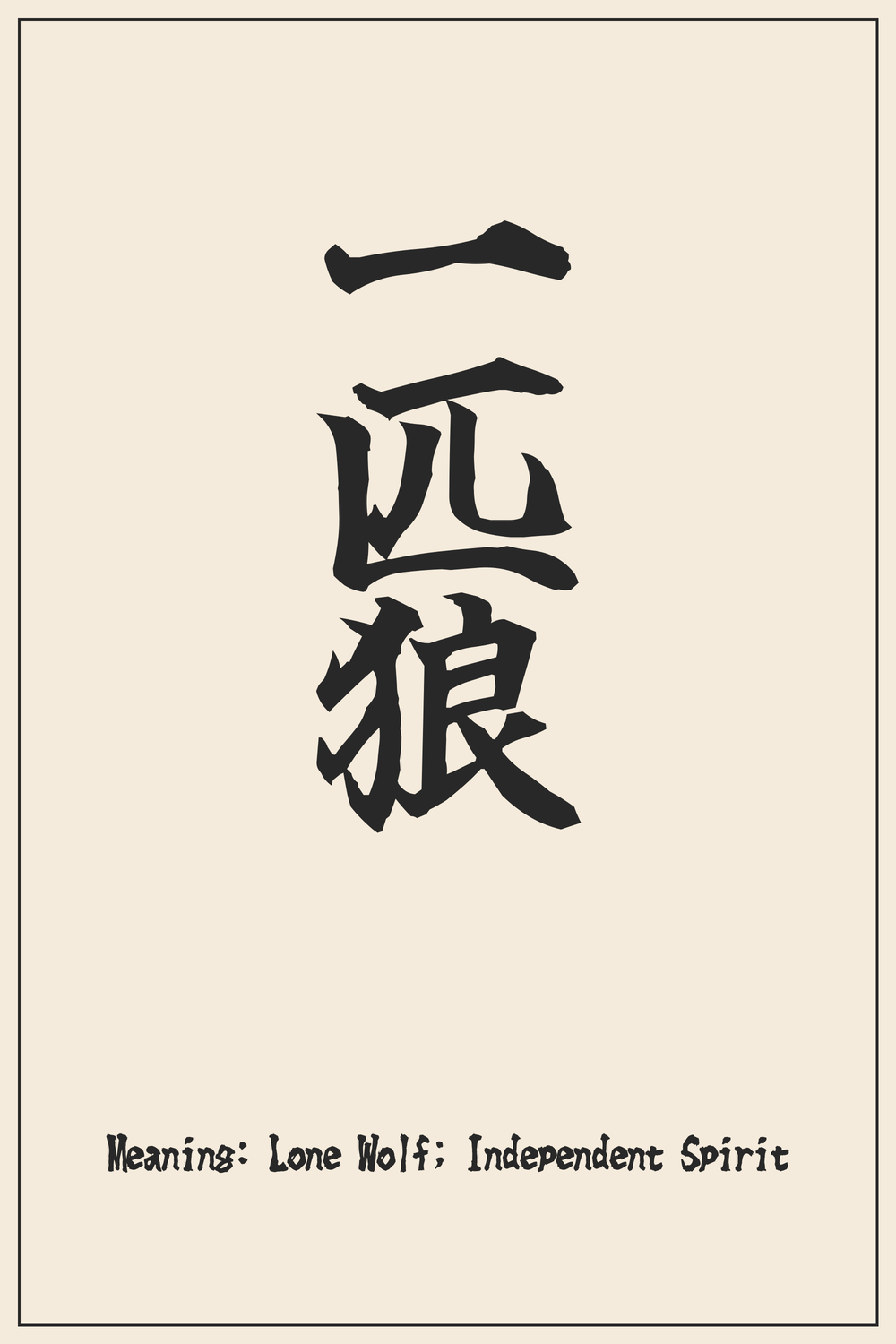
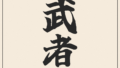
🖌️ Calligraphy Style
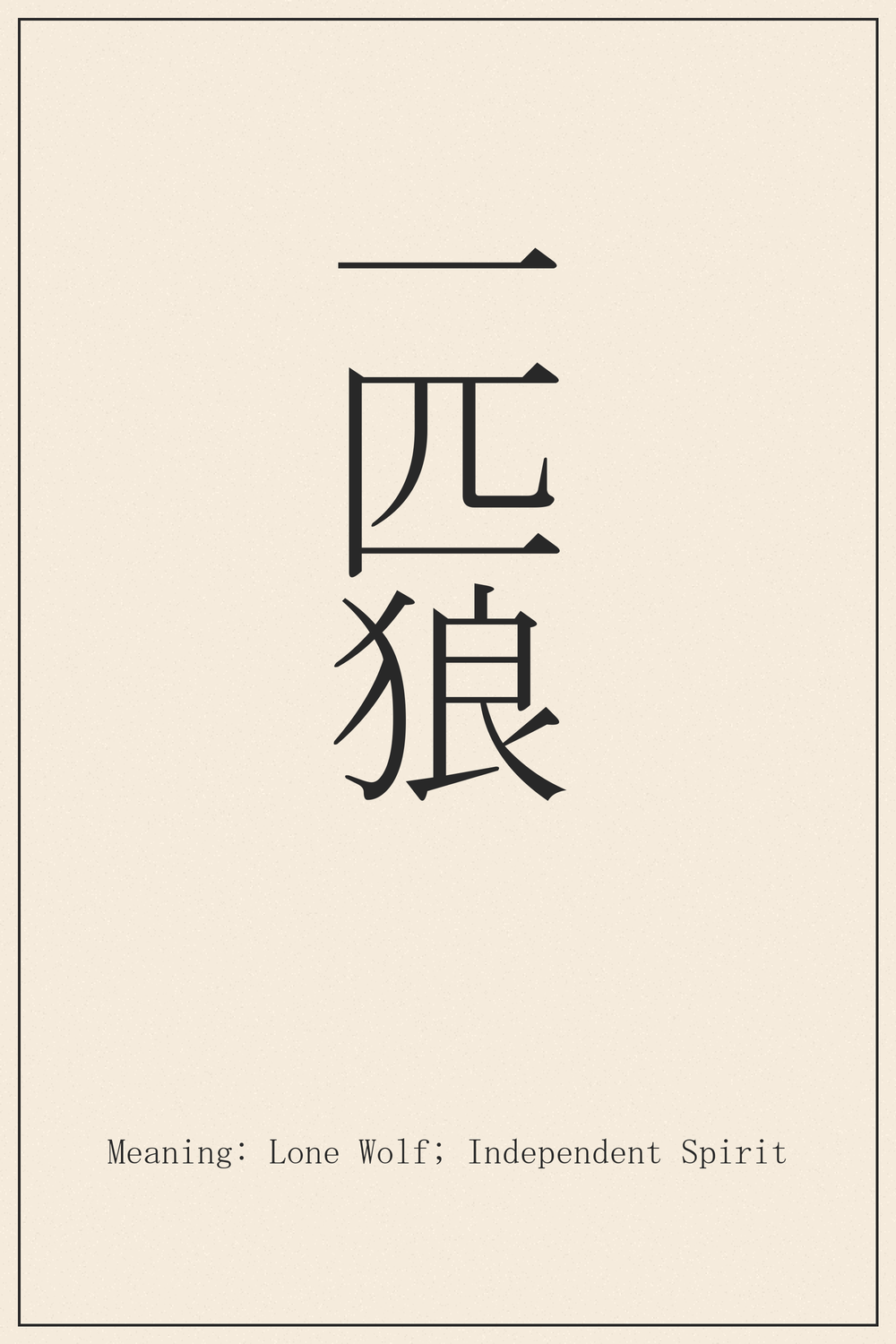
📝 Mincho Style
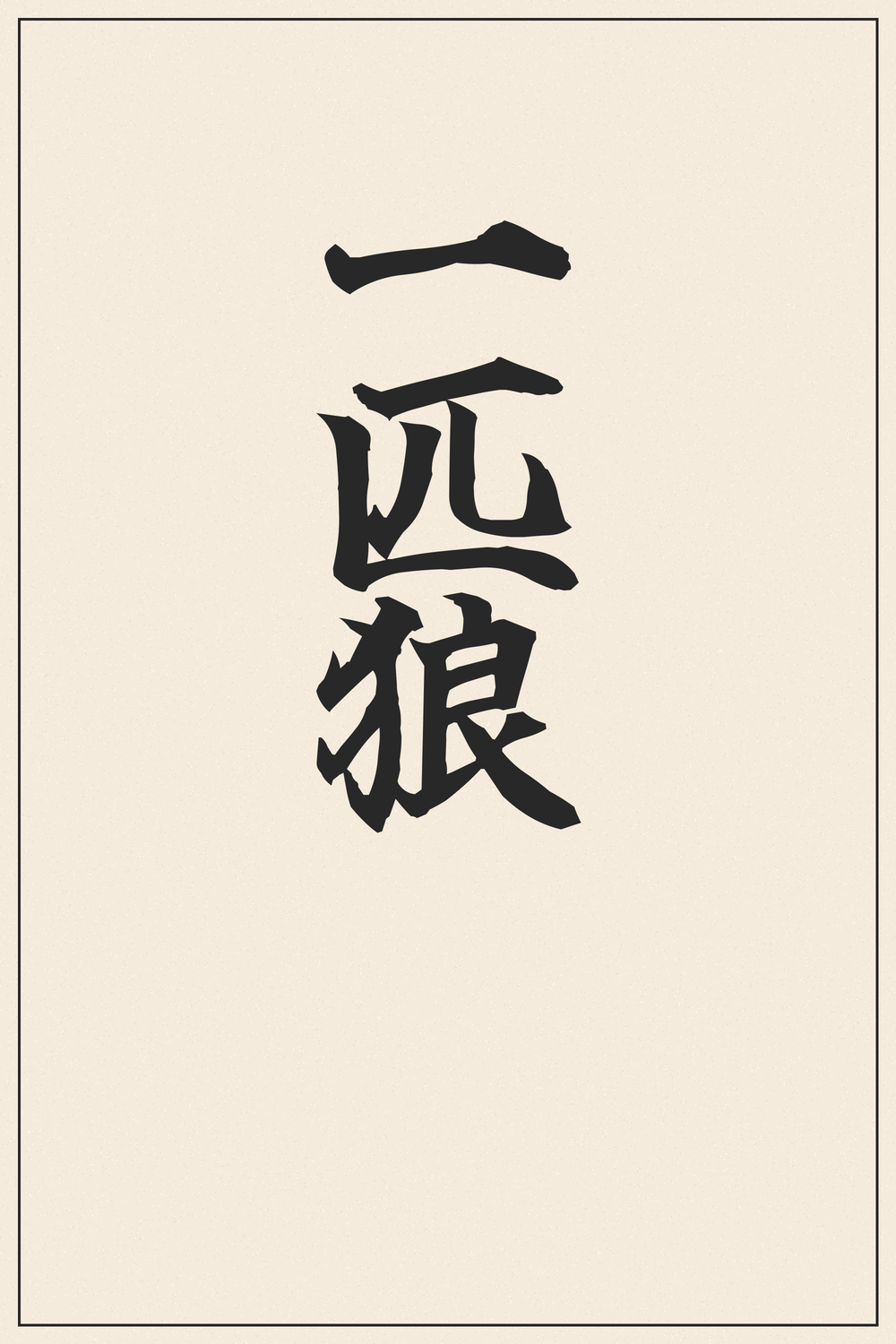
📜 Vertical Writing
⚡ Quick Facts
Breaking Down 一 (Ichi/Ippiki)
The character 一 is the simplest in the Japanese writing system—a single horizontal stroke representing “one.” It’s the first character children learn, the foundational number, pure singularity. In this phrase, it establishes the fundamental condition: aloneness, individuality, separation from plurality.
But 一 carries philosophical weight beyond mere counting. In compound words, it emphasizes unity, uniqueness, the irreducible essence of something. 一心 (isshin, single-minded devotion), 一生 (isshō, entire lifetime), 一途 (ichizu, earnest sincerity)—the character transforms whatever follows into something concentrated, undivided, pure.
When 一 modifies a counter word like 匹, pronunciation changes to ippiki through phonetic smoothing. That’s just linguistic mechanics. The meaning stays clear: ONE wolf, singular wolf, wolf counted solo rather than as pack member. The simplicity of the stroke mirrors the starkness of the condition—you’re either with the pack or you’re one.
Japanese uses specific counter words for different categories of objects. You don’t just say “one dog”—you say 一匹 (ippiki), using the counter for small/medium animals. Using the proper counter demonstrates linguistic competence and cultural knowledge. Wolves get counted with 匹, placing them linguistically among animals humans observe but don’t fully control—wild, other, respected but separate.
Breaking Down 匹 (Hiki/Piki)
The character 匹 functions as a counter for small to medium-sized animals—dogs, cats, wolves, horses. Its ancient form depicted paired items or cloth (two pieces matching), but it evolved into the go-to counter for creatures roughly human-sized or smaller. You use it when counting animals you interact with but don’t eat as livestock.
Counter words seem like grammatical trivia until you recognize what they reveal about cultural categorization. Large animals like elephants get different counters. Livestock for consumption get yet another. Birds have their own. The specific counter you use places the subject into conceptual taxonomy—this is how we think about this thing, how we relate to it, where it fits in our mental organization of reality.
Using 匹 for wolves acknowledges them as powerful animals commanding respect but remaining wild—not domesticated, not conquered, maintaining their dangerous otherness. The counter creates linguistic distance. You don’t cuddle wolves. You count them carefully, tracking their numbers, maintaining awareness of their presence. 匹 keeps them at arm’s length while acknowledging their existence matters.

One wolf, no pack—survival through strength and solitude
Breaking Down 狼 (Ōkami)
The character 狼 combines the beast/dog radical 犭(kemono-hen) with 良 (ryō, good/fine). The radical categorizes wolves among animals—specifically canines and wild creatures. The 良 component functions primarily phonetically, providing the “rō” sound, though its independent meaning “good” creates interesting layers. Is the wolf a “good beast”? Ancient etymologists debated this.
Japanese wolves—Canis lupus hodophilax, the Honshū wolf—went extinct around 1905, hunted to extermination during modernization. Before that, they inhabited mountain forests throughout Japan, featured prominently in folklore as both protectors and threats. Some regions revered wolves as mountain kami (spirits/gods), guardians keeping wild boar and deer populations controlled. Others feared them as dangerous predators threatening travelers and livestock.
This dual perception—protector and threat, noble and dangerous—transferred to the lone wolf metaphor. People who operate independently outside organizational structures might be protecting something valuable (integrity, vision, authenticity) or threatening something necessary (harmony, cooperation, collective wellbeing). The ambiguity isn’t bug; it’s feature. Lone wolves earn respect and suspicion simultaneously.
Japanese Group Harmony vs. Individualism
Japanese culture famously emphasizes 和 (wa, harmony)—prioritizing group consensus, avoiding direct conflict, maintaining social cohesion above individual preference. The saying “the nail that sticks up gets hammered down” captures this philosophy. Stand out too much, express opinions too forcefully, refuse to compromise, and social pressure will flatten you back into conformity.
This cultural tendency isn’t universal personality trait—plenty of Japanese people chafe against these expectations. But structural pressures remain powerful. Corporate culture demands loyalty to the company. Educational systems reward conformity. Social relationships depend on carefully maintained obligation networks. Stepping outside these systems means risking isolation, losing support structures most people need for basic survival.
一匹狼 became cultural shorthand for people who opt out anyway—freelancers rejecting corporate employment, artists pursuing personal vision over commercial success, entrepreneurs building ventures independently, anyone choosing autonomy over security. The phrase acknowledges the courage this requires while hinting at the loneliness it costs. Being a lone wolf sounds romantic until you’re actually alone.
Japan’s lone wolf archetype connects historically to rōnin (浪人)—masterless samurai who lost their lord through death or disgrace. These warriors wandered without organizational belonging, surviving through skill alone. Some became noble heroes in folklore. Others became desperate bandits. The ronin mythos romanticizes independence while acknowledging its dangerous precarity—exactly what 一匹狼 represents in modern context.
🎨 Tattoo Design Ideas
- ✨ Traditional Horizontal Format – Three characters arranged horizontally in bold brushwork creates powerful, readable statement. The calligraphy should feel strong and decisive—confident strokes suggesting self-assurance, not hesitation. Perfect for upper back, chest, or shoulder blade placements (7-10 inches wide) where all three characters command presence.
- ✨ Vertical Column Style – Traditional top-to-bottom arrangement along spine, forearm, or outer thigh honors authentic Japanese writing direction. The vertical descent creates strong visual line suggesting independence and determination. Works beautifully for 8-11 inch placements where length emphasizes the phrase’s weight.
- ✨ Wolf Silhouette Integration – Pair 一匹狼 with minimalist wolf silhouette—howling profile, running form, or watchful stance. Keep wolf imagery stylized and simple, not detailed illustration. The kanji dominate; the wolf provides visual context. Consider placing wolf above, below, or wrapping subtly around characters.
- ✨ Minimalist Modern Line – Clean, precise strokes without decorative flourish for contemporary aesthetic. Despite the wild imagery, modern execution creates sophisticated impact. Perfect for medium placements (6-8 inches) on forearm, upper arm, or calf where clarity matters more than size.
- ✨ Mountain/Moon Context – Add minimal mountain silhouette or moon suggesting the lone wolf’s habitat—wilderness, night, solitude. Keep environmental elements atmospheric and subtle—thin line work, watercolor suggestion, negative space. The characters remain focal point; scenery provides mood.
- ✨ Circular Composition – Arrange three characters in arc or circle, perhaps with wolf pawprint, moon phase, or mountain peak completing the circular form. This creates enclosed, unified composition while maintaining readability. Works beautifully for shoulder, upper chest, or thigh placements.
Who Chooses This Tattoo
Entrepreneurs and freelancers who’ve rejected traditional employment choose 一匹狼 celebrating their independence. They’ve opted out of corporate security, salary predictability, organizational belonging—choosing autonomy despite financial uncertainty and lack of safety nets. The tattoo becomes badge affirming that choice, visible reminder during difficult moments that independence justifies its costs.
Introverts who never quite fit into social groups select it explaining their nature without apology. They’re not antisocial or broken—they’re lone wolves, operating differently by design. The phrase reframes isolation from personal failure into natural variation, from “what’s wrong with you?” to “this is how I’m built.” It transforms loneliness into chosen solitude.
People who’ve survived by trusting only themselves—through family dysfunction, institutional betrayal, repeated disappointments—wear 一匹狼 as armor and anthem. They learned through pain that self-reliance isn’t preference; it’s survival strategy. The characters announce “I walk alone because that’s safest,” validating their wariness while honoring their strength.
Lone wolf mythology romanticizes isolation in ways that can glorify unhealthy patterns. Humans are social animals—we evolved needing community, cooperation, connection. True lone wolves in nature often die young. Getting this tattoo works if you genuinely thrive independently, but be honest whether you’re celebrating authentic preference or rationalizing inability to connect. Independence is admirable; isolation born from fear or trauma might need addressing differently.
Why These Characters Endure
Modern society demands conformity through a thousand subtle mechanisms—algorithm-driven content homogenization, corporate dress codes, professional networking requirements, social media’s popularity contests. We’re encouraged to optimize ourselves for market compatibility, sand down rough edges, present palatable versions designed for maximum acceptance. The pressure to fit in has never been more sophisticated or pervasive.
一匹狼 offers counternarrative from a culture that perfected conformity pressure then created language honoring those who resist it anyway. The phrase acknowledges reality: going against the grain costs something. You’ll be lonelier, face more criticism, lack support systems others take for granted. But it affirms the choice is valid—sometimes maintaining authenticity requires accepting isolation, sometimes your vision demands pursuing paths others won’t follow.
These characters endure because the fundamental tension hasn’t changed. Humans need both—connection AND autonomy, belonging AND individuality, pack security AND personal freedom. We’re not purely social creatures or perfect loners; we’re complex beings navigating between extremes. Getting 一匹狼 tattooed doesn’t resolve that tension. It declares which side you’ve chosen to err toward, which risks you’ll accept, what kind of wolf you are. That clarity, that commitment to authentic self-knowledge despite social cost, remains worth marking permanently.

Comments