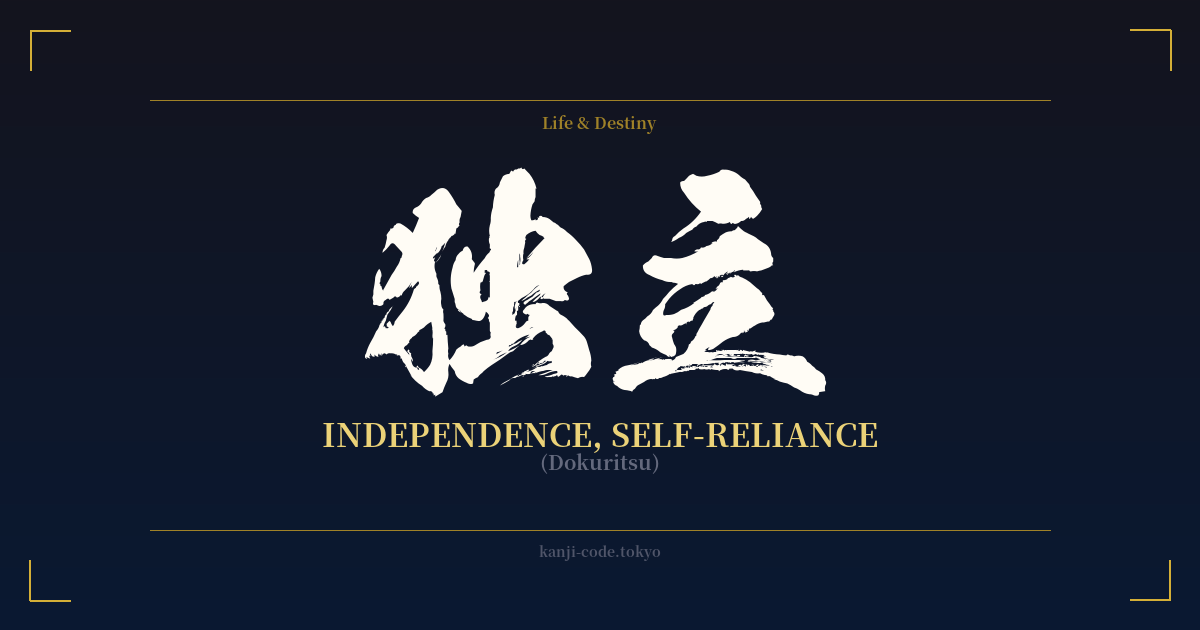
✍️ 独立 (Dokuritsu) — Cultural Context
The word 独立 (Dokuritsu) is a powerful and evocative term in the Japanese language, literally translating to "standing alone." It is formed by combining two distinct kanji: 独 (doku), meaning "single" or "alone," and 立 (ritsu), meaning "to stand" or "to rise." Together, they paint a vivid picture of an individual or entity establishing itself, free from the support or control of others. This concept embodies the spirit of independence, autonomy, and self-reliance.
Historically, the idea of 独立 gained significant prominence during the Meiji Restoration in the late 19th century. As Japan rapidly modernized to avoid colonization by Western powers, the nation’s rallying cry was one of national independence and strength. Thinkers like Fukuzawa Yukichi, a prominent intellectual of the era, championed the idea of individual independence as the bedrock of a strong nation. In his influential work, "An Encouragement of Learning" (学問のすすめ), he argued that if each citizen became self-reliant and independent in thought and action, the nation as a whole would prosper and maintain its sovereignty.
In modern Japanese culture, 独立 navigates a fascinating space between traditional collectivism and modern individualism. Japanese society has historically placed a high value on group harmony (和, Wa), where the needs of the group often supersede the desires of the individual. In this context, striving for 独立 can be seen as both a virtue and a challenge. It represents the admirable goal of not being a burden on others, of being capable and self-sufficient. This is evident in phrases like 独立開業 (dokuritsu kaigyō), which means to start one's own business.
At the same time, an excessive focus on independence can be perceived as cold, distant, or a rejection of community ties. The ideal is often a balance: to be an independent person who can still function harmoniously within a group. For many young people, achieving 独立 by leaving the family home and becoming financially self-sufficient is a major life milestone, a rite of passage into adulthood.
Beyond the social and political, 独立 carries a deep philosophical weight. It speaks to the journey of forging one's own path, relying on one's inner strength, and having the courage to stand by one's convictions, even if it means standing alone. It is a declaration of personal sovereignty and a commitment to building a life on one's own terms. This makes it a profound concept for anyone, anywhere, who values personal growth and autonomy.
🖌️ Font Styles for 独立
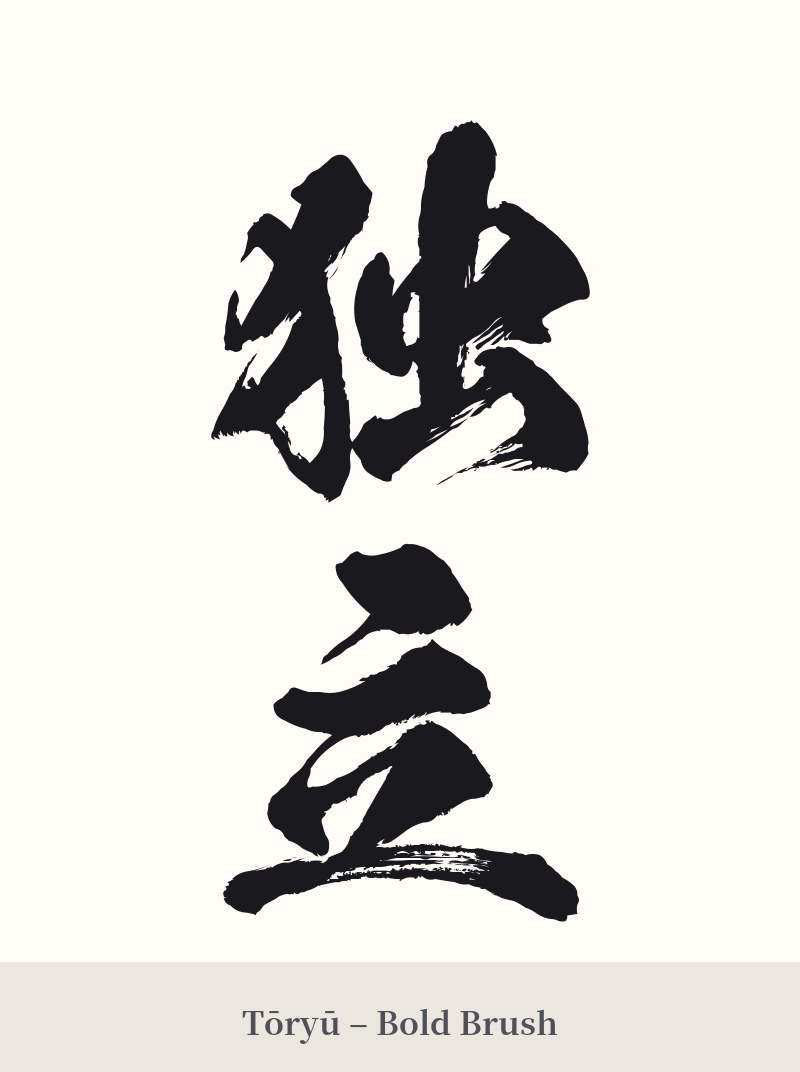
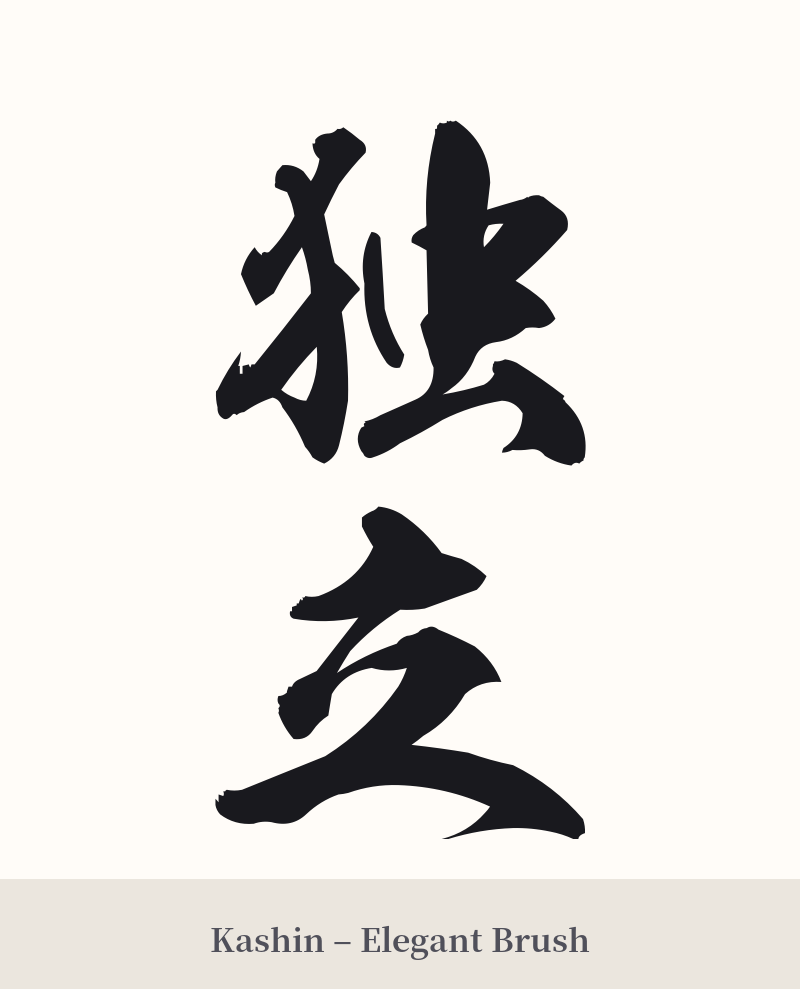
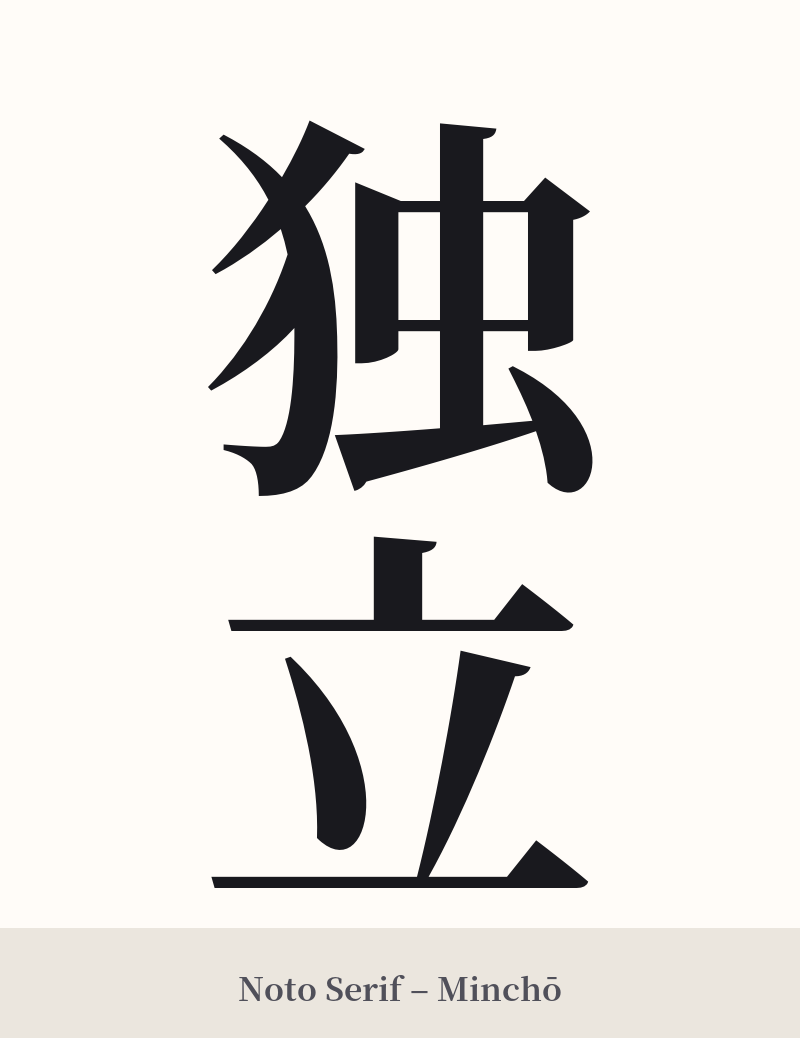
The same kanji can look dramatically different depending on the calligraphy style. Choose a font that matches the mood you want for your tattoo or design.
🎨 Tattoo Suitability
📐 Tattoo Design Guide
The word 独立 (Dokuritsu) offers excellent versatility for a tattoo design, conveying strength and resolve.
– Placement: A vertical orientation is highly recommended, as it visually reinforces the meaning of "standing up." This looks particularly striking along the forearm, the spine, the side of the calf, or over the bicep. For a horizontal design, placement across the chest, upper back, or collarbone works well.
– Font Style: The choice of script can dramatically alter the feel of the tattoo. A bold, angular Kaisho (block script) emphasizes stability and unwavering strength. A semi-cursive Gyosho script can add a sense of personal journey and fluid determination. For a more modern and clean aesthetic, a crisp Mincho style provides elegance and clarity.
– Visual Tips: The two characters are well-balanced, but ensure your artist pays attention to the negative space between them. The complexity of 独 (doku) on the left contrasts nicely with the simplicity of 立 (ritsu) on the right. While the kanji is powerful enough to stand on its own, it could be subtly integrated with imagery like a solitary pine tree on a cliff or a single bird taking flight, though this is not necessary.
Comments