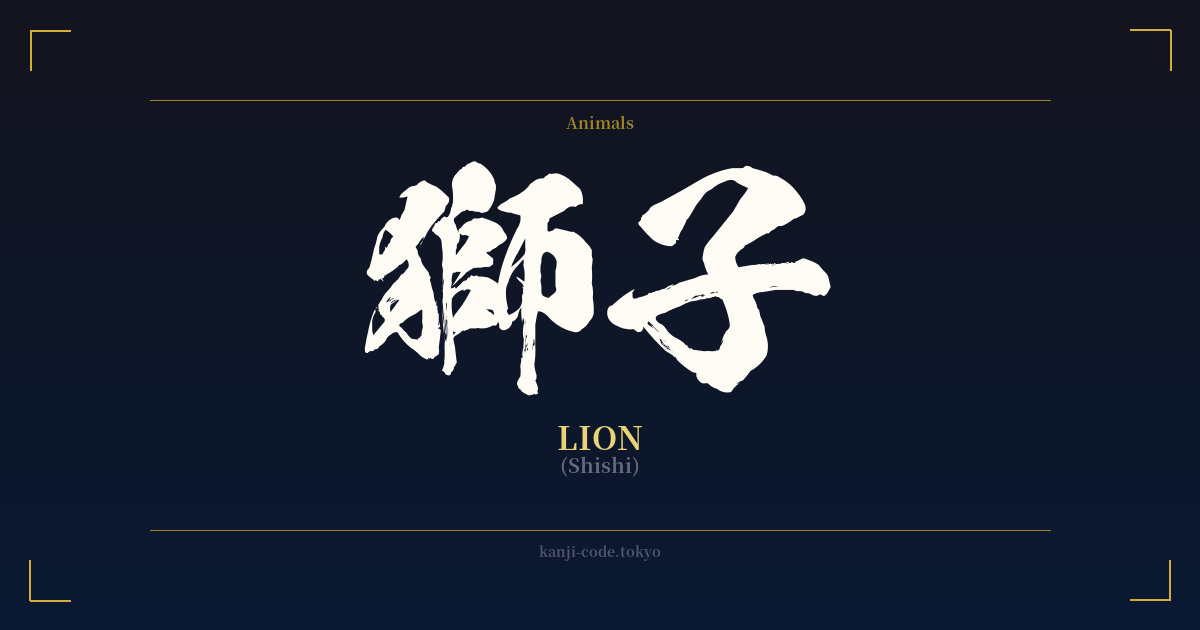
✍️ 獅子 (Shishi) — Cultural Context
In Japan, the word 獅子 (Shishi) conjures an image far more complex and powerful than just the zoological lion. It represents a potent symbol of protection, strength, and divine authority, deeply woven into the nation's spiritual and cultural fabric.
The most visible manifestation of the Shishi is in the form of 狛犬 (Komainu), the stone guardian lion-dogs that flank the entrances to countless Shinto shrines and Buddhist temples. These statues are not mere decorations; they are fierce spiritual protectors. Typically found in pairs, one has its mouth open, and the other closed. This represents the 'a-un' concept in Buddhism, symbolizing the beginning and end of all things, the alpha and omega. They stand eternal guard, warding off evil spirits and protecting the sacred grounds within.
The Shishi also dances its way into Japanese folklore through the 獅子舞 (Shishi-mai), or lion dance. Performed during New Year celebrations and other festivals, a person or group of people don a large, ornate lion costume and dance through the streets. It is believed that being 'bitten' on the head by the Shishi brings good luck, drives away sickness, and ensures a healthy year. This tradition highlights the lion's role as a benevolent, luck-bestowing creature.
Its connection to Buddhism is profound. The lion is considered a protector of the Dharma (the teachings of Buddha) and is the traditional mount for Manjushri (Monju Bosatsu), the Bodhisattva of wisdom. This association imbues the Shishi with not just physical strength but also intellectual and spiritual power. A lion's roar, in Buddhist scripture, is a metaphor for the fearless and powerful proclamation of truth.
From epic Kabuki plays where heroes display lion-like courage to intricate ukiyo-e woodblock prints, the Shishi is a recurring motif representing nobility, valor, and kingly authority. It is a symbol that has been revered for centuries, a mythical beast that embodies the ideal of a powerful, wise, and unwavering guardian.
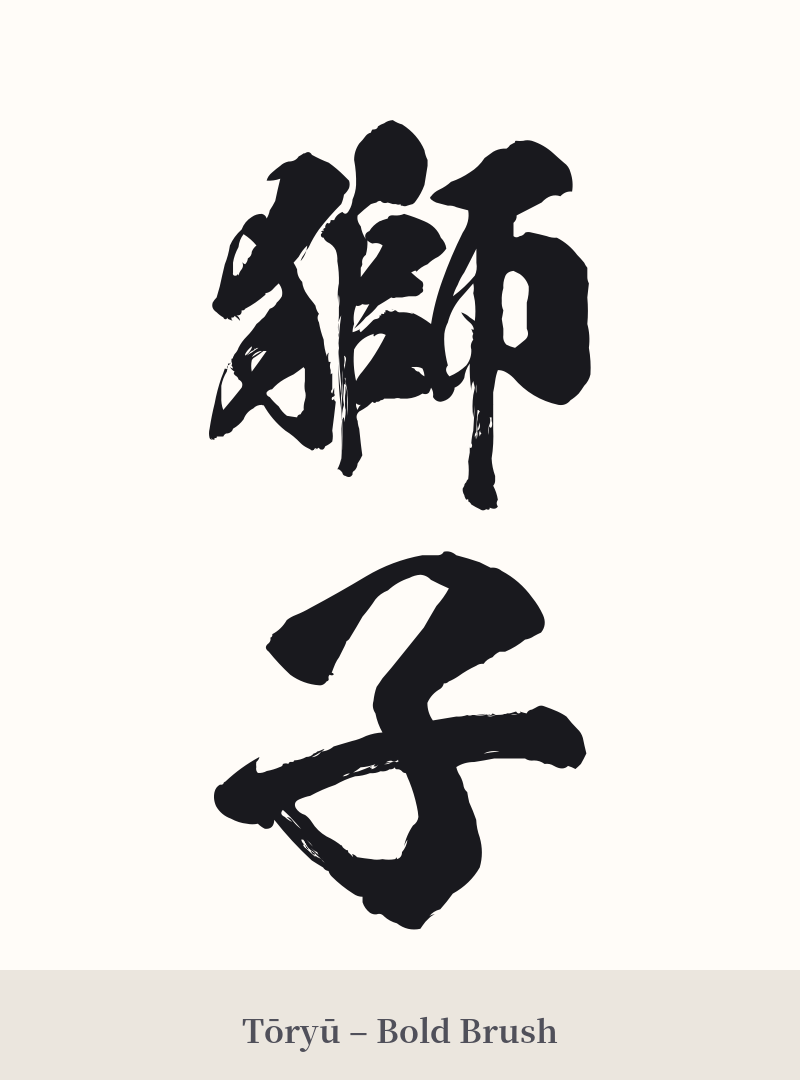
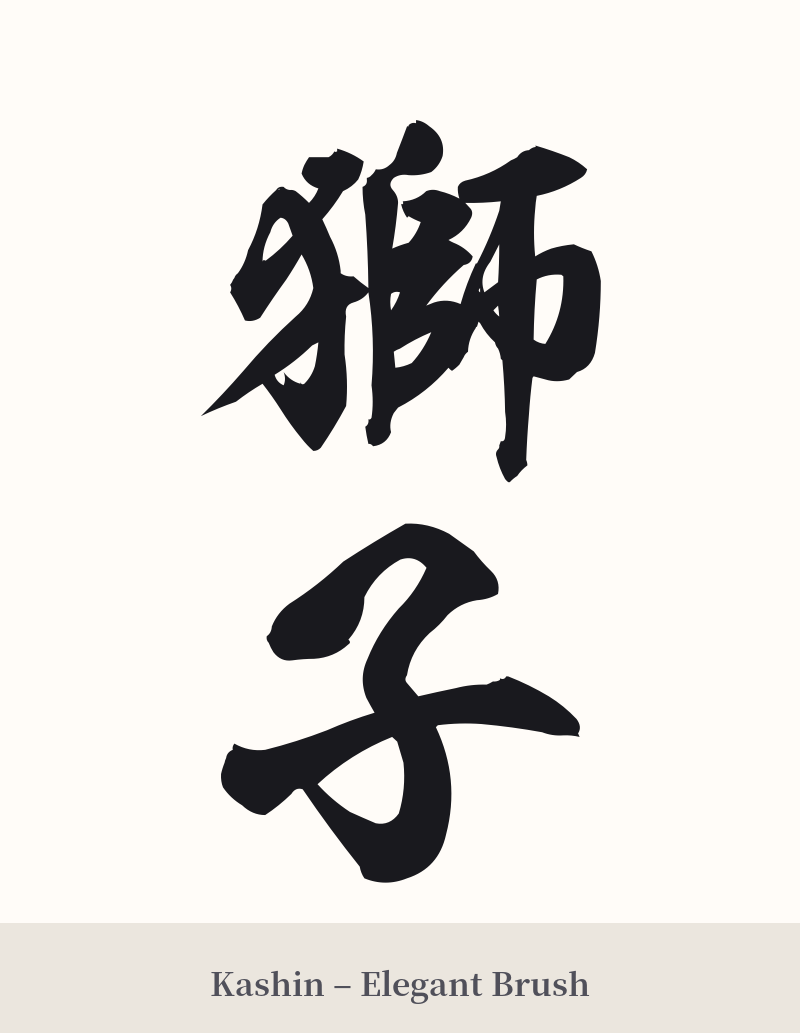
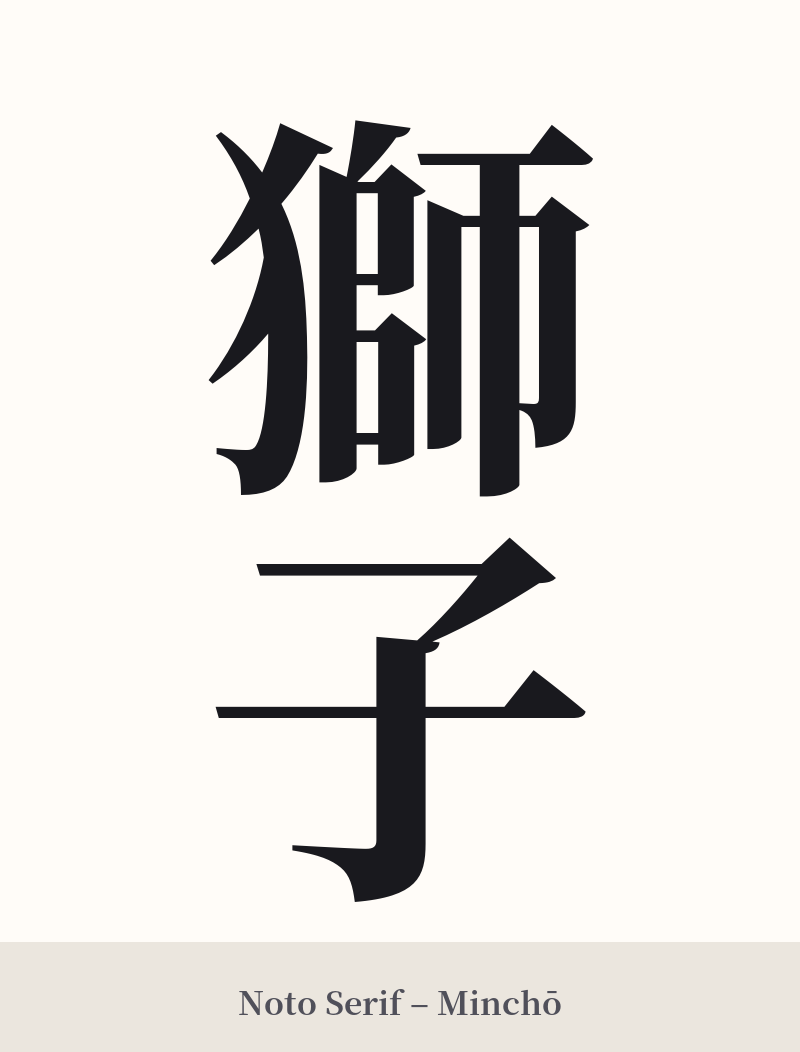
🖌️ Font Styles for 獅子
The same kanji can look dramatically different depending on the calligraphy style. Choose a font that matches the mood you want for your tattoo or design.
🎨 Tattoo Suitability
📐 Tattoo Design Guide
For a 獅子 (Shishi) tattoo, the design should reflect its inherent power and majesty. Due to the detail in the first character, this kanji benefits from a medium to large size to maintain clarity and impact.
– Placement: Consider larger muscle groups like the back, chest, or outer thigh. A vertical placement along the spine or down the arm or leg is a classic and visually striking choice that emphasizes the kanji's structure.
– Font Style: A bold, strong script is highly recommended. A traditional Kaisho (block script) will give it a solid, architectural feel, emphasizing its protective nature. For a more dynamic and energetic look, a Gyosho (semi-cursive) or even a dramatic Sosho (cursive) script can capture the feeling of the Shishi-mai lion dance.
– Visual Tips: Pairing the kanji with related imagery can enhance its meaning. Consider a background of stylized Japanese clouds or waves. A tattoo could also feature the kanji alongside a depiction of a Komainu statue or a fierce Kabuki-style lion mask. The contrast between the complex first character and the simple second one is already visually interesting, so even as a standalone piece, it is very effective.
Comments