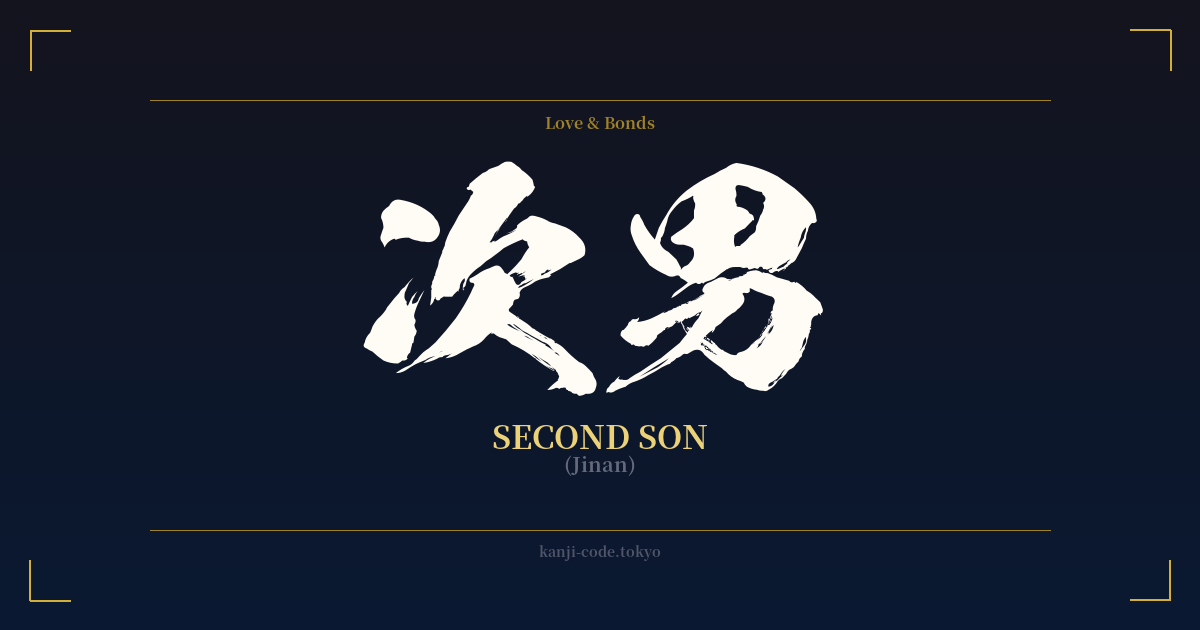
✍️ 次男 (Jinan) — Cultural Context
The Japanese word 次男 (Jinan) literally translates to 'second son.' While simple on the surface, this term is deeply embedded in the cultural and historical fabric of Japan's family structure, carrying nuances that go far beyond a simple birth order designation.
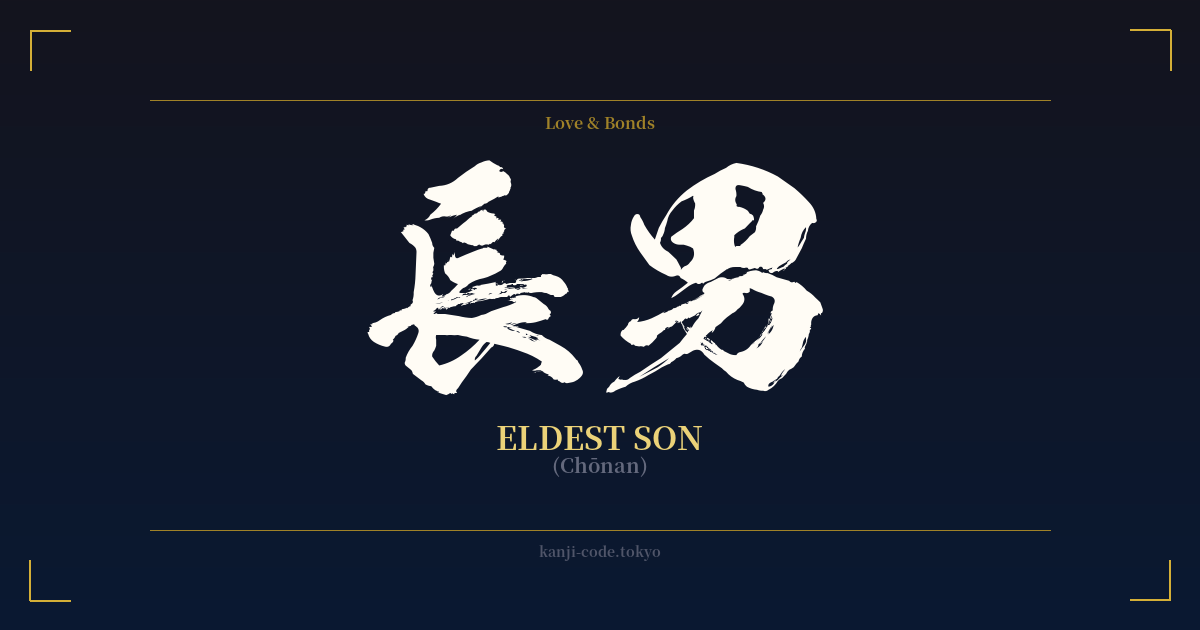
Historically, Japanese society was built upon a system of primogeniture, where the 長男 (chōnan), or eldest son, held a position of immense importance. The chōnan was the designated heir, responsible for inheriting the family's property, business, and title. He was expected to care for his aging parents and maintain the family lineage and ancestral traditions. This role came with great privilege but also immense pressure and responsibility.
The jinan, and any subsequent sons, existed in a different sphere. Without the automatic inheritance and defined role of the eldest, the second son's path was often one of greater uncertainty but also greater freedom. They were not typically expected to remain in the main household. Instead, their futures could lead in several directions. Many would leave to establish their own 'branch families' (分家, bunke), starting a new household that was subordinate to the main family line (本家, honke).
Another common path for a jinan was to be adopted into another family as a successor, a practice known as 養子 (yōshi). This was a strategic move for families who lacked a male heir, allowing them to preserve their own family name and assets. For the jinan, it offered a chance at inheritance and status that he would not have had in his birth family. Others might enter the priesthood or pursue a craft or trade independently.
In modern Japan, the legal framework of primogeniture has been abolished, and inheritances are typically divided more equally among children. However, the cultural echoes of this system remain. The eldest son may still feel a subtle, unspoken pressure to be the 'responsible one,' while the second son is often perceived as being more carefree, independent, and free to pursue his own passions without the weight of familial expectation. The term is frequently used in literature, manga, and film to quickly establish a character's personality type and family dynamics.
Therefore, 次男 (Jinan) is more than just a label. It signifies a unique position within the family, a story of independence, and a life path forged outside the primary line of succession. It represents a different kind of strength—one built not on inheritance, but on making one's own way in the world.
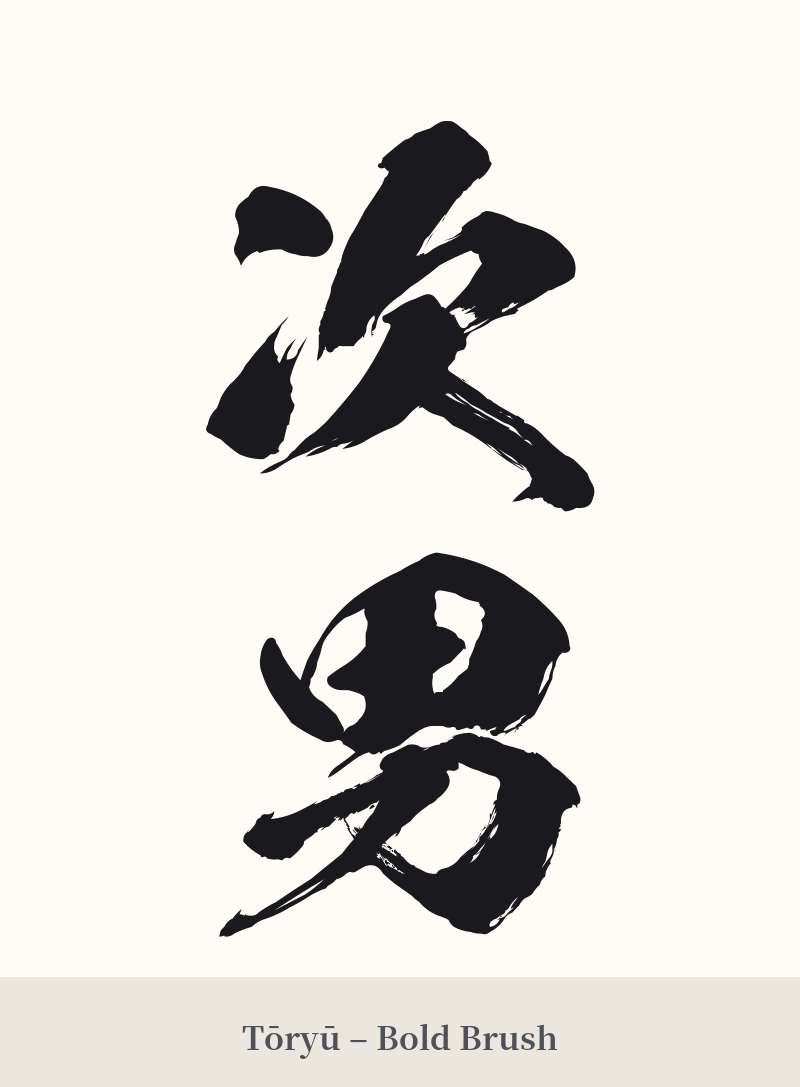
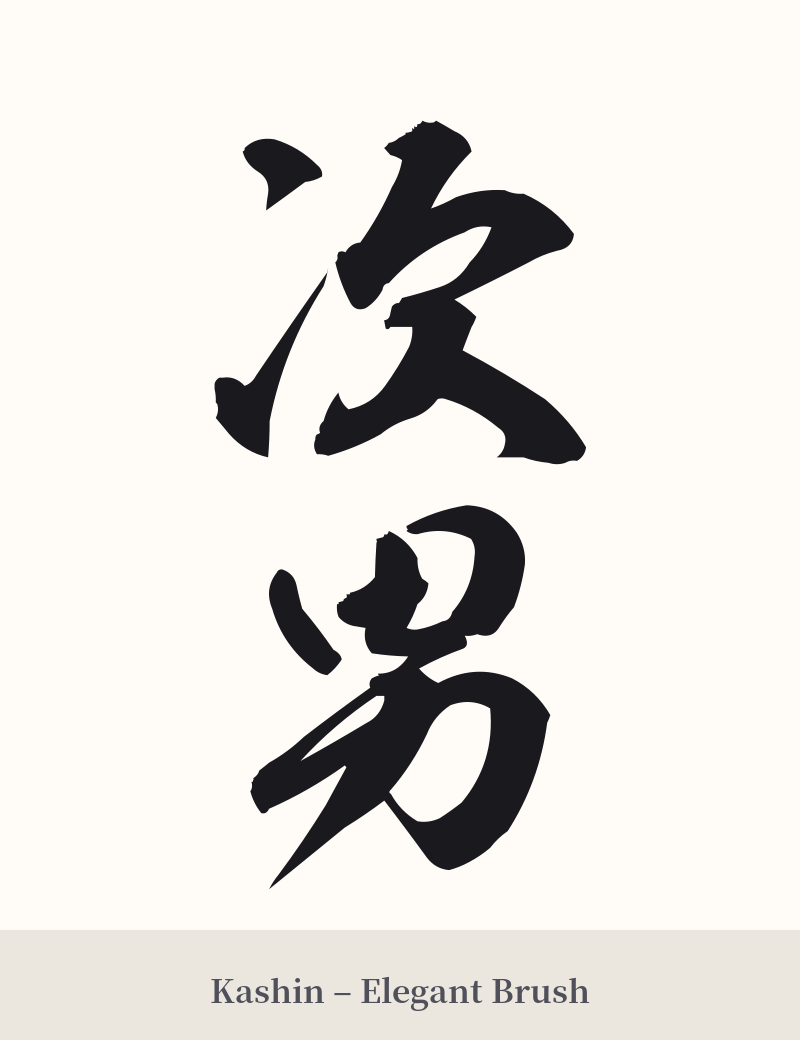
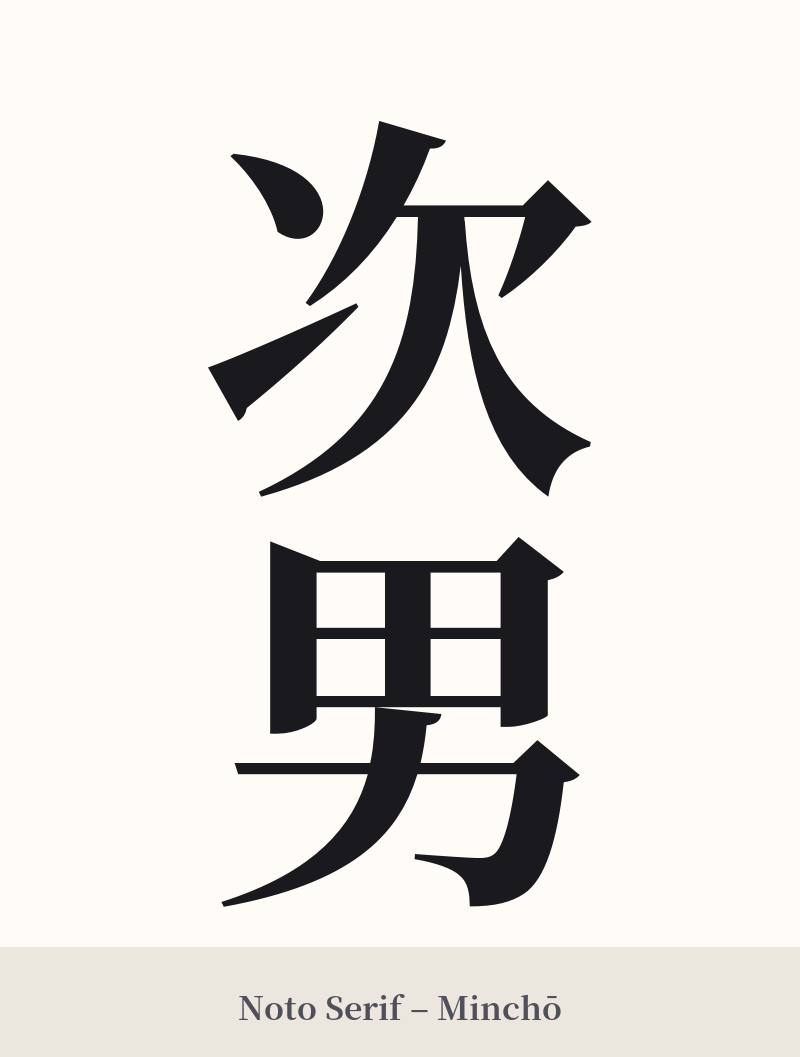
🖌️ Font Styles for 次男
The same kanji can look dramatically different depending on the calligraphy style. Choose a font that matches the mood you want for your tattoo or design.
🎨 Tattoo Suitability
📐 Tattoo Design Guide
A tattoo of 次男 (Jinan) is a deeply personal statement about one's identity and place within their family. The design should reflect its straightforward and humble nature.
– Placement: Because it's a personal and literal term, smaller and more discreet placements are often suitable. Consider the inner wrist, forearm, ankle, or across the collarbone. It could also be placed over the heart as a symbol of family connection.
– Font Style: A clean, legible font is recommended. A standard Mincho (serif) or Gothic (sans-serif) style complements the word's directness. Overly ornate or aggressive calligraphy styles might feel mismatched with the modest meaning of the term.
– Visual Tips: This kanji stands best on its own or with other highly personal elements. You could incorporate a birthdate or the name of a sibling. Avoid pairing it with generic Japanese imagery like dragons or waves, as the symbolic clash could create a confusing message.
Comments