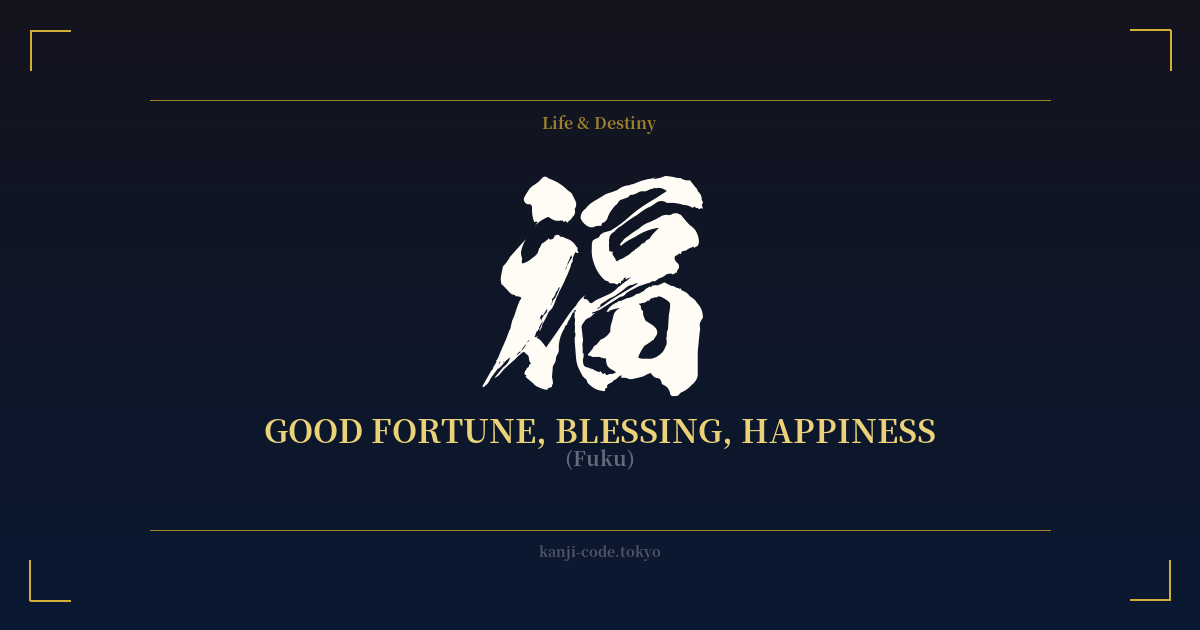
✍️ 福 (Fuku) — Cultural Context
The kanji 福 (fuku) is one of the most auspicious and cherished characters in East Asian culture, representing a state of comprehensive well-being that goes far beyond simple luck or momentary happiness.
Its origin story is beautifully depicted in its very structure. The character is a combination of two radicals: 示 (shimesu) on the left, which symbolizes an altar or a divine revelation, and 畐 (fuku) on the right. The right-side component originally depicted a tall, full jar of alcohol or grain—an offering to the gods. Together, they paint a picture of a person presenting a bountiful offering at a sacred altar, an act of devotion that invites divine favor. This etymology reveals the core concept of 福: it is a blessing bestowed by a higher power in response to sincerity and gratitude.
Unlike the fleeting emotion of happiness (幸せ, shiawase) or the random chance of luck (運, un), 福 describes a sustained, holistic condition. It is the state where all major aspects of life are in harmony: good health, a thriving family, financial stability, and peace of mind. It’s the feeling of being provided for, protected from misfortune, and having more than enough. In Japan, this concept is deeply woven into daily life and spiritual practices.
During New Year's (お正月, Oshōgatsu), the character 福 is seen everywhere. It adorns decorations, lucky charms (omamori), and the special envelopes (otoshidama) containing money given to children. It is also central to the idea of the Seven Lucky Gods (七福神, Shichifukujin), a pantheon of deities who are believed to travel on their treasure ship and distribute fortune to the worthy at the start of the year. Gods like Daikokuten (god of wealth) and Ebisu (god of commerce) are direct embodiments of the blessings contained within 福.
You might also see the character on the bib of a Maneki-neko (beckoning cat), inviting prosperity into a business, or written on ema (wooden prayer plaques) at Shinto shrines. While the Chinese tradition of hanging the character upside down to signify 'fortune arrives' (福倒, fú dào) is not native to Japan, it is widely recognized. Ultimately, 福 represents a profound and desirable state of existence—not a jackpot win, but a life rich with blessings, security, and contentment.
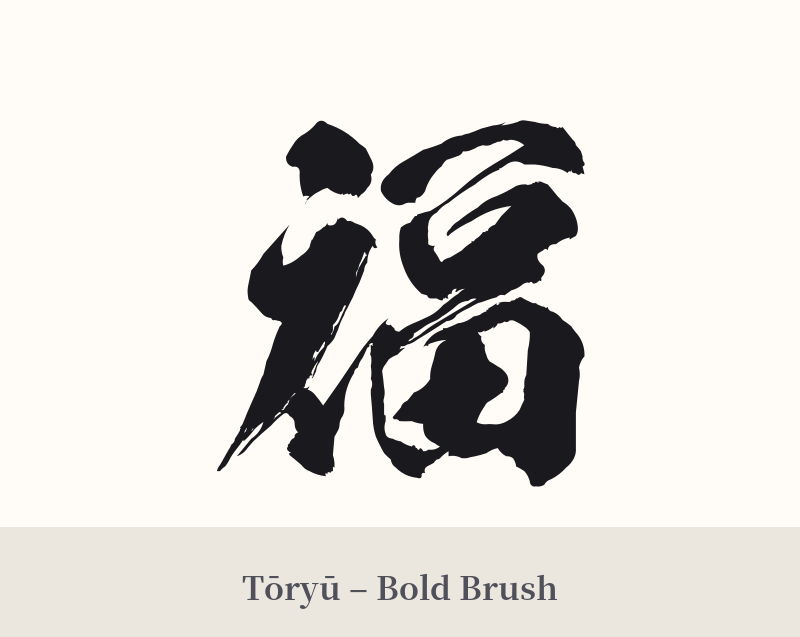
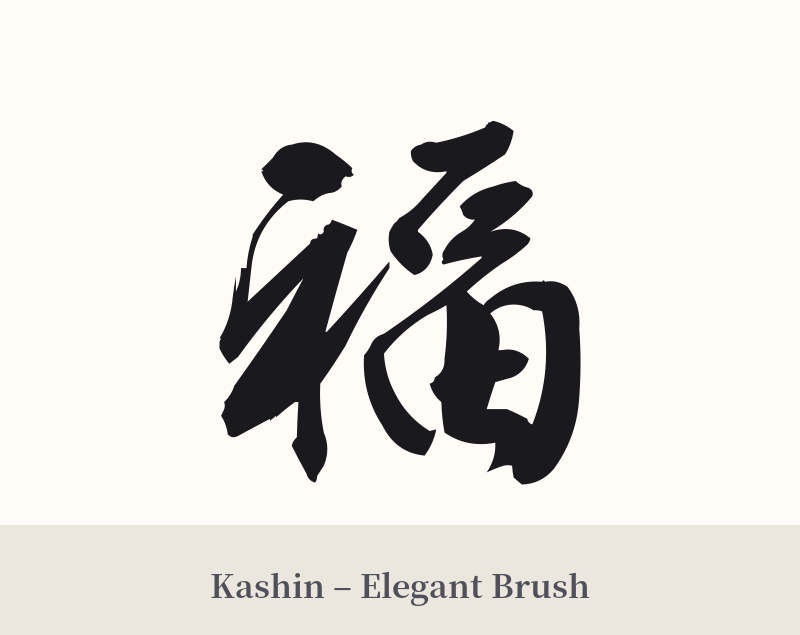
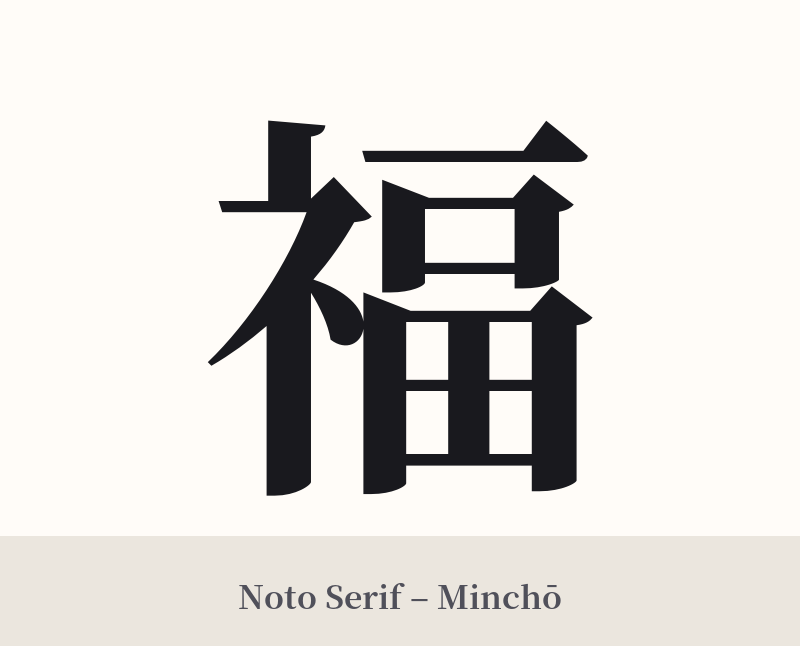
🖌️ Font Styles for 福
The same kanji can look dramatically different depending on the calligraphy style. Choose a font that matches the mood you want for your tattoo or design.
🎨 Tattoo Suitability
📐 Tattoo Design Guide
The kanji 福 is a versatile and powerful symbol that works well in various tattoo designs. Its balanced structure and positive meaning make it a popular choice.
– Placement: For a personal reminder of blessings, consider the chest, back, or inner arm. For a more public declaration to invite good fortune, the forearm, wrist, or calf are excellent spots. Its square-like shape also fits well on the back of the neck.
– Style: A traditional calligraphy script (shodō) is the most common and revered style. A bold kaisho (block script) emphasizes stability and strength, while a flowing gyosho (semi-cursive script) can give it a more dynamic and artistic feel. Avoid overly stylized or thin fonts that can make the 13 strokes look messy or illegible.
– Visual Elements: 福 can be the centerpiece of a larger design. Consider pairing it with other auspicious Japanese symbols like a koi fish swimming upstream (representing perseverance), a dragon (power and protection), cherry blossoms (the beauty of life), or a Maneki-neko (beckoning cat). Placing it on a scroll or within an ensō (Zen circle) can also frame the character beautifully.
Comments