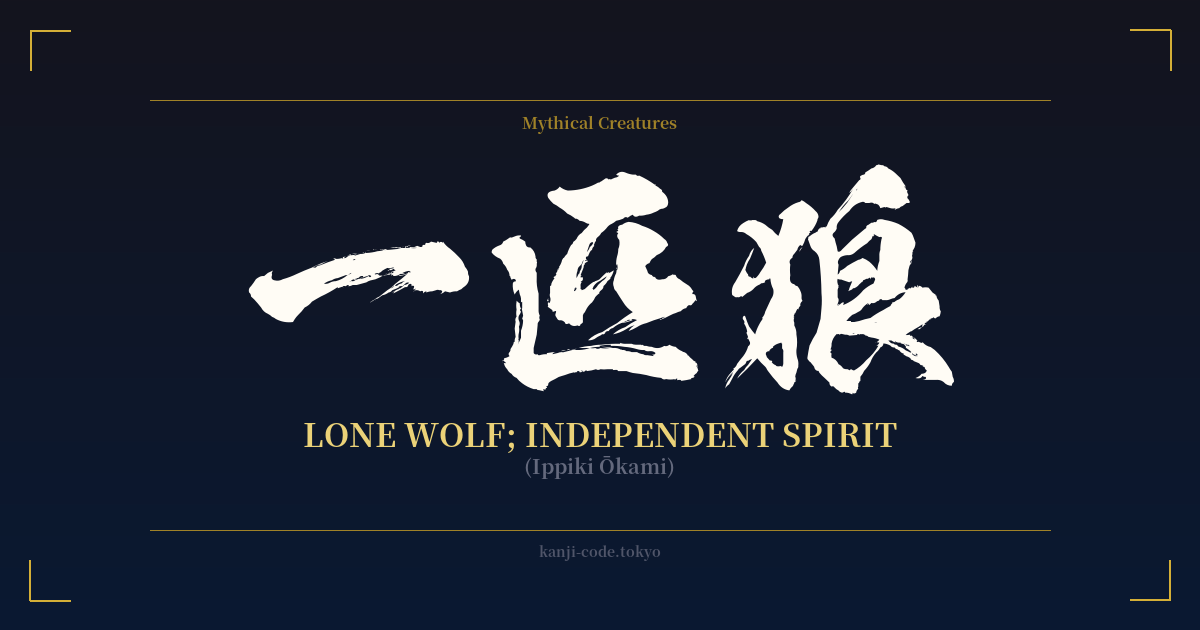
✍️ 一匹狼 (Ippiki Ōkami) — Cultural Context
The Japanese phrase 一匹狼 (Ippiki Ōkami) translates literally to "one wolf," using the counter 匹 (hiki) designated for animals. This simple description belies a deep cultural concept that resonates with the spirit of the maverick, the outsider, and the fiercely independent individual.
In the natural world, wolves are pack animals. Their survival depends on cooperation, social hierarchy, and collective effort. A wolf that leaves or is cast out from its pack is an anomaly, a creature forced into a dangerous and often short-lived solitude. It is this very contradiction—an animal designed for community surviving alone—that captured the human imagination and formed the basis for this powerful metaphor.
In Japan, a culture that places immense value on group harmony (和, wa) and collective consciousness (集団意識, shūdan ishiki), the idea of the lone wolf takes on a particularly sharp meaning. To call someone an Ippiki Ōkami is to describe a person who deliberately operates outside of established social or corporate structures. They forge their own path, relying on their own skills and judgment rather than conforming to the group consensus.
This label is a double-edged sword, its meaning shifting dramatically with context. On one hand, it can be a high compliment, expressing admiration for someone's extraordinary talent, self-reliance, and unwavering conviction. It evokes the image of a master craftsman honing his skills in isolation, a brilliant entrepreneur charting a new course, or a ronin (masterless samurai) bound only by his own code of honor. In this light, the Ippiki Ōkami is a figure of strength and integrity.
On the other hand, the term can be a criticism or an expression of pity. It can imply that a person is arrogant, stubborn, or simply incapable of cooperating with others. In a traditional Japanese company, being labeled an Ippiki Ōkami is often a negative assessment, suggesting a failure to be a team player. It points to the social cost of their independence: isolation and a lack of belonging.
Ultimately, 一匹狼 embodies the tension between the individual and the collective. It celebrates the strength required to stand alone while simultaneously acknowledging the loneliness that such a path entails. It is not just about being a loner; it is about choosing independence in a world that pressures you to conform, making it a complex and compelling symbol of personal identity.
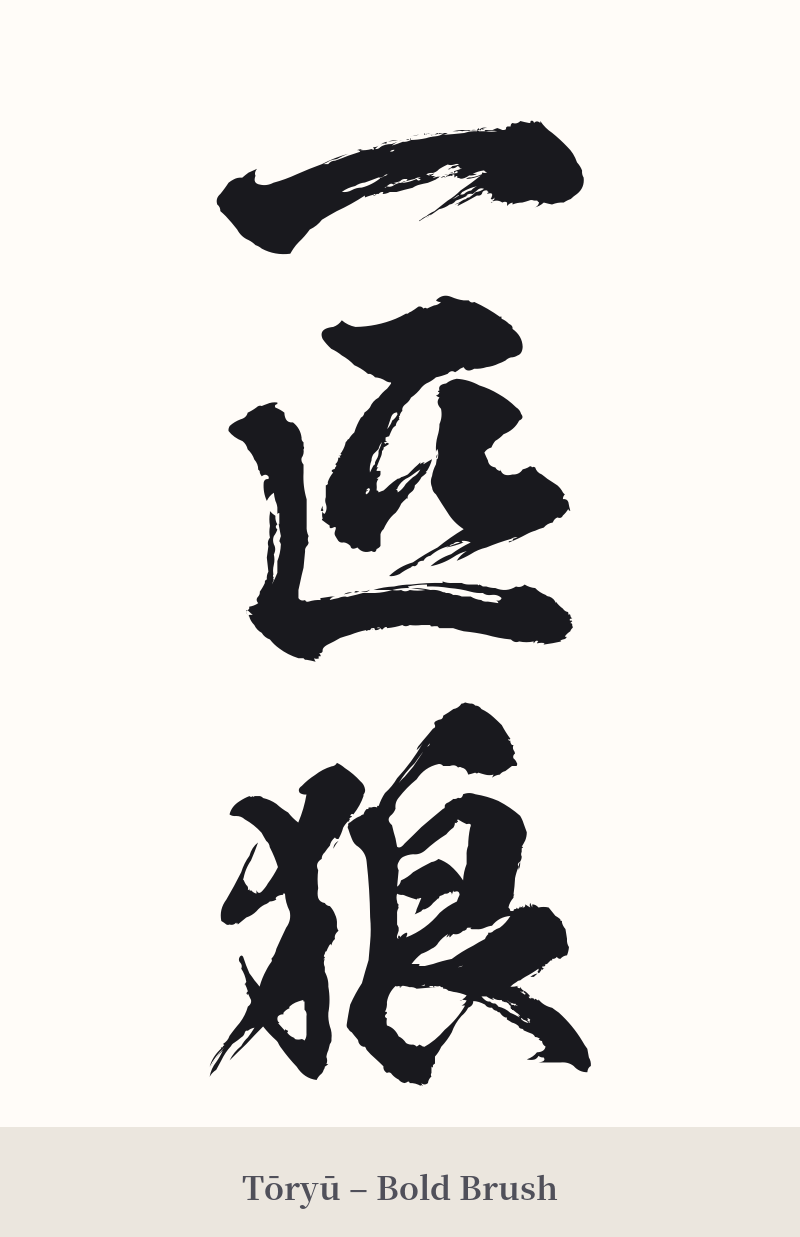
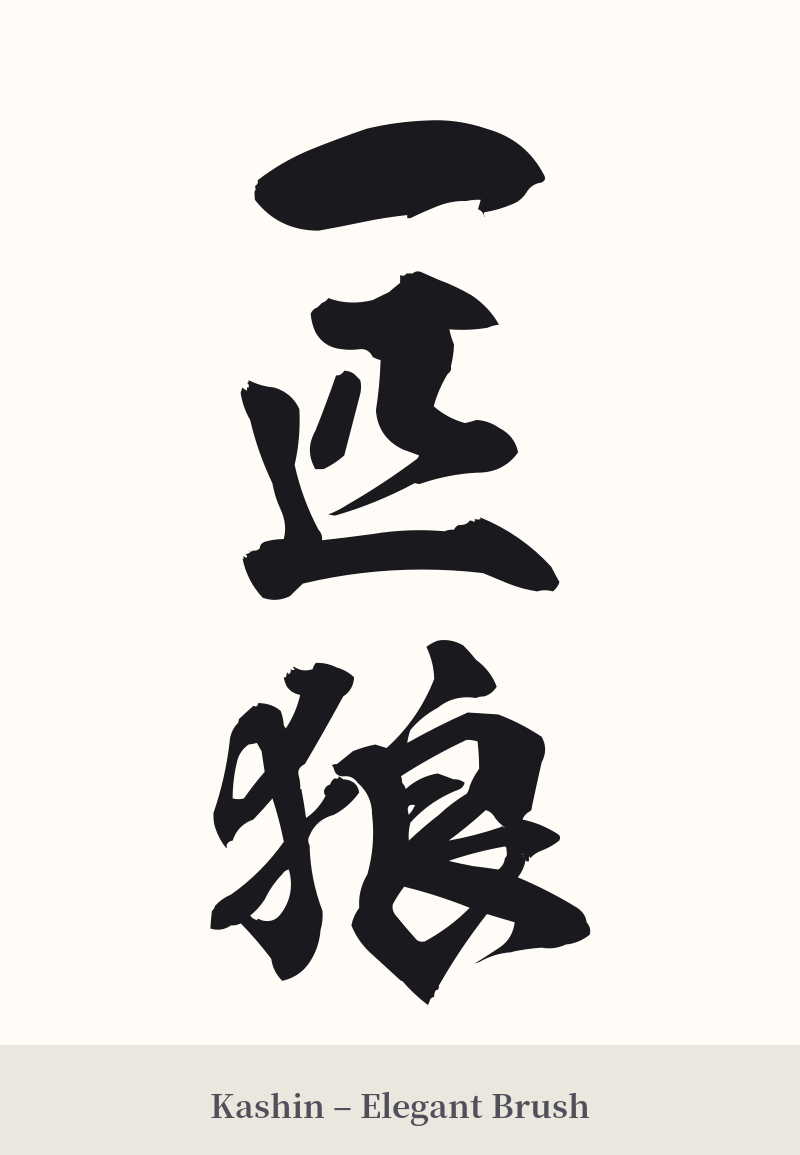
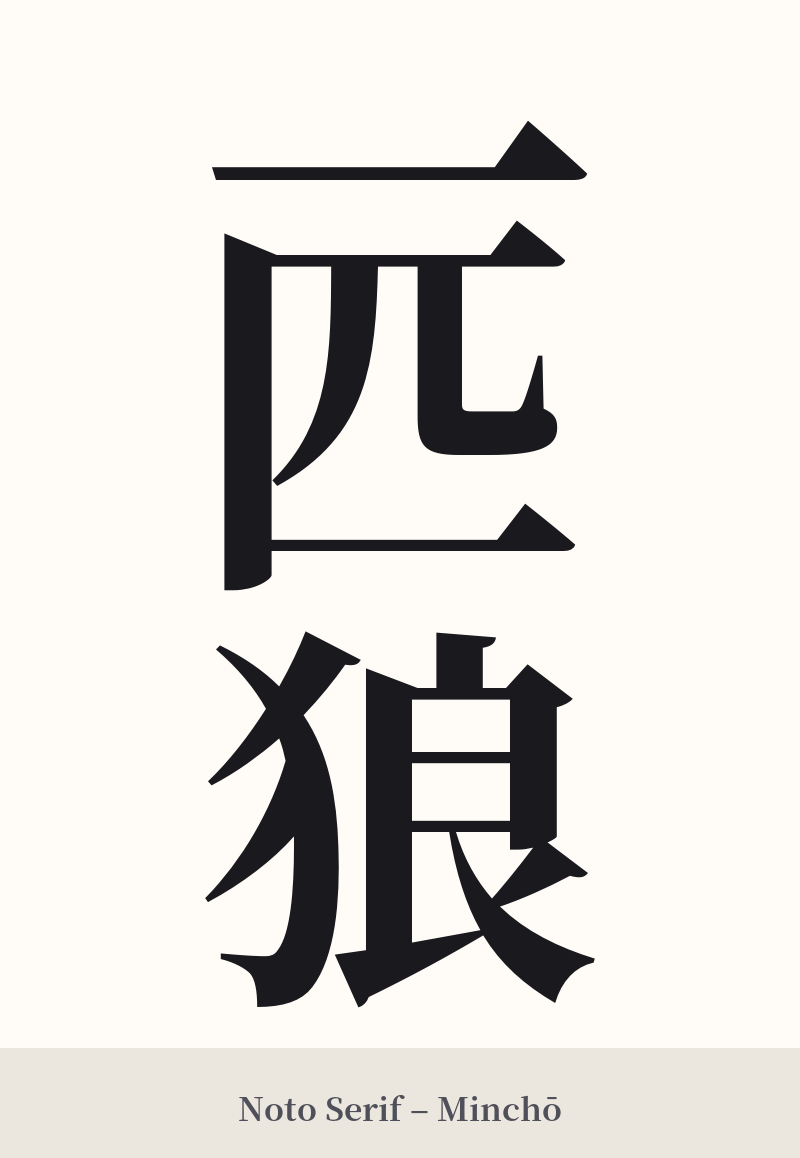
🖌️ Font Styles for 一匹狼
The same kanji can look dramatically different depending on the calligraphy style. Choose a font that matches the mood you want for your tattoo or design.
🎨 Tattoo Suitability
📐 Tattoo Design Guide
A tattoo of 一匹狼 makes a strong statement about independence and self-reliance. Its three-character structure offers good design flexibility.
– Placement: A vertical orientation is classic and works exceptionally well on the forearm, calf, or along the spine. For a horizontal layout, the chest, upper back, or across the ribs are excellent choices.
– Font Style: The choice of calligraphy can dramatically alter the mood. A dynamic, flowing brush script (Gyosho or Sosho) can emphasize the 'wild' and untamed nature of the wolf. Conversely, a bold, angular block script (Kaisho) projects an image of unshakeable strength and resolve.
– Visual Tips: Consider integrating the kanji with imagery. A sumi-e (ink wash) style wolf howling at the moon behind the characters can create a powerful scene. You could also have the final character, 狼 (wolf), rendered slightly larger or with more stylistic flair to make it the focal point of the design.
Comments