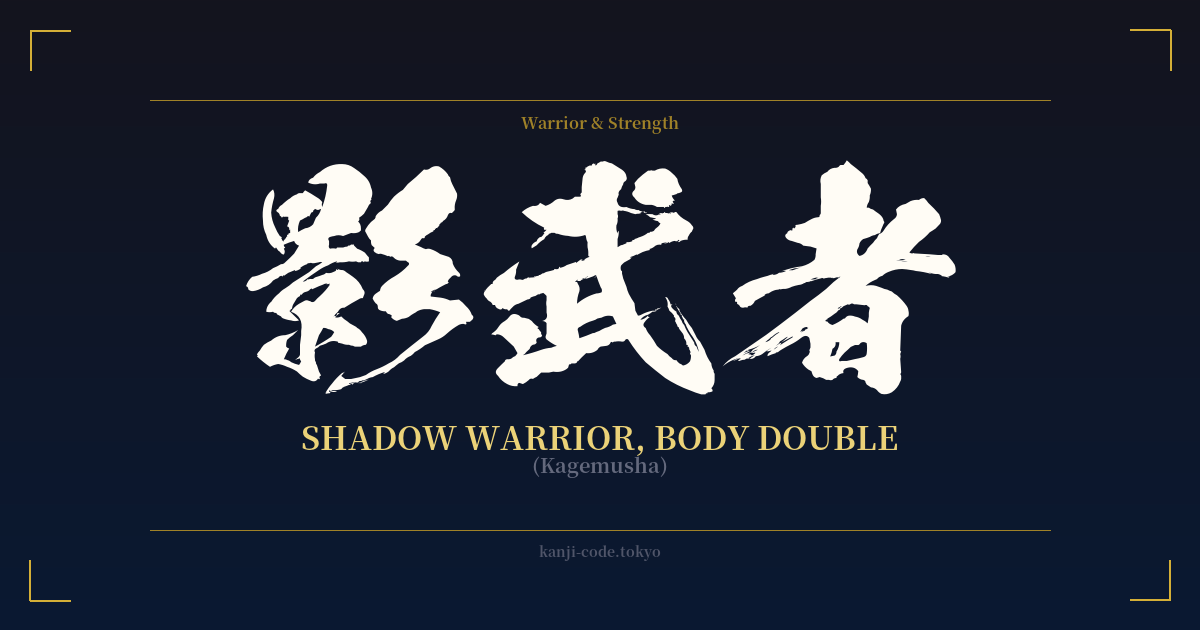
✍️ 影武者 (Kagemusha) — Cultural Context
The term Kagemusha, translating to “Shadow Warrior,” conjures powerful images of feudal Japan, clandestine operations, and the ultimate sacrifice. More than just a warrior lurking in the shadows, a Kagemusha was a political decoy or body double, tasked with impersonating a powerful lord or general to protect them from assassination and deceive enemies on the battlefield.
This practice was most prominent during the Sengoku period (c. 1467–1615), an era of intense civil war and political intrigue. A daimyo (feudal lord) was a constant target. Using a Kagemusha was a high-stakes strategic move. The decoy had to be a convincing look-alike, trained to mimic the lord's voice, mannerisms, and even his strategic thinking. It was a life of constant performance, lived under the threat of discovery and death.
Perhaps the most famous story associated with the term is that of Takeda Shingen, one of the most powerful daimyo of the Sengoku period. It is widely believed that he employed several body doubles, a tale immortalized in Akira Kurosawa's epic 1980 film, Kagemusha. The film tells the story of a petty thief who is recruited to impersonate the deceased Takeda Shingen to prevent the clan's enemies from discovering the great leader's death. This film brought the concept of the Kagemusha to a global audience, cementing its place in popular culture as a symbol of deception, identity, and the burdens of leadership.
To be a Kagemusha was to live a paradox. You held the visible power of a lord but possessed none of it personally. You were a vessel, a shadow that could only exist in relation to the light it mimicked. This role demanded immense loyalty and self-abnegation, as the Kagemusha had to erase their own identity completely. Their success meant their own non-existence. This psychological depth—the interplay of duty, deception, sacrifice, and the loss of self—is what makes the concept of the Kagemusha so endlessly fascinating. It represents not just a warrior, but a strategic asset and a tragic figure of Japanese history.
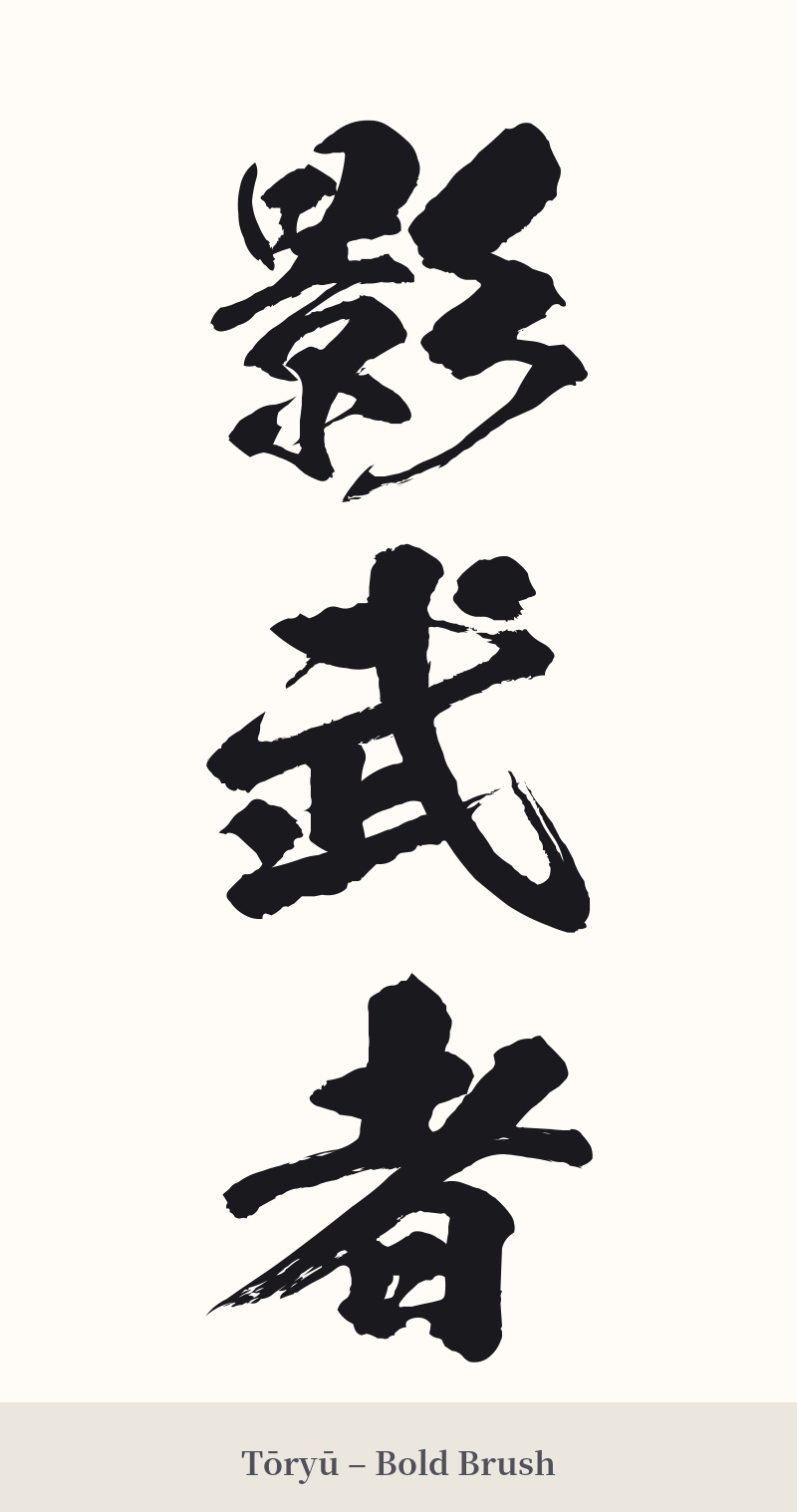
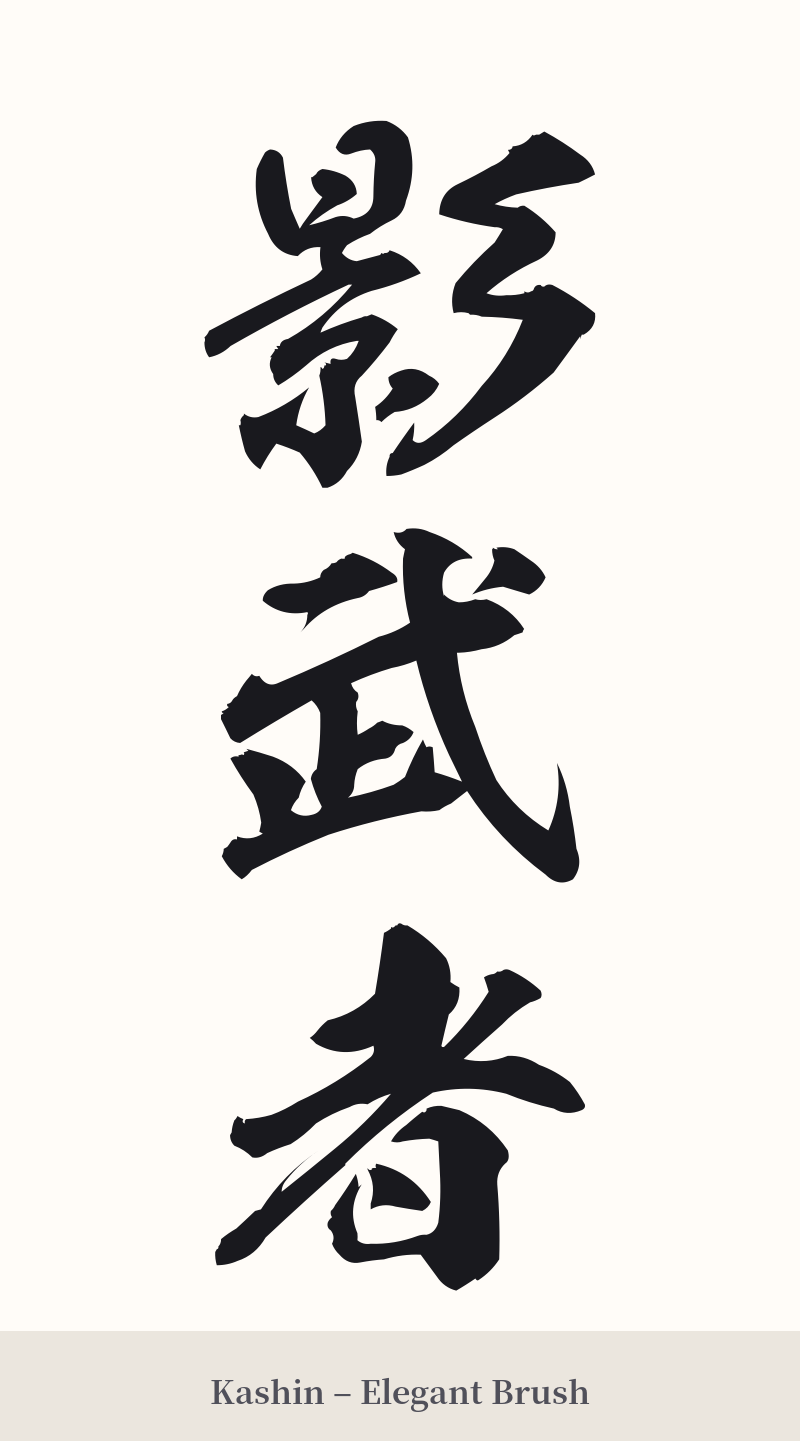
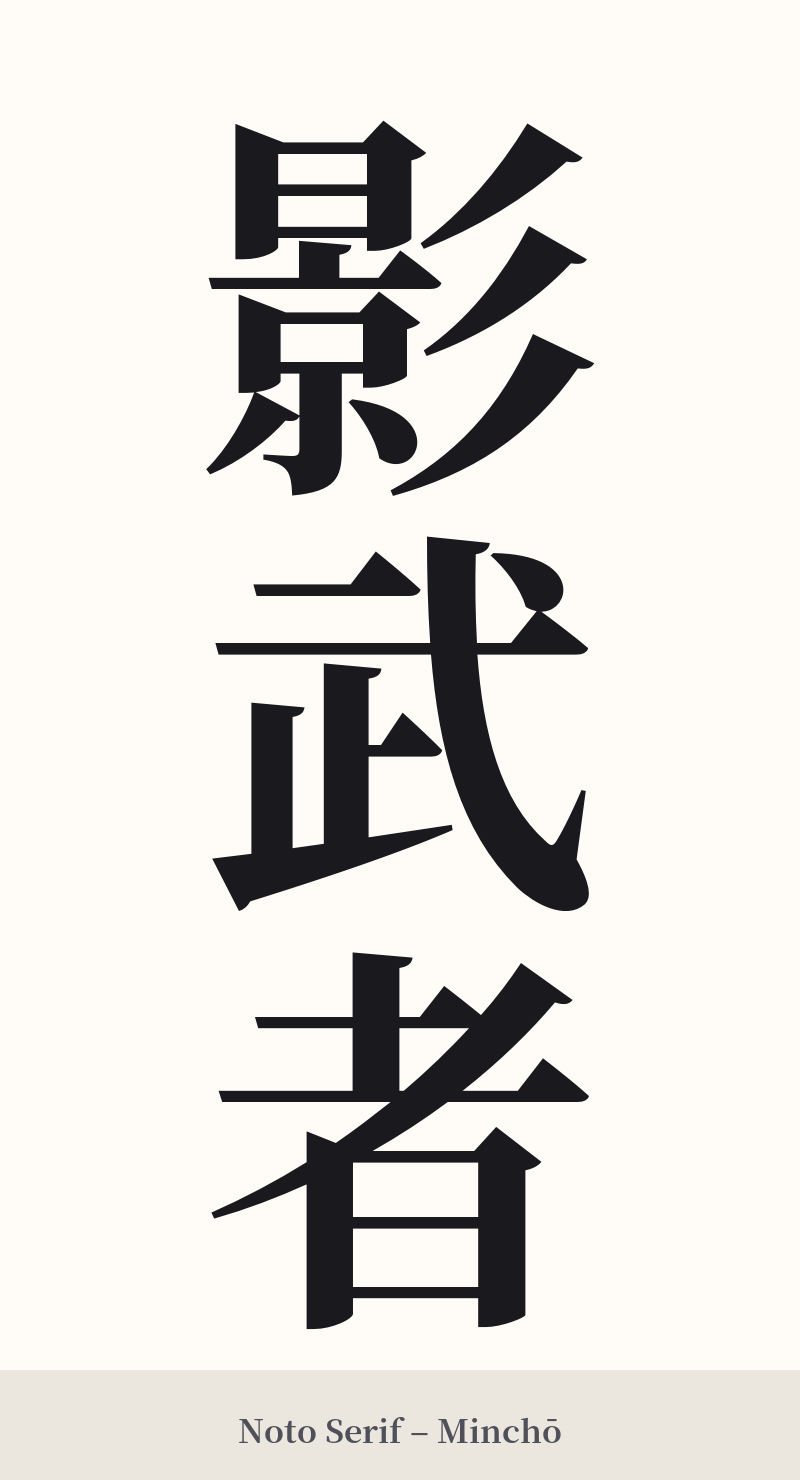
🖌️ Font Styles for 影武者
The same kanji can look dramatically different depending on the calligraphy style. Choose a font that matches the mood you want for your tattoo or design.
🎨 Tattoo Suitability
📐 Tattoo Design Guide
The three-character compound 影武者 is powerful and visually compelling, making it an excellent choice for a tattoo.
– Placement: A vertical orientation is highly recommended to honor traditional Japanese script. Ideal placements include the spine, running down the forearm, or along the calf or shin. A horizontal placement across the upper back or chest can also be effective.
– Font Style: For a historical and dynamic feel, a semi-cursive brushstroke style like Gyosho is perfect. This evokes the calligraphy of the era. For a bolder, more solid statement, a crisp Kaisho (block) style will emphasize the strength and gravity of the 'warrior' aspect.
– Visual Tips: Due to the complexity of the 影 (kage) character, avoid making the tattoo too small. Work with an artist who is experienced with kanji to ensure the strokes are well-defined. You could also consider incorporating related imagery, such as a silhouette, a samurai mask (menpo), or the Takeda clan crest (mon) as a nod to its most famous story.
Comments