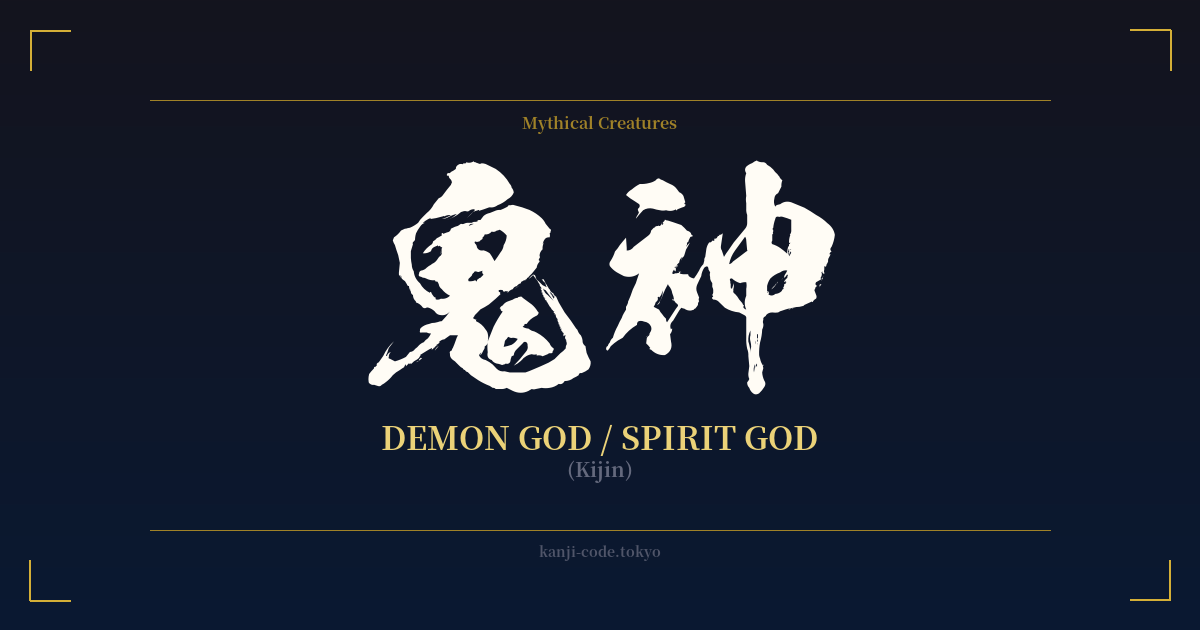
✍️ 鬼神 (Kijin) — Cultural Context
The Japanese word 鬼神 (Kijin) is a potent and complex term that defies simple translation. Composed of the kanji for 'demon' (鬼, ki) and 'god' (神, jin), it refers to fierce, awe-inspiring supernatural beings that exist beyond the simple human concepts of good and evil. These are not just monsters; they are primal forces, terrifying deities, and powerful spirits whose might inspires both fear and reverence.
In Japanese folklore and religion, Kijin occupy a unique space. They can be wrathful deities from the Buddhist pantheon, punishing the wicked with terrifying force. They might also be the raw, untamable spirits of nature—the god of a volcano, the spirit of a typhoon—entities whose power is immense and impartial. The term can even encompass the vengeful ghosts (onryō) of powerful nobles or warriors who were wronged in life and returned as terrifying spiritual forces.
The key to understanding Kijin is to move past the Western dualism of God vs. Devil. A Kijin is defined by its overwhelming power and its otherworldly nature, not by a moral alignment. A Kijin might protect a village from harm with ferocious strength one day and cause a destructive earthquake the next. Its actions are seen as a part of a larger, often incomprehensible cosmic order. This concept is deeply rooted in Shinto, which recognizes divinity (kami) in all things, including phenomena that are violent and destructive.
One of the most famous figures who embodies the Kijin spirit is Susanoo-no-Mikoto, the Shinto god of seas and storms. In the ancient chronicles, he is depicted as a violent, chaotic deity who wreaks havoc in the heavenly realm. Yet, he is also the heroic figure who slays the eight-headed serpent Yamata no Orochi, demonstrating a capacity for both destruction and salvation.
This duality makes Kijin a popular subject in Japanese art, literature, and modern media. In Noh theater, characters often transform into Kijin in moments of intense emotion like jealousy or rage. In manga and anime, characters who are described as Kijin are often overwhelmingly powerful beings who blur the line between hero and villain, forcing others to confront the terrifying and sublime nature of true power.
🖌️ Font Styles for 鬼神
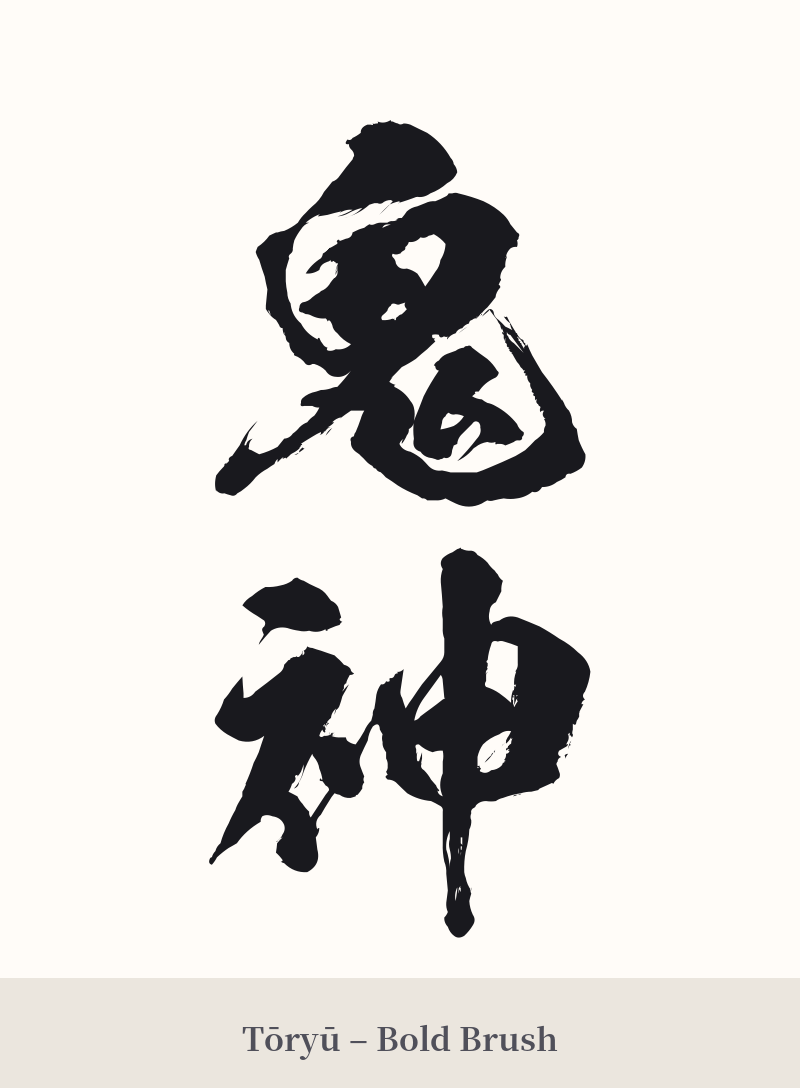
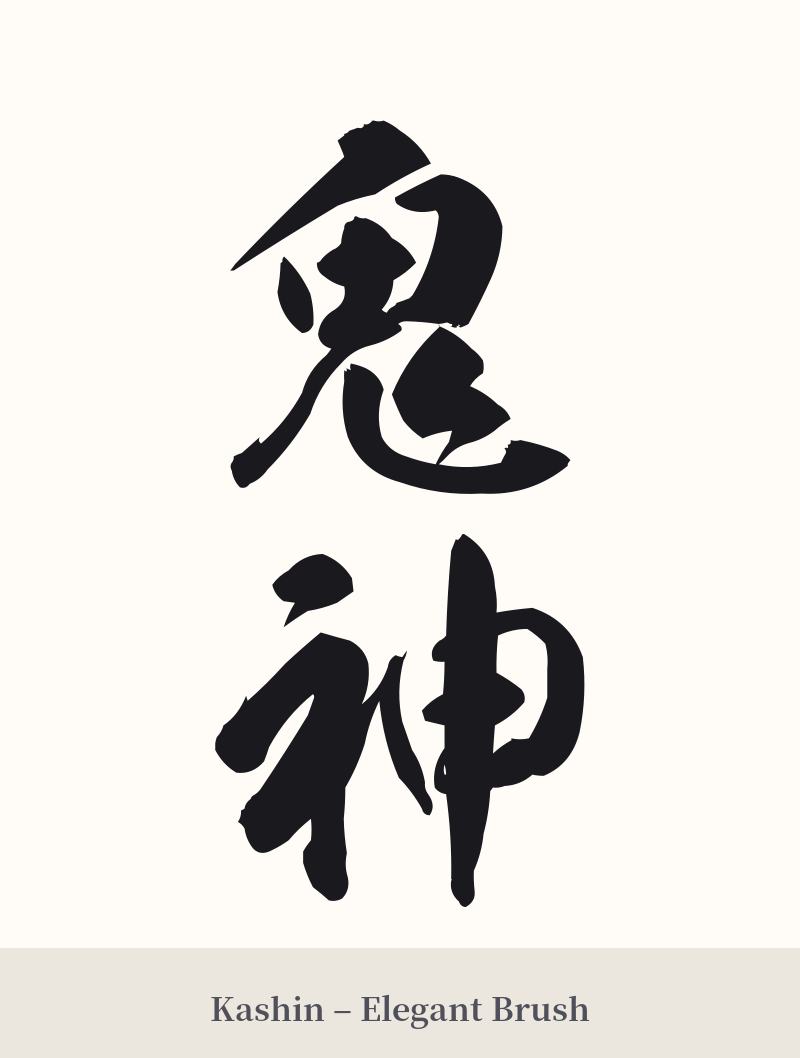
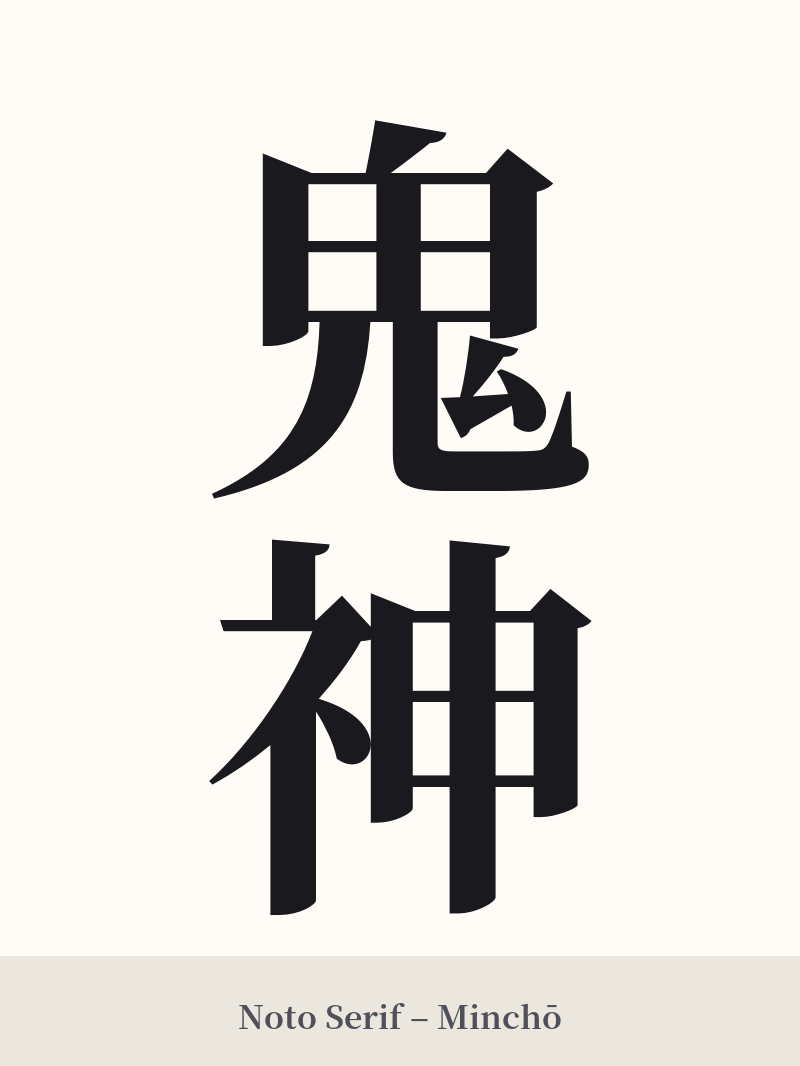
The same kanji can look dramatically different depending on the calligraphy style. Choose a font that matches the mood you want for your tattoo or design.
🎨 Tattoo Suitability
📐 Tattoo Design Guide
The kanji for Kijin carries an aura of immense power, and its design should reflect that. It's best suited for larger areas of the body where its presence can be fully appreciated.
– Placement: Consider prominent, broad surfaces like the back, chest, or thigh. A vertical placement along the spine, forearm, or calf can also be very effective, emphasizing the two-character structure.
– Font Style: An aggressive, dynamic brush script (gyōsho or sōsho) works exceptionally well, as the flowing, powerful strokes mirror the untamed nature of a Kijin. Alternatively, a thick, blocky kaisho script can lend a sense of unshakeable, ancient power.
– Visual Tips: This kanji pairs well with traditional Japanese imagery. Consider incorporating it with a Noh mask (like Hannya), swirling storm clouds, lightning bolts, or crashing waves. For a striking effect, the 鬼 character could be inked in red or another bold color to contrast with the black 神, highlighting its dualistic nature.
Comments