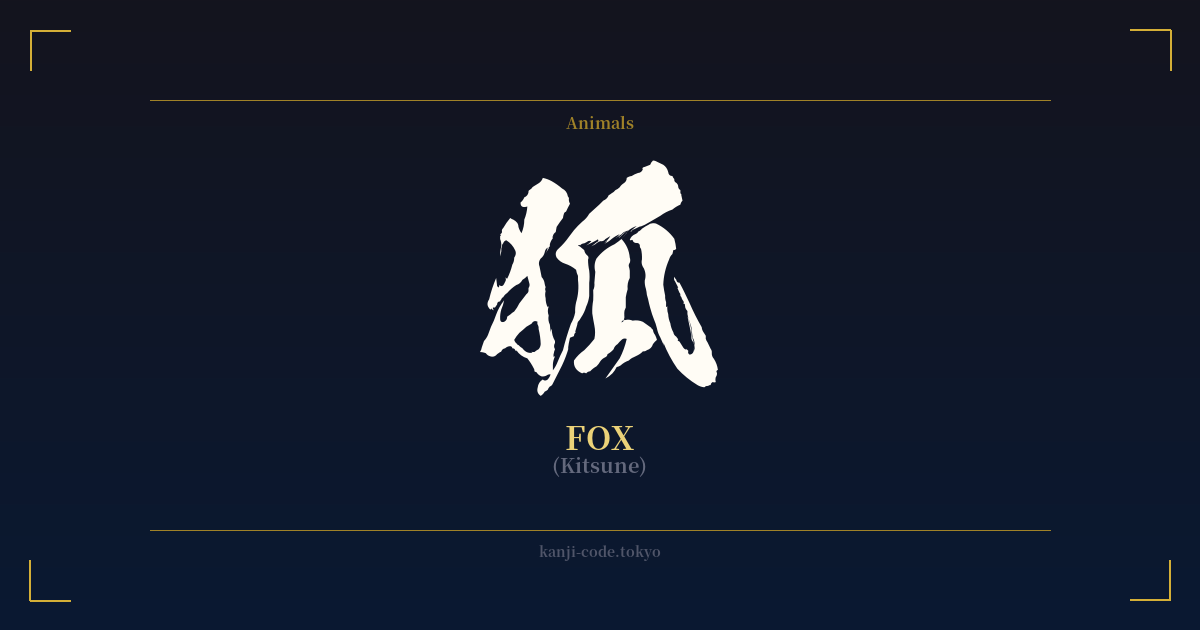
✍️ 狐 (Kitsune) — Cultural Context
The single kanji 狐, read as 'kitsune', simply means 'fox'. Yet, this character unlocks a world of deep cultural and mythological significance in Japan, far beyond the animal itself. In Japanese folklore, the fox is one of the most prominent and complex figures, a yōkai (supernatural being) possessing sharp intelligence, magical abilities, and a famously dualistic nature.
On one hand, the kitsune is a revered, celestial figure. They are most famously known as the messengers of Inari Ōkami, the Shinto deity of rice, sake, commerce, and prosperity. These benevolent foxes, called 'zenko' (善狐, literally 'good foxes'), are often depicted as pure white and are believed to be protectors, bringing good fortune to those they favor. The thousands of red torii gates at Fushimi Inari Shrine in Kyoto are guarded by countless stone fox statues, a testament to their sacred status.
On the other hand, there is the 'yako' (野狐, 'field fox'), the wild and untamed trickster. These kitsune are masters of illusion and shapeshifting. Legends are filled with tales of them transforming into beautiful women to seduce and deceive unwary men, leading travelers astray with mysterious lights known as 'kitsunebi' (fox-fire), or playing elaborate pranks on arrogant samurai and greedy merchants. While sometimes malevolent, their actions are often portrayed as a form of wild justice, humbling the proud and foolish.
The power and wisdom of a kitsune are said to grow with age. Every hundred years, they are believed to grow an additional tail, with their magical abilities increasing in tandem. The ultimate form is the 'kyūbi no kitsune' (九尾の狐), the nine-tailed fox, a being of immense power and near-divine knowledge. This iconic image has become a staple in modern pop culture, from anime and manga to video games, cementing the fox's place as a symbol of mystical power.
Therefore, the kanji 狐 represents more than just an animal. It embodies a complex blend of divinity and wildness, wisdom and mischief, protection and deception. It is a symbol of nature's untamable spirit and the thin veil between the mortal and the magical worlds.
🖌️ Font Styles for 狐
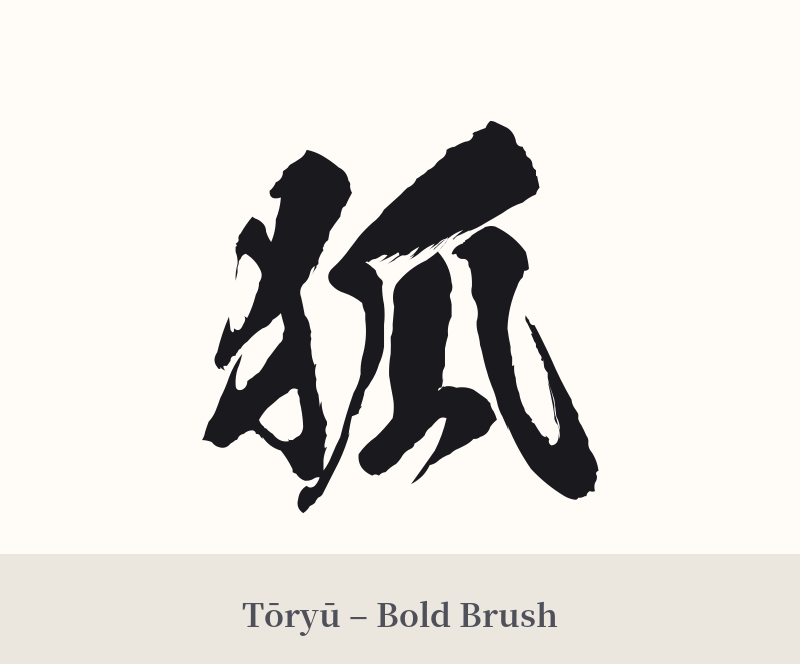
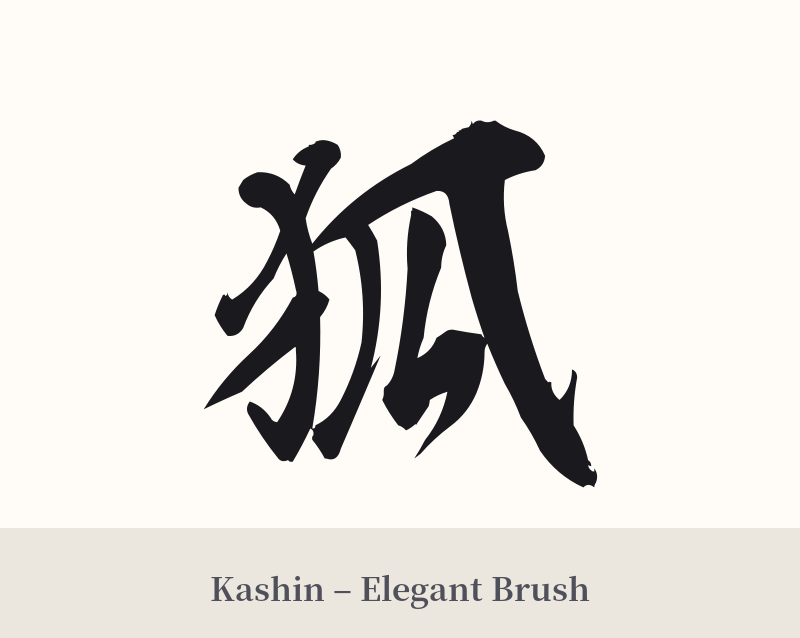
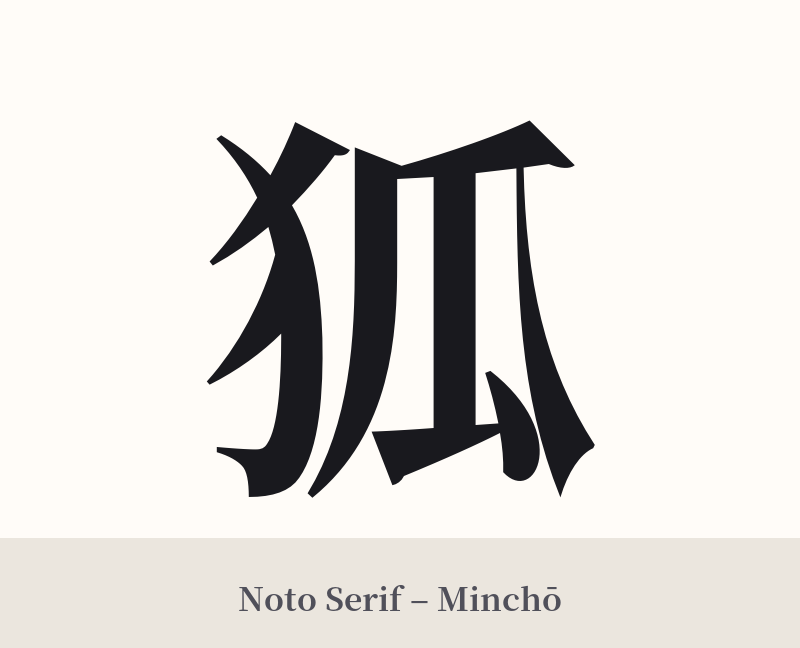
The same kanji can look dramatically different depending on the calligraphy style. Choose a font that matches the mood you want for your tattoo or design.
🎨 Tattoo Suitability
📐 Tattoo Design Guide
The kanji 狐 offers great versatility for a tattoo design, blending a single character's simplicity with deep symbolic weight.
– Placement: For a standalone piece, the forearm, calf, or back of the shoulder allows the character to be rendered with clarity and detail. For a more subtle placement, the inner wrist or behind the ear can work, though fine details may be lost.
– Font Style: A dynamic, flowing calligraphy or brushstroke style (shodō) is highly recommended. This captures the fox's energetic, fluid, and slightly wild nature. A sharp, angular Mincho style can emphasize its cunning and intelligence.
– Visual Tips: Consider integrating the kanji into a larger design. It pairs exceptionally well with classic kitsune imagery like a fox mask, multiple tails fanning out from the character, or wisps of 'kitsunebi' (fox-fire) in blue or orange. Placing the kanji within a red 'torii' gate strongly links it to its role as a divine messenger of Inari.
Comments