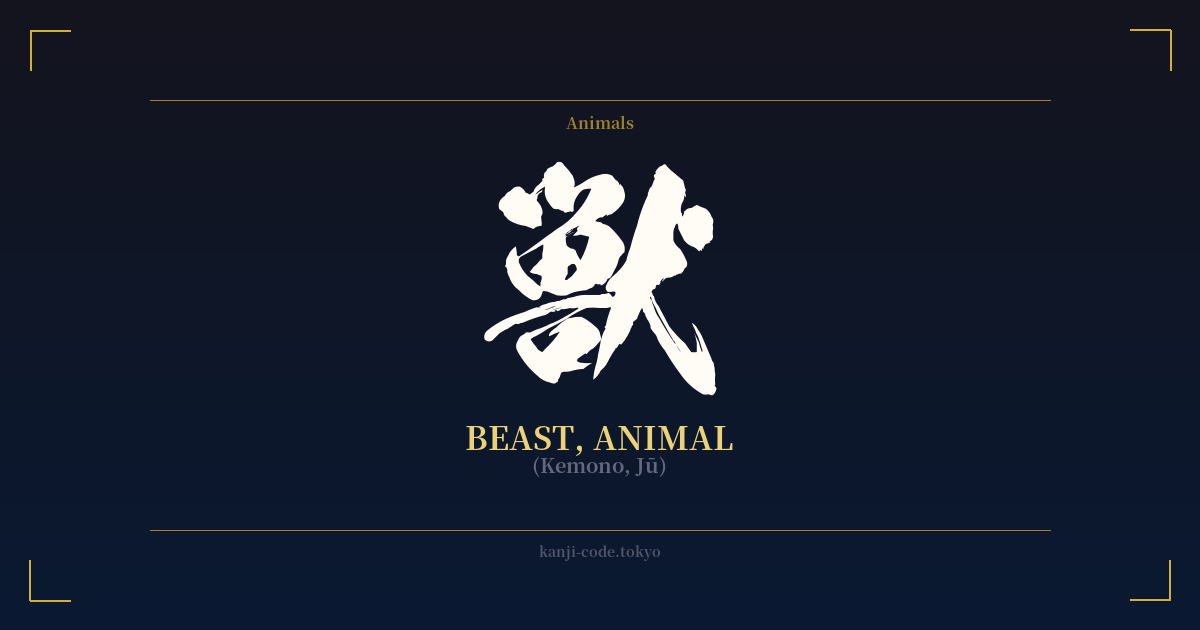
✍️ 獣 (Kemono, Jū) — Cultural Context
The kanji 獣 (kemono) is a character that resonates with raw, untamed power. While its most direct translation is 'beast' or 'animal,' it carries a much deeper and more primal connotation than the general, scientific term 動物 (dōbutsu), which simply means 'animal'. Kemono speaks to the wild, instinctual creature that lives outside the bounds of human civilization.
Historically, the character's composition hints at this relationship between humanity and the wild. It is comprised of the radical 犭(a variant of 犬, meaning 'dog' or 'beast') on the left, and a more complex component on the right that originally depicted a type of hunting weapon or a captured animal. This etymology paints a picture of a creature that is hunted, a force of nature to be contended with.
In Japanese culture, kemono are not just physical creatures; they are deeply woven into folklore and mythology. Many yōkai (supernatural monsters or spirits) take the form of kemono, embodying the mysterious and often dangerous power of the natural world. From the cunning Kitsune (foxes) to the shape-shifting Tanuki (raccoon dogs), these beasts blur the line between the animal and the divine, or the demonic. They represent forces that are beyond human control and understanding.
This idea is powerfully explored in modern Japanese media. Hayao Miyazaki's film Princess Mononoke is a quintessential example, where the great beasts of the forest are noble, powerful beings fighting to protect their world from human destruction. The term 'Mononoke' itself refers to spirits or monsters, often with a bestial form. Similarly, the popular video game series Monster Hunter is centered entirely on the pursuit of formidable 'kemono'.
To call a person a 'kemono' can be a potent insult, suggesting they lack reason, control, and morality, acting only on base instincts. This duality is the heart of the kanji's power: it represents both the awe-inspiring, noble spirit of the wild and the frightening, chaotic potential of untamed nature. It is the beast within and the beast without, a symbol of pure, unadulterated instinct.
🖌️ Font Styles for 獣
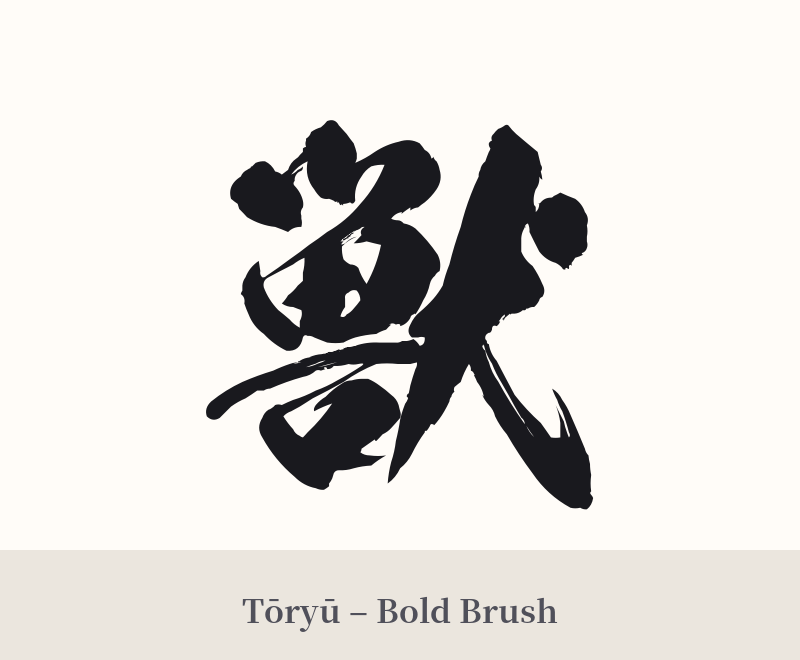
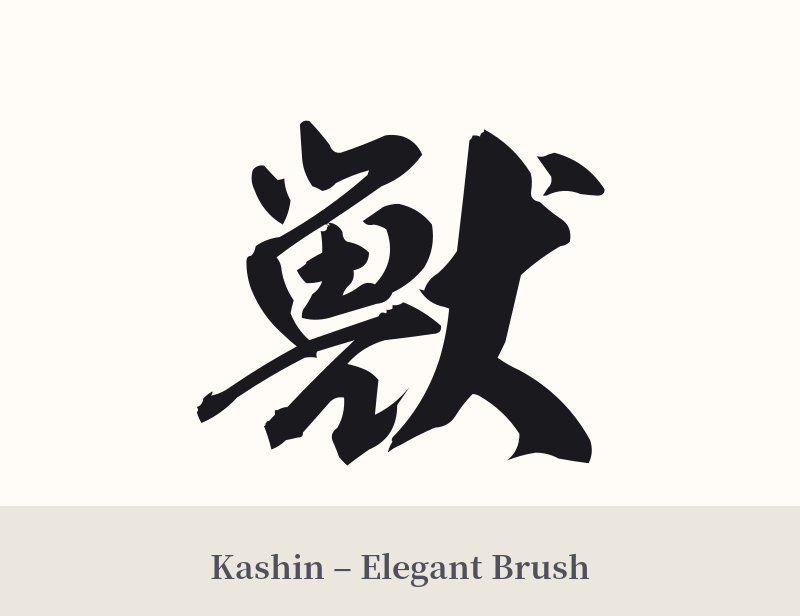
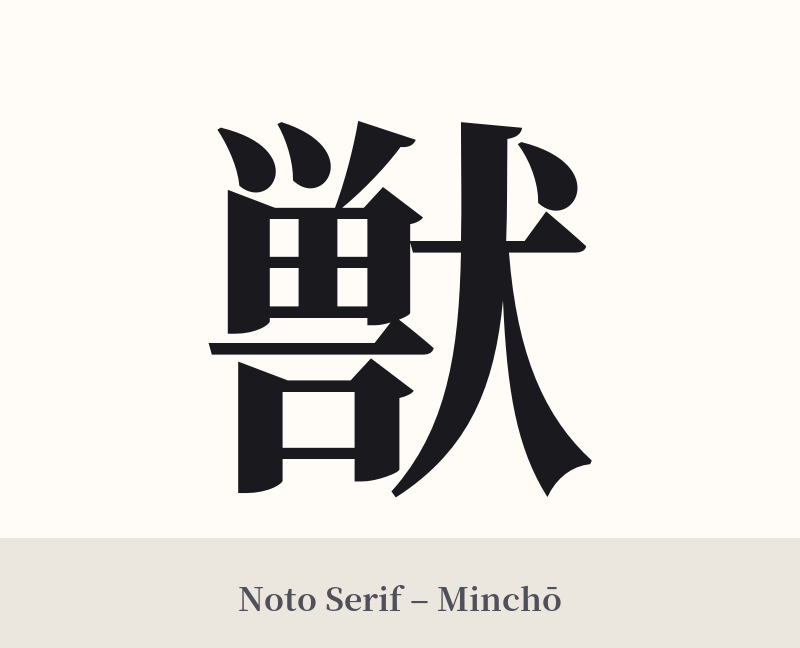
The same kanji can look dramatically different depending on the calligraphy style. Choose a font that matches the mood you want for your tattoo or design.
🎨 Tattoo Suitability
📐 Tattoo Design Guide
The kanji 獣 is a visually dense and powerful character, making it an excellent centerpiece for a tattoo. Its complexity lends itself to larger designs where the details can be appreciated.
– Placement: Consider large muscle groups that provide a flat canvas, such as the back, thigh, chest, or the outer bicep. These areas allow the artist to render the 16 strokes clearly without them becoming cramped.
– Style: A bold, expressive calligraphy style (shodō) works exceptionally well, emphasizing the wild and untamed energy of the character. Thick, dynamic brushstrokes can give it a sense of movement and raw power. For a more graphic and stark look, a heavy block-style font like Mincho can also be very effective.
– Visuals: While 獣 stands strong on its own, it can be integrated into a larger composition. Pairing it with natural elements like wind bars, crashing waves, bamboo, or pine trees can ground it in a traditional Japanese aesthetic. For a more symbolic design, consider incorporating flames to represent a fiery spirit or surrounding it with a dark, misty background to evoke a sense of mystery.
Comments