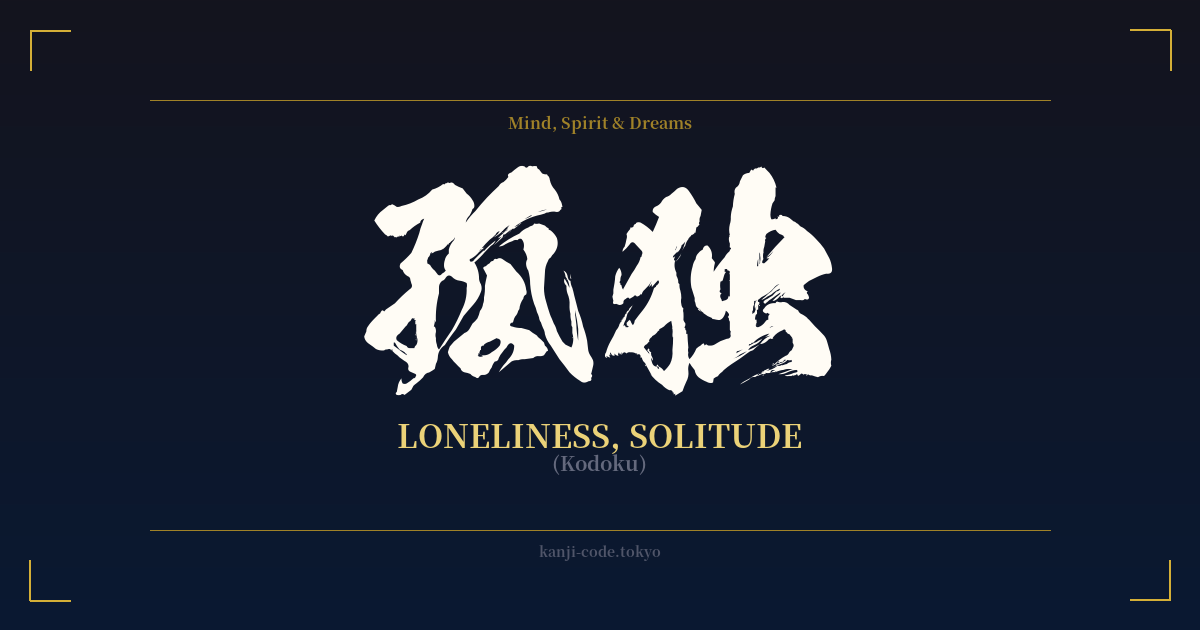
✍️ 孤独 (Kodoku) — Cultural Context
The Japanese word 孤独 (Kodoku) carries a profound duality, embodying both the sharp pain of loneliness and the quiet, contemplative state of solitude. In a culture that places a high value on group harmony and social interconnectedness, the concept of being alone holds a uniquely powerful and often somber weight. At its most basic level, Kodoku describes a state of being physically and emotionally isolated from others, a feeling of being disconnected and without companionship. This is the loneliness that Japanese literature and cinema often explore with poignant depth, reflecting a deep-seated fear of being cast out from the group.
However, Kodoku is not solely a negative term. It also taps into a rich philosophical and aesthetic tradition rooted in Zen Buddhism and the principles of wabi-sabi. In this context, solitude is not a punishment but a chosen path toward self-discovery, introspection, and spiritual enlightenment. Historical figures like wandering monks, poets, and hermit scholars actively sought Kodoku to free themselves from worldly distractions and achieve a higher state of awareness. Think of Kamo no Chōmei, who retreated to a ten-foot square hut to contemplate the transient nature of life, finding peace in his deliberate isolation.
This positive interpretation sees solitude as a space for creativity and profound thought. Many artists, writers, and craftsmen in Japan have historically valued their time alone as essential for honing their skills and finding their unique voice. The silence of Kodoku allows for a deeper connection with oneself and the natural world, fostering the kind of insight that is impossible to find amidst the noise of society.
In modern Japan, this duality persists. The 'lonely hero' is a common archetype in manga and anime, a character whose isolation is both their greatest burden and the source of their unique strength. Therefore, to understand Kodoku is to understand a core tension within the Japanese psyche: the deep human need for community versus the individual's quest for personal meaning. It is a word that is both melancholic and beautiful, a reflection of the complex and often contradictory nature of the human experience.
🖌️ Font Styles for 孤独
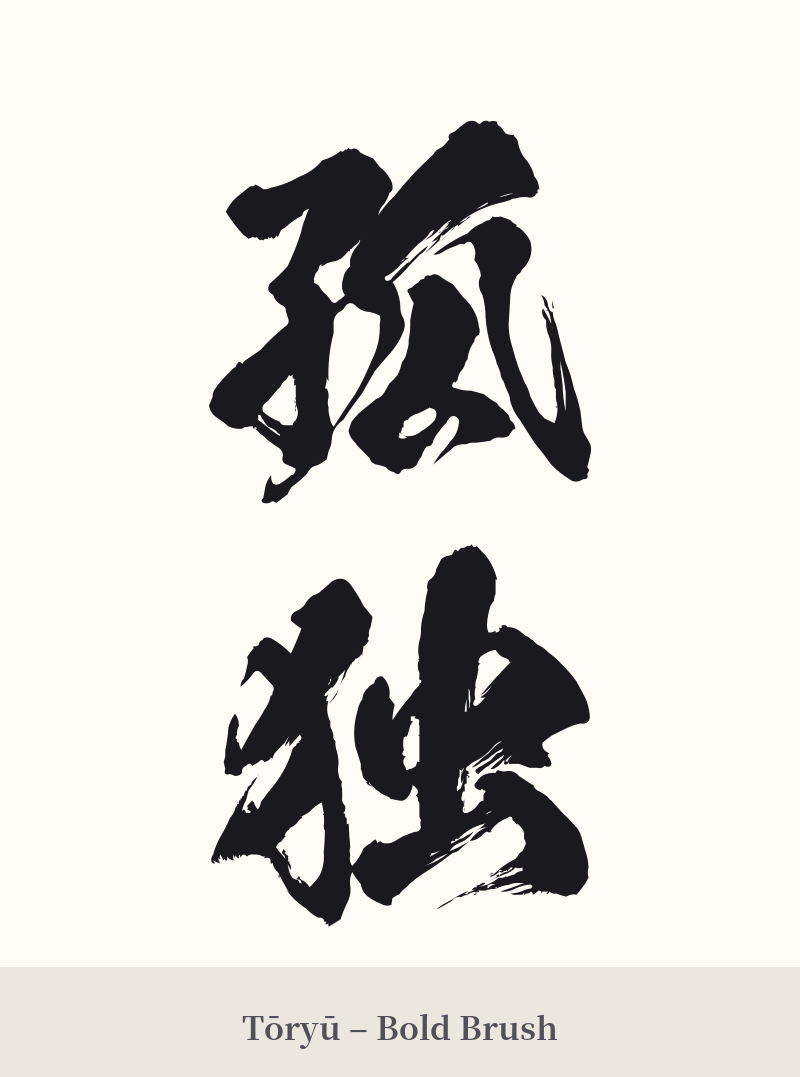
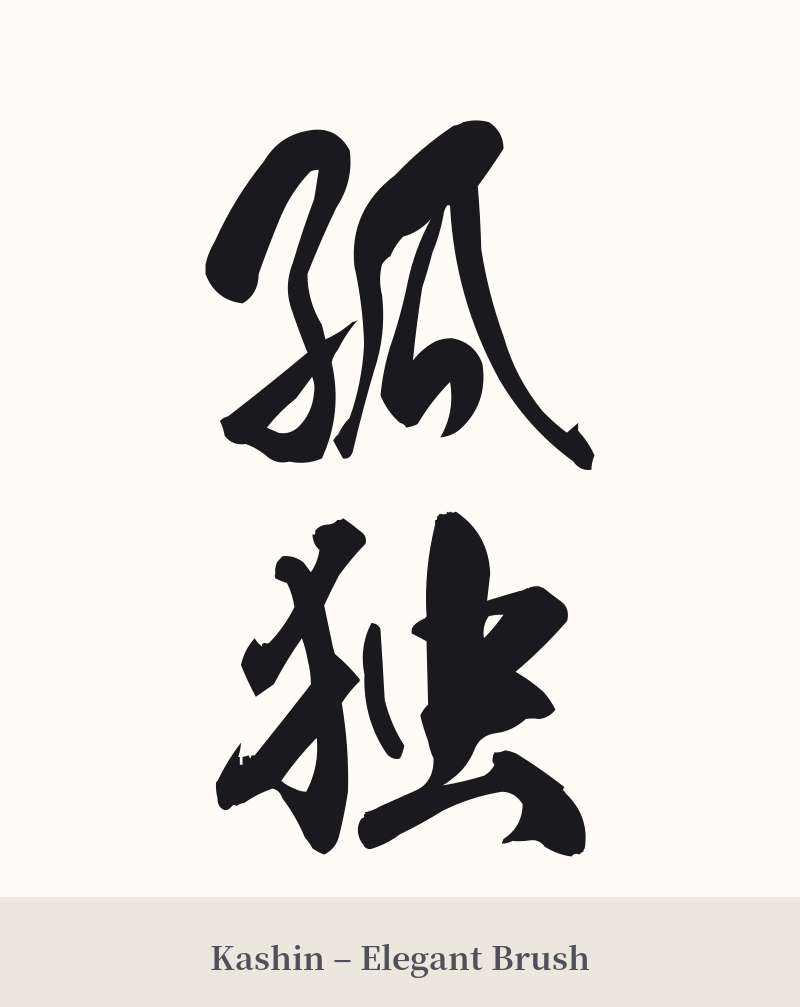
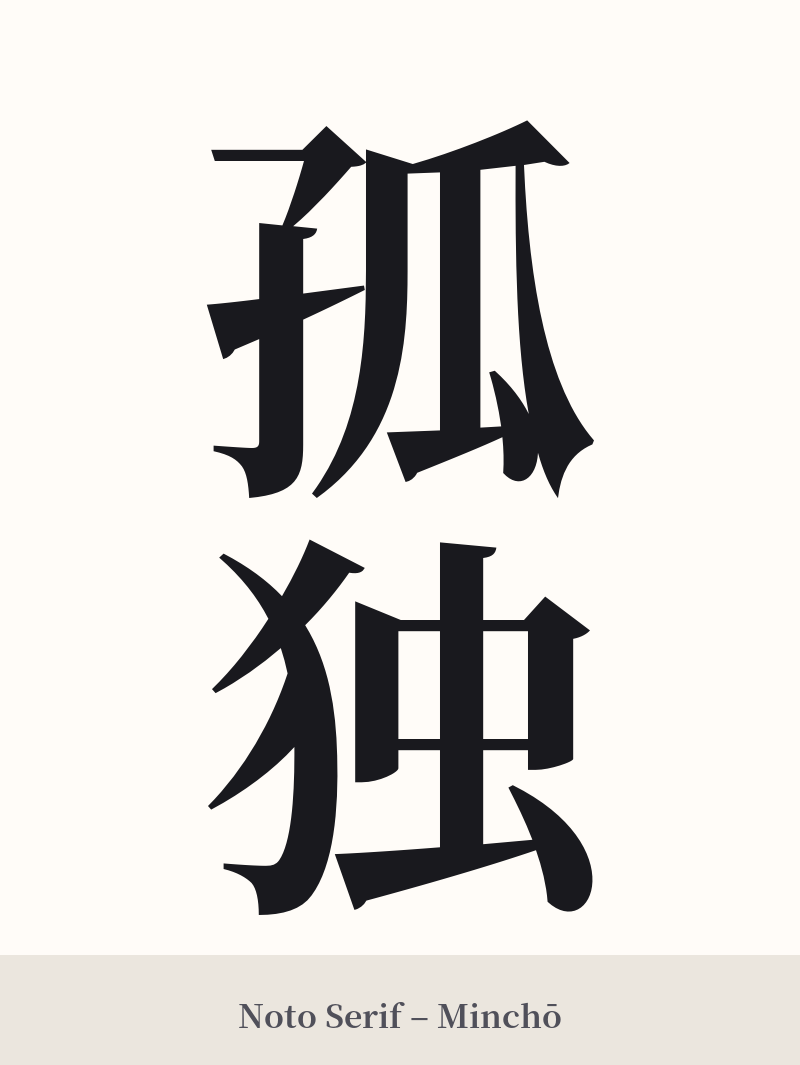
The same kanji can look dramatically different depending on the calligraphy style. Choose a font that matches the mood you want for your tattoo or design.
🎨 Tattoo Suitability
📐 Tattoo Design Guide
A design for 孤独 (Kodoku) should reflect its introspective and somber nature. The word itself carries a lot of weight, so the design choices can either amplify its painful or philosophical side.
– Placement: Consider locations that are more personal and less for public display. The inner forearm, the rib cage, or vertically along the spine are excellent choices that mirror the internal feeling of the word.
– Font Style: The script can drastically change the mood. A crisp, angular Mincho or Kaisho font emphasizes the starkness and isolation of loneliness. A flowing, semi-cursive Gyosho script can suggest a more chosen, fluid solitude. For a rawer, more emotional take, a rough, brush-stroked style (like Zomokutai) can convey the pain and struggle associated with the feeling.
– Visual Elements: While the kanji can stand alone, pairing it with a simple image can deepen its meaning. Consider a single falling cherry blossom petal to represent transient beauty in isolation, a lone enso circle for enlightenment in solitude, or a barren tree branch to highlight the starkness of being alone.
Comments