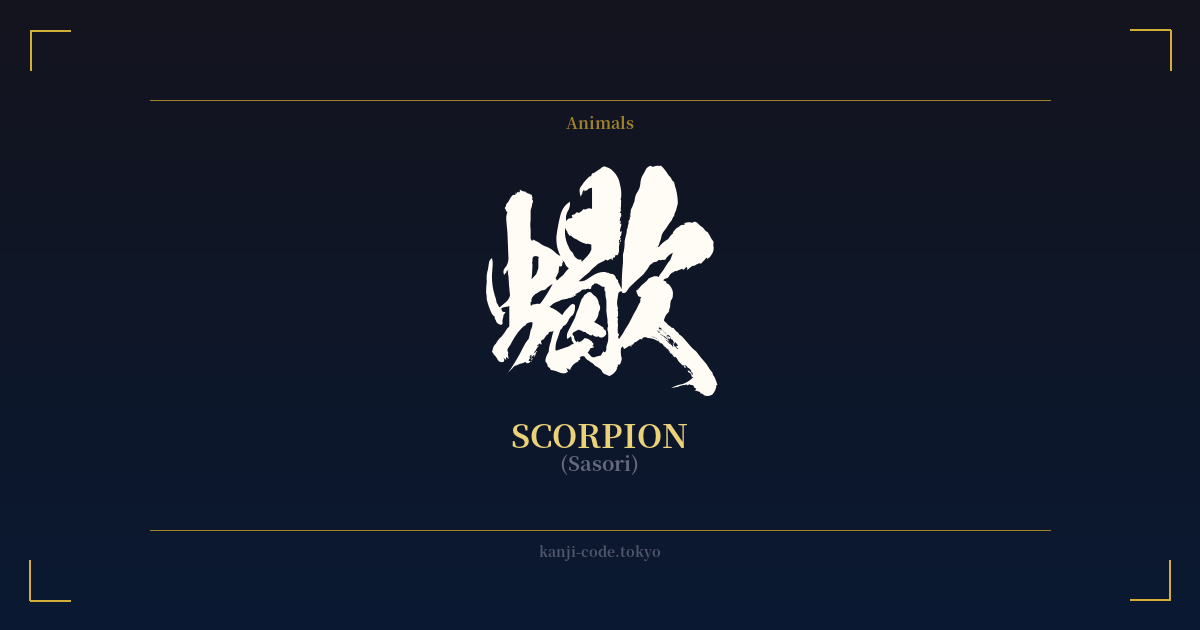
✍️ 蠍 (Sasori) — Cultural Context
The kanji 蠍, read as 'Sasori,' is the Japanese character for the scorpion. Its form is as intricate and intimidating as the creature it represents. This character is a powerful symbol, immediately evoking feelings of danger, precision, and a solitary, resilient nature.
The character itself offers a glimpse into its meaning. It is composed of two main parts. The bottom radical, 虫 (mushi), is a key component in many kanji for insects, bugs, and other crawling creatures. The top part, 曷 (katsu), primarily serves a phonetic purpose, guiding the pronunciation. Together, they create a character that visually and sonically signifies a specific type of 'bug'—the scorpion.
In Japan, scorpions are not a common part of the native fauna, especially on the main islands. As a result, much of the symbolism associated with the scorpion is imported or universal, rather than stemming from local folklore. It represents a potent, hidden threat—a small creature with a deadly capacity. This duality makes it a symbol of both peril and power. It's the embodiment of the idea that size does not determine strength.
The most prevalent cultural association for modern Japanese people is through the zodiac. 'Sasori-za' (蠍座) is the Japanese name for the constellation Scorpio. This links the kanji to astrology and the personality traits associated with it: passion, determination, secrecy, and a magnetic intensity. This connection has cemented the scorpion's place in the modern Japanese imagination.
In popular culture, the name 'Sasori' has been used for characters who are often antagonists or anti-heroes, known for their deadly skills, cunning, and complex motivations. A famous example is the character Sasori from the manga and anime series 'Naruto,' known as 'Sasori of the Red Sand.' This has significantly influenced how a younger, global audience perceives the kanji, associating it with puppetry, poison, and a tragic, artistic lethality.
Ultimately, 蠍 (Sasori) is a symbol of survival against the odds. It is a creature that thrives in harsh environments, equipped with formidable defenses. To choose this kanji is to embrace a symbol of potent power, resilience, and the quiet danger that lies within a determined spirit.
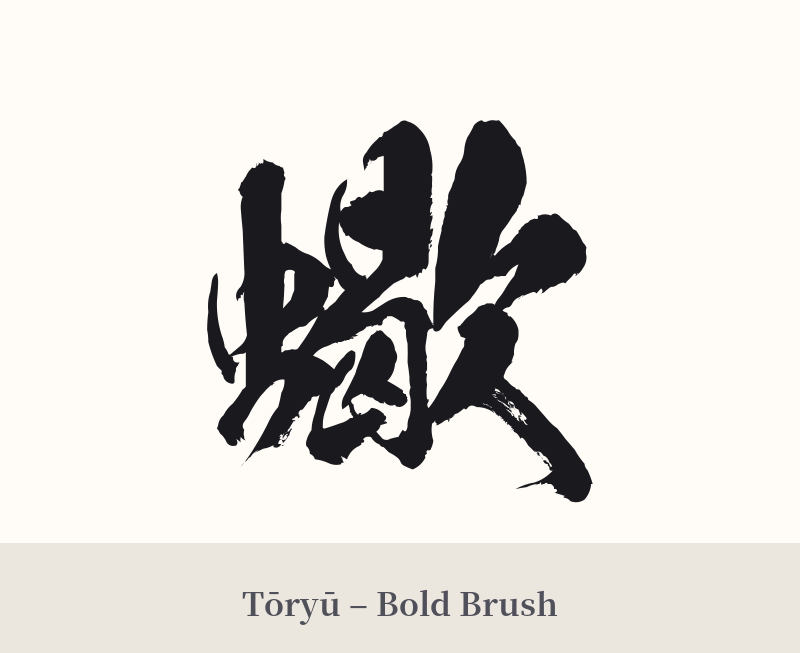
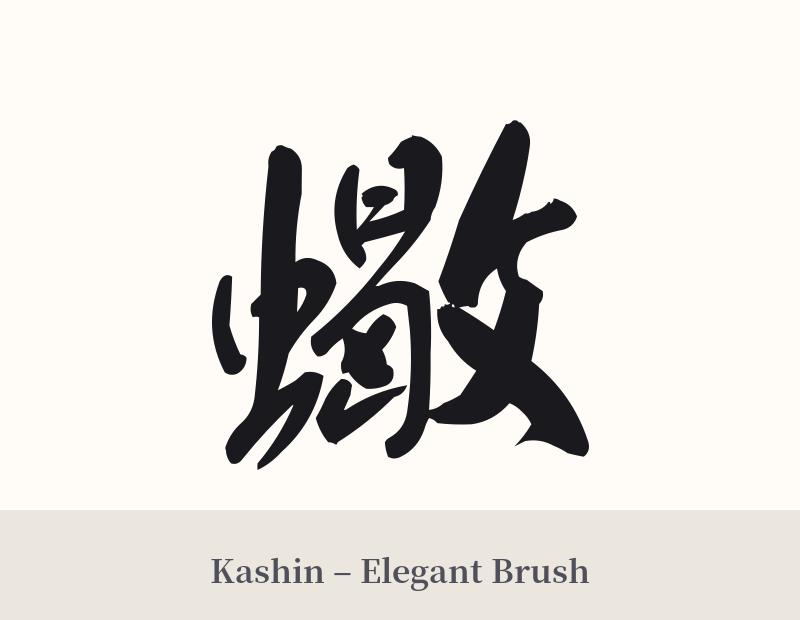
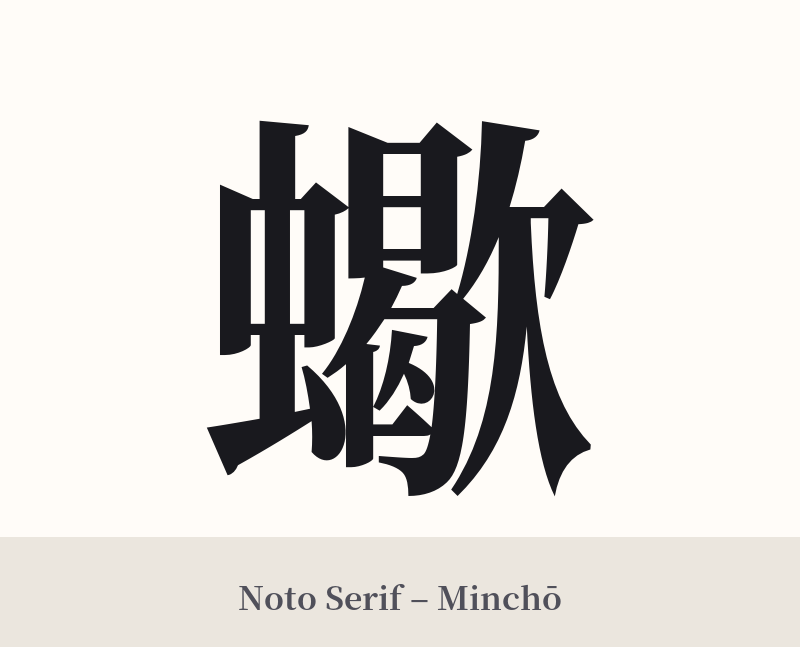
🖌️ Font Styles for 蠍
The same kanji can look dramatically different depending on the calligraphy style. Choose a font that matches the mood you want for your tattoo or design.
🎨 Tattoo Suitability
📐 Tattoo Design Guide
The 蠍 kanji is visually complex and benefits from careful design choices to maximize its impact.
– Placement: Due to its vertical structure and detail, this kanji works exceptionally well on the forearm, calf, or along the spine. These locations provide enough space for the artist to render the strokes clearly.
– Style: A bold, semi-cursive calligraphy style (gyosho) can enhance its aggressive and dynamic feel. For a more traditional and clear look, a crisp, block-like font (kaisho) will highlight the character's intricate architecture.
– Size: Avoid making this tattoo too small. The 17 strokes need room to breathe. A smaller size risks the lines bleeding into each other over time, turning your sharp scorpion into a blurry mess. Discuss the minimum viable size with your artist.
– Pairing: Consider pairing the kanji with a realistic or stylized image of a scorpion. Another option is to incorporate a splash of red ink behind or within the character to symbolize the poison's sting or the passion associated with the Scorpio sign.
Comments