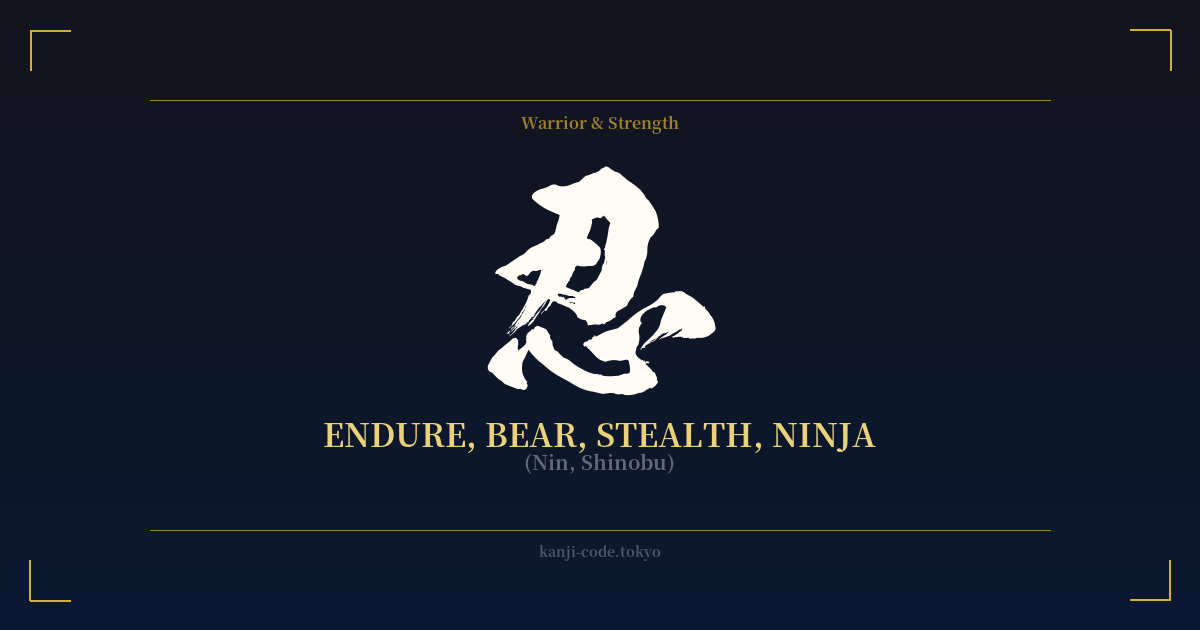
✍️ 忍 (Nin, Shinobu) — Cultural Context
The kanji 忍, read as 'Shinobu' or 'Nin,' is one of the most iconic and profound characters in the Japanese language. Its power lies in its visual construction and its rich, dualistic meaning. The character is a combination of two radicals: 刃 (yaiba), meaning 'blade,' positioned over 心 (kokoro), meaning 'heart' or 'mind.' This stark imagery paints a vivid picture: a heart under the pressure of a blade, yet withstanding it. This is the essence of 忍—to endure, to bear, to persevere through hardship with unwavering inner strength.
In its 'Shinobu' reading, the kanji embodies the virtues of patience, forbearance, and self-control. It is a core concept tied to the philosophy of Bushido, the samurai code. For a warrior, 'shinobu' meant enduring physical pain, emotional turmoil, and the adversities of battle without complaint. It wasn't about a lack of feeling, but rather the mastery over one's emotions. This stoic resilience was considered a mark of true strength and character, a quiet determination that was more powerful than any outward display of aggression.
This idea of endurance is woven into Japanese culture through proverbs like 'nintai wa bitoku' (忍耐は美徳), meaning 'patience is a virtue.' It reflects a cultural value placed on gaman (我慢), the act of persevering with dignity through difficult times.
Parallel to this meaning of endurance is the reading 'Nin,' which is inextricably linked to the world of stealth, secrecy, and espionage. The word 忍者 (ninja) literally translates to 'a person of stealth' or 'one who endures.' Here, the kanji's meaning shifts from passive endurance to active concealment. It represents the ability to move unseen, to hide one's intentions, and to operate in the shadows. The ninja's discipline was a physical and mental application of 忍, enduring harsh training and suppressing their presence to accomplish their mission.
This connection has propelled 忍 into global consciousness, largely through entertainment like the 'Naruto' anime series, where it is a central theme. While pop culture often focuses on the 'cool' factor of the ninja, it's important to remember that at its core, the kanji speaks to a deeper, more universal human experience: the strength it takes to hold a blade to your own heart and not flinch.
🖌️ Font Styles for 忍
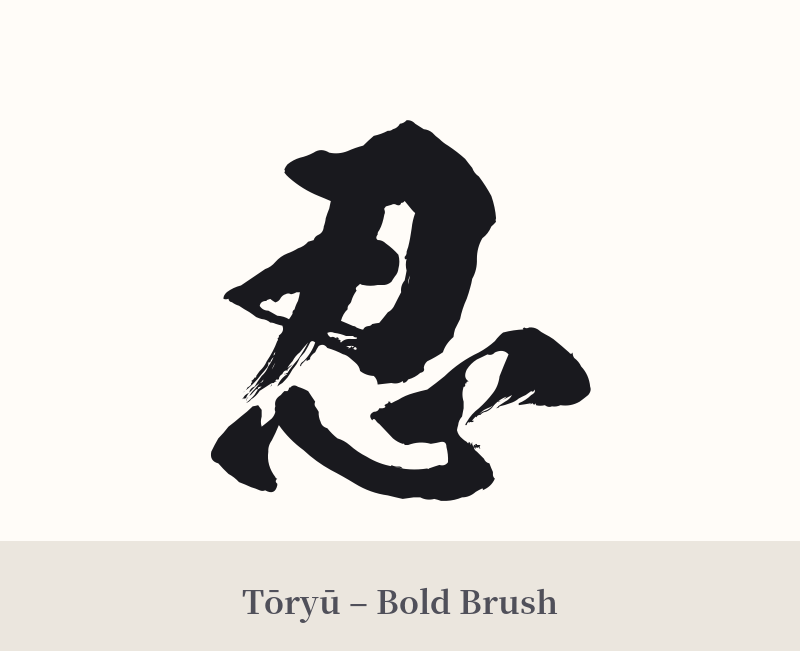
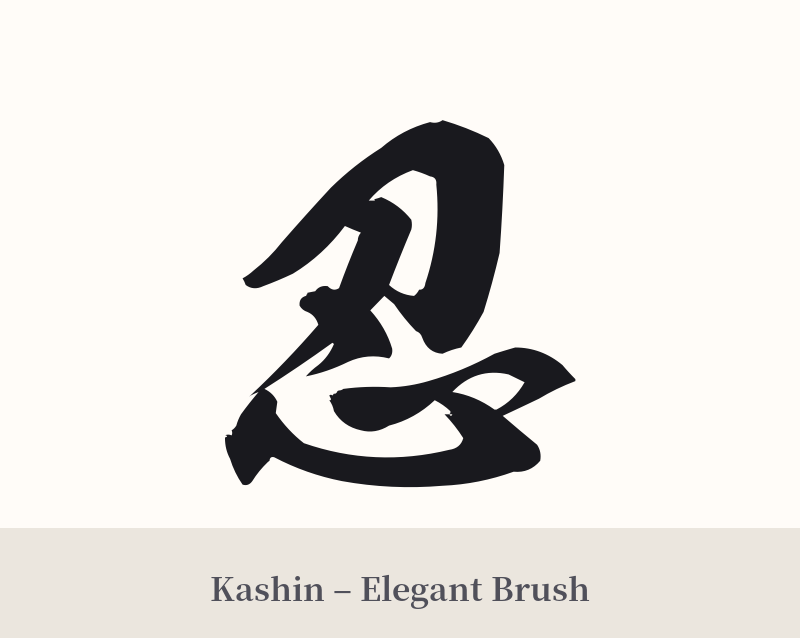
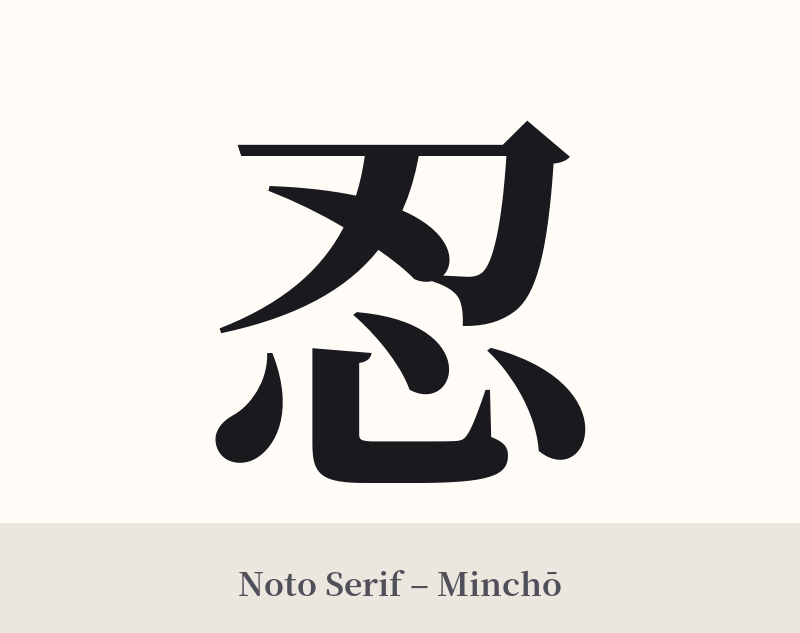
The same kanji can look dramatically different depending on the calligraphy style. Choose a font that matches the mood you want for your tattoo or design.
🎨 Tattoo Suitability
📐 Tattoo Design Guide
The kanji 忍 offers great versatility for a tattoo design, thanks to its strong shape and powerful symbolism.
– Placement: As a single, vertically-oriented character, it works exceptionally well on the forearm, calf, bicep, or the back of the neck. For a more discreet placement that aligns with its meaning of 'stealth,' the ribs or behind the ear are excellent choices.
– Font Style: The choice of script can dramatically alter the feeling of the tattoo. A bold, angular Kaisho (block) style emphasizes strength and unyielding endurance. In contrast, a flowing, semi-cursive Gyosho or fully cursive Sosho style can evoke the movement and stealth associated with the ninja.
– Visual Tips: To avoid a generic look, consider integrating other elements. A subtle brushstroke effect (shodo style) can ground the design in its artistic roots. You might also incorporate a small, secondary symbol, like a lotus flower to represent rising above adversity, or a simple enso circle to symbolize enlightenment and strength. Using a splash of red ink, perhaps for a hanko (artist's stamp) element, can create a striking contrast against black ink.
Comments