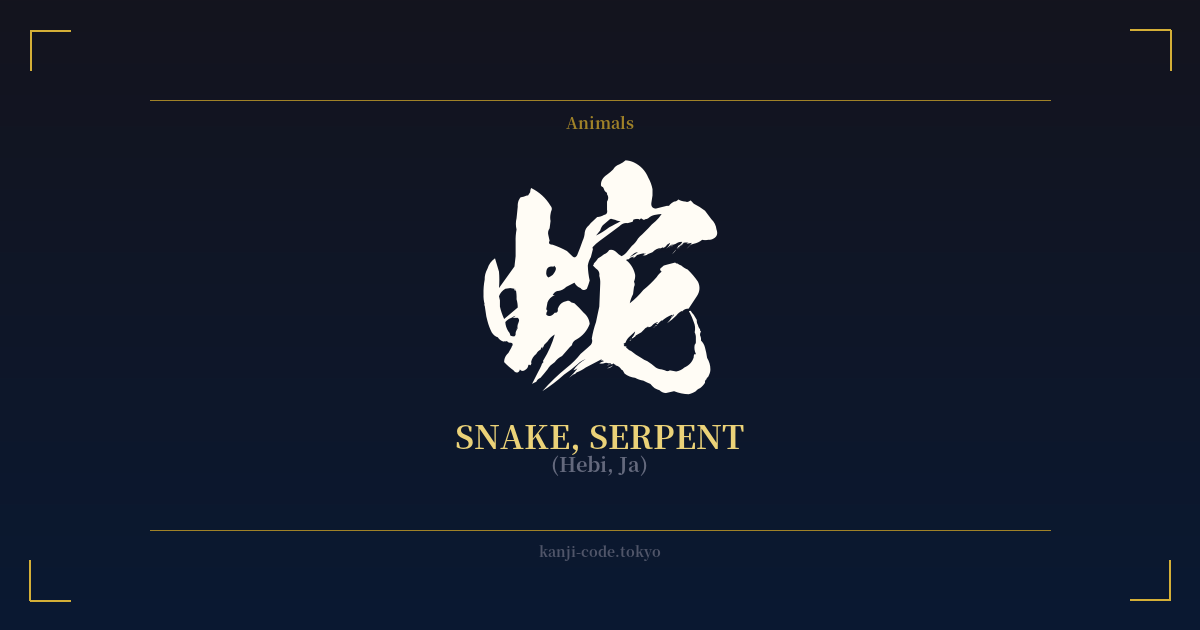
✍️ 蛇 (Hebi, Ja) — Cultural Context
The kanji 蛇 (hebi) is more than a simple character for a reptile; it is a vessel of complex and often contradictory symbolism deeply woven into the fabric of Japanese culture. Its form includes the radical 虫, which historically referred to a wide range of creatures, including insects, reptiles, and amphibians, grounding the character in the world of living, crawling beings.
In Japan, the snake holds a powerful dual identity. On one hand, it is revered as a divine messenger (kami no tsukai), particularly associated with gods of harvest and mountains. The white snake, or 白蛇 (shirohebi), is especially auspicious, considered a direct servant of Benzaiten, the goddess of wealth, music, and eloquence. Finding a white snake is thought to be a sign of immense good fortune, and shrines dedicated to them, like the one in Iwakuni, attract worshippers seeking prosperity.
This connection to fortune and divinity extends to the snake's life cycle. The shedding of its skin is a potent symbol of rebirth, renewal, and eternal life. This regenerative power also links the snake to medicine and healing, a concept shared across many cultures. For this reason, the snake can represent overcoming illness, personal transformation, and the cyclical nature of life and death.
However, the snake also has a darker side in Japanese folklore. It can embody intense jealousy, obsession, and vengefulness, often depicted as a transformed, monstrous being. Famous tales, such as the story of Kiyohime in the legend of Anchin and Kiyohime, show a woman consumed by unrequited love transforming into a giant serpent to pursue her target. In Noh and Kabuki theater, masks with snake-like features represent vengeful female spirits. The phrase 「蛇のような」 (hebi no you na), meaning "like a snake," can describe a person who is persistent in a cold or vindictive way.
It is important to distinguish 蛇 (hebi) from 巳 (mi). While both relate to the snake, 巳 is the specific character used for the snake in the East Asian zodiac cycle. 蛇 refers to the animal itself in a general context. This duality of protector and destroyer, of fortune and jealousy, makes the snake one of the most compelling and dynamic symbols in Japanese iconography.
🖌️ Font Styles for 蛇
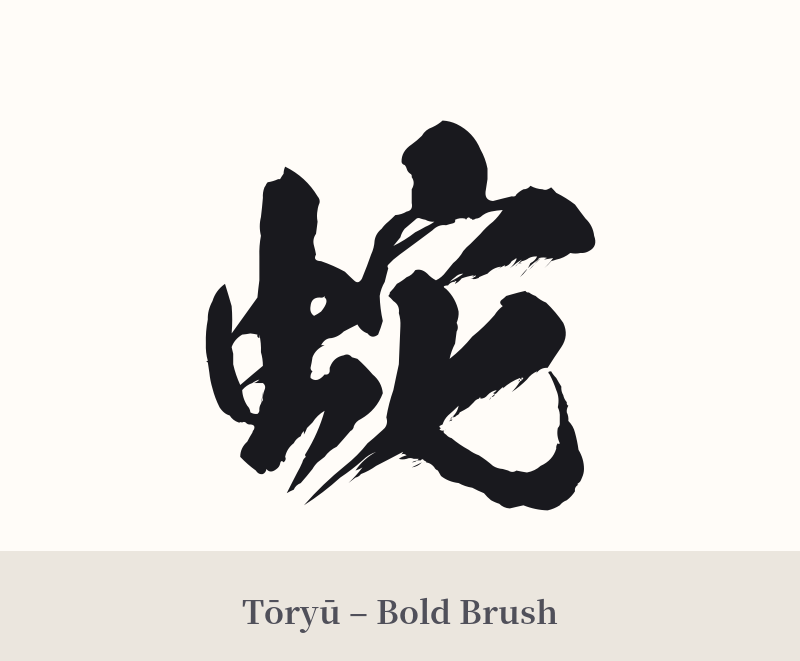
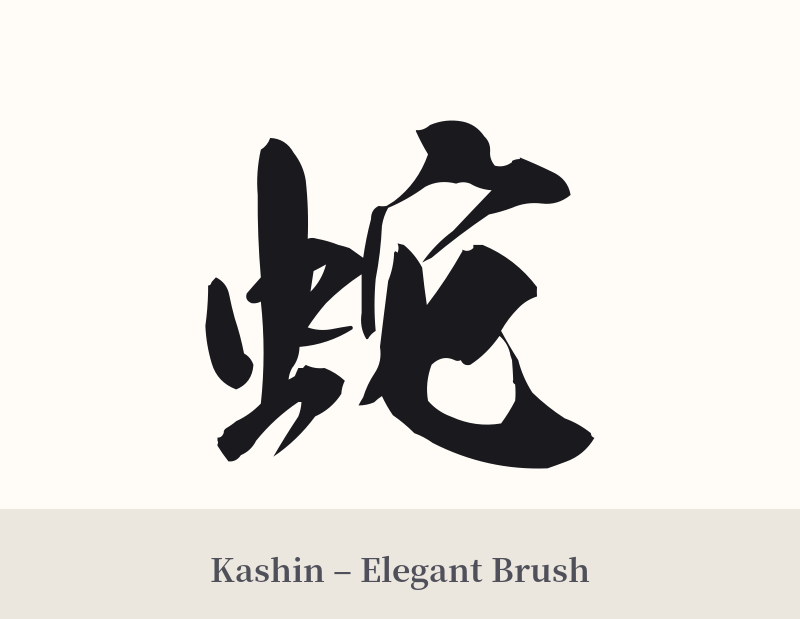
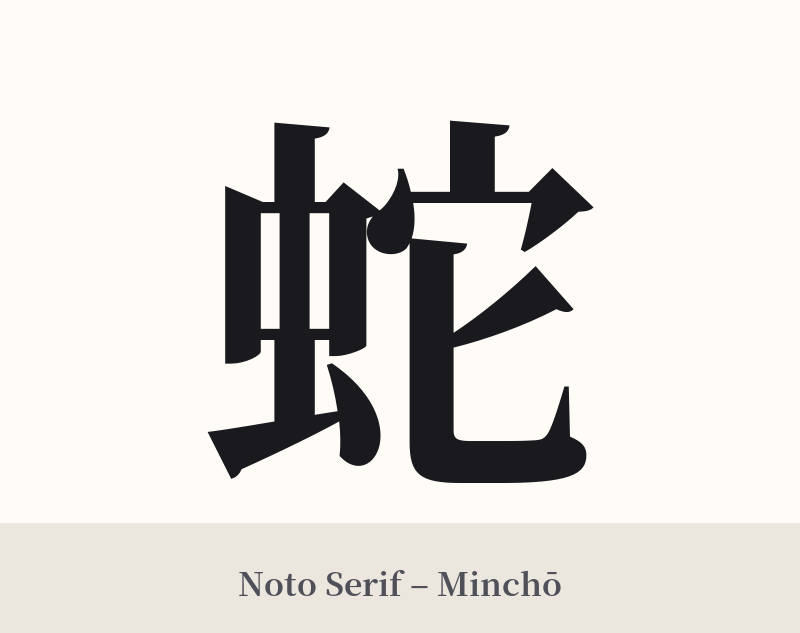
The same kanji can look dramatically different depending on the calligraphy style. Choose a font that matches the mood you want for your tattoo or design.
🎨 Tattoo Suitability
📐 Tattoo Design Guide
The kanji 蛇 offers a fantastic canvas for a tattoo, embodying a sense of fluid motion and ancient mystery.
– Placement: This character works well on limbs where its form can complement the body's natural curves, such as the forearm, calf, or wrapping around a bicep. For a larger, more impactful piece, the back or ribs provide ample space.
– Style: A dynamic calligraphy or shodō style is a classic choice, using expressive brushstrokes to mimic the snake's slithering movement. Alternatively, a sharp, angular Mincho-style font can give it a more modern and stoic feel.
– Visual Tips: Consider integrating the kanji with an illustration of a snake. The snake could be coiled around the character, or the kanji itself could be formed from the body of a snake. This creates a powerful interplay between the abstract symbol and its literal representation.
Comments