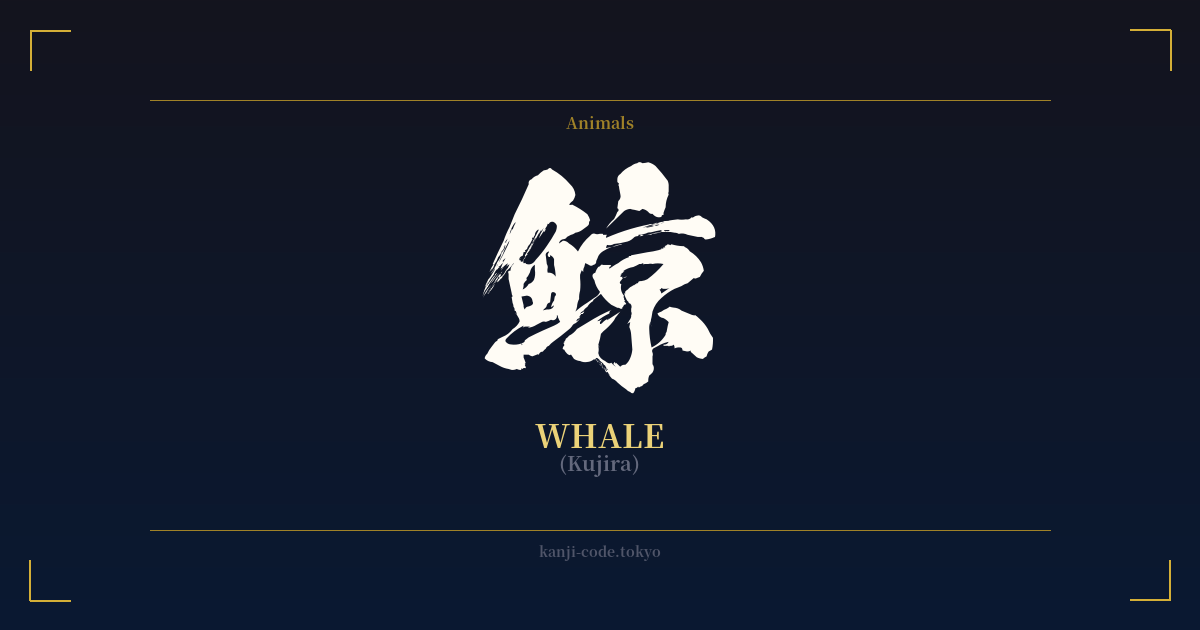
✍️ 鯨 (Kujira) — Cultural Context
The Japanese kanji for whale, 鯨 (kujira), is a character steeped in the immense power and mystery of the ocean. Its very construction offers a glimpse into the Japanese perception of this magnificent creature. The character is a composite of two radicals: 魚 (sakana) on the left, meaning 'fish,' and 京 (kyō) on the right, meaning 'capital city.' This combination poetically describes the whale as the 'capital fish' or the 'king of fish,' a testament to its colossal size and dominant presence in the sea.
In Japanese folklore and religion, whales were not merely large animals; they were often seen as divine beings or messengers from the gods. Known as 'Ebisu-same' or 'Kujira-gami' (Whale Gods), they were revered as manifestations of the sea gods themselves. Ebisu, one of the Seven Lucky Gods and the patron of fishermen and good fortune, was sometimes depicted with or symbolized by a whale. A whale appearing near a fishing boat was considered a sign of a bountiful catch to come.
This reverence is deeply rooted in the historical relationship between coastal communities and whales. Before the era of industrial whaling, a whale that washed ashore—an event called 'yorikujira'—was seen as a divine gift from the ocean. It provided an enormous amount of resources, from meat for food to oil for lamps and bones for tools. These communities would often hold ceremonies and build memorials to honor the spirit of the whale, expressing gratitude and praying for its soul. This reflects a deep-seated Shinto belief in the spiritual essence of all things in nature.
However, the perception of whales in Japan is also complex and layered. In the post-war period, whale meat became a crucial source of protein for a starving nation, cementing its place in the national diet and memory for older generations. This historical context is often disconnected from the international controversy surrounding modern commercial whaling. For many Japanese, the whale symbolizes not just a mythic sea god but also a nostalgic connection to a time of national recovery and sustenance.
Today, the kanji 鯨 carries all these layers: the awe for a majestic creature, the reverence for a divine messenger, the gratitude for a gift from the sea, and the complex history of a vital resource. It represents a profound connection to the ocean that is both spiritual and practical, embodying grandeur, serenity, and the deep, often untamed, forces of nature.
🖌️ Font Styles for 鯨
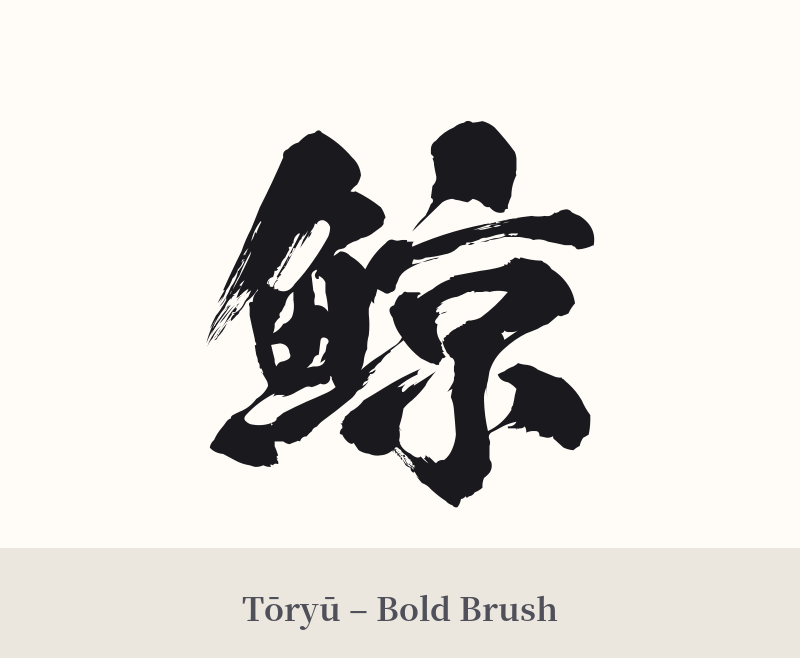
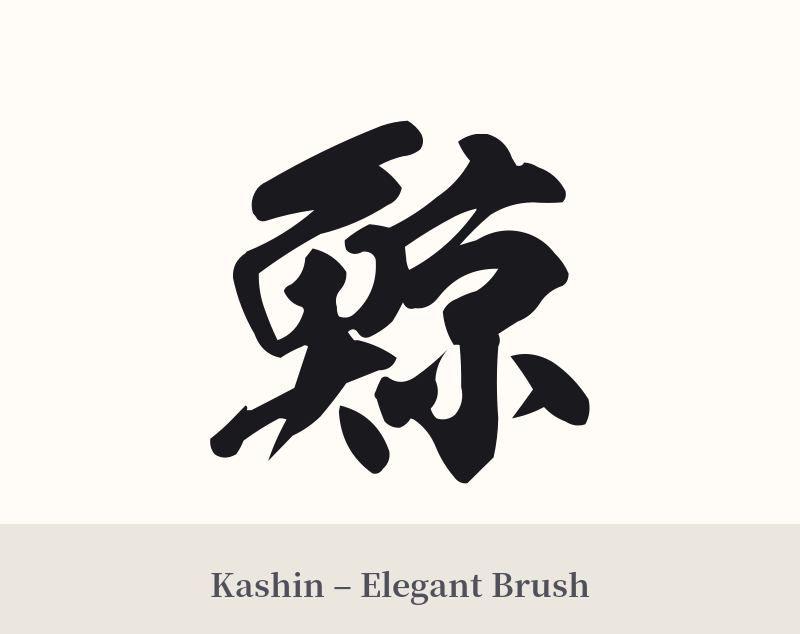
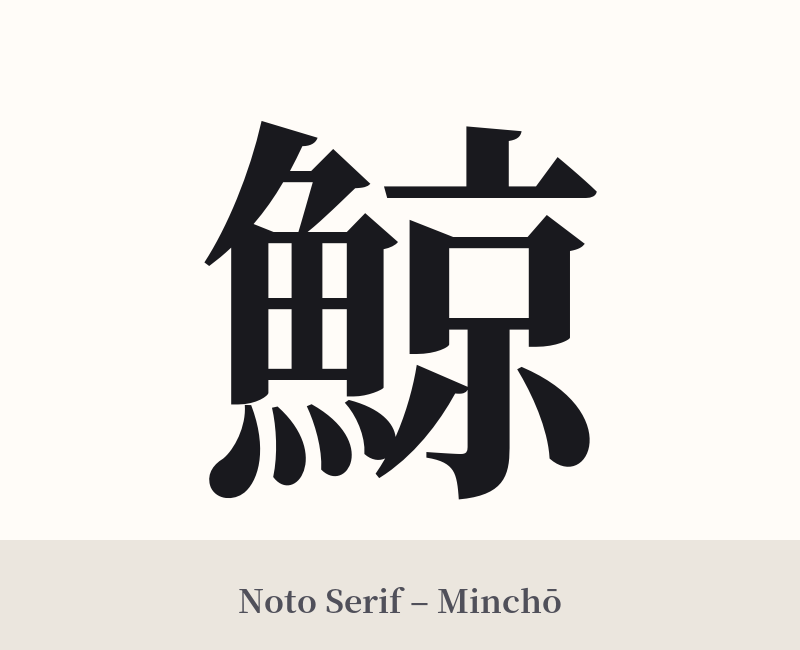
The same kanji can look dramatically different depending on the calligraphy style. Choose a font that matches the mood you want for your tattoo or design.
🎨 Tattoo Suitability
📐 Tattoo Design Guide
The kanji 鯨 (Kujira) is a visually complex and powerful character, making it an excellent choice for a tattoo with significant presence.
– Placement: Due to its 19 strokes and intricate details, 鯨 works best as a medium to large-sized tattoo. Ideal placements include the calf, forearm, thigh, or back, where the artist has enough space to render the strokes cleanly without them blurring together over time.
– Style: A traditional Japanese calligraphy style (shodō) is a fantastic choice, particularly a bold, dynamic script like gyōsho (semi-cursive) or sōsho (cursive). These styles can capture the fluid, powerful movement of a whale in the ocean. For a more modern or subtle look, a clean, crisp Mincho or Gothic font can emphasize the character's architectural structure.
– Visual Pairings: To enhance its meaning, consider incorporating related imagery. Pairing 鯨 with stylized waves (nami), particularly in the ukiyo-e style, creates a classic and dynamic scene. Other complementary elements include a crescent moon, lotus flowers to symbolize purity and rebirth, or even a subtle silhouette of a whale integrated into the background.
Comments