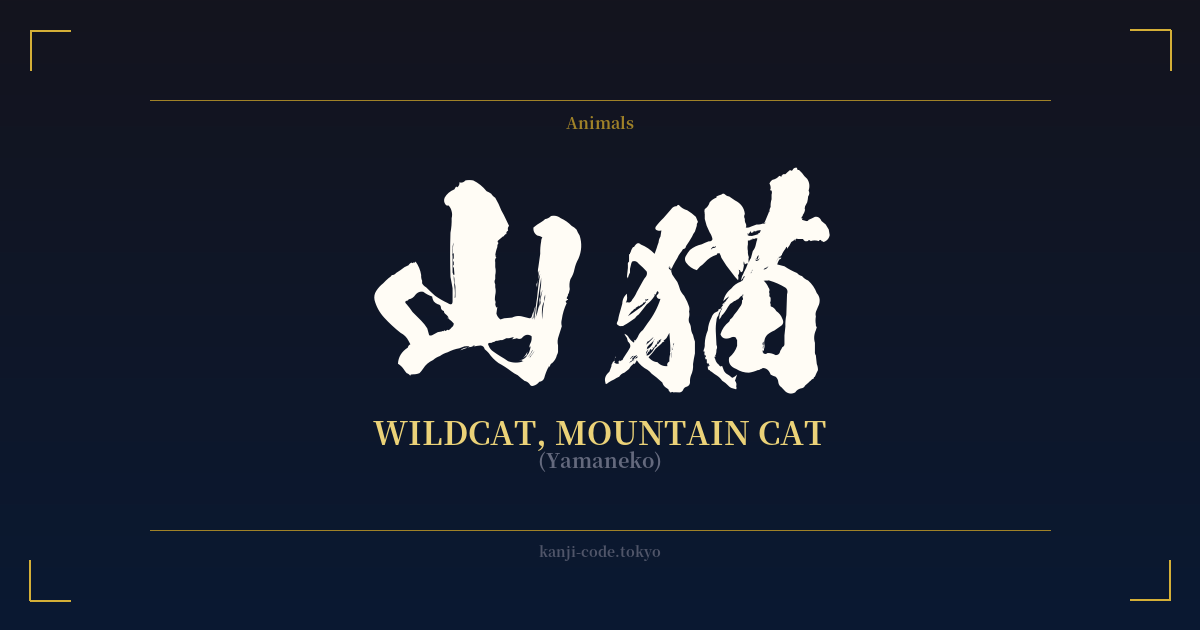
✍️ 山猫 (Yamaneko) — Cultural Context
山猫 (Yamaneko) is the Japanese word for 'wildcat' or 'mountain cat,' a term that immediately conjures images of untamed nature and elusive grace. The word is a beautifully direct combination of its two component kanji: 山 (yama), meaning 'mountain,' and 猫 (neko), meaning 'cat.' Together, they paint a picture of a feline that belongs not to the home, but to the rugged, remote landscapes of Japan.
Unlike the common domestic cat (猫, neko), the yamaneko embodies self-sufficiency, agility, and a spirit that cannot be tamed. It represents the wild, untethered soul of the mountains. This isn't just a generic term; in Japan, it specifically calls to mind two protected, real-world species: the Iriomote wildcat (西表山猫, Iriomote-yamaneko) and the Tsushima leopard cat (対馬山猫, Tsushima-yamaneko). These animals are national treasures, living symbols of Japan's precious and fragile biodiversity. The Iriomote cat, found only on the island of Iriomote in Okinawa, is a critically endangered 'living fossil,' adding a layer of poignancy and conservationist spirit to the word.
In Japanese culture, cats occupy a complex space, ranging from the lucky and beckoning 'maneki-neko' to the supernatural and sometimes terrifying 'bakeneko' (monster cat) of folklore. The yamaneko, however, exists in a more grounded, naturalistic realm. It is not a mythical beast but a real predator, respected for its survival skills and its ability to thrive in harsh environments. It symbolizes a quiet strength, keen senses, and a profound connection to the natural world, separate from human affairs.
Choosing the kanji 山猫 is to embrace this symbolism of independence and resilience. It speaks to a personality that is perhaps a bit of a loner, but fiercely capable and resourceful. It's for someone who feels a deep connection to nature and values their own freedom above all else. The yamaneko doesn't seek attention; it commands respect through its quiet presence and untamable essence, making it a powerful and subtle statement.
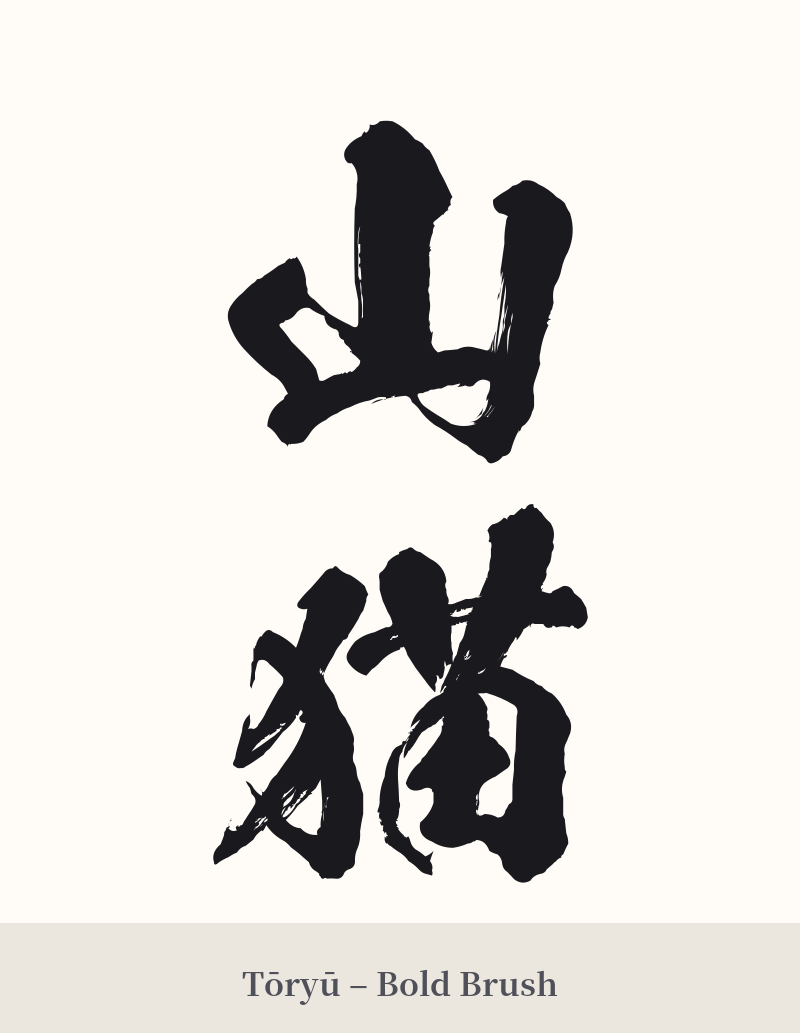
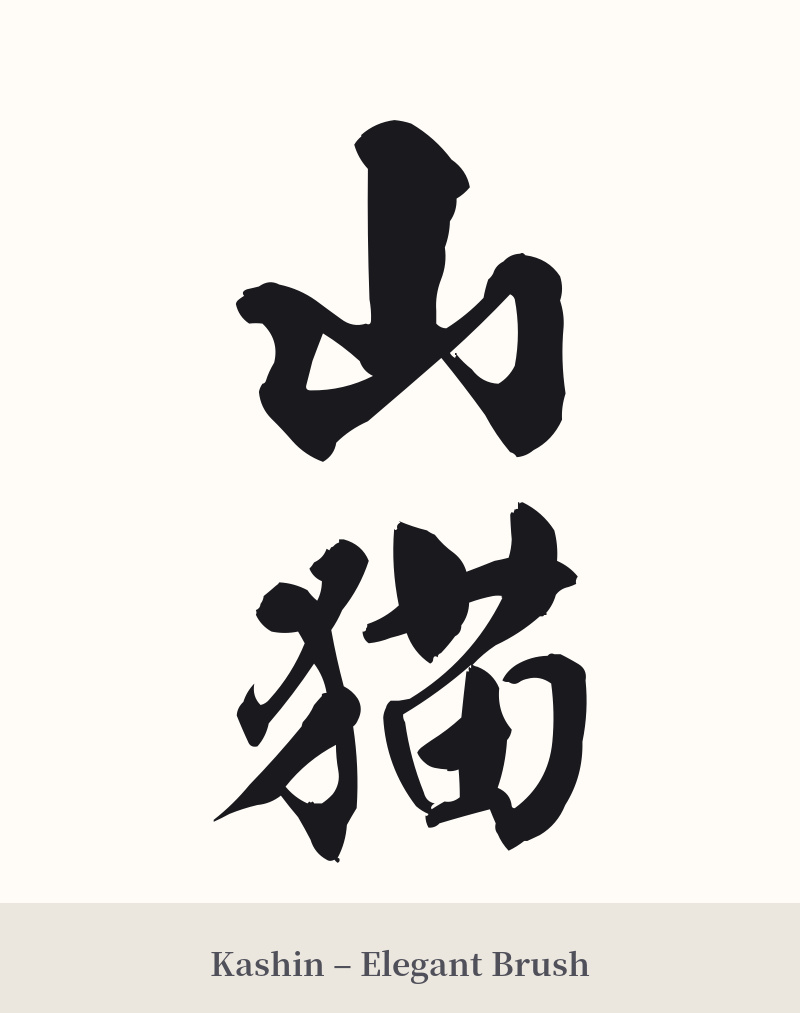
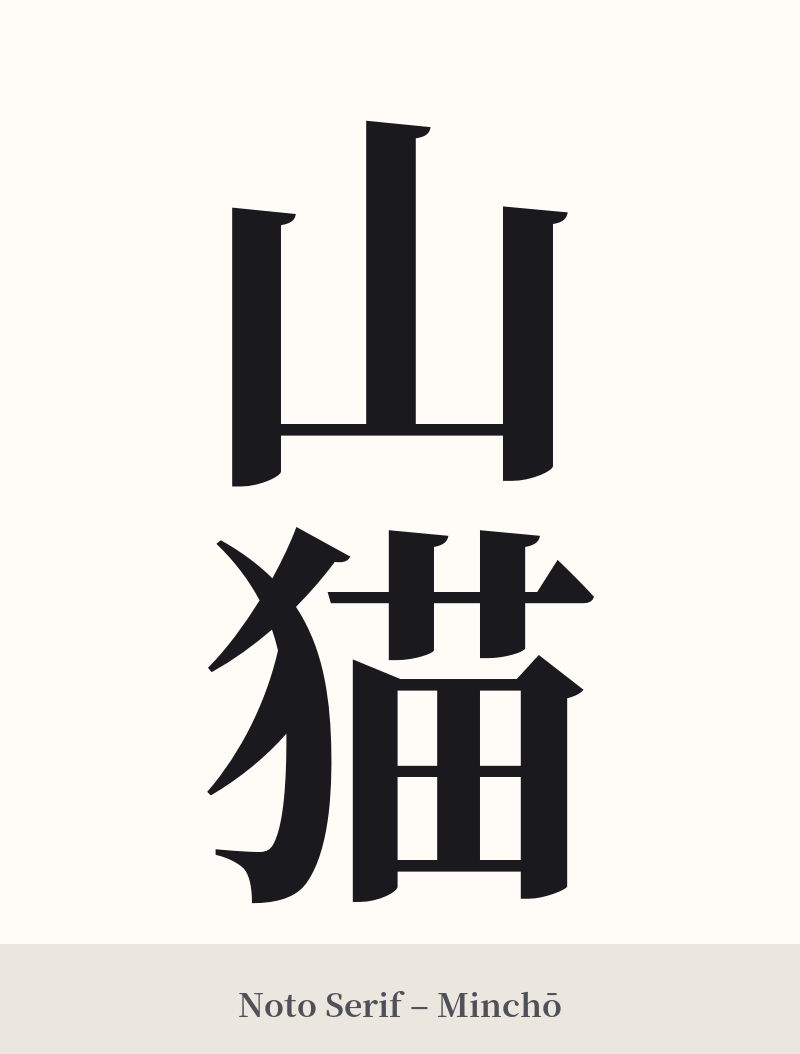
🖌️ Font Styles for 山猫
The same kanji can look dramatically different depending on the calligraphy style. Choose a font that matches the mood you want for your tattoo or design.
🎨 Tattoo Suitability
📐 Tattoo Design Guide
For a 山猫 tattoo, the design should reflect its meaning of wildness and natural grace.
– Placement: Vertical alignment works beautifully for these two characters. Consider placing it along the forearm, the calf, or the ribs to create a sleek, elongated look. For a more subtle placement, the back of the neck or behind the ear can be effective.
– Font Style: A semi-cursive, brush-stroke style (gyōsho) can capture the fluid, agile movement of a wildcat. For a stronger, more grounded look, a clean and classic kaisho (block) script emphasizes the stability of the 'mountain' character. Avoid overly ornate or decorative fonts that might detract from the kanji's natural simplicity.
– Visual Elements: Complement the kanji with imagery that enhances its theme. Pairing 山猫 with minimalist bamboo stalks, a silhouette of a mountain range, or a crescent moon can frame the word within its natural habitat. A splash of ink in the style of sumi-e (ink wash painting) can also create a dynamic and atmospheric background.
Comments