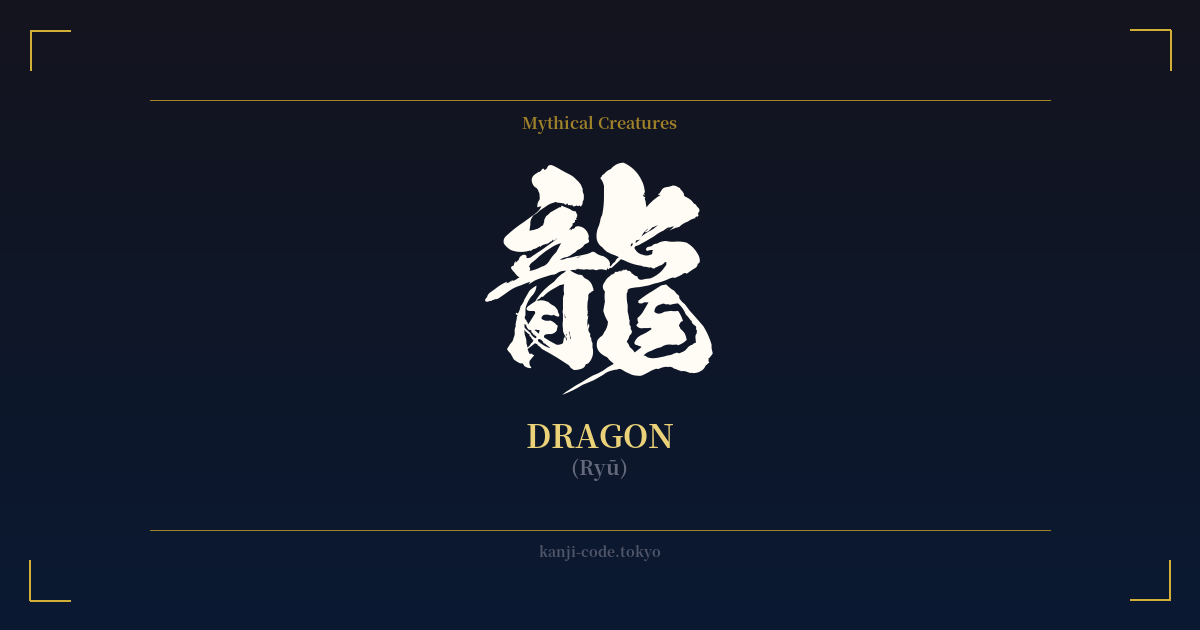
✍️ 龍 (Ryū) — Cultural Context
The kanji 龍 (Ryū) is more than just a word for 'dragon'; it is a vessel of immense cultural and spiritual significance in Japan, carrying thousands of years of mythology on its intricate strokes. Its origins trace back to ancient Chinese oracle bone script, where it was etched as a pictograph of a serpentine, horned creature, a plea to the divine forces governing rain and water.
Unlike the greedy, fire-breathing beasts of Western lore that hoard gold and terrorize villages, the Eastern dragon is a benevolent and revered being. It is a divine 'kami' or god, a master of the elements, and a symbol of wisdom, power, and good fortune. Japanese dragons are water deities, believed to reside in palaces at the bottom of the sea, in rivers, or in the clouds. They command the tides, summon rain for bountiful harvests, and protect humanity.
This connection to water is paramount. The deity Ryūjin (龍神), the Dragon God of the Sea, is a central figure in Japanese mythology, controlling the ocean's vast power. Many Shinto shrines, particularly those near coastlines or bodies of water, are dedicated to dragon deities, where fishermen and farmers have prayed for safety and prosperity for centuries.
The dragon's influence also permeated Buddhism upon its arrival in Japan. Dragons were seen as protectors of the Buddhist faith and its teachings. It's common to find elaborate dragon carvings adorning the roofs, gates, and ceilings of temples, acting as spiritual guardians against evil forces. The famous ceiling painting of a dragon at Kennin-ji temple in Kyoto is a stunning example, watching over the sacred space below.
Symbolically, the dragon was also tied to imperial power, with the emperor sometimes being associated with this divine creature, embodying his role as a wise and powerful leader. The dragon's physical form itself is a composite of other powerful animals—said to have the head of a camel, the horns of a deer, the eyes of a demon, and the scales of a carp—symbolizing its dominion over the entire animal kingdom. Today, the dragon remains a potent and beloved symbol, celebrated in festivals, art, and stories, representing a powerful, protective force of nature.
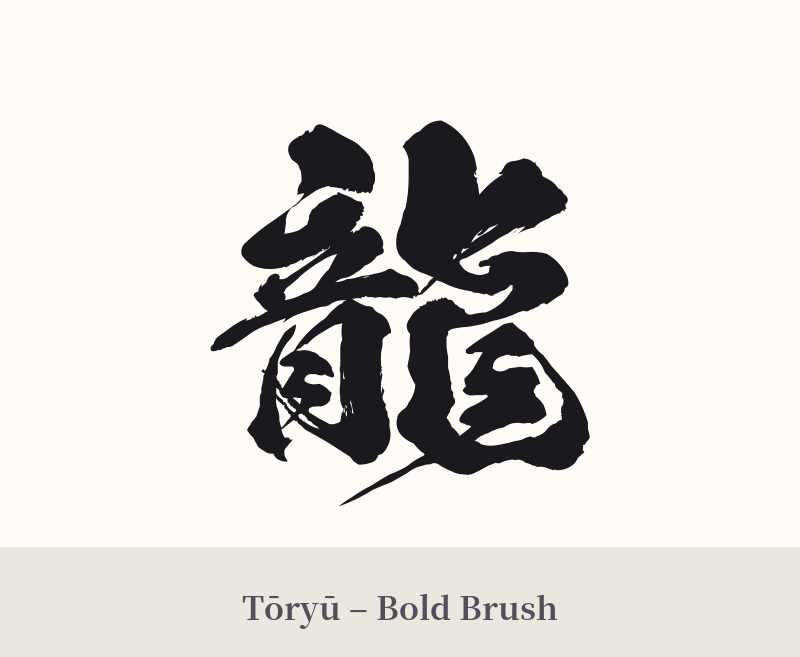
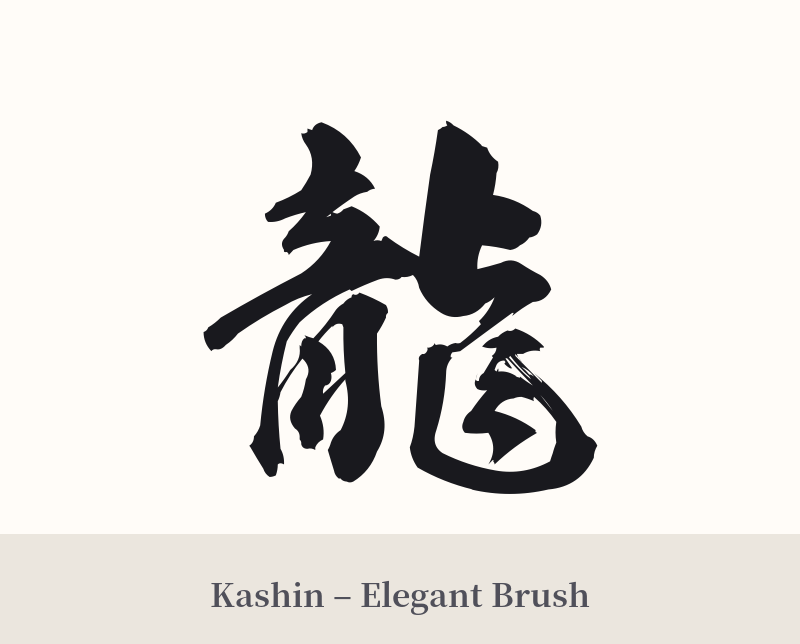
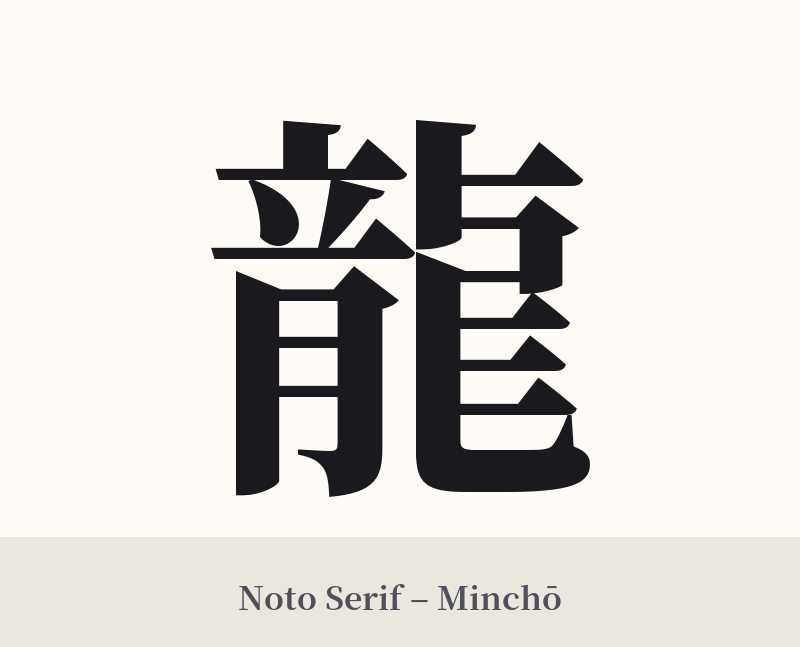
🖌️ Font Styles for 龍
The same kanji can look dramatically different depending on the calligraphy style. Choose a font that matches the mood you want for your tattoo or design.
🎨 Tattoo Suitability
📐 Tattoo Design Guide
The 龍 kanji offers incredible artistic potential for a tattoo, but its complexity demands careful consideration of placement and style.
– Placement: This character works best in larger, prominent areas where its details can be appreciated. The back, chest, or thigh provides a large canvas for a powerful centerpiece. For a vertical design, the spine, forearm, or calf are excellent choices, accentuating the character's natural flow.
– Font Style: A dynamic, flowing calligraphy style like Gyosho (semi-cursive) or Sosho (cursive) can beautifully mimic the fluid movement of a dragon's body. For a bolder, more grounded statement, a strong and precise Kaisho (block script) emphasizes its power and authority.
– Visual Tips: The character 龍 is powerful enough to stand alone. However, it can be seamlessly integrated with traditional Japanese imagery. Consider pairing it with waves or water to honor its connection to the sea god Ryūjin, or with clouds and lightning to represent its dominion over the sky and storms. Adding a single pearl, the 'ryū no tama' (dragon's jewel), which is said to contain its power and wisdom, can be a subtle yet meaningful addition.
Comments