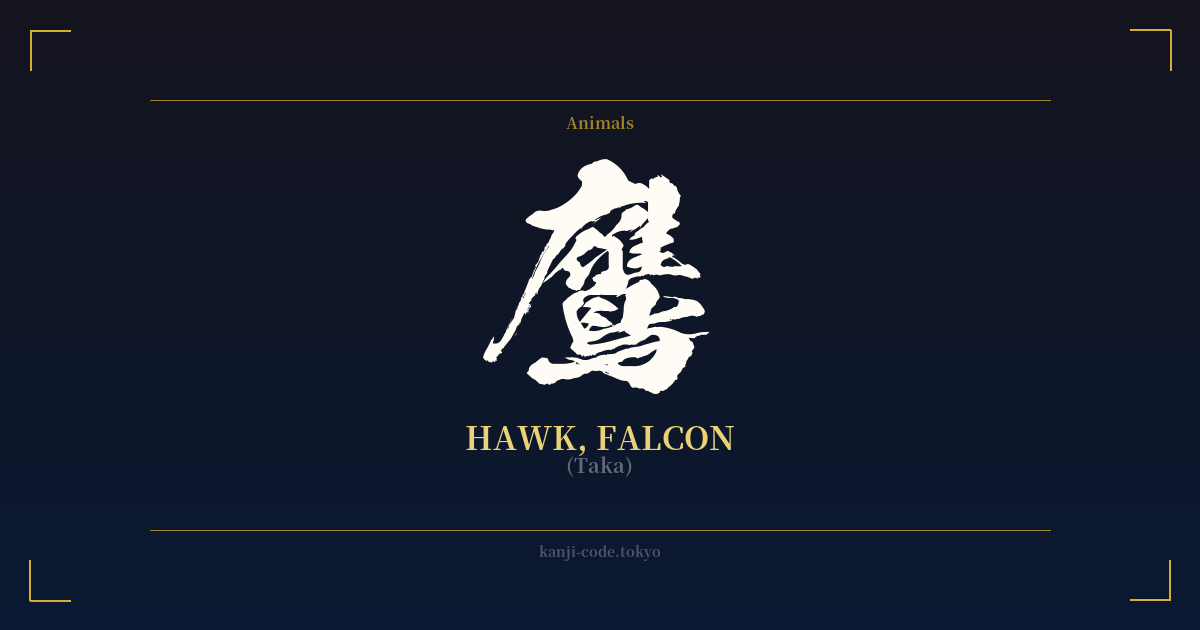
✍️ 鷹 (Taka) — Cultural Context
In the vast lexicon of Japanese symbolism, few creatures command the same respect as the hawk, or 鷹 (Taka). This magnificent bird of prey is more than just a part of the natural landscape; it's a powerful emblem woven into the very fabric of Japanese culture, history, and spirituality.
The hawk's most potent association is with the samurai class. During the feudal era, falconry, known as takagari (鷹狩), was a highly esteemed practice among the warrior elite. It was not merely a sport but a display of status, discipline, and martial skill. The ability to train and command a hawk was seen as a reflection of a warrior's ability to lead and conquer. Powerful daimyō and shōguns, including the great Tokugawa Ieyasu, were avid falconers, further cementing the hawk's image as a symbol of power, authority, and strategic prowess.
This connection to the warrior class imbues the kanji 鷹 with meanings of victory, sharp focus, and foresight. A hawk's keen eyesight, capable of spotting prey from incredible heights, translates into the symbolic meaning of perception, vision, and the ability to see the bigger picture. It represents a clear-minded, decisive nature, one that observes patiently before striking with lethal precision.
A famous Japanese proverb, 「能ある鷹は爪を隠す」(Nō aru taka wa tsume o kakusu), translates to "A talented hawk hides its talons." This speaks to the virtue of true strength: those who are genuinely powerful and capable do not need to boast or show off their abilities constantly. They reveal their strength only when necessary, embodying a quiet confidence and profound mastery.
Beyond its martial connotations, the hawk also holds a sacred place in Shintoism. As a creature that soars between the heavens and the earth, it is often viewed as a messenger of the kami (gods). Its presence can be seen as an auspicious omen, a bridge between the mortal and divine realms. In art, the hawk is a popular motif, often depicted perched on a pine tree—a combination that symbolizes enduring strength and longevity.
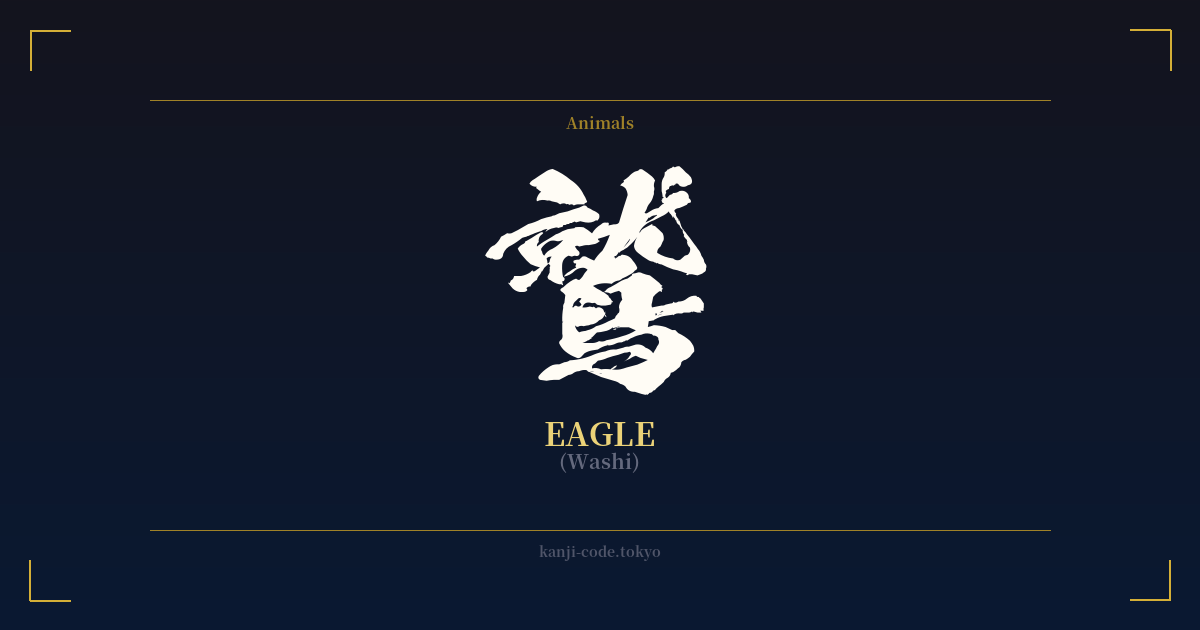
The kanji character 鷹 itself is a beautiful, complex ideogram. It is composed of the radical for bird (鳥) on the right, signifying its nature as a fowl. The left side provides phonetic and semantic clues, contributing to the character's overall majestic and intricate appearance. To choose 鷹 is to embrace a symbol of nobility, sharp intelligence, and untamed spirit.
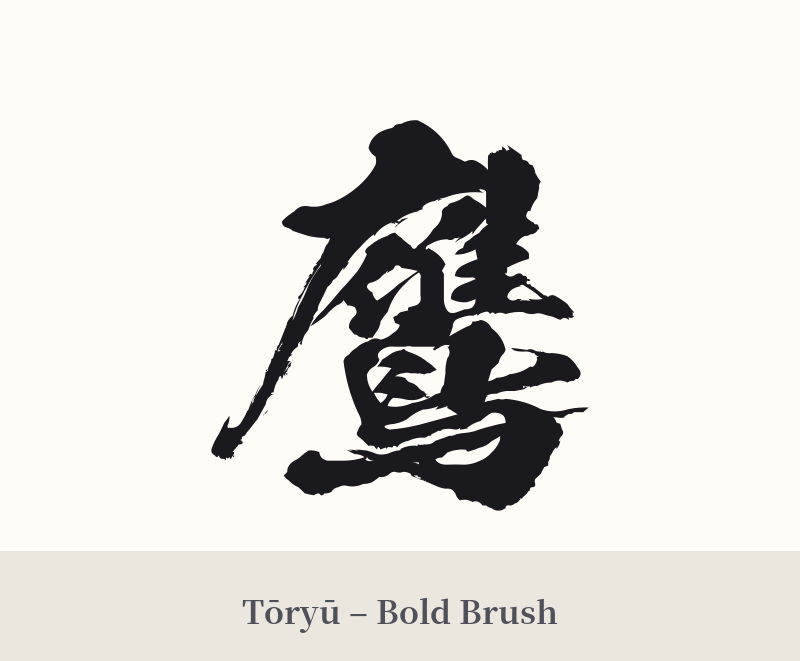
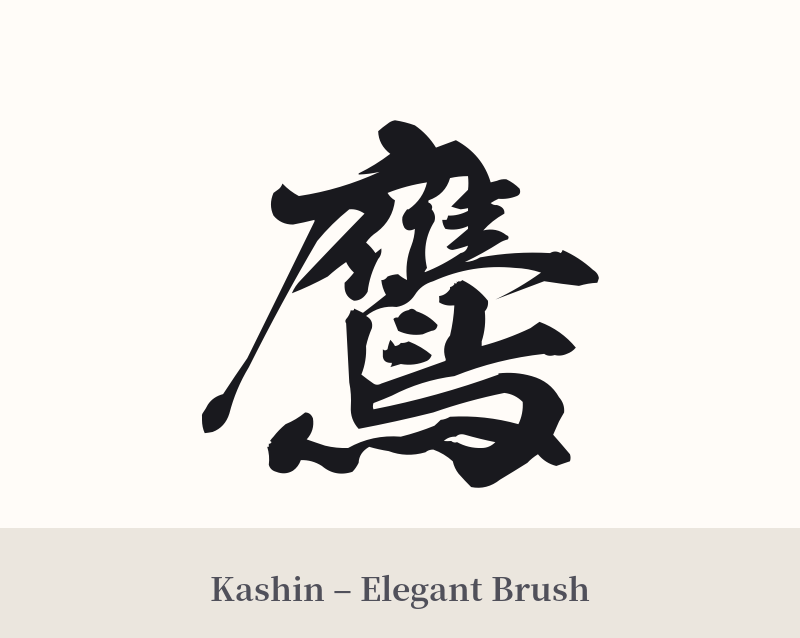
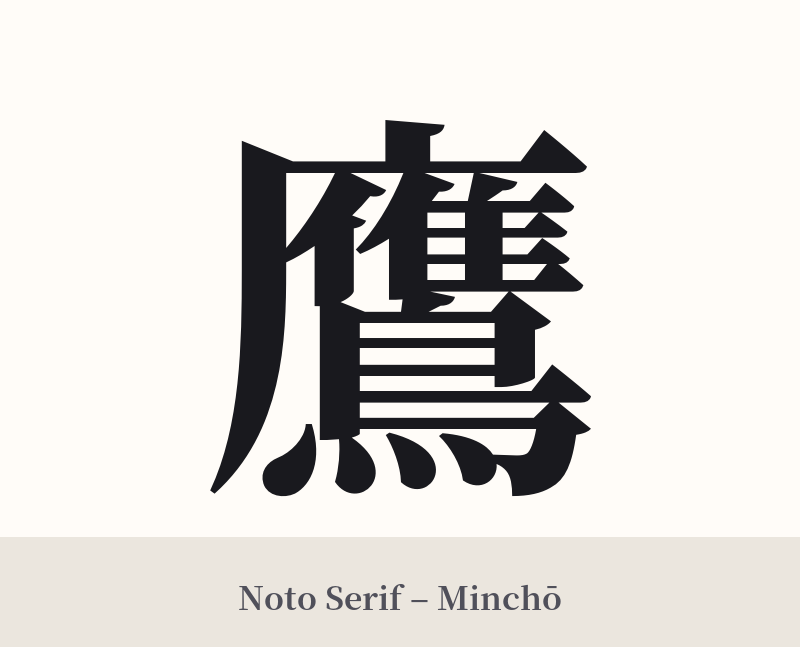
🖌️ Font Styles for 鷹
The same kanji can look dramatically different depending on the calligraphy style. Choose a font that matches the mood you want for your tattoo or design.
🎨 Tattoo Suitability
📐 Tattoo Design Guide
Due to its complexity, the kanji 鷹 (Taka) thrives with thoughtful design and placement.
– Placement: This character demands space to be appreciated. It is best suited for larger, flatter areas of the body like the back, chest, or thigh. A vertical placement on the forearm or calf can also be very effective, provided it is large enough.
– Style: A bold, semi-cursive brushstroke style (gyōsho) can capture the hawk's dynamic movement and fierce spirit. For a more formal and powerful look, a traditional block script (kaisho) emphasizes its strength and stability. Avoid overly thin or delicate fonts that would struggle with the character's 24 strokes.
– Visual Companions: While 鷹 is powerful enough to stand alone, it pairs beautifully with traditional Japanese elements. Consider a backdrop of windswept pine branches to symbolize longevity, or jagged mountains to represent steadfastness. A subtle ink wash or a splash of red from a hanko-style seal can add a dramatic accent without overpowering the kanji itself.
Comments