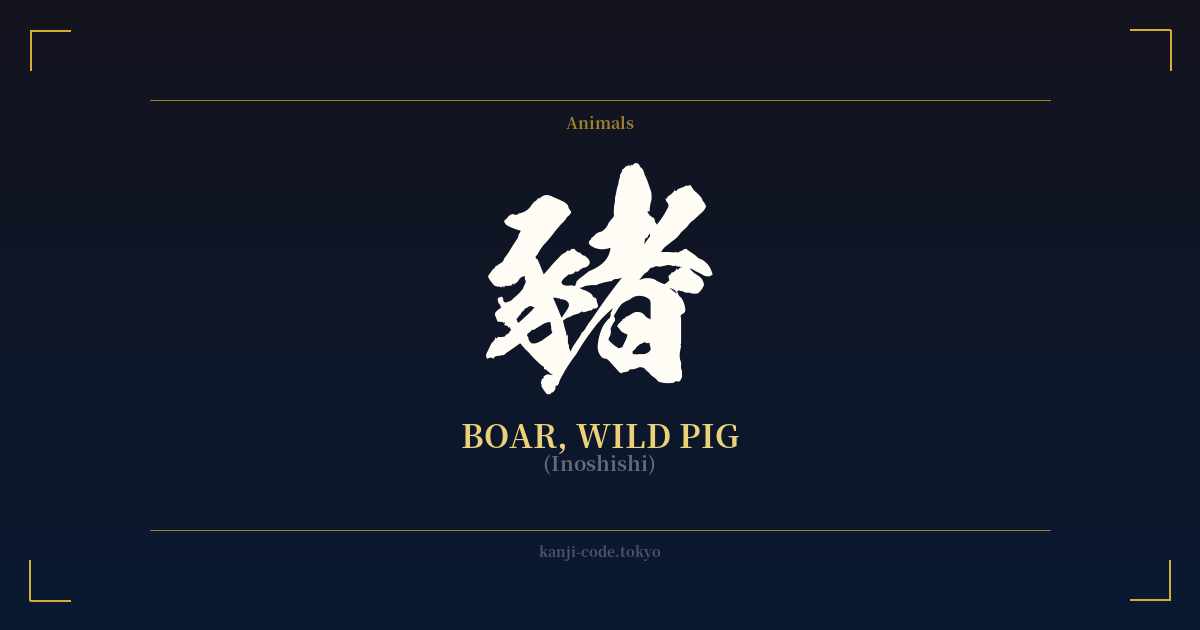
✍️ 豬 (Inoshishi) — Cultural Context
The kanji 豬, read as 'inoshishi', represents the wild boar, an animal deeply embedded in the natural and cultural landscape of Japan. Far more than just a creature of the forest, the boar is a potent symbol of courage, determination, and untamed energy.
Its most prominent role is as the twelfth and final animal of the Japanese zodiac, the Jūnishi. Those born in the Year of the Boar are believed to embody its key traits: they are seen as courageous, honest, and incredibly determined. They move forward with single-minded purpose, charging directly at their goals. This can also manifest as stubbornness or recklessness, a duality that captures the animal's raw power.
The boar holds a sacred place in Shinto and folklore. It is often depicted as a divine messenger or a symbol of the mountain gods (yama no kami). One famous story involves Wake no Kiyomaro, a high-ranking court official in the 8th century. Legend says that when he was injured and exiled, a pack of 300 boars appeared to guide and protect him on his journey, miraculously healing his leg. Because of this tale, the boar is associated with protection, particularly for the legs and lower back.
This image of fearless forward momentum gave rise to the four-character idiom 猪突猛進 (chototsumōshin), which literally translates to 'boar-thrust-fierce-advance'. It describes a person who rushes headlong toward a goal with immense vigor, without being distracted or deterred. While it can sometimes imply a lack of caution, this quality was highly admired by the samurai class, who saw the boar's direct and fearless attack as an ideal in battle. The boar embodies the spirit of a warrior who commits fully to the fight.
Beyond its symbolic weight, the boar is also a part of Japan's culinary tradition. In mountainous regions, boar meat is a delicacy, famously served in a hot pot dish called 'botan nabe' (peony pot), named for the way the dark red meat is arranged like flower petals. This grounds the powerful symbol in the tangible reality of rural life, connecting it to the cycles of nature and sustenance.
In modern Japan, 豬 (inoshishi) continues to represent this blend of wild strength, divine protection, and unwavering determination. It is a symbol not of brutishness, but of a primal, powerful life force that charges ahead, guided by instinct and courage.
🖌️ Font Styles for 豬
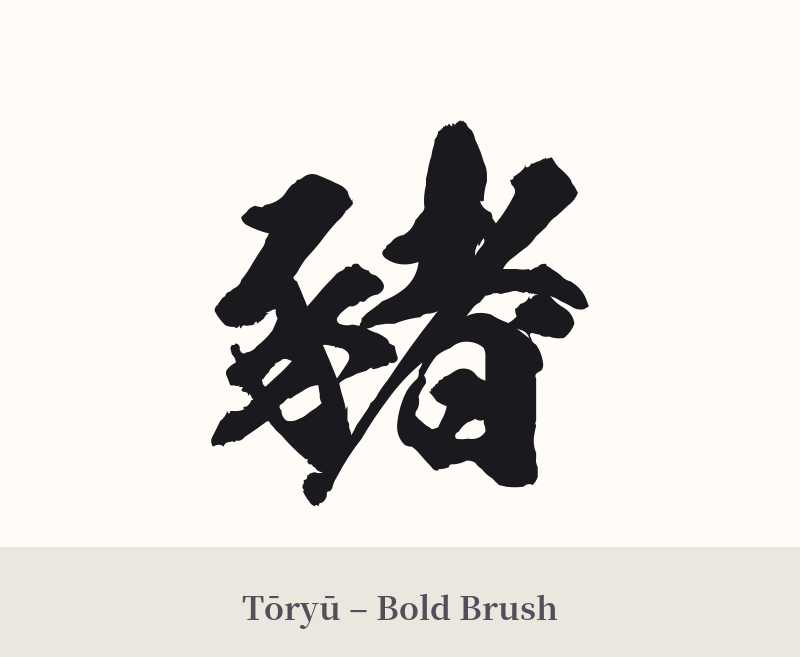
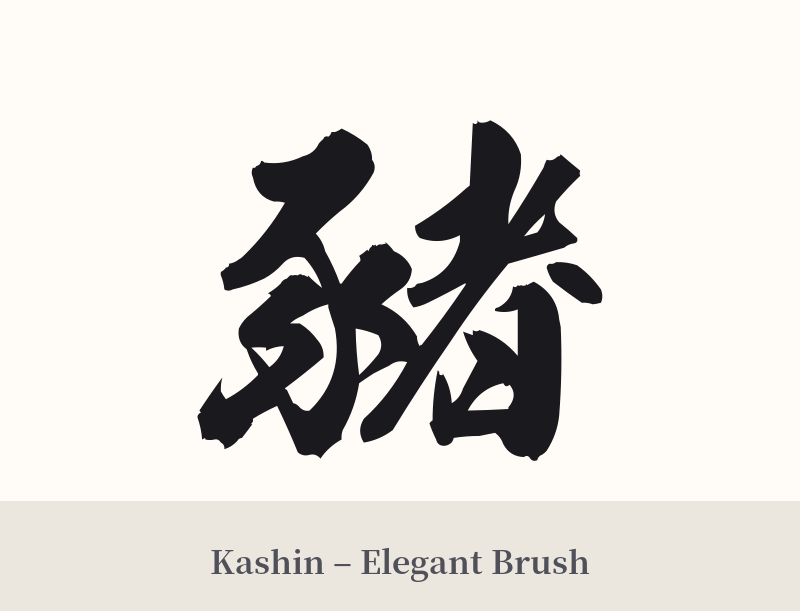
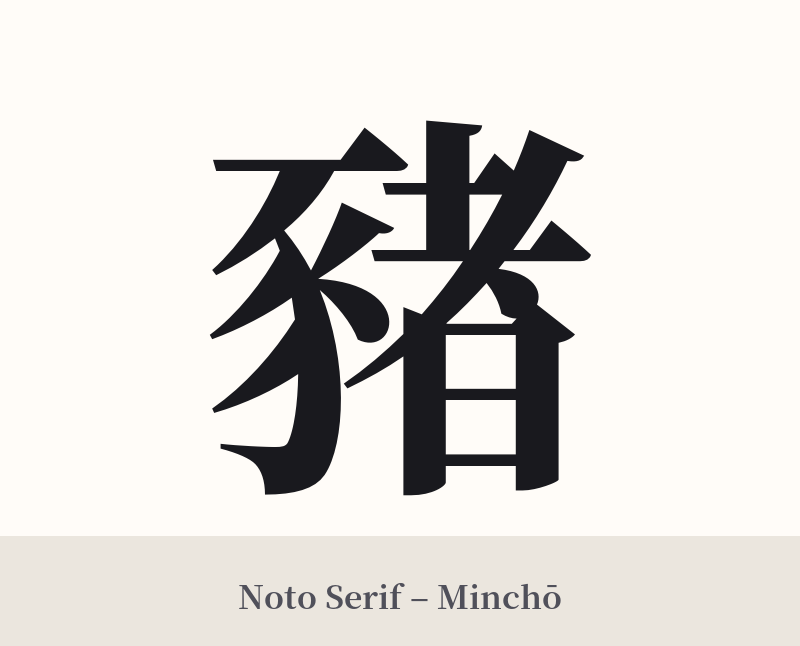
The same kanji can look dramatically different depending on the calligraphy style. Choose a font that matches the mood you want for your tattoo or design.
🎨 Tattoo Suitability
📐 Tattoo Design Guide
The kanji 豬 is a powerful choice for a tattoo, embodying strength and determination. Here are some design considerations:
– Placement: This character works well as a standalone piece on a muscular area that emphasizes its strength, such as the calf, forearm, shoulder blade, or upper back.
– Font Style: A bold, dynamic brushstroke style (gyōsho or sōsho) can capture the boar's wild energy and forward momentum. For a more solid and stable look, a classic block script (kaisho) will highlight the character's balanced structure and inherent power.
– Visual Pairings: To add more context, consider pairing 豬 with other elements. It is often associated with mountains (山) or forests, reflecting its natural habitat. Pairing it with maple leaves (momiji) is also a classic combination, often seen in traditional Japanese art.
Comments