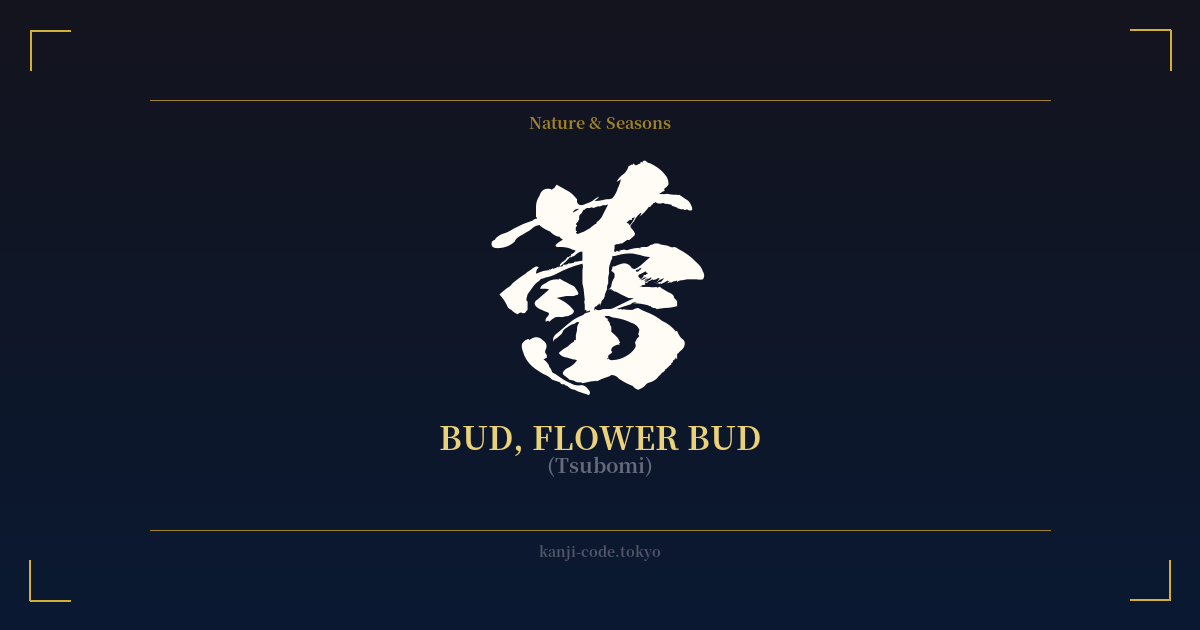
✍️ 蕾 (Tsubomi) — Cultural Context
The kanji 蕾 (tsubomi) translates to 'flower bud' in English, but its essence carries a much deeper weight in Japanese culture. It is a character steeped in the beauty of anticipation and the promise of what is to come. More than just a stage in a plant's life, tsubomi represents potential in its purest form—a quiet, contained energy on the verge of bursting forth.
In Japan, a country with a profound appreciation for the changing seasons, the tsubomi is a quintessential symbol of spring. It's a common 'kigo,' or seasonal word, used in haiku and other forms of poetry to evoke the feeling of early spring, when the cold of winter is just beginning to recede and the world is preparing for renewal. The sight of cherry blossom buds (sakura no tsubomi) is a source of national excitement, a prelude to the famous hanami (flower viewing) festivals.
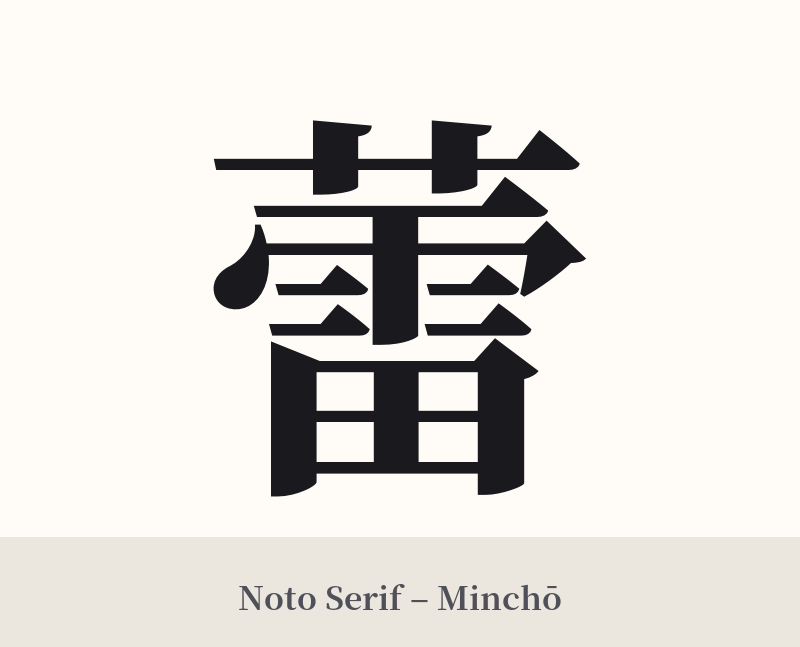
The character itself offers a glimpse into its meaning. The top radical, 艹 (kusakanmuri), is the symbol for grass or plants, firmly rooting the character in the botanical world. The lower component, 雷, means 'thunder.' While its primary function here is phonetic, some poetic interpretations link the rumbling, powerful energy of a thunderstorm to the immense potential packed within a tiny bud, waiting for the right moment to explode into bloom.
Metaphorically, tsubomi is used to describe anything in its nascent stages. A young person with unfulfilled talent is a tsubomi. A budding romance is a tsubomi. A new business venture or a creative project just starting out is a tsubomi. It captures the beauty of the 'before'—the moment just prior to realization, which often holds a unique and poignant charm of its own. It reminds us that there is profound beauty not just in the final outcome, but in the journey and the promise of what lies ahead.
Unlike the fully bloomed flower, 花 (hana), which represents fulfillment and beauty in the present moment, 蕾 (tsubomi) is a symbol of hope, future, and the delicate state of becoming. It speaks to a quiet confidence and the patience required to let things unfold in their own time. This makes it a powerful and introspective symbol, cherished for its gentle yet resilient spirit.
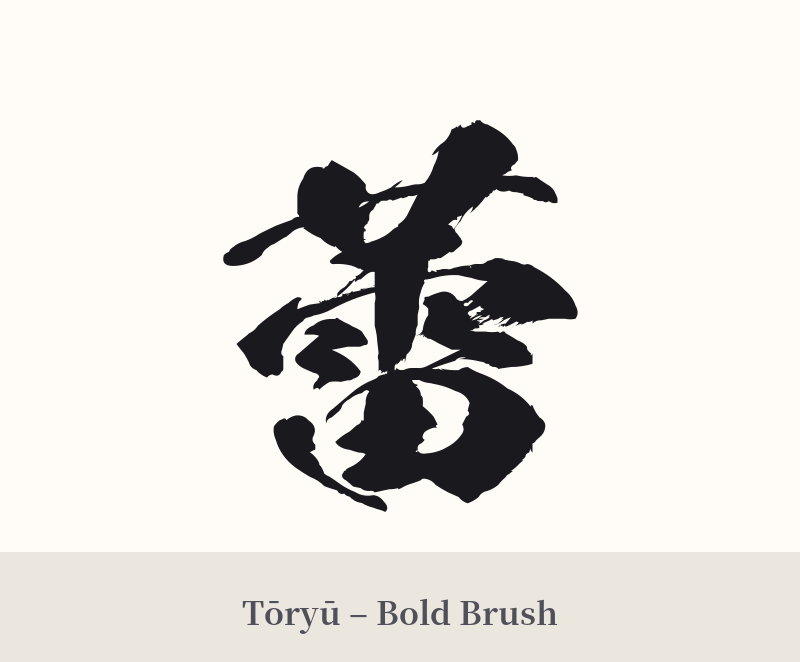
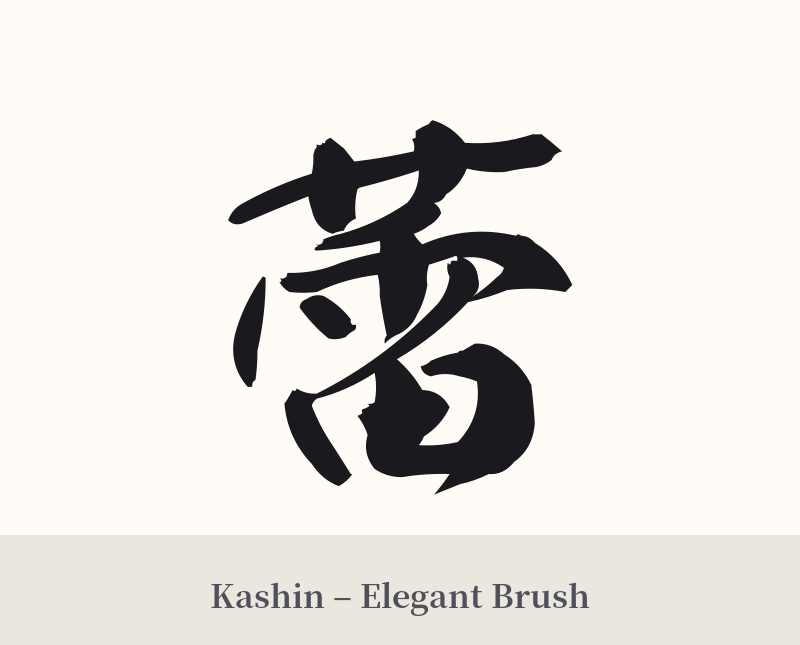
🖌️ Font Styles for 蕾
The same kanji can look dramatically different depending on the calligraphy style. Choose a font that matches the mood you want for your tattoo or design.
🎨 Tattoo Suitability
📐 Tattoo Design Guide
The kanji 蕾 (tsubomi) is visually complex, and a successful tattoo design hinges on respecting its intricacy.
– Placement: This character needs space to breathe. Opt for larger, flatter areas of the body like the forearm, the calf, the shoulder blade, or the back. This allows the artist to render the 16 strokes clearly. Avoid small, cramped areas like the wrist, ankle, or fingers, where the lines will inevitably blur over time.
– Style: A clean, crisp Kaisho (block) script is a safe bet, ensuring every stroke is distinct and legible. For a more organic feel, a Gyosho (semi-cursive) style could work, but it requires an artist with a strong command of Japanese calligraphy to maintain balance and avoid it becoming an illegible smudge.
– Visual Elements: Consider pairing the kanji with its literal meaning. A design that incorporates the character 蕾 alongside a minimalist depiction of a cherry blossom or lotus bud can be very effective. The kanji could be placed on the stem of the flower or subtly integrated into the background, creating a design that is both beautiful and meaningful.
Comments