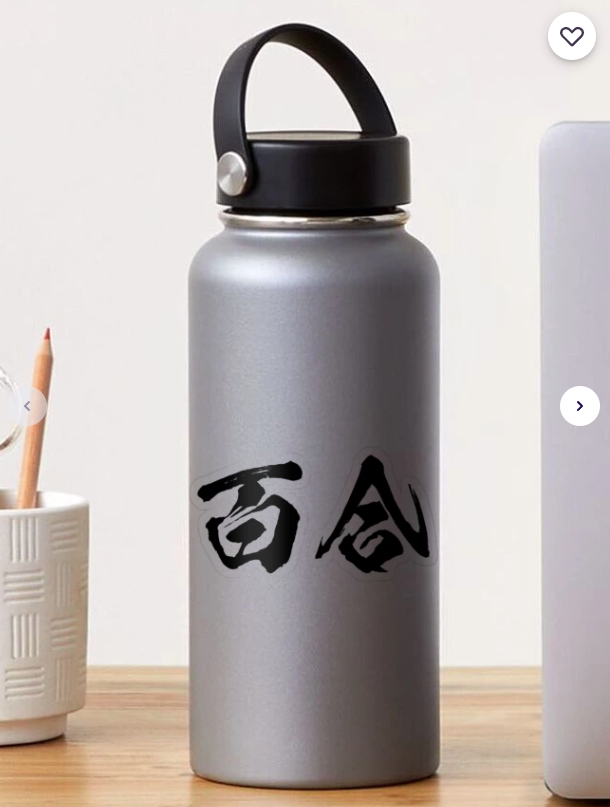
百合
Lily
The flower that sways in mountain breezes got its name from shaking—but its characters describe something completely different happening underground.
Watch a wild lily growing on a Japanese mountainside in summer wind. The flower sits at the end of a thin stem that bends and waves with every breeze, the white petals fluttering like they might fly away. Ancient observers called this movement 揺り (yuri)—the swaying, trembling motion of something light balanced on something delicate. The flower became ゆり (yuri), named for how it dances.
But when Japanese scribes needed kanji to write this word, they borrowed Chinese characters that had nothing to do with swaying. They used 百合—literally “hundred combinations” or “hundred gatherings.” Why? Because if you dig up a lily bulb, you’ll find it’s not a single solid mass. It’s dozens of overlapping scales clustered together like roof tiles or fish scales, each individual piece joining (合) with countless others (百) to create the whole. The sound “yuri” describes what you SEE above ground. The characters 百合 describe what’s HIDDEN below.
This disconnect between sound and symbol creates beautiful layers of meaning. The lily becomes both the delicate flower trembling in wind AND the complex underground structure holding it steady—visible elegance supported by hidden multiplicity. Japanese culture absorbed these dual associations, making lilies symbols of purity and innocence (from the white flowers) while also representing unity and cooperation (from the bulb’s many-scales-becoming-one structure). Plus, modern anime culture added another layer entirely, but we’ll get to that.
✨ Kanji Styles Gallery
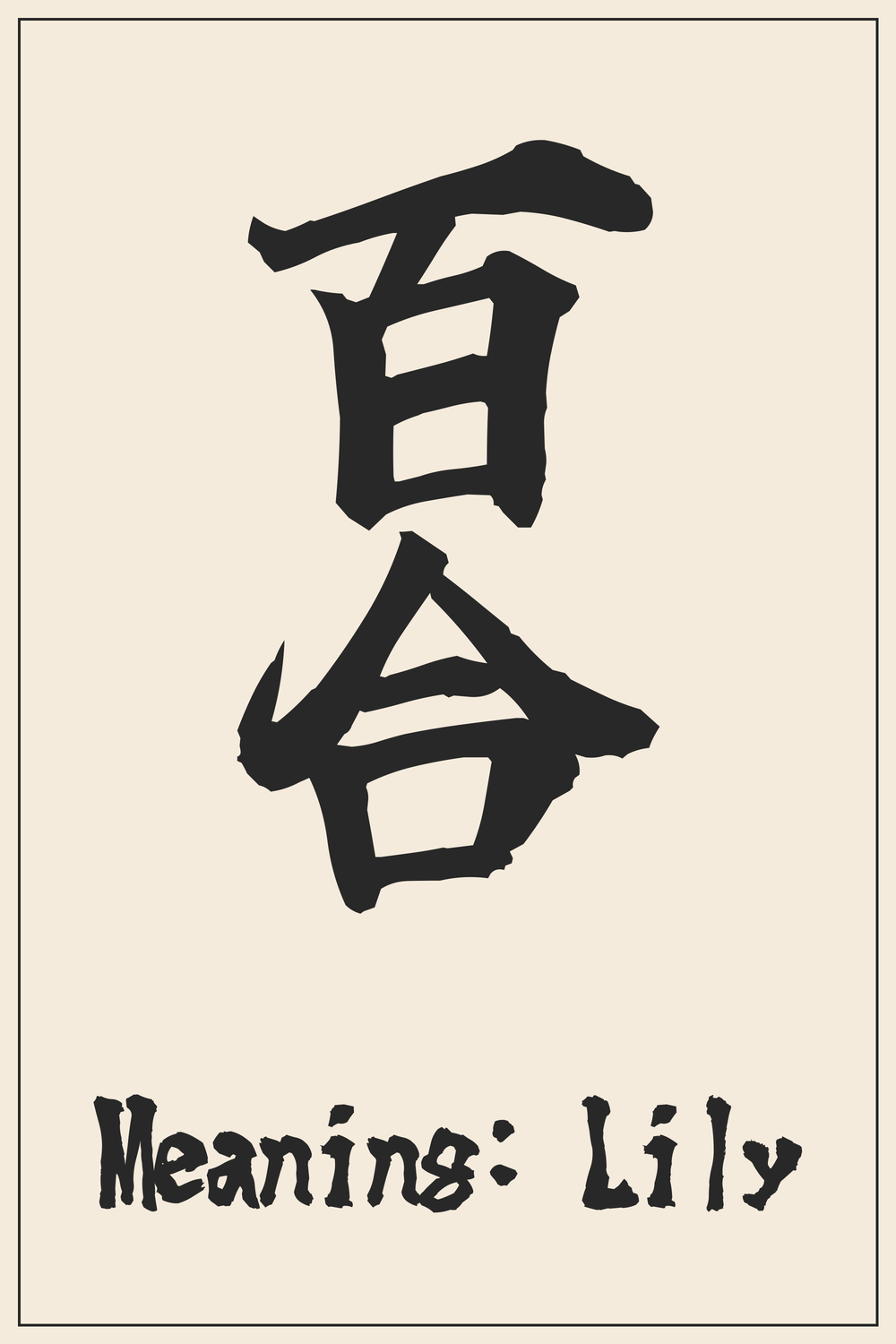
🖌️ Calligraphy Style
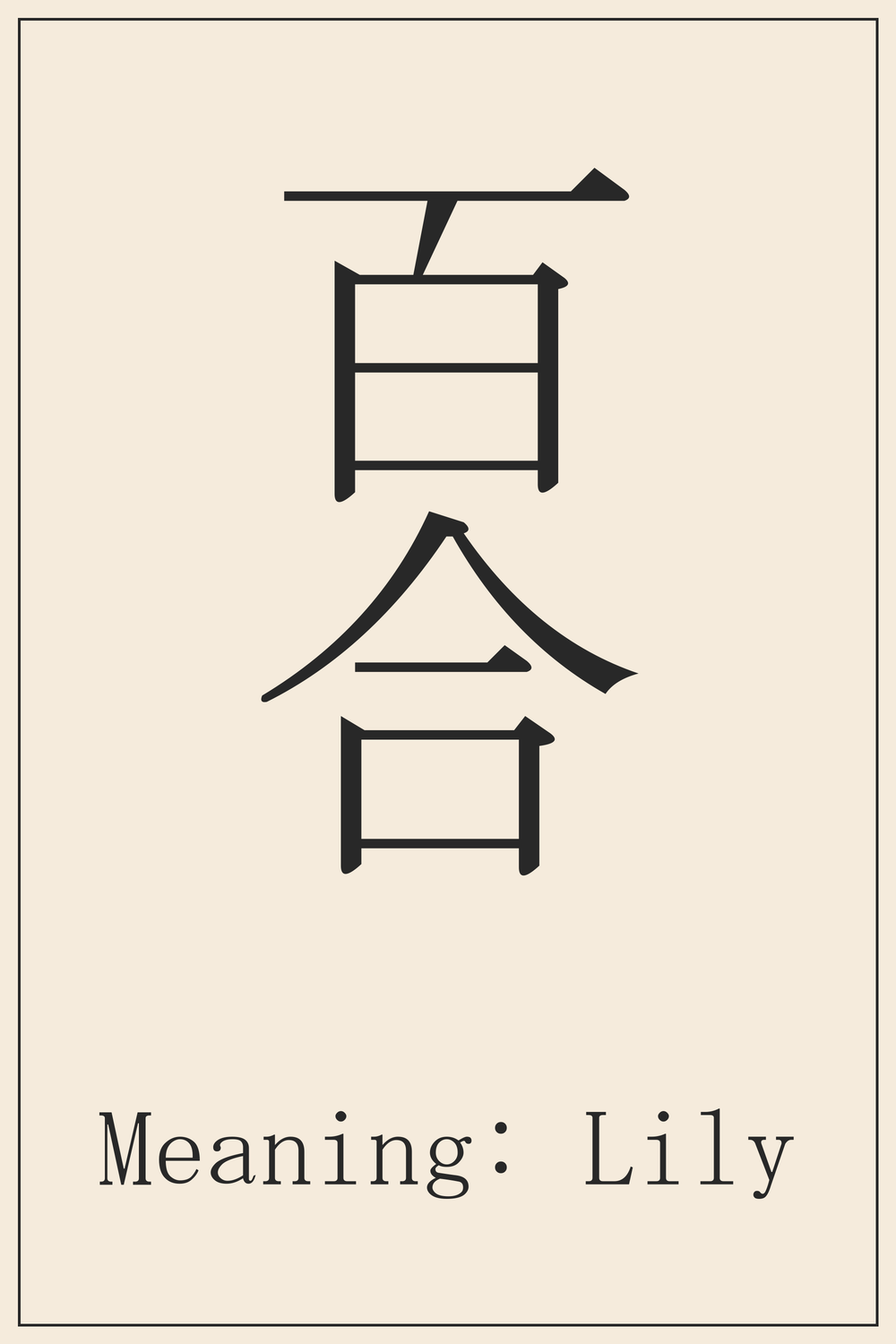
📝 Mincho Style
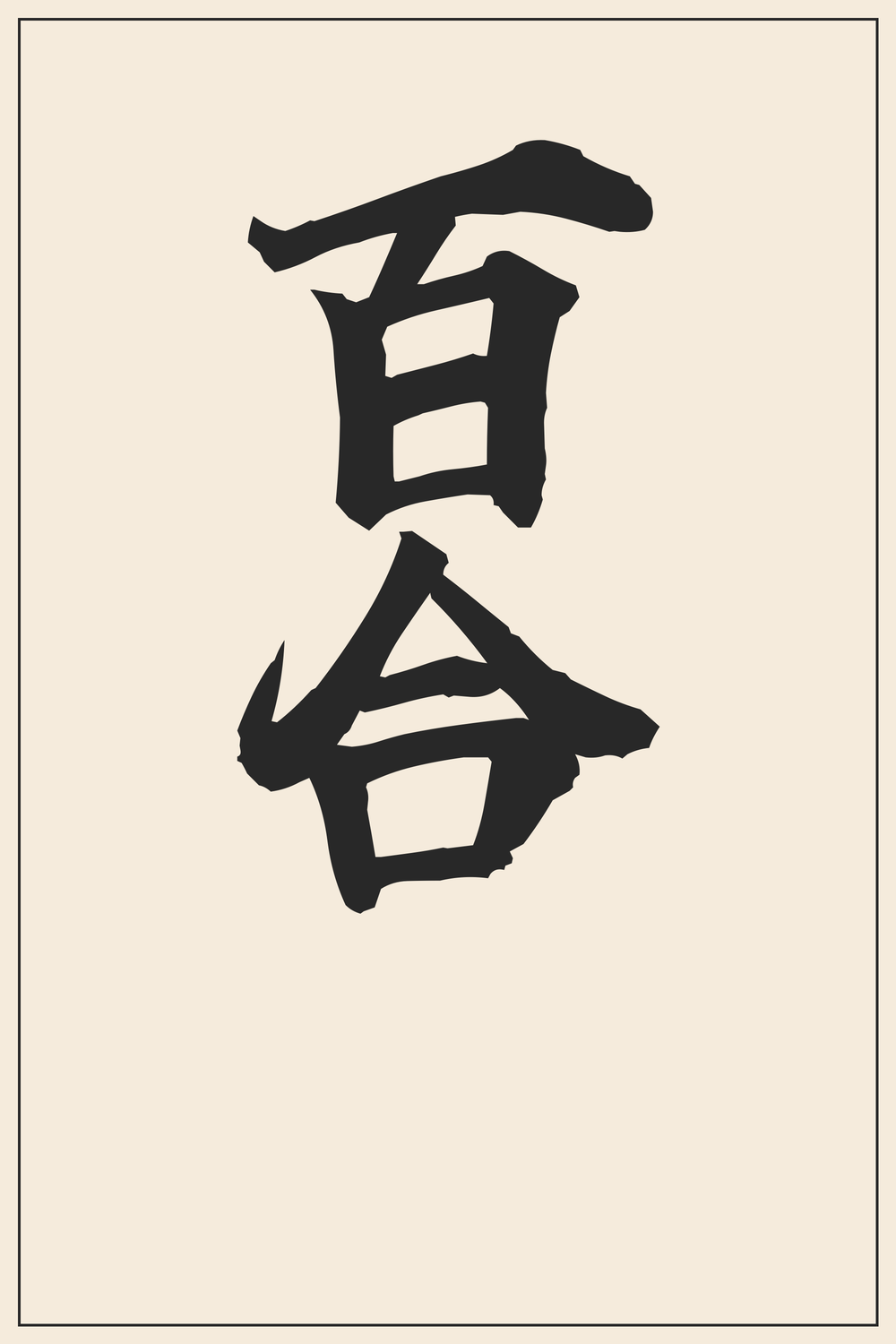
📜 Vertical Writing
⚡ Quick Facts
Breaking Down 百 (Hyaku)
The character 百 represents “one hundred”—not mystical or metaphorical but literally the number 100. Its structure combines 白 (white) with a modified top stroke, though the etymological connection to whiteness remains debated. In ancient counting systems, one hundred represented completion, totality, “as many as you can imagine”—the highest round number before shifting to abstract concepts of infinity.
In compound words, 百 often means “many” or “all kinds” rather than exactly one hundred: 百科事典 (hyakka-jiten, encyclopedia—literally “hundred-subjects dictionary”), 百貨店 (hyakkaten, department store—”hundred-goods store”), 百面相 (hyakumensō, making many funny faces). The number suggests variety, multiplicity, abundance—everything you could possibly want or imagine.
In 百合, the “hundred” isn’t literal counting. It suggests “numerous,” “many,” “countless”—describing how lily bulbs contain dozens of overlapping scales rather than exactly one hundred. The character establishes scale and multiplicity, setting up the gathering/combining concept that follows in the second character.
In Chinese tradition, lilies became wedding symbols partly because 百合 sounds like 百年好合 (bǎiniánhǎohé)—”may you have a hundred years of harmonious unity.” The phonetic connection between lily bulbs’ physical structure and marriage’s ideal unity made lilies popular gifts for newlyweds, representing hope that many elements would combine into lasting happiness.
Breaking Down 合 (Gō/Au)
The character 合 originally depicted a lid fitting over a vessel—the top and bottom elements coming together perfectly. From that concrete image, it evolved to mean “to join,” “to combine,” “to fit together,” “to match,” “to gather.” It appears throughout Japanese vocabulary related to union and combination: 合体 (gattai, fusion), 結合 (ketsugō, connection), 場合 (baai, case/situation—literally “place-combination”).
As a verb, 合う (au) means fundamental compatibility—things that match, fit together, or work in harmony. 似合う (niau) means “to suit” someone aesthetically. 話し合う (hanashiau) means “to discuss”—literally “to talk together.” 出会う (deau) means “to meet”—paths coming together. The character always suggests elements finding proper alignment or unity.
In 百合, the 合 describes how numerous scales overlap and nest together forming the lily bulb. Each individual scale curves to fit against its neighbors, creating structural integrity through cooperation. The bulb isn’t carved from solid material—it’s assembled from many pieces that learned to combine perfectly. That’s the image Chinese botanists captured when they named the lily “hundred gatherings.”
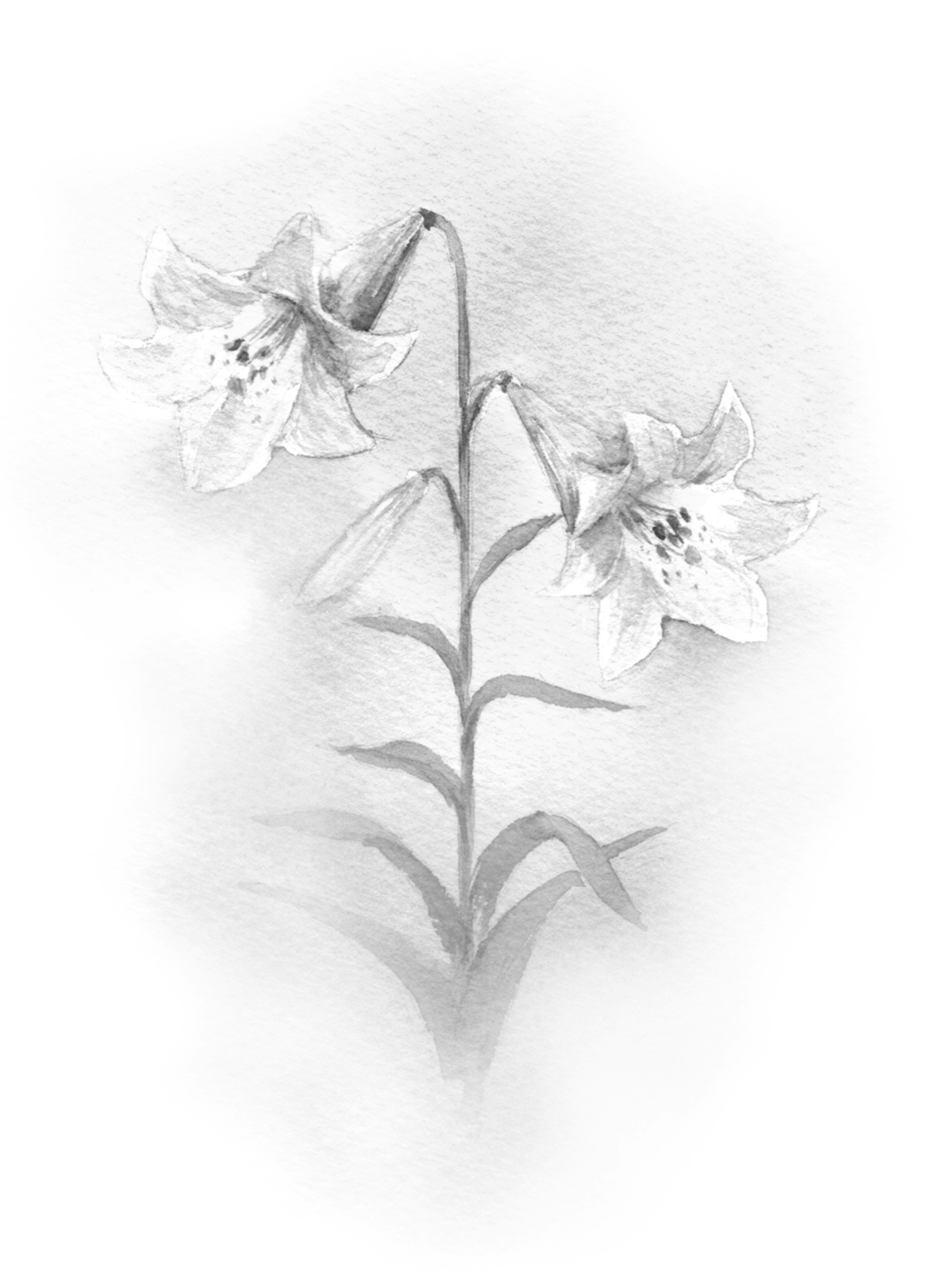
Grace above ground, complexity below—the lily in full bloom
Traditional Symbolism
White lilies in Japanese culture carry meanings borrowed from multiple sources. Christianity’s association with the Virgin Mary imported purity and innocence symbolism. Greek and Roman traditions linked lilies to beauty and femininity—brides wore lily garlands, Romans stuffed pillows with lily petals for their fragrance. These Western associations merged with indigenous Japanese appreciation for the flower’s elegant simplicity.
The Japanese mountains host several native lily species. 山百合 (yama-yuri, mountain lily) grows wild across hillsides, producing large white flowers with golden centers and red spots. These lilies bloom in summer, their strong fragrance carrying across forests. 笹百合 (sasa-yuri, bamboo lily) produces smaller pink flowers. 鉄砲百合 (teppō-yuri, trumpet lily) got its name from the flower’s resemblance to a rifle barrel. Each variety carried specific cultural associations.
Lilies appear in traditional color-layering systems for kimono. The 百合 color scheme featured red outer fabric with reddish-gold inner layers, worn in summer when lilies bloomed. The color combination echoed certain lily varieties’ petal coloration, connecting fashion to seasonal natural beauty through subtle aesthetic reference that educated viewers would recognize and appreciate.
Funeral Flowers and Grief
White lilies serve double symbolic duty in Japanese culture—representing pure joy at weddings while also appropriate for funerals and memorials. Their white color invokes serenity and peace. The flower’s transience—blooming gloriously then fading—mirrors life’s passage from birth to death. Buddhist philosophy emphasizes impermanence, and lilies visually demonstrate that teaching through their brief flowering period.
White and yellow chrysanthemums remain the traditional Japanese funeral flowers, but white lilies appear frequently at gravesites and memorial services, especially for younger deceased individuals. The lily’s association with purity makes it particularly appropriate for commemorating children or young people whose lives ended before they accumulated life’s complications and compromises.
This dual symbolism—joyful purity and sorrowful grief—doesn’t create confusion in practice because context determines interpretation. A bride carrying white lilies celebrates innocence beginning married life. The same flowers placed at a grave honor innocence returning to the earth. The flower’s meaning adapts to the occasion while maintaining its core association with purity, beauty, and the transient nature of all beautiful things.
Lily bulbs (百合根, yurine) are edible delicacies in Japanese cuisine, typically prepared as tempura, steamed in savory egg custard (chawanmushi), or sautéed. They taste slightly sweet with starchy texture similar to potatoes. The season runs November through February. Those overlapping scales making the bulb structurally interesting also make it culinarily valuable—each scale cooks individually while the whole holds together.
Modern Yuri Culture
In the early 1970s, Japan’s pioneering gay magazine Barazoku (薔薇族, “Rose Tribe”—bara/rose symbolizing male homosexuality) created a women’s section called “Yurizoku no Heya” (百合族の部屋, “The Lily Tribe Room”). This established yuri/lily as the female equivalent to bara/rose, creating parallel flower symbolism for same-sex attraction.
The term evolved through shoujo manga (girls’ comics) and anime to describe romantic or emotional relationships between female characters. Yuri became an entire genre—stories exploring attraction, friendship, and romance between women, ranging from innocent hand-holding to explicit sexual content. The term spread internationally, adopted into English anime fandom vocabulary without translation.
This modern usage connects obliquely to the traditional symbolism. Lilies represented ideal feminine purity in early 20th-century Japanese girls’ school culture, where intense emotional friendships between female students (called “S” relationships) were romanticized as pure spiritual connections. The lily’s association with refined feminine beauty and pure emotion made it perfect shorthand for female-female romantic relationships when those needed symbolic representation.
The yuri genre meaning remains primarily Japanese and anime-community usage. In mainstream Japanese culture, 百合 still primarily means the flower. If you tell someone your tattoo is a yuri, they’ll likely think you love lilies, not that you’re signaling LGBTQ identity—unless the context suggests otherwise. The symbol’s meaning depends heavily on which cultural space you’re navigating.
🎨 Tattoo Design Ideas
- ✨ Kanji with Floral Integration – The two characters 百合 placed alongside or wrapping around a stylized lily flower illustration creates beautiful unity between written and visual elements. Keep the flower elegant and simplified—traditional sumi-e style rather than photorealistic. Perfect for shoulder blade, thigh, or ribcage placements (6-9 inches).
- ✨ Vertical Traditional Format – Two characters stacked vertically in classic calligraphy honors authentic Japanese writing direction. The simplicity lets the kanji make full impact without competing elements. Ideal for spine, forearm, or behind-ear placements where vertical text flows naturally (3-5 inches).
- ✨ Minimalist Modern Line – Clean, precise strokes without decorative flourish work beautifully for contemporary aesthetic. The two characters remain elegant and readable even at smaller sizes. Perfect for wrist, ankle, or collarbone placements (2-4 inches) where subtlety matters.
- ✨ Watercolor Background – Bold black characters with soft watercolor wash suggesting lily petals behind them—whites, pale yellows, soft pinks. The color should enhance rather than overwhelm. Keep washes subtle and atmospheric, letting the kanji dominate the composition.
- ✨ Single Bloom Accent – Place 百合 as primary focus with one delicate lily bloom sketched minimally beside or above the characters. The flower should feel like punctuation or accent mark, not co-equal element. This design celebrates both the word and what it names without cluttering.
- ✨ Circular Composition – Arrange the characters in gentle arc or circle, perhaps with thin stem and lily silhouette completing the circular form. This creates enclosed composition while maintaining kanji readability. Works beautifully for shoulder, upper arm, or calf placements.
Who Chooses This Tattoo
People named Yuri (a common Japanese female given name) sometimes tattoo 百合 as permanent signature connecting them to their name’s meaning and cultural roots. The tattoo becomes personal identifier and cultural anchor, especially for people of Japanese heritage living outside Japan who want visible connection to their ancestry.
Those drawn to traditional symbolism choose lilies representing purity, elegance, and natural beauty. The lily works as feminine symbol without being cliché—more sophisticated than roses or butterflies, carrying deeper cultural and literary associations. The characters add intellectual and aesthetic dimension that pure floral illustration lacks.
Within LGBTQ communities, especially among women who love women and anime/manga fans, 百合 serves as subtle signal of identity and cultural belonging. It’s legible to those who know, invisible to those who don’t—allowing wearer to control disclosure. The symbol lets you claim community membership without billboard announcement.
Be aware that 百合 carries different meanings in different contexts. To most Japanese speakers, it means “lily flower” with traditional associations of purity and elegance. To anime/manga fans and LGBTQ communities, it signals yuri genre and female-female relationships. Your tattoo’s “meaning” depends on who’s reading it and in what context—which can be feature or bug depending on your intentions.
Why These Characters Endure
The disconnect between sound (yuri, from swaying) and characters (百合, from bulb structure) creates accidental poetry. You get dual imagery—the visible flower trembling in breeze AND the hidden bulb holding it steady through cooperation of many scales. That duality makes lilies perfect metaphors: beauty supported by hidden complexity, elegance built on foundation of many elements working together.
The lily adapts symbolically to whatever meaning people need. Pure innocence for weddings. Peaceful grief for funerals. Feminine beauty in classical art. Coded identity in modern subcultures. The flower remains flexible enough to carry contradictory meanings simultaneously without losing coherence. That symbolic elasticity ensures continued relevance across changing cultural contexts.
百合 endures because it names something genuinely beautiful—a flower that blooms spectacularly then fades, teaching impermanence through aesthetic experience rather than abstract lecture. Whether you connect to traditional purity symbolism, appreciate botanical poetry, claim LGBTQ identity, or simply love how lilies look trembling in mountain wind, these characters hold space for your interpretation. That openness, combined with genuine elegance, makes them worth carrying permanently.
Comments