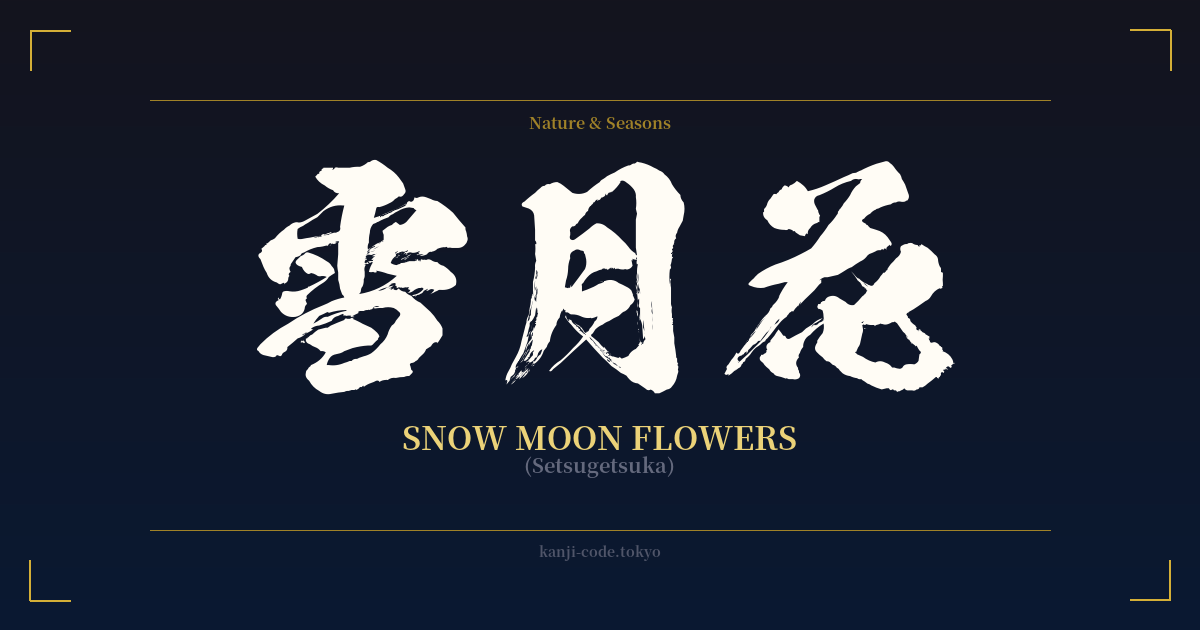
✍️ 雪月花 (Setsugetsuka) — Cultural Context
雪月花 (Setsugetsuka), translating to “Snow, Moon, Flowers,” is one of the most elegant and profound expressions in Japanese aesthetics. It encapsulates the transient beauty of nature as it cycles through the seasons, evoking a deep, often bittersweet appreciation for the moments that pass.
The phrase originates from a line in a 9th-century Chinese poem by the Tang dynasty poet Bai Juyi. Writing to a distant friend, he lamented, “At times of snow, moon, or flowers, I think of you most.” In its original context, it was a personal expression of longing, where the beauty of nature amplified the pain of separation.
When these characters arrived in Japan, they were absorbed into the court culture of the Heian period (794-1185). Japanese poets and writers, such as Sei Shōnagon in her famous “Pillow Book,” began using the term. However, its meaning underwent a subtle but significant transformation. It evolved from a personal feeling of missing someone into a broader, more philosophical concept about the poignant beauty of nature itself.
Each element of Setsugetsuka corresponds to a specific season and its associated mood. 雪 (yuki), or snow, represents the stark, silent purity of winter. 月 (tsuki), the moon, symbolizes the clear, contemplative melancholy of autumn. And 花 (hana), the flowers—most often interpreted as cherry blossoms (sakura)—signify the vibrant, ephemeral joy of spring. Together, they form a complete cycle, a tribute to the Japanese sensitivity to seasonal change.
This concept is deeply intertwined with other core Japanese aesthetic ideas like “mono no aware” (the pathos of things) and “wabi-sabi” (finding beauty in imperfection and impermanence). Setsugetsuka isn't just about pretty scenery; it's about recognizing that beauty is powerful precisely because it is fleeting. The snow melts, the moon wanes, and the blossoms fall. This understanding encourages a mindful appreciation of the present moment.
Beyond literature, Setsugetsuka is a recurring theme in Japanese art. It appears in triptychs of hanging scrolls, garden designs where specific plants are chosen to highlight each season, and variations of the tea ceremony. It remains a powerful symbol of nature's delicate and heartbreaking beauty.
🖌️ Font Styles for 雪月花
The same kanji can look dramatically different depending on the calligraphy style. Choose a font that matches the mood you want for your tattoo or design.
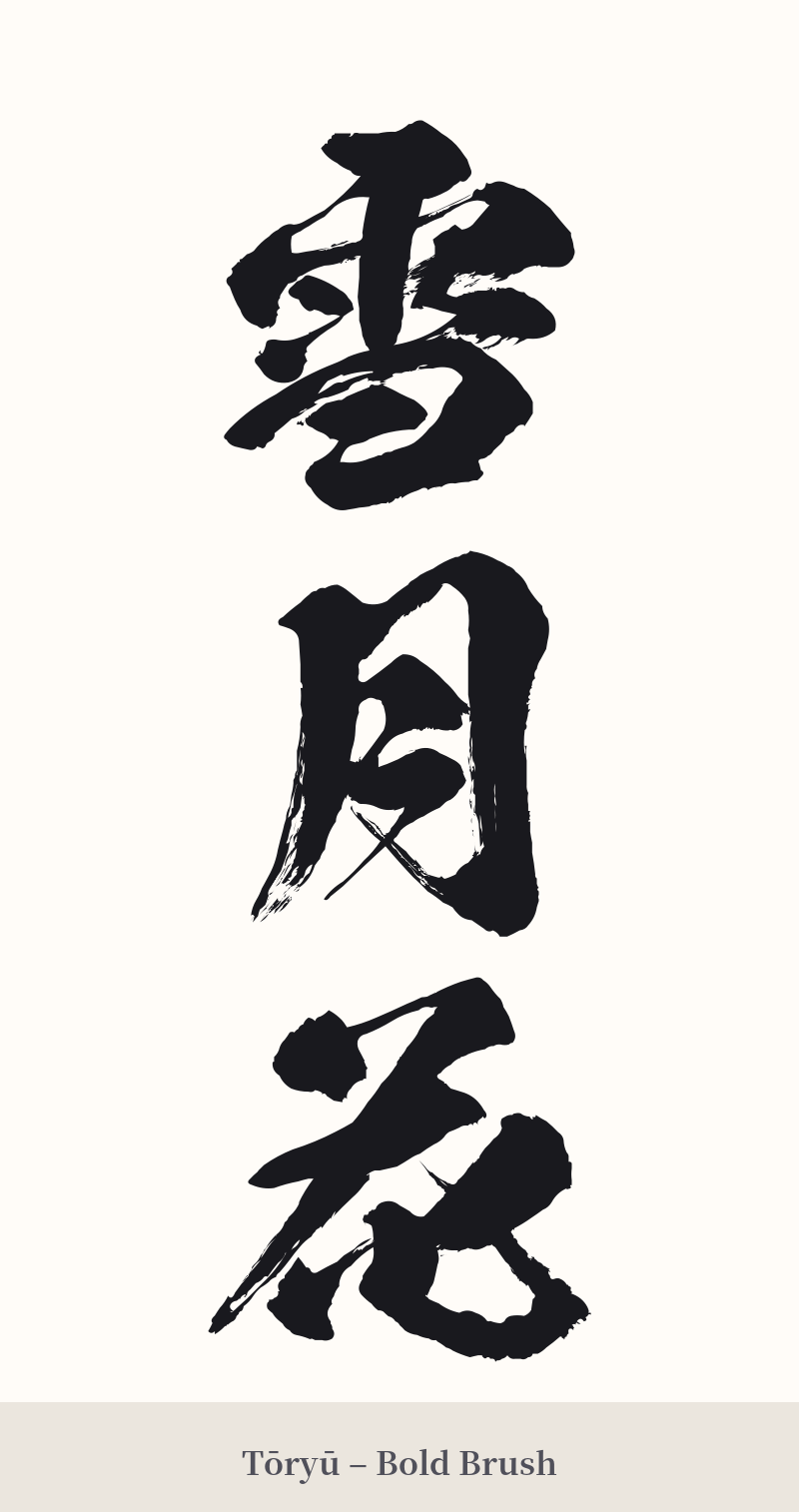
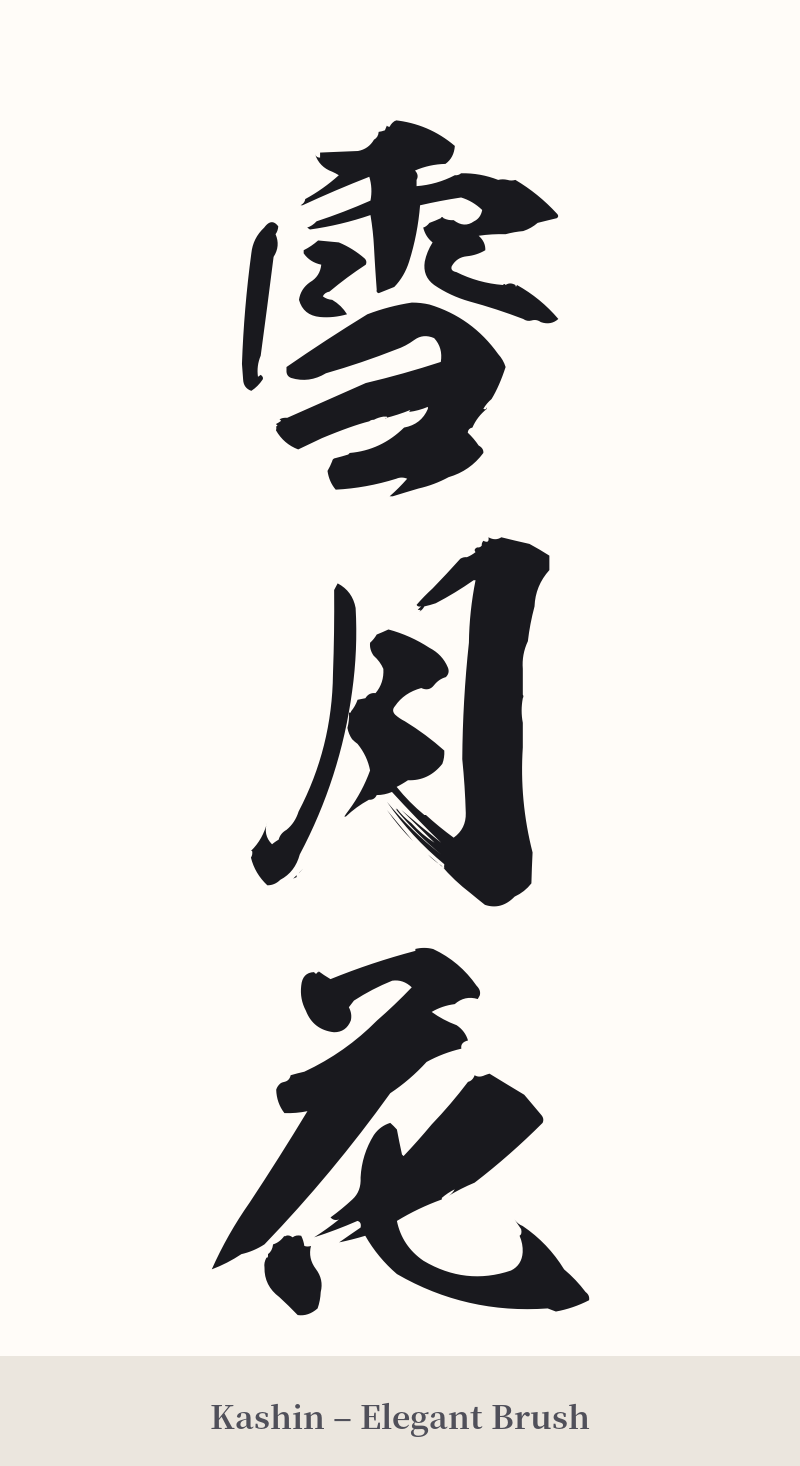
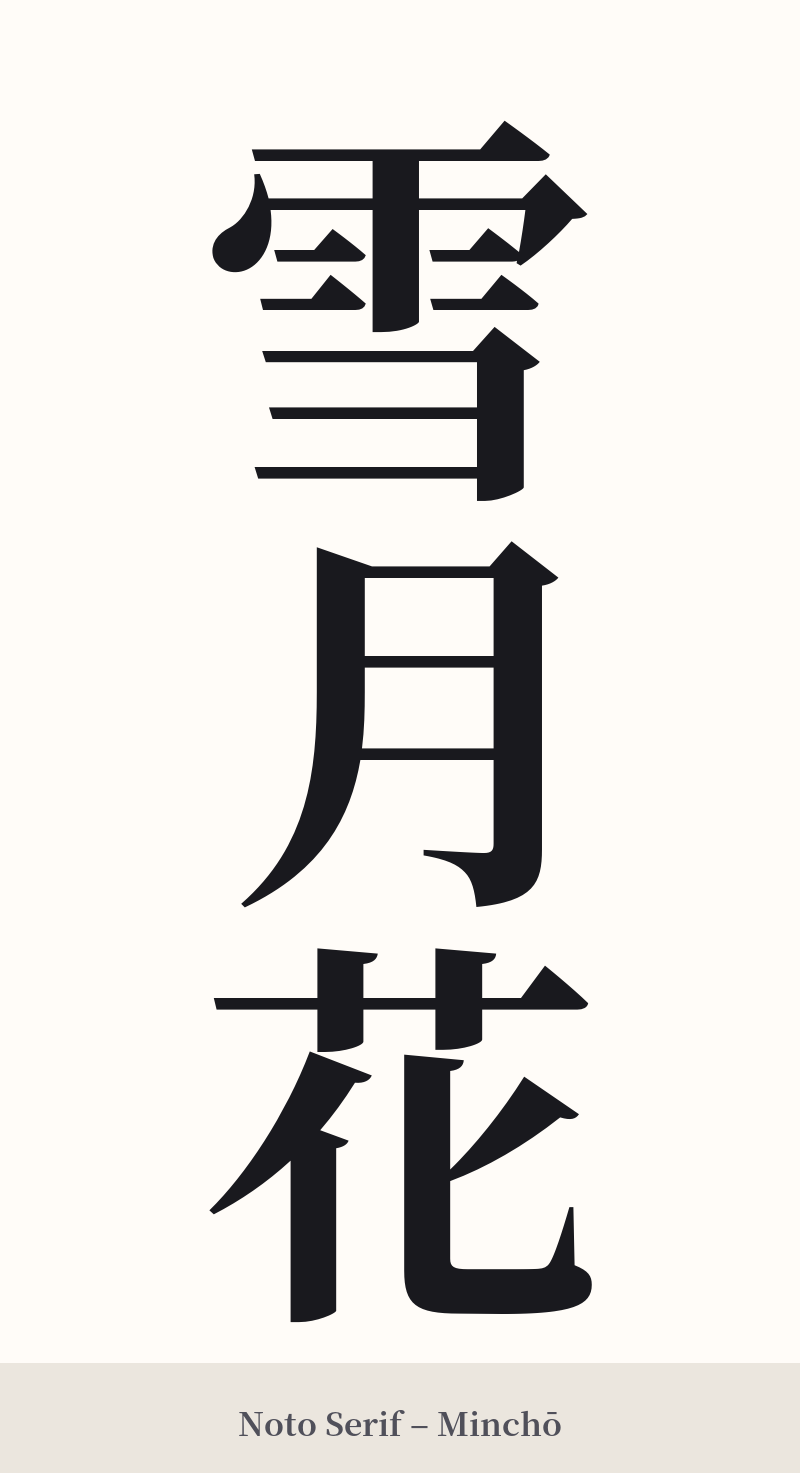
🎨 Tattoo Suitability
📐 Tattoo Design Guide
The three characters of 雪月花 offer a beautifully balanced and poetic design. A vertical alignment is the most traditional and visually impactful choice, making it ideal for the forearm, spine, or along the calf.
– Placement: A vertical column flows elegantly down the arm, leg, or back. For a horizontal design, the chest or upper back provides a wide enough canvas to give each character space to breathe.
– Font Style: Calligraphic styles work best to capture the artistic essence of Setsugetsuka. A semi-cursive script (Gyōsho) can add a sense of flow and elegance, reflecting the natural theme. For a more formal and bold look, a standard block script (Kaisho) provides clarity and strength.
– Visual Embellishments: Consider subtly incorporating the elements themselves into the design. A few falling cherry blossom petals, a delicate crescent moon, or the pattern of a snowflake could be woven around or near the kanji. This can be done with fine-line work or soft watercolor shading to enhance the theme without overpowering the characters.
Comments