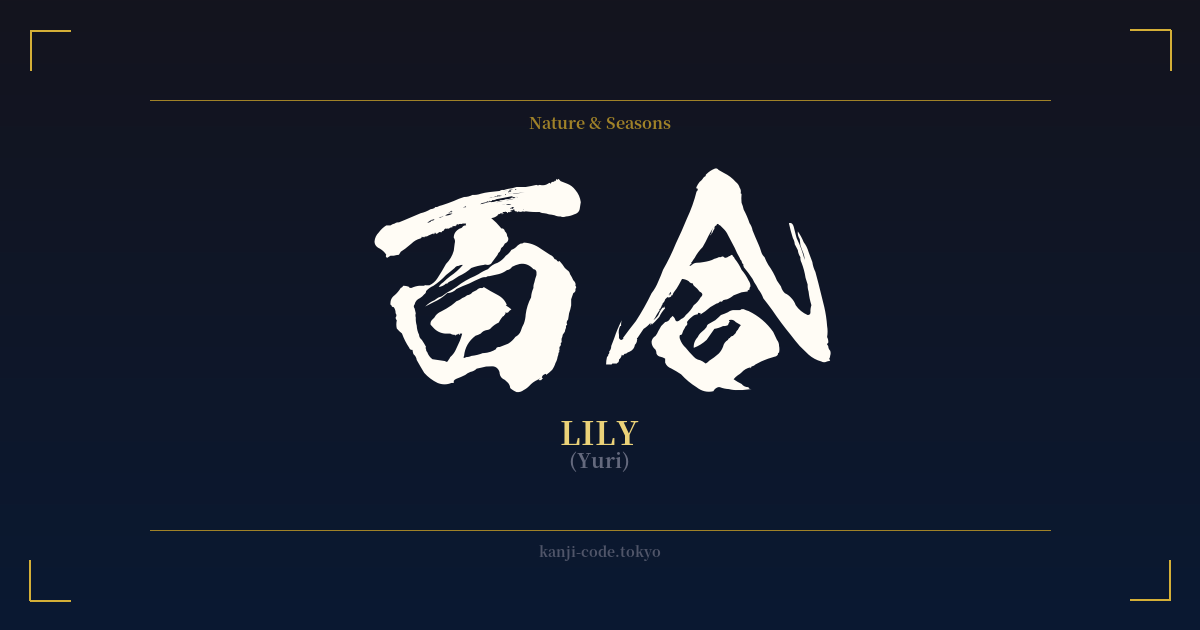
✍️ 百合 (Yuri) — Cultural Context
The word 百合 (Yuri) evokes the image of the lily flower, a symbol of purity, elegance, and renewal in Japanese culture. Its graceful form and often-white petals have made it a favorite in art, poetry, and gardens for centuries, representing virtue and the refined beauty of summer.
The story of its name, however, reveals a beautiful complexity. The Japanese word for lily, 'yuri', is thought to originate from the verb 'yuru' (揺る), meaning 'to sway' or 'to tremble.' Early Japanese speakers observed the delicate flower head nodding and dancing in the wind on its slender stalk and named it for this gentle motion.
But when it came time to assign kanji, scribes chose characters that described a different, hidden aspect of the plant. They selected 百合, which literally translates to 'hundred meetings' or 'hundred unions.' This isn't about the flower at all; it's about the bulb. If you were to dig up a lily, you would find its bulb is not a single, solid unit but is composed of dozens, even hundreds, of small, overlapping scales. The kanji 百 (hundred, many) and 合 (to join, to meet) perfectly describe this underground structure—a multitude of parts coming together to create a single organism.
This creates a wonderful poetic duality. The sound 'yuri' describes the visible, ephemeral beauty of the swaying flower, while the characters 百合 describe the hidden, complex, and foundational structure that supports it. It’s a metaphor for visible grace being sustained by unseen unity and strength.
In the 20th century, 百合 gained an entirely new layer of meaning. In the 1970s, the term was adopted by the editor of a magazine for gay men to refer to lesbian relationships, creating a counterpart to 'bara' (薔薇, rose) for gay male media. This usage stuck and grew exponentially. Today, 'Yuri' is the universally recognized term for the genre of manga, anime, and light novels that focuses on romantic and intimate relationships between female characters.
This modern association is now arguably as famous as the botanical one, especially among younger generations and international fans of Japanese pop culture. Therefore, the word 百合 carries a fascinating triple meaning: the swaying flower, the unified bulb, and a celebrated genre of romantic love. It’s a testament to how language evolves, layering new cultural significance onto ancient roots.
🖌️ Font Styles for 百合
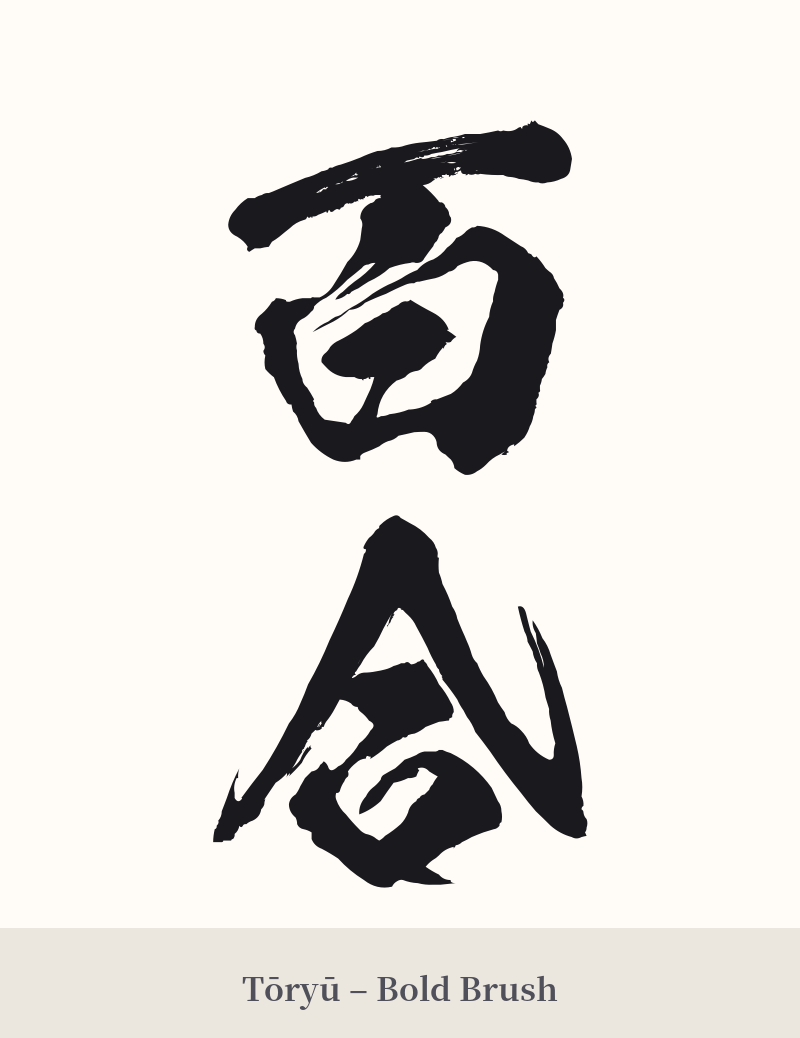
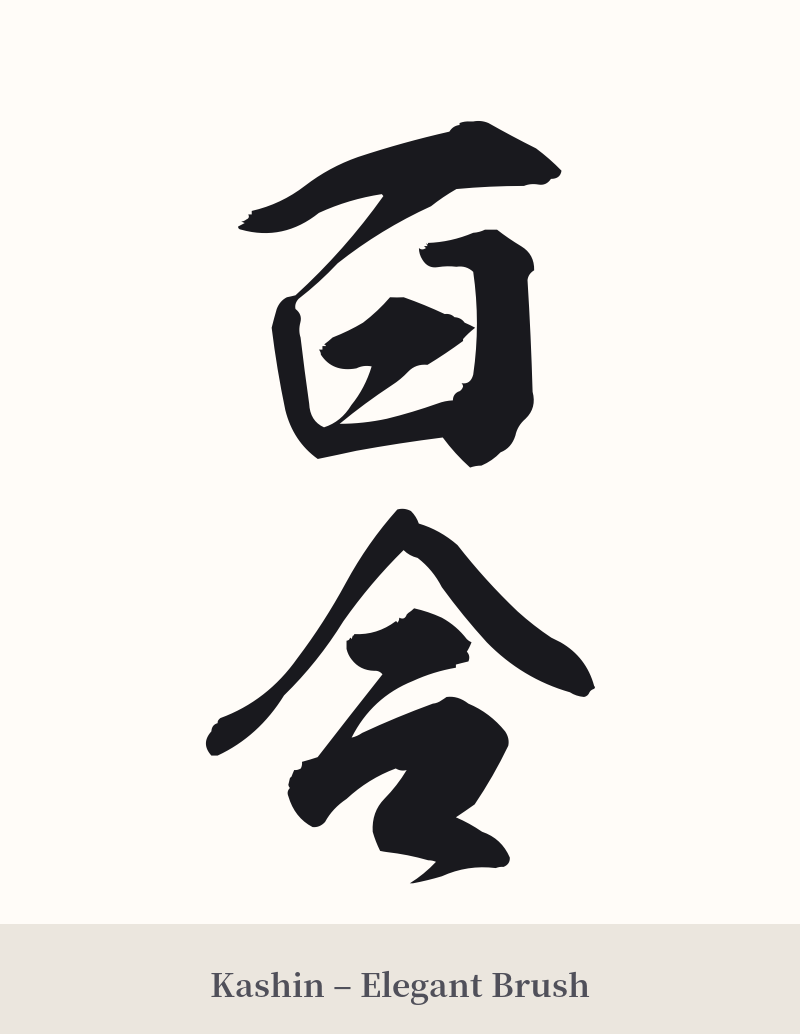
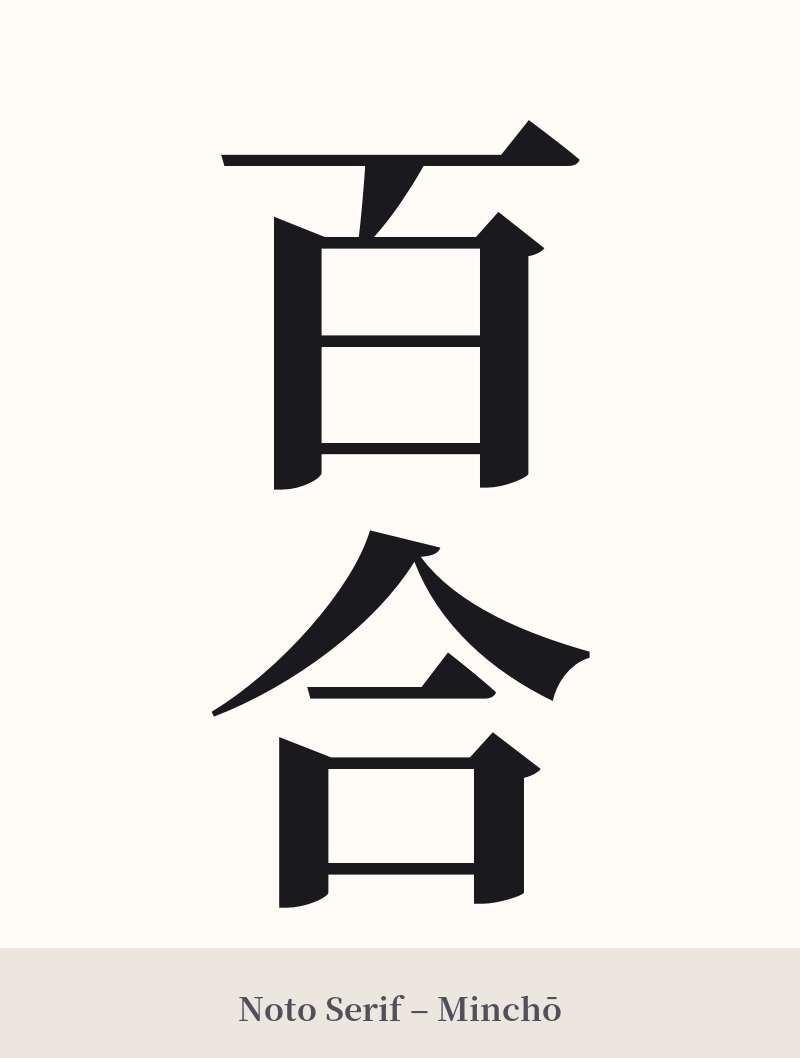
The same kanji can look dramatically different depending on the calligraphy style. Choose a font that matches the mood you want for your tattoo or design.
🎨 Tattoo Suitability
📐 Tattoo Design Guide
A 百合 tattoo offers a blend of elegance and layered meaning. Its simple characters lend themselves to a variety of artistic interpretations.
– Placement: For a vertical design, the forearm, shin, or along the spine can create a graceful and flowing look. For a more subtle placement, the wrist, ankle, or behind the ear works well.
– Font Style: A minimalist, clean font (like a modern Mincho style) can emphasize the kanji's simplicity and purity. Conversely, a flowing, cursive-like shodō (calligraphy) script can capture the 'swaying' nature of the flower's origin.
– Visual Elements: Consider pairing the kanji with a line-art illustration of a lily flower. The tattoo could feature the kanji written on the stem of the flower or placed beside it, creating a direct visual link between the symbol and its meaning.
Comments