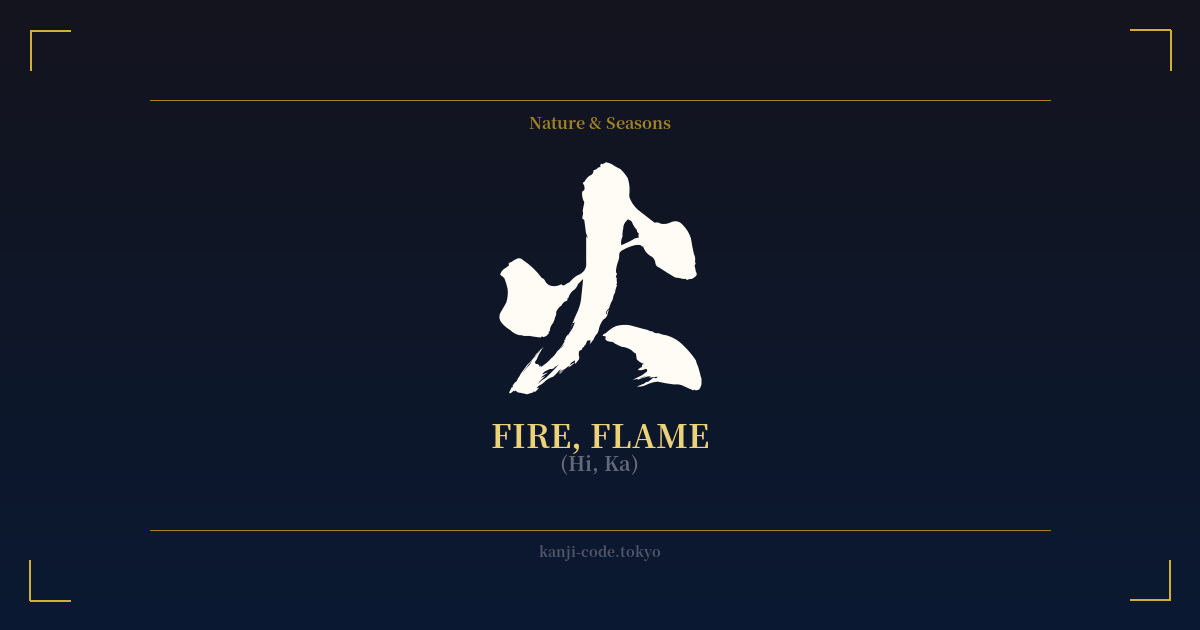
✍️ 火 (Hi, Ka) — Cultural Context
The kanji 火 (hi, ka) is more than just a symbol for fire; it is a pictograph born from the very image of a flickering flame, a primal force that has shaped human civilization and spirituality for millennia. Its simple, four-stroke form is thought to represent a central fire with sparks flying off to the sides, capturing the dynamic and untamable nature of the element itself. In its simplicity lies a universe of meaning.
In Japanese philosophy, 火 is one of the five core elements of the Godai (五大), alongside Earth (地), Water (水), Wind (風), and Void (空). In this system, fire represents the energetic, forceful, and transformative aspects of the world. It is the element of passion, desire, drive, and movement. It is associated with the south, the season of summer, and the color red, embodying the peak of energy and activity.
This duality of creation and destruction is central to fire's symbolism in Japan. On one hand, fire is a force of purification in Shintoism. Sacred flames are used in rituals (oharai) to cleanse impurities and ward off evil spirits. The eternal flames at sacred sites like the Ise Grand Shrine are a testament to this divine connection. Fire is also the heart of the home—the hearth (irori)—and the tool of the craftsman, forging steel for swords and shaping pottery.
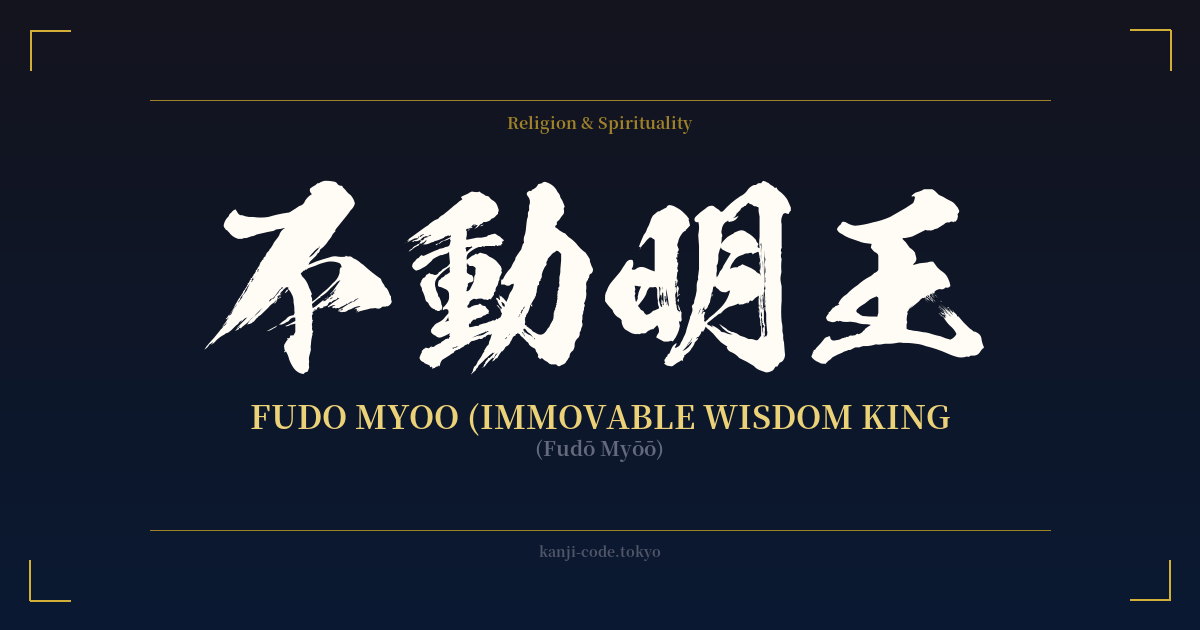
On the other hand, fire is a terrifying force of destruction, a reality for a country historically built of wood and paper. This destructive power is a frequent theme in Japanese art and literature. Yet, even in destruction, there is a sense of renewal, as seen in the Buddhist deity Fudō Myōō (不動明王), the Immovable Wisdom King. Surrounded by a halo of flames, he uses fire not to destroy, but to incinerate earthly passions, ignorance, and attachments, transforming them into wisdom and enlightenment. His fire is a compassionate, purifying force that cuts through delusion.
This rich symbolism permeates the Japanese language. A fit of rage is an 'angry fire' (怒りの火, ikari no hi), and a tense situation is like a 'spark' (火花, hibana) that could ignite a conflict. The popular saying 火のない所に煙は立たぬ (Hi no nai tokoro ni kemuri wa tatanu) means "Where there's no fire, there's no smoke," underscoring the idea that every rumor has a source. From grand fire festivals (himatsuri) that light up the night sky to the simple act of lighting a candle for an ancestor, the kanji 火 remains a potent and ever-present symbol of life's most powerful forces.
🖌️ Font Styles for 火
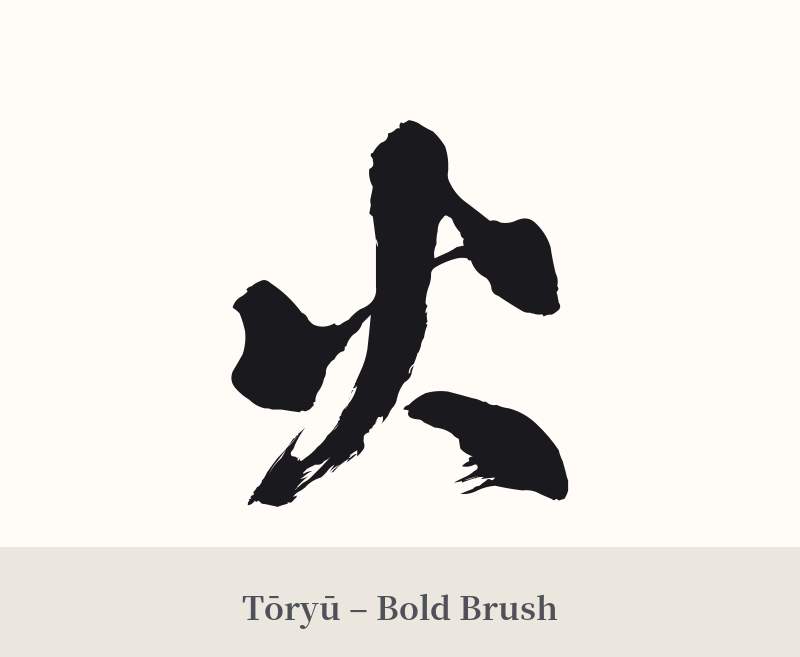
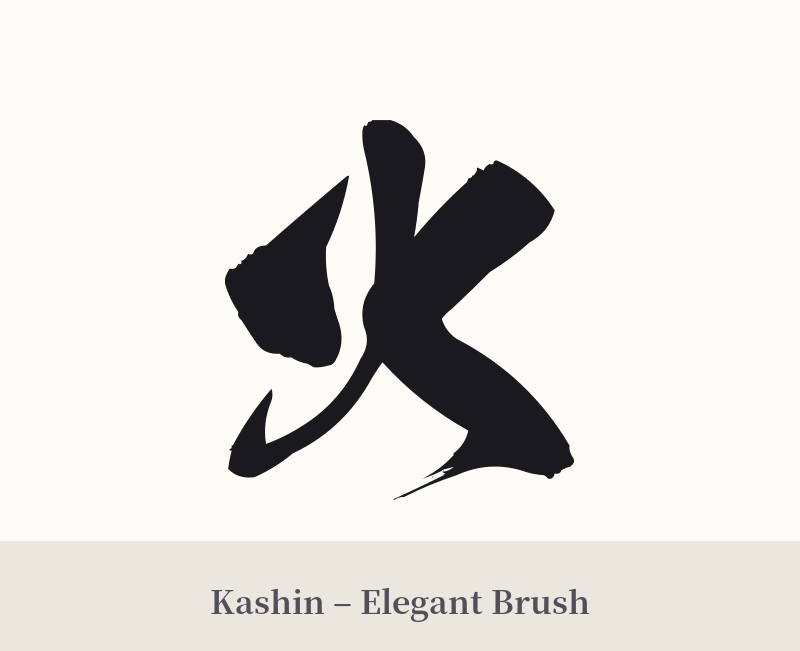
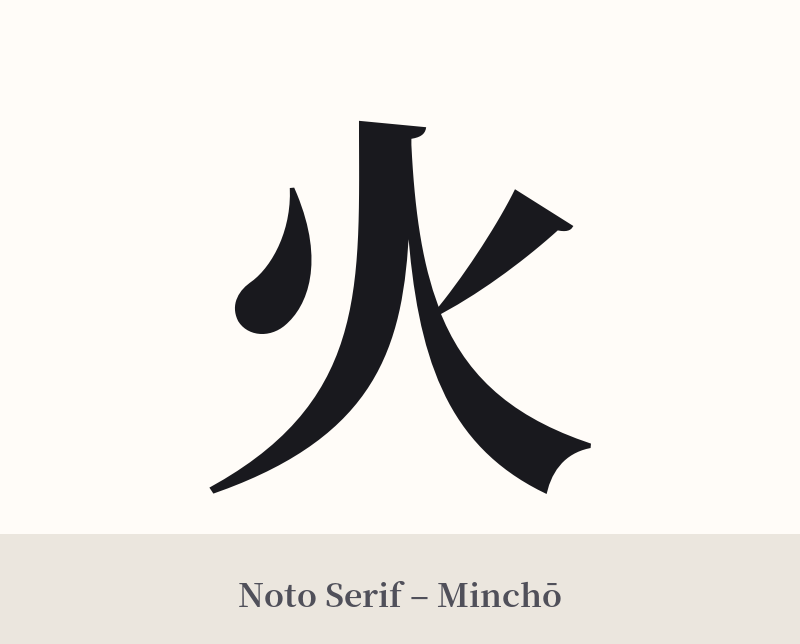
The same kanji can look dramatically different depending on the calligraphy style. Choose a font that matches the mood you want for your tattoo or design.
🎨 Tattoo Suitability
📐 Tattoo Design Guide
The kanji 火 offers tremendous versatility for a tattoo design due to its simple and iconic shape.
– Placement: Its balanced, vertical nature works well on the forearm, calf, bicep, or back of the neck. For a larger, more impactful piece, it can serve as a centerpiece on the chest or back.
– Style Suggestions: A traditional calligraphy (shodō) style is a classic choice. An aggressive, scratchy brushstroke can convey rage and power, while a softer, more fluid stroke can represent a flickering candle or a gentle spirit. For a modern take, a minimalist design with clean, sharp lines can emphasize its elemental purity.
– Visual Tips: Don't be afraid to integrate the kanji into a larger image. The character could be formed from licking flames, be branded onto another design element, or be the source from which a phoenix (火の鳥, Hi no Tori) emerges. This approach can help make a popular kanji feel deeply personal and unique.
Comments