✍️ 盆栽 (Bonsai) — Cultural Context
The word 盆栽 (Bonsai) literally translates to "tray planting." This simple translation, however, barely scratches the surface of a profound art form that is steeped in centuries of philosophy and aesthetic refinement. While Bonsai is famously Japanese, its roots trace back to the ancient Chinese practice of penjing (盆景), the art of creating miniature landscapes in containers.
This practice was introduced to Japan during the Kamakura period (1185–1333), where it was adopted and transformed by Zen Buddhist monks. For them, the act of cultivating a miniature tree was not merely horticulture; it was a form of meditation. It was a discipline requiring immense patience, foresight, and a deep connection to the natural world. The small, contained tree became a living representation of the universe, a focus for contemplation on life, aging, and the passage of time.
Over the centuries, Japanese artists refined the practice, developing distinct styles and techniques. They infused it with uniquely Japanese aesthetic principles. One of the most important is wabi-sabi (侘寂), the appreciation of beauty in imperfection and impermanence. A perfect, symmetrical bonsai is less valued than one that shows its age through a gnarled trunk, a missing branch, or a weathered bark. These "flaws" tell the story of the tree's struggle and survival, making it more beautiful and true to nature.
Another key concept is the harmony between humanity, nature, and the divine. The bonsai artist does not simply force the tree into a shape. Instead, they work with the tree's natural tendencies, guiding its growth over decades. It is a partnership, a slow and deliberate dialogue between the artist and the living plant. The resulting creation is more than just a tree in a pot; it is a harmonious sculpture that captures the spirit and essence of a full-sized tree in the wild.
Today, Bonsai is a respected art form practiced worldwide, but it remains a powerful symbol of Japanese culture. It represents discipline, the beauty of aging, the quiet satisfaction of long-term dedication, and the profound idea that one can find the entire universe within a small, carefully tended space.
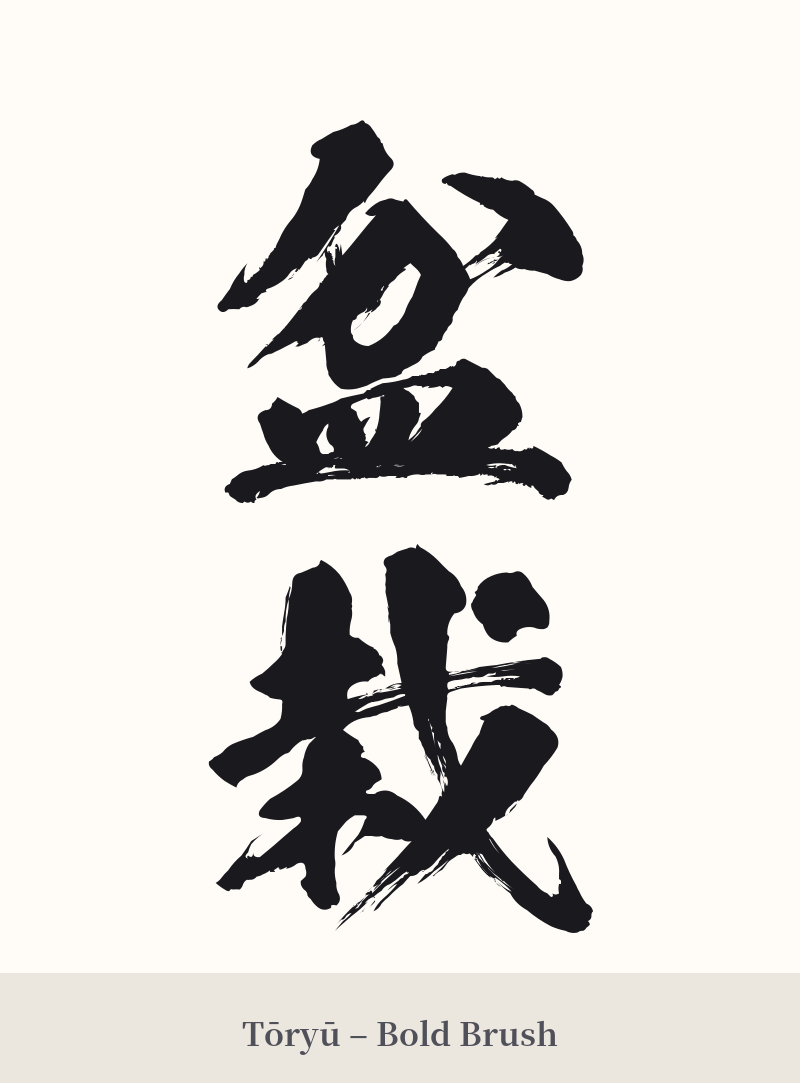
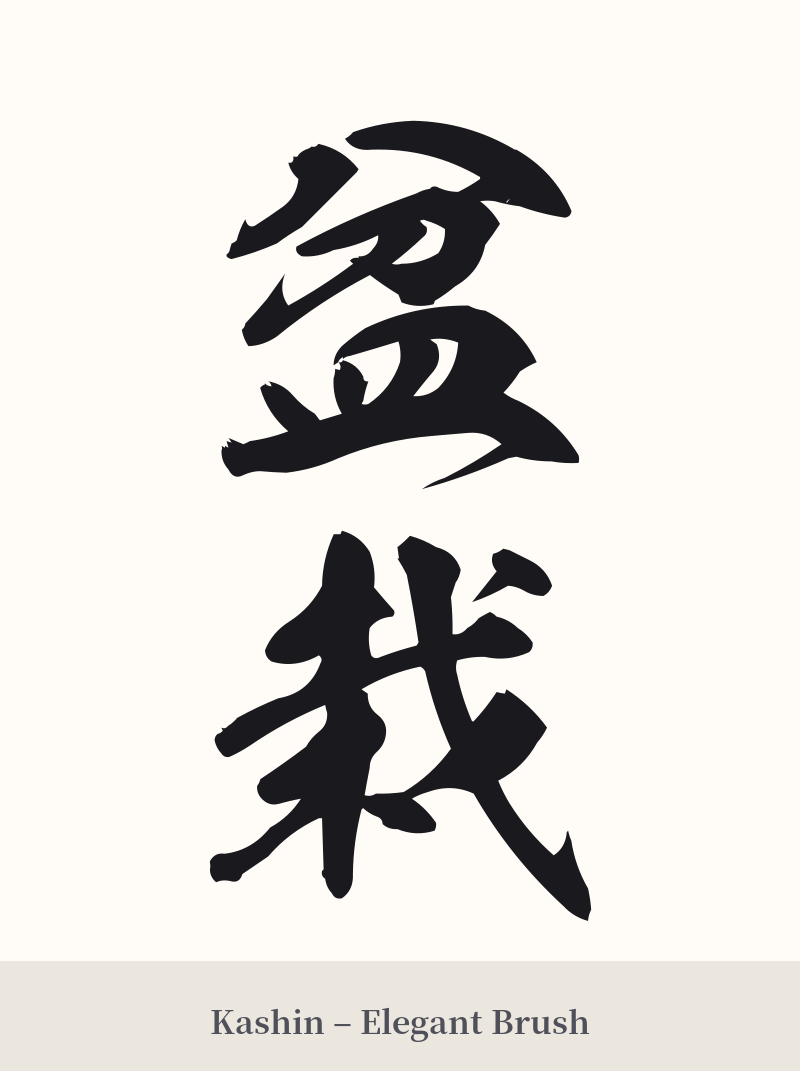
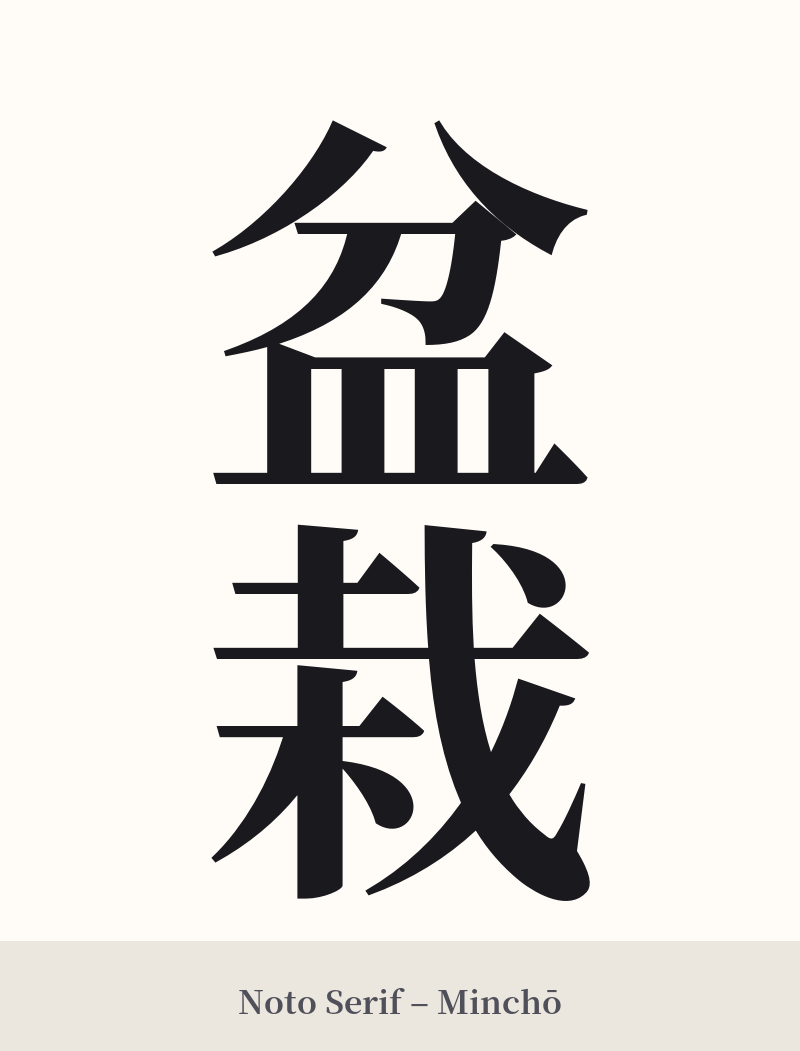
🖌️ Font Styles for 盆栽
The same kanji can look dramatically different depending on the calligraphy style. Choose a font that matches the mood you want for your tattoo or design.
🎨 Tattoo Suitability
📐 Tattoo Design Guide
A 盆栽 (Bonsai) tattoo is a statement of patience and artistic appreciation. The two-character composition offers good balance for various placements.
– Placement: This kanji works well both horizontally and vertically. A vertical arrangement on the forearm, bicep, or calf can beautifully mimic the upward growth of a tree. Horizontally, it fits well across the chest, upper back, or inner wrist. – Font Style: For a traditional and artistic feel, a semi-cursive script like Gyōsho (行書) can add a sense of fluidity and grace. For maximum clarity and a more formal look, a clean Kaisho (楷書) block script is a timeless choice. Avoid overly stylized or unreadable fonts that detract from the kanji's inherent form. – Visual Tips: Consider pairing the kanji with a minimalist enso circle or a subtle image of a bonsai tree itself. Ensure the artist leaves enough space between strokes, especially in the 栽 character, to prevent blurring over time. This is a design that benefits from precision.
Comments