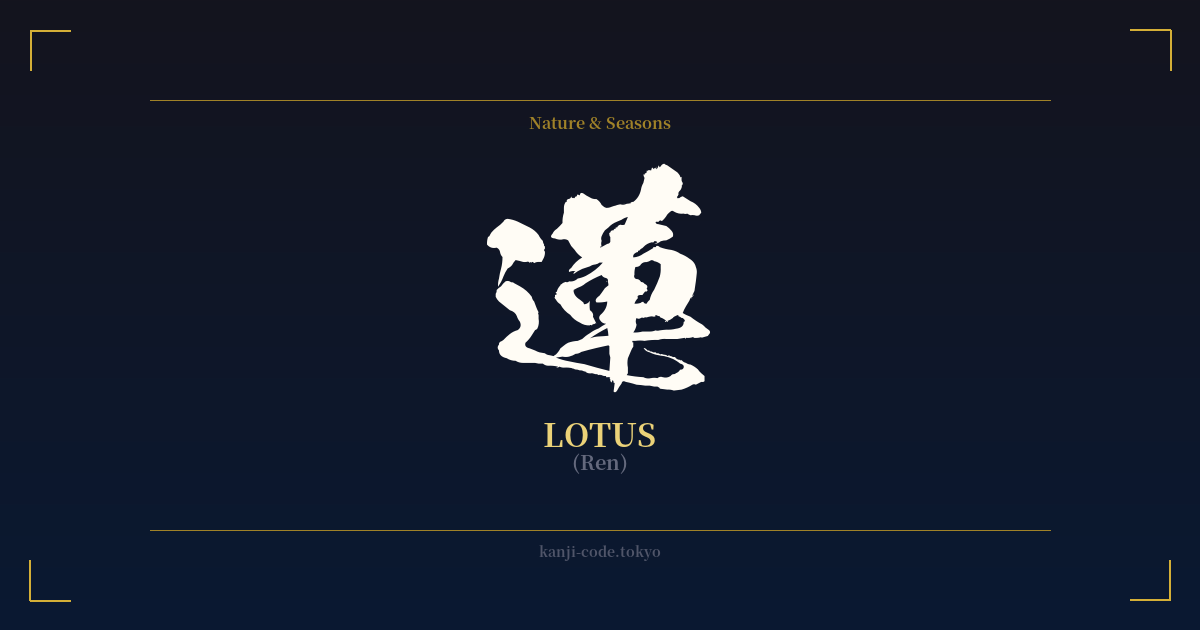
✍️ 蓮 (Ren) — Cultural Context
The kanji 蓮 (Ren) represents the lotus flower, one of the most powerful and revered symbols in Japanese and East Asian culture. Its significance is rooted in a simple yet profound observation: the lotus grows from the mud at the bottom of a pond, pushing its way through murky water to bloom immaculately on the surface. This journey has made it the ultimate emblem of purity, resilience, and spiritual awakening.
Deeply intertwined with Buddhism, the lotus is a central motif representing enlightenment. Many depictions of Buddha and Bodhisattvas show them seated upon a lotus throne, symbolizing their transcendent and pure state, untouched by the grime of the mortal world. The flower’s life cycle—budding, blooming, and seeding simultaneously—is seen as a metaphor for the past, present, and future existing at once, a key concept in Buddhist philosophy.
A famous Japanese proverb, 「泥中の蓮」 (deichū no hasu), translates to "a lotus in the mud." It celebrates the ability to live a virtuous life and maintain one's integrity despite being surrounded by corruption, hardship, or negativity. It speaks to an inner strength and a commitment to beauty and truth, regardless of external circumstances.
Beyond its spiritual weight, the lotus is a cherished part of Japan's natural aesthetic. Lotus ponds are popular destinations, especially in the summer when the flowers are in full bloom. The brief but spectacular beauty of the lotus has inspired countless poems, paintings, and artistic works throughout Japanese history, cementing its place as a symbol of transient yet profound beauty.
The character 蓮 itself is a combination of the radical 艹 (kusa-kanmuri), which signifies a plant, and the phonetic component 連 (ren), meaning "to connect" or "continuous." This phonetic part coincidentally adds another layer of poetic meaning, evoking the interconnected roots of the lotus plant and its continuous cycle of life, death, and rebirth. Today, 蓮 is also a popular and beautiful female given name in Japan, carrying all of the flower's positive connotations.
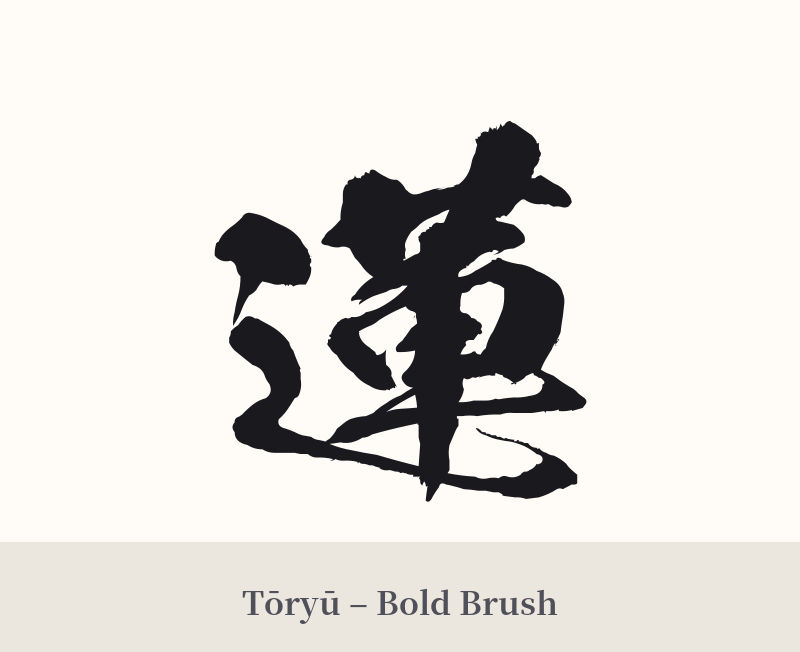
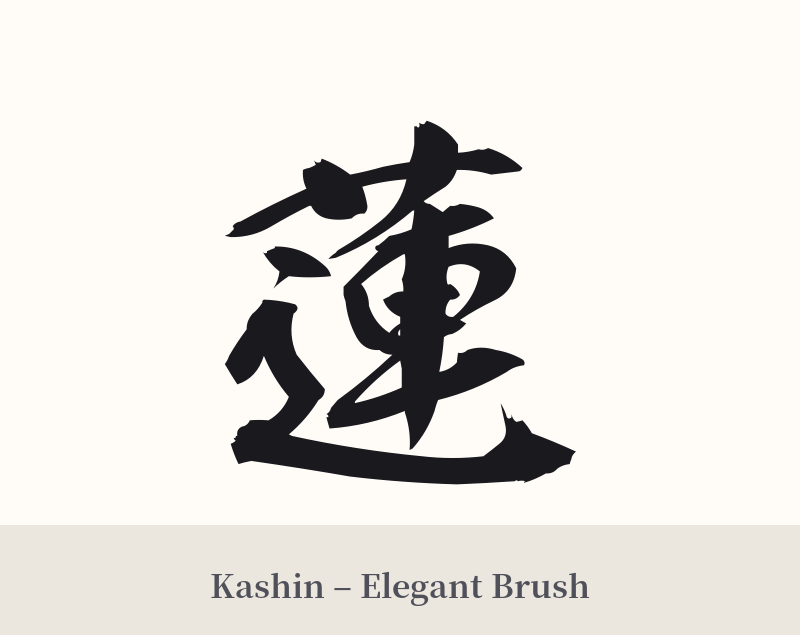
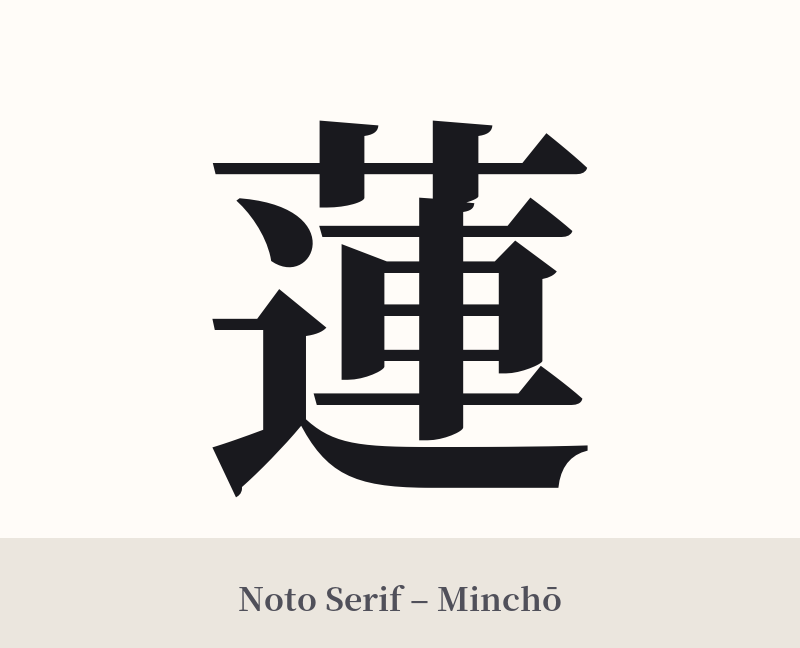
🖌️ Font Styles for 蓮
The same kanji can look dramatically different depending on the calligraphy style. Choose a font that matches the mood you want for your tattoo or design.
🎨 Tattoo Suitability
📐 Tattoo Design Guide
The kanji 蓮 is visually graceful and lends itself well to a variety of tattoo designs. Its balanced structure allows it to stand strong on its own or be integrated into a larger piece.
– Placement: Consider areas that allow for elegant verticality, such as the forearm, the back of the neck, along the spine, or on the calf. For a more subtle placement, the wrist or behind the ear works well, though the details might be lost if too small.
– Font Styles: A flowing, semi-cursive calligraphy style (gyōsho) can emphasize the elegance and natural grace of the lotus. For a bolder, more modern statement, a clean and crisp block script (kaisho) highlights the character's architectural beauty.
– Visual Tips: Pairing the kanji with an image of a lotus flower is a classic choice. You could have the kanji written on a scroll that unfurls next to the flower, or have it emerge from water ripples at the base of the design. Adding a dragonfly, another symbol of summer and change in Japan, can create a more dynamic and complete scene.
Comments