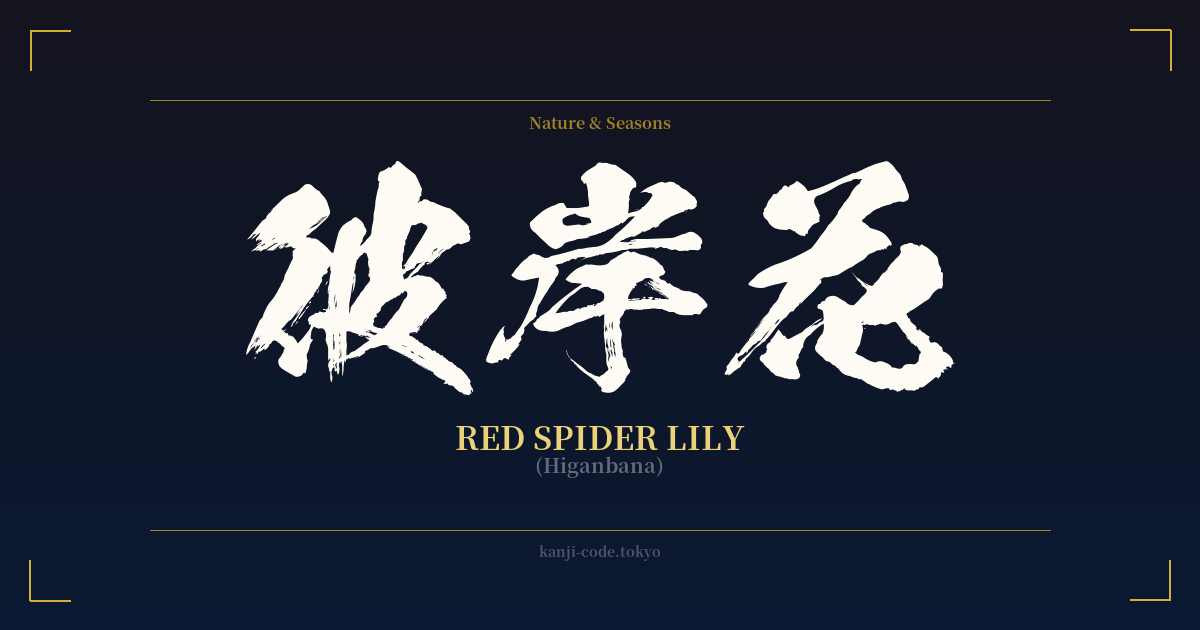
✍️ 彼岸花 (Higanbana) — Cultural Context
The Red Spider Lily, or 彼岸花 (Higanbana), is one of Japan's most visually striking and symbolically loaded flowers. Its appearance is dramatic: in late September, vibrant red blossoms erupt from the earth on bare stalks, often in vast, fiery carpets, just as the summer's heat begins to fade. This timing is no coincidence and is central to its name and meaning.
The word itself is a direct key to its symbolism. It is composed of 彼岸 (Higan) and 花 (hana). 花 simply means 'flower.' The critical part is 彼岸, a term that refers to the autumnal equinox, a period in Japanese Buddhism dedicated to honoring the spirits of one's ancestors. More poetically, 彼岸 literally translates to 'the other shore,' a metaphor for the realm of the dead, separated from our world, 'this shore' (shigan), by the mythical Sanzu River.
Thus, the Higanbana is the 'flower of the other shore,' blooming to guide the souls of the departed during this transitional time. This connection to death is absolute and multifaceted. The flowers are famously planted around cemeteries and on the edges of rice paddies. While this enhances their spectral image, the reason was originally practical: the bulbs of the Lycoris radiata plant are highly poisonous. Farmers and monks planted them to keep moles, mice, and other pests from disturbing gravesites and crops.
This toxicity contributes to its ominous reputation. It's said that if a house burns down after Higanbana are brought inside, it’s because of the flower. It has many other names that reinforce this dark image, including 'death flower' (shibito-bana), 'ghost flower' (yūrei-bana), and 'hell flower' (jigoku-bana).
A unique botanical trait adds another layer of tragic beauty. The flowers bloom and die before the leaves ever appear. When the leaves finally sprout, the flowers are long gone. This phenomenon has led to the belief that the flower and its leaves, like star-crossed lovers, are destined never to meet. In folklore, it symbolizes final goodbyes and memories of those who have passed on, a beautiful but painful reminder of irreversible separation.
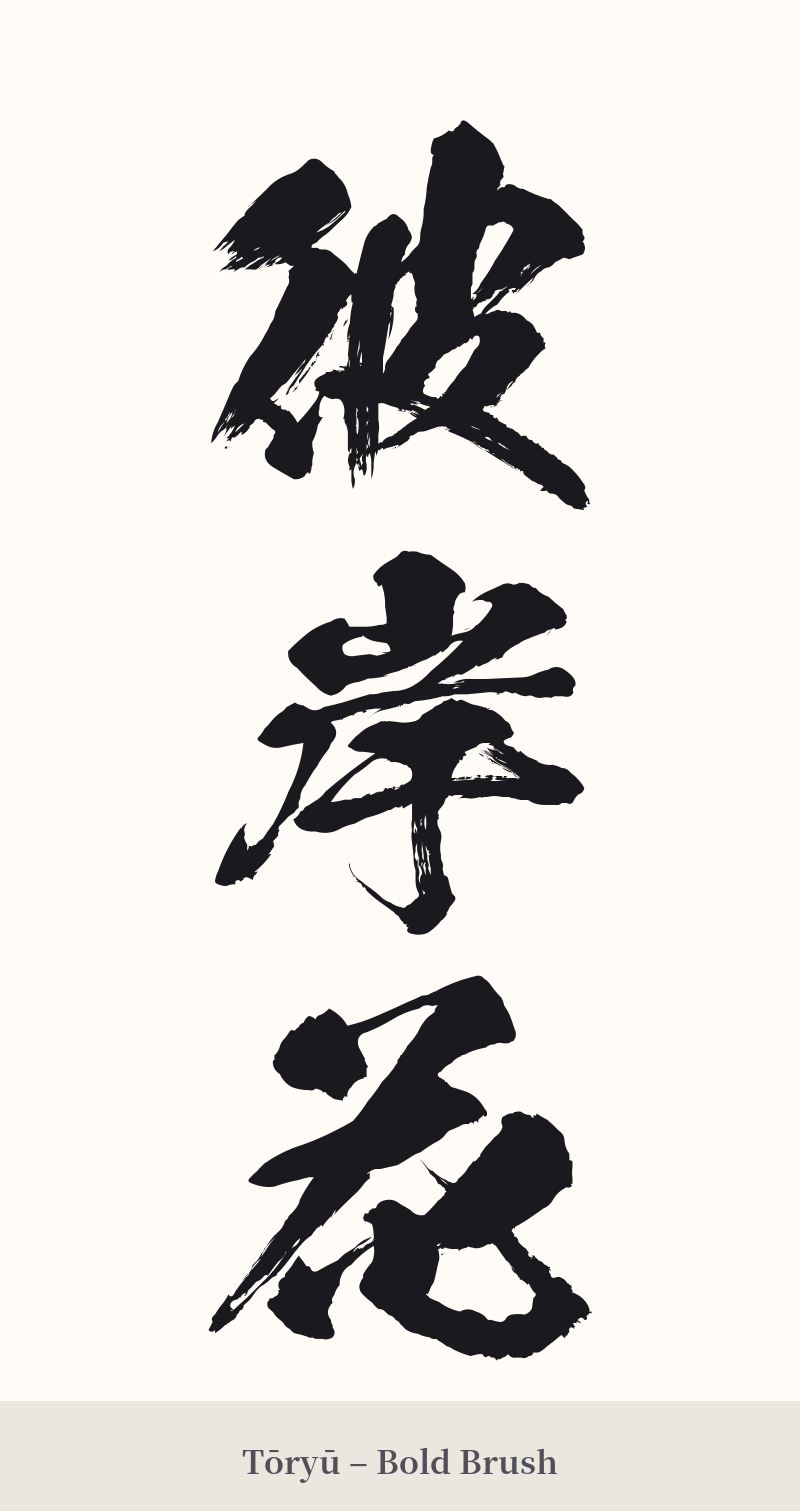
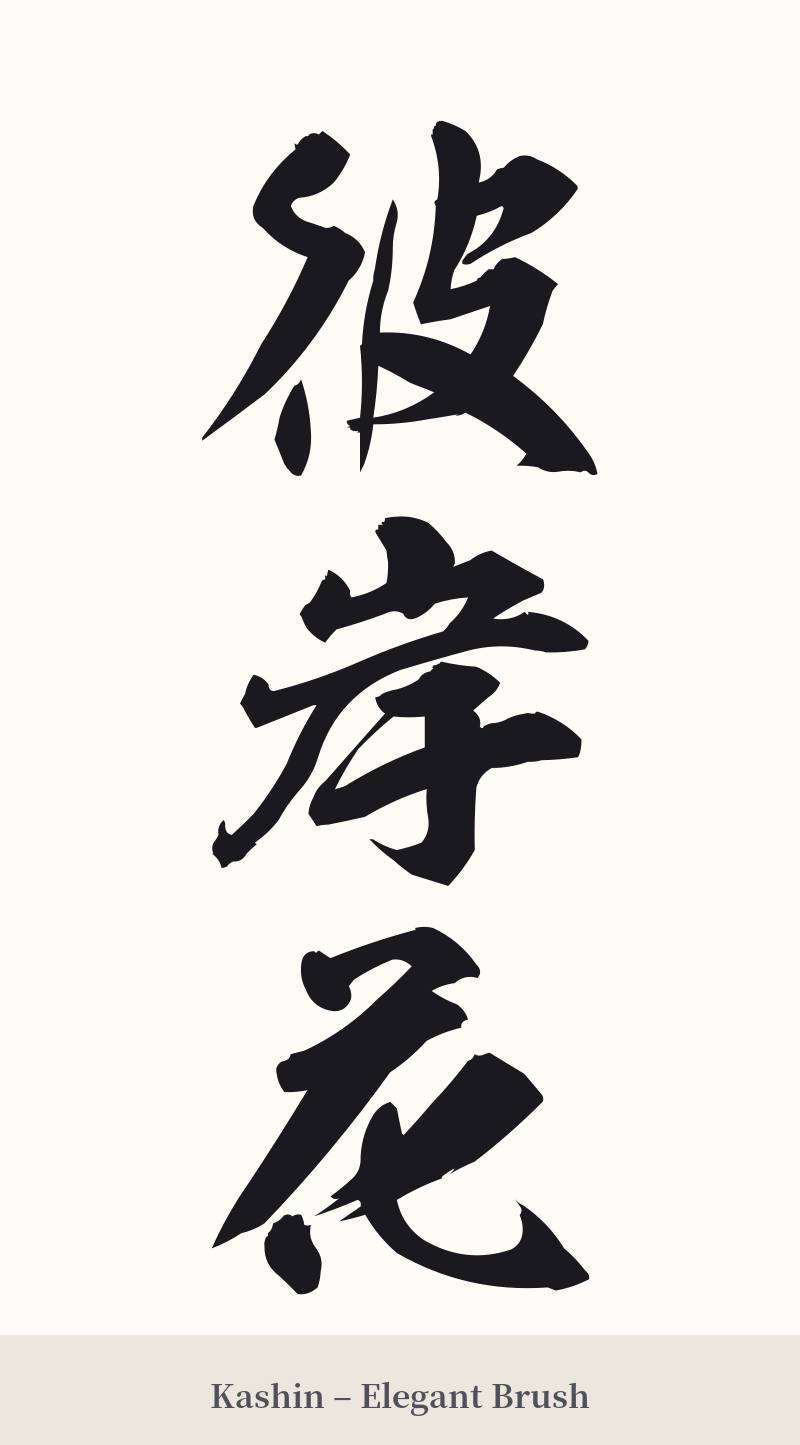
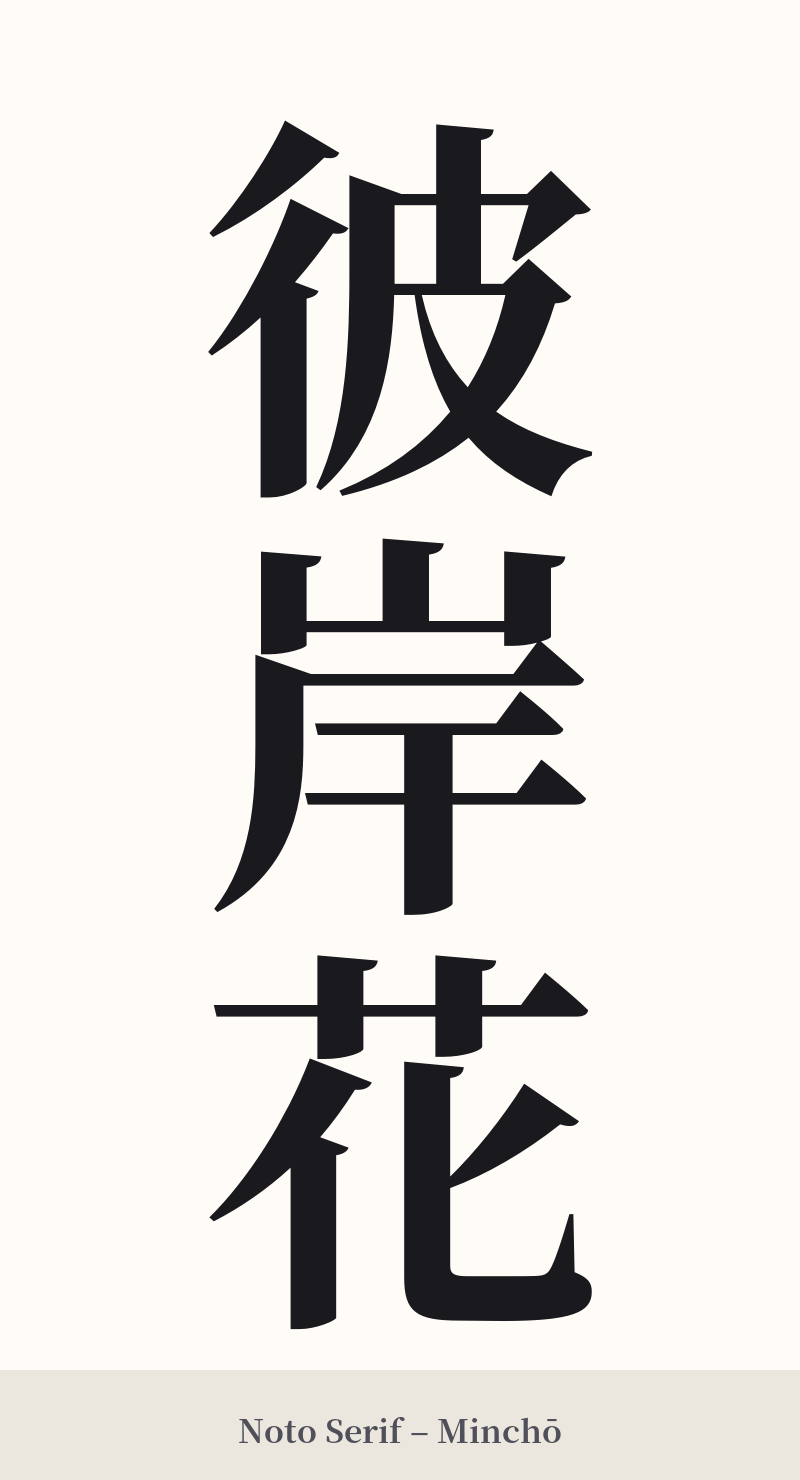
🖌️ Font Styles for 彼岸花
The same kanji can look dramatically different depending on the calligraphy style. Choose a font that matches the mood you want for your tattoo or design.
🎨 Tattoo Suitability
📐 Tattoo Design Guide
The kanji for Higanbana offers a design that is both elegant and full of narrative weight. Its three-character structure lends itself well to various compositions.
– Placement: A vertical arrangement is highly recommended, mimicking the long, elegant stem of the flower itself. This looks powerful along the spine, forearm, or calf. A horizontal layout works well across the chest or upper back.
– Style: For a flowing, ephemeral feel, consider a cursive script like gyōsho or sōsho. This can capture the flower's ghostly beauty. For a more grounded, solemn look that emphasizes its connection to gravestones and tradition, a clean, angular kaisho font is a strong choice.
– Visual Tips: This kanji is a perfect candidate to be integrated with imagery of the red spider lily. The characters could form the 'stem' of a lily illustration. A popular and striking choice is to render the final character, 花 (flower), in a vivid red ink while keeping the first two characters in black, creating a dramatic focal point.
Comments