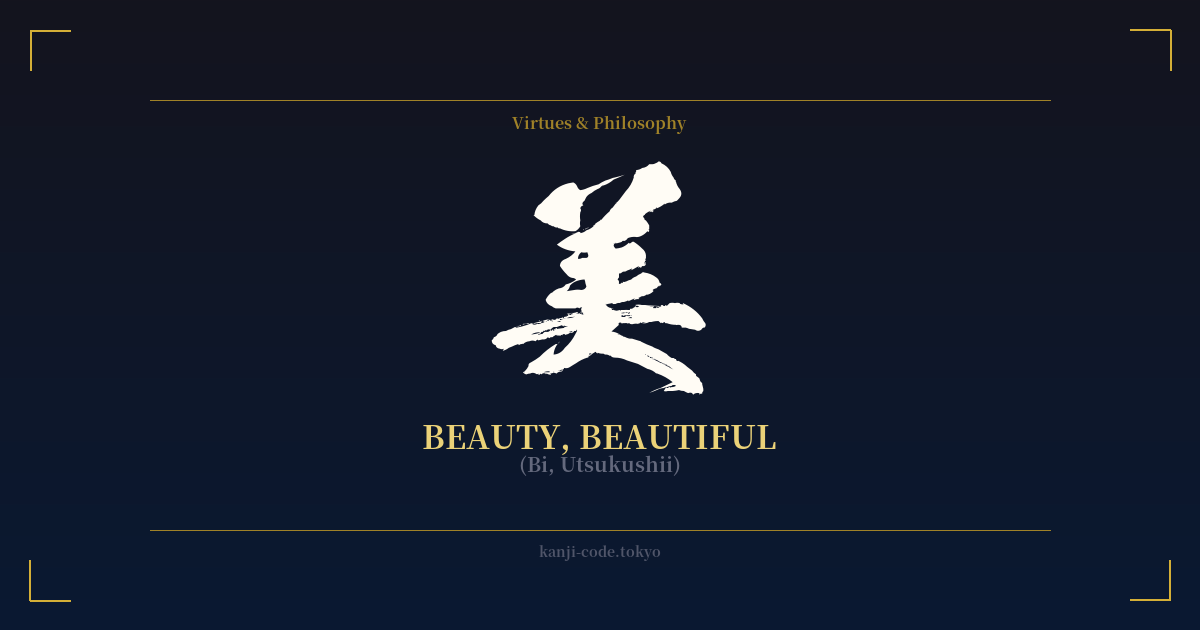
✍️ 美 (Bi, Utsukushii) — Cultural Context
The kanji 美 (bi, utsukushii) is one of the most aesthetically pleasing and conceptually rich characters in the Japanese language. Its meaning, 'beauty,' goes far beyond simple physical attractiveness, touching upon deep philosophical and artistic currents that have shaped Japanese culture for centuries.
The character's etymology offers a glimpse into its ancient roots. It is a combination of 羊 (yō, hitsuji), meaning 'sheep,' and 大 (dai, ōkii), meaning 'big.' In ancient China, a large, well-fed sheep was not only a source of sustenance but also a symbol of prosperity, goodness, and aesthetic pleasure. This combination of 'big' and 'sheep' came to represent something pleasing, good, and ultimately, beautiful.
In Japan, the concept of beauty is multifaceted. It is not always about perfection, symmetry, or overt grandeur. Instead, Japanese aesthetics often celebrate the subtle, the transient, and the imperfect. This is embodied in concepts like 'wabi-sabi' (侘寂), which finds beauty in impermanence and imperfection, such as the patina on an old metal cup or a moss-covered stone. Another key concept is 'yūgen' (幽玄), which refers to a profound, mysterious grace—a beauty that is felt rather than easily seen or explained. The kanji 美 encompasses all these nuances.
This character is a fundamental building block in the Japanese vocabulary of aesthetics. It forms words like 'bijutsu' (美術), meaning 'fine art,' 'bijin' (美人), a 'beautiful person' (typically a woman), and 'bimi' (美味), 'delicious taste.' Its presence highlights how the concept of beauty is integrated into all aspects of life, from art and human appearance to the culinary arts.
The appreciation for 美 is also a cornerstone of traditional Japanese practices. In 'shodō' (書道), the art of calligraphy, the beautiful execution of a character is as important as its meaning. In 'ikebana' (生け花), the art of flower arranging, beauty is found in the balance, space, and form of the arrangement. Even in martial arts ('budō', 武道), the precise and elegant execution of forms ('kata') is considered a manifestation of beauty and skill.
Ultimately, the kanji 美 represents a holistic ideal. It is not just about what is seen with the eyes, but what is felt with the heart and understood by the mind. It speaks to a harmony between inner substance and outer form, making it a powerful and enduring symbol in Japanese culture.
🖌️ Font Styles for 美
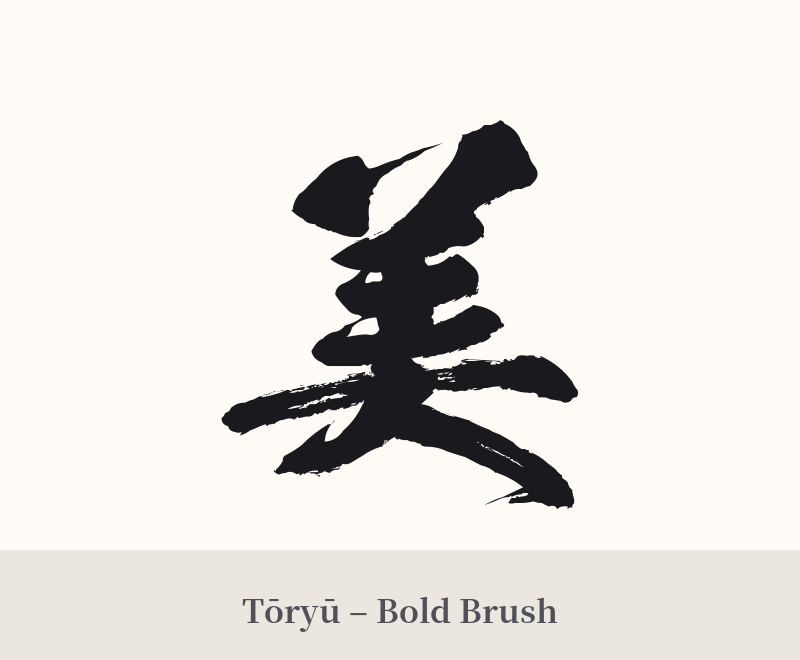
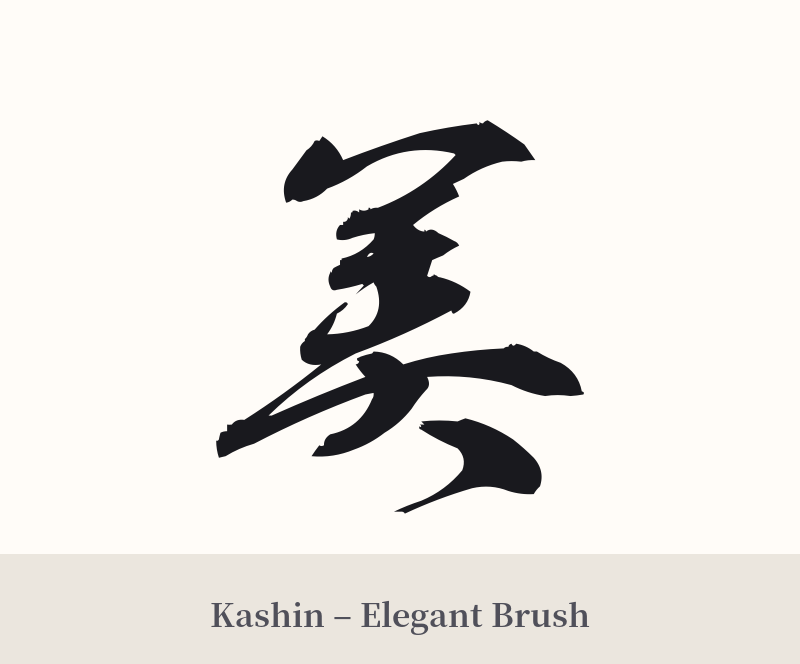
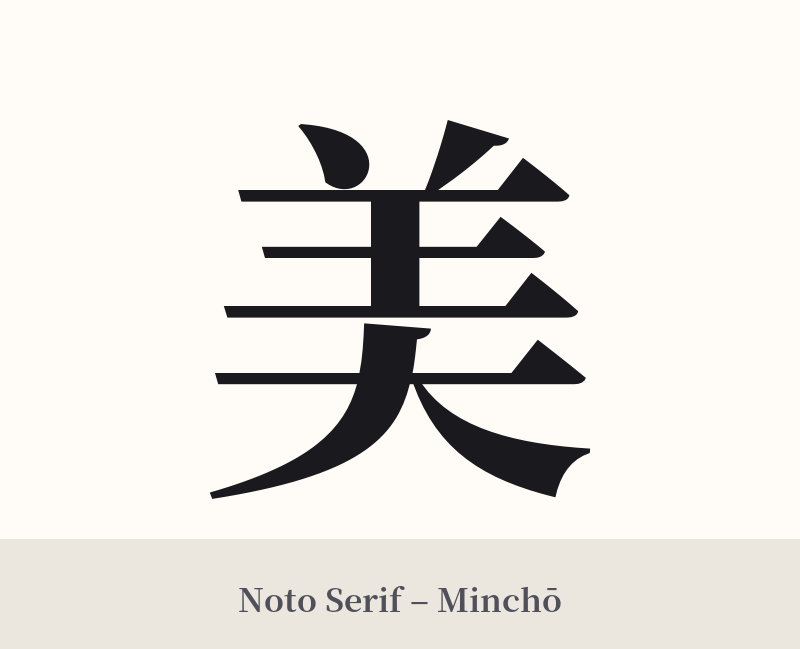
The same kanji can look dramatically different depending on the calligraphy style. Choose a font that matches the mood you want for your tattoo or design.
🎨 Tattoo Suitability
📐 Tattoo Design Guide
The kanji 美 is celebrated for its elegant structure, making it a versatile choice for a tattoo design.
– Placement: Its vertical and balanced nature works well on the forearm, the back of the neck, behind the ear, or along the spine. For a more subtle placement, the wrist or ankle are excellent choices.
– Font Style: An elegant, flowing script like Gyōsho (semi-cursive) or Sōsho (cursive) can enhance its artistic and graceful feel. For a more traditional and bold statement, a clean Kaisho (block) or Mincho font emphasizes its balanced and beautiful structure.
– Visual Tips: Because the character itself means beauty, it stands strongly on its own. However, it can be beautifully complemented by classic Japanese motifs. Consider pairing it with a single cherry blossom petal, a subtle watercolor splash in the background, or integrating it into a design with a koi fish or a crane to symbolize other virtues.
Comments