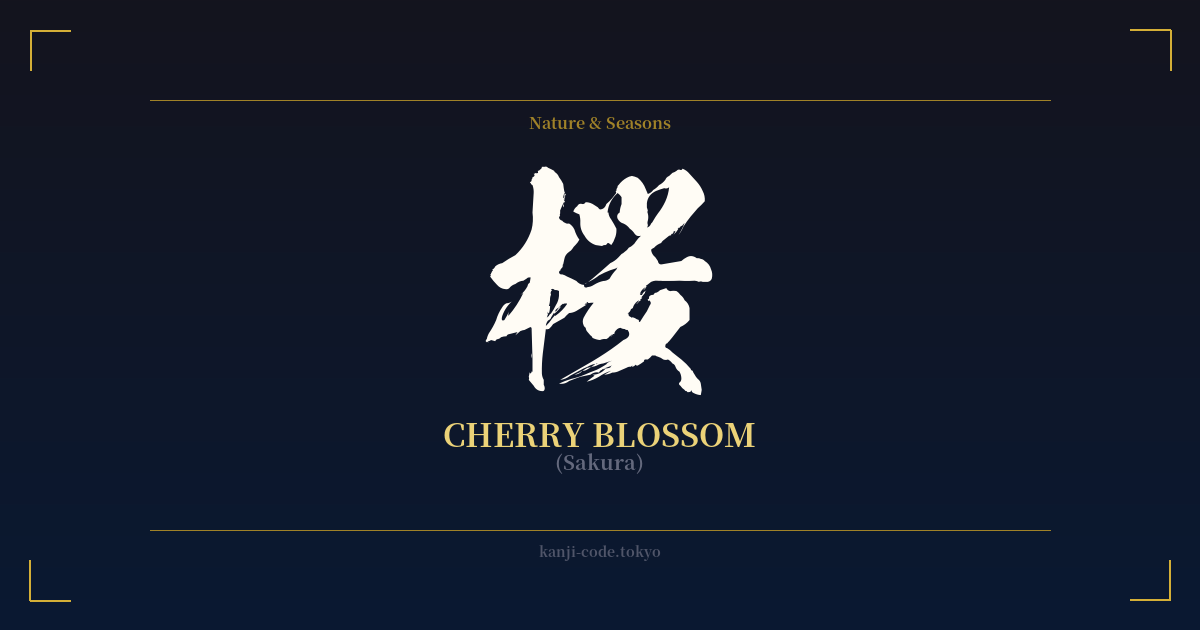
✍️ 桜 (Sakura) — Cultural Context
The kanji 桜 (Sakura) is more than just a symbol for a flower; it is a cornerstone of Japanese culture and philosophy, embodying the nation's most deeply held aesthetic ideals. On the surface, it represents the breathtaking beauty of spring, when cherry trees erupt in a sea of pale pink and white blossoms across the country. This annual event inspires 'hanami' (花見), or flower-viewing parties, where friends, family, and colleagues gather under the blooming trees to eat, drink, and celebrate.
Beneath this joyful surface lies a much deeper, more poignant meaning. The life of a cherry blossom is intensely beautiful but shockingly brief. After blooming to their fullest, the petals fall in just a few days, often scattered by a gentle breeze or spring rain. This fleeting nature is a powerful metaphor for life itself, a concept known as 'mono no aware' (物の哀れ), the beautiful sadness or pathos of things. It's a recognition that all things, including life, are transient, and their impermanence is precisely what makes them so precious.
This symbolism was particularly resonant with the samurai. The warrior class of feudal Japan adopted the cherry blossom as an emblem of their own ethos. They sought to live their lives with brilliance and purpose, but to face death with grace and acceptance, falling at the peak of their vitality, much like a sakura petal drifting from its branch. The saying, "The best flower is the cherry blossom; the best man is the samurai," captures this connection perfectly.
Today, the sakura remains Japan's unofficial national flower and a globally recognized symbol of the country. It appears everywhere from imperial crests to modern pop culture, serving as a constant reminder of renewal, hope, and the elegant acceptance of life's fleeting beauty. The arrival of the cherry blossoms signals the end of winter and the start of a new season, a new school year, and a new fiscal year, marking a time of profound transition and fresh beginnings for all of Japan.
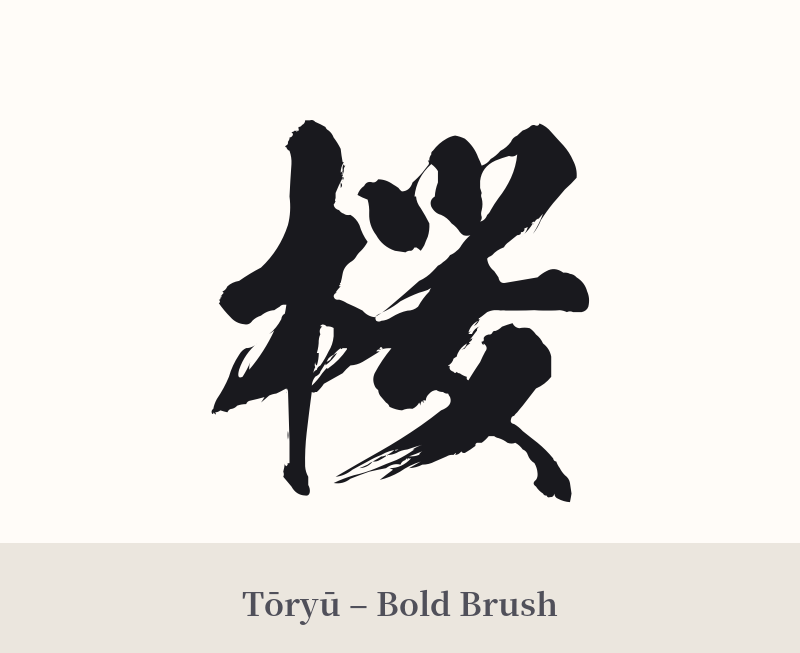
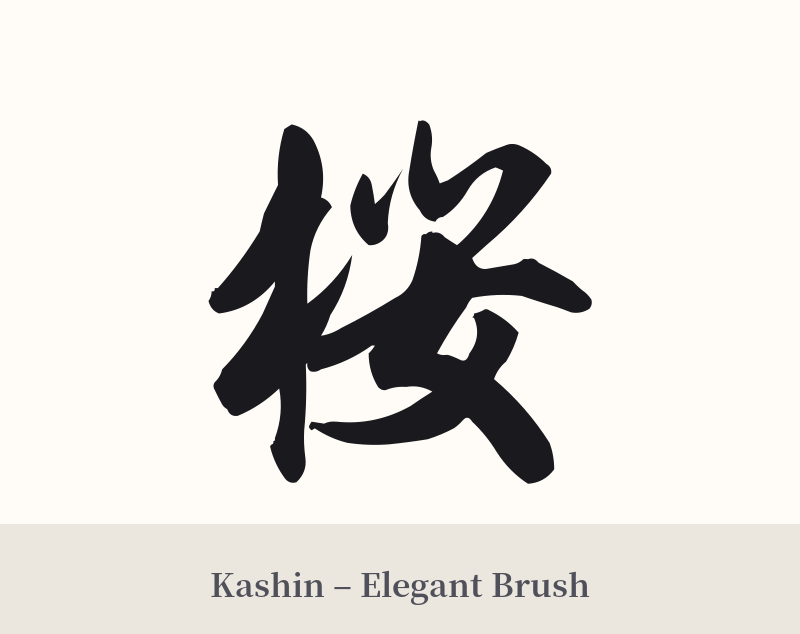
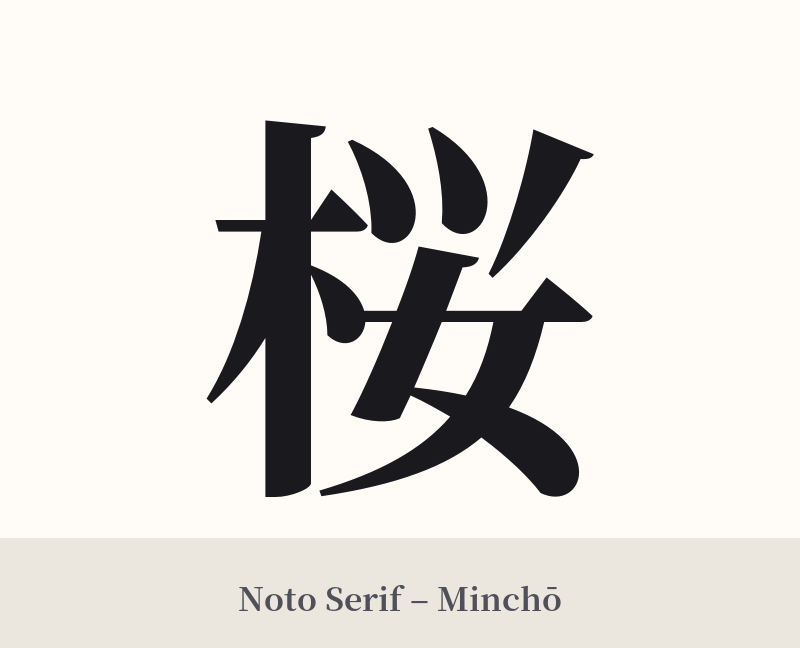
🖌️ Font Styles for 桜
The same kanji can look dramatically different depending on the calligraphy style. Choose a font that matches the mood you want for your tattoo or design.
🎨 Tattoo Suitability
📐 Tattoo Design Guide
The 桜 kanji is versatile and suits a variety of tattoo designs and placements.
– Placement: For a delicate and personal statement, consider smaller placements like the wrist, ankle, behind the ear, or on the collarbone. For a more impactful piece, it can be a central element in a larger design on the back, thigh, or forearm.
– Style: A cursive or semi-cursive calligraphy style (gyosho or sosho) beautifully captures the organic, flowing nature of the blossom itself. For a more modern and sharp look, a clean Mincho font works well. The character's visual balance makes it look good in almost any reputable script.
– Visuals: Enhance the kanji by incorporating imagery of falling petals or a small branch. A subtle wash of pink or red watercolor behind or within the character can add a layer of beauty without overpowering the symbol itself.
Comments