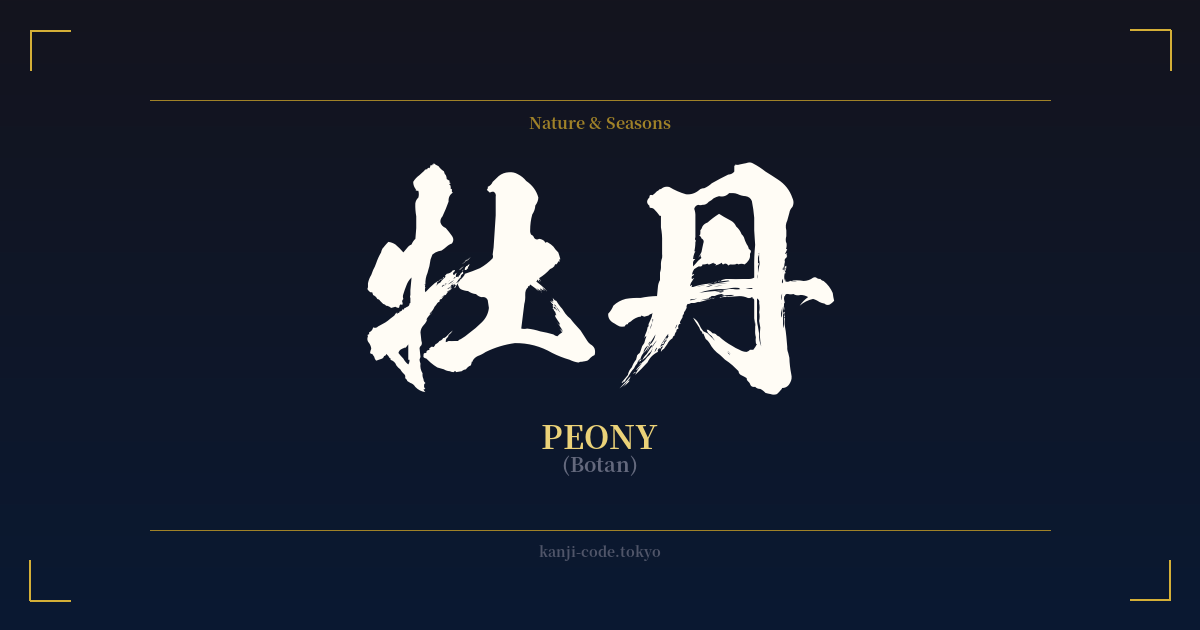
✍️ 牡丹 (Botan) — Cultural Context
In the rich tapestry of Japanese floral symbolism, the peony, or 牡丹 (Botan), holds a place of supreme honor. It is often called the “King of Flowers” (百花の王, Hyakka no Ō), a title that speaks to its commanding presence and deep cultural significance. Its large, lush petals and vibrant colors have captivated artists, poets, and nobles for centuries.
The journey of the peony began in China, where it was revered as a symbol of wealth, power, and imperial status. It was introduced to Japan during the Nara period (710-794), initially as a medicinal plant. However, its breathtaking beauty soon ensured its place in ornamental gardens, art, and literature. The Japanese aristocracy quickly adopted the peony, associating it with prosperity, good fortune, and refined elegance.
Interestingly, despite its delicate appearance, the peony also carries connotations of bravery and honor, making it a favored motif among the samurai class. This duality is captured in the phrase 「立てば芍薬、座れば牡丹、歩く姿は百合の花」 (Tateba shakuyaku, suwareba botan, aruku sugata wa yuri no hana), which translates to “Standing, a herbaceous peony; sitting, a tree peony; walking, a lily.” This proverb uses the stately and dignified presence of the Botan to describe the grace of a beautiful woman, yet the flower’s association with strength remains.
This connection to masculine virtue is most famously visualized in the Irezumi (traditional Japanese tattoo) motif known as Karajishi Botan (唐獅子牡丹), which pairs the peony with a lion or shishi (guardian lion-dog). The lion represents raw power and authority, while the peony symbolizes beauty and wealth. Together, they create a perfect balance—a warrior who possesses not only strength but also intellect and grace. The peony is believed to tame the wild spirit of the lion, illustrating the ideal of power tempered by refinement.
From Ukiyo-e woodblock prints by masters like Hokusai and Hiroshige to modern-day tattoo art, the 牡丹 remains a powerful and enduring symbol. It represents a life of beauty, honor, and prosperity, making it more than just a flower, but an aspiration.
🖌️ Font Styles for 牡丹
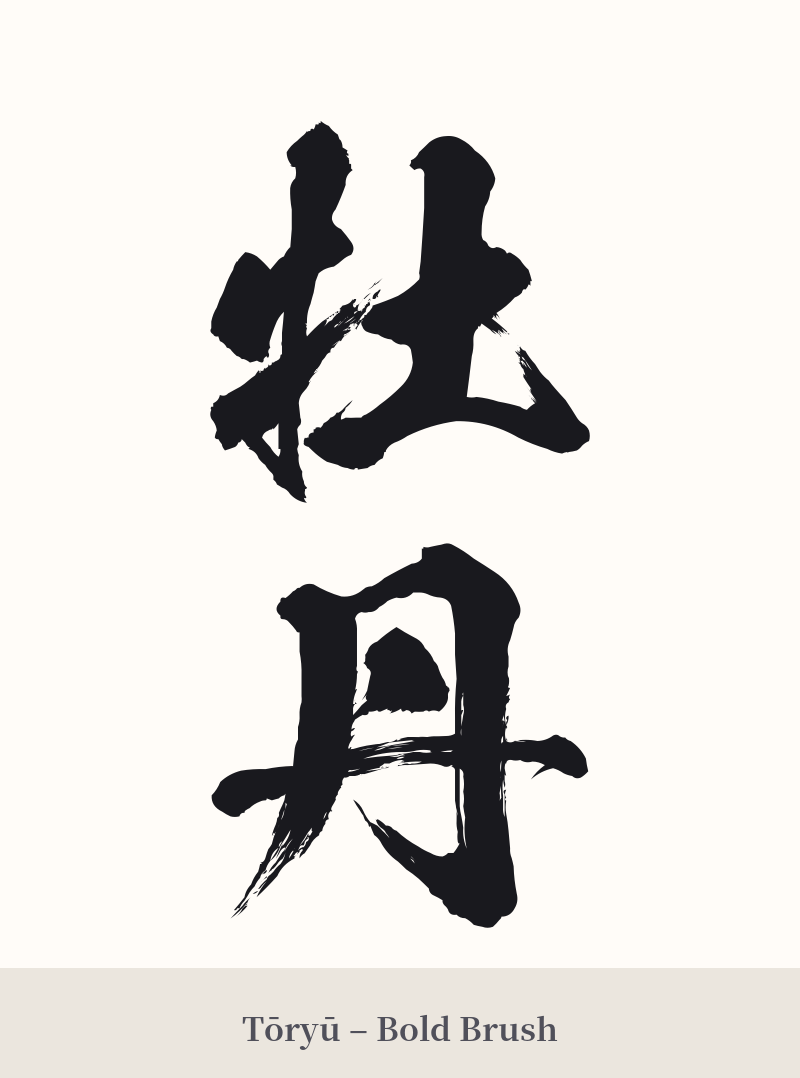
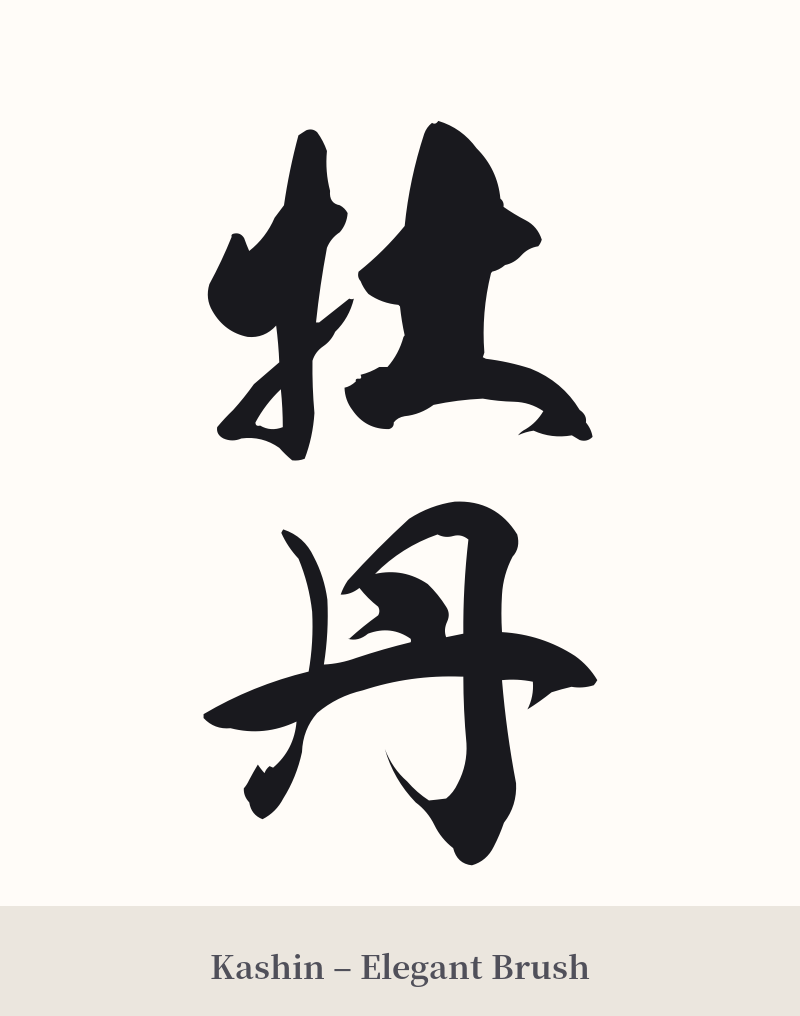
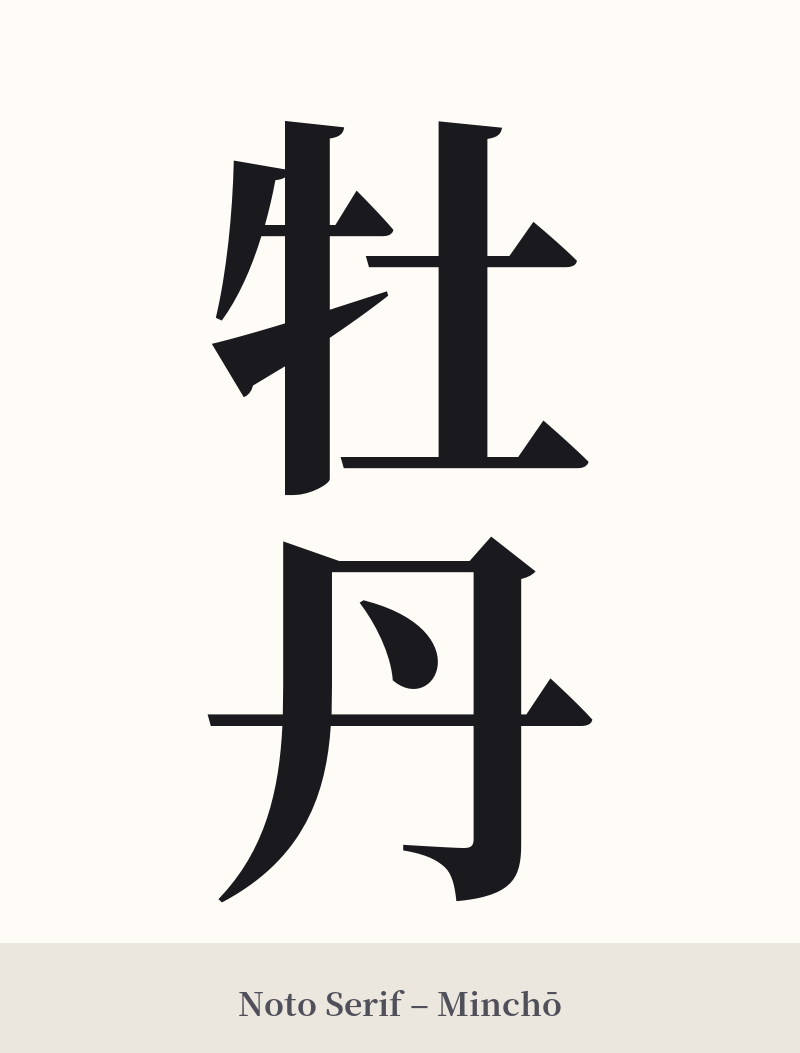
The same kanji can look dramatically different depending on the calligraphy style. Choose a font that matches the mood you want for your tattoo or design.
🎨 Tattoo Suitability
📐 Tattoo Design Guide
The kanji 牡丹 (Botan) offers wonderful versatility for a tattoo design, embodying both strength and elegance.
– Placement: For a vertical orientation, the inner forearm, calf, or alongside the spine are excellent choices, allowing the characters to flow with the body's natural lines. For a horizontal design, the chest, upper back, or above the collarbone can create a strong, centered look.
– Font Style: A semi-cursive script (Gyōsho) can capture the flowing, organic nature of a flower. For a more formal and dignified appearance, a classic serif style like Mincho is ideal. A bold, blocky Kaisho script can emphasize the 'kingly' and powerful aspects of the peony's symbolism.
– Visual Tips: Pairing the kanji directly with an illustration of a peony flower is a classic and beautiful combination. The kanji can be placed beside the flower or integrated into its leaves and stems. For a larger, more traditional Japanese piece, consider the iconic Karajishi Botan motif, combining the kanji with a guardian lion (shishi) and peonies.
Comments