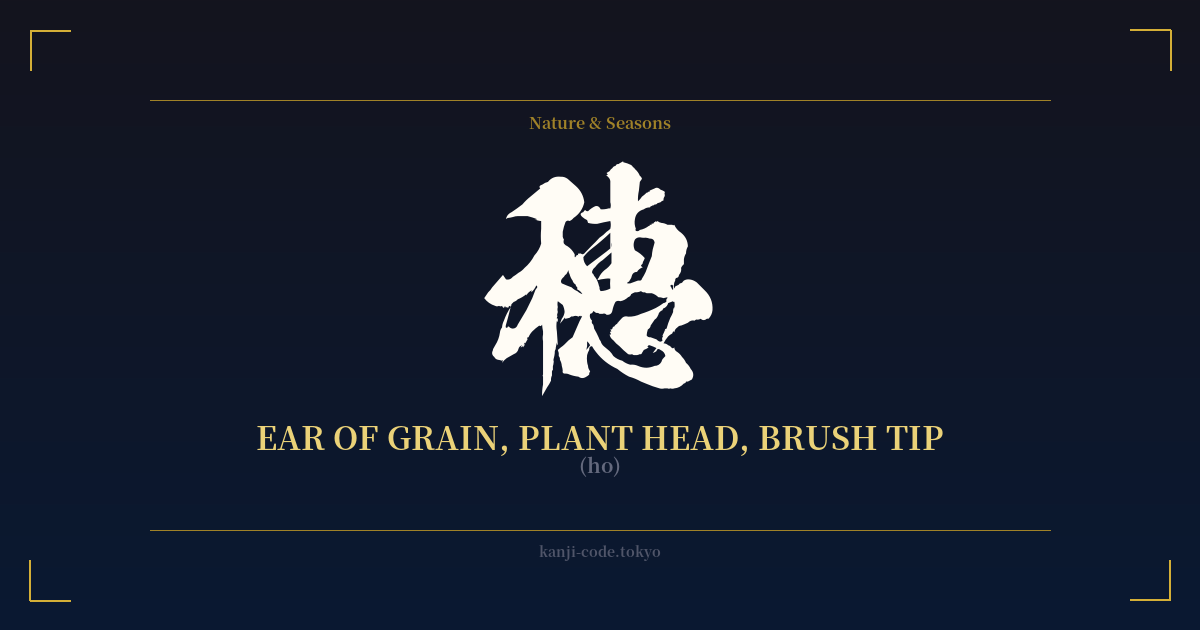
✍️ 穂 (ho) — Cultural Context
The kanji 穂 (ho) paints a vivid picture, one deeply rooted in the soil and soul of Japan. At its core, it represents the ear of a grain plant—most notably rice or wheat—heavy and ripe, bowing gracefully under the weight of its own bounty. This single character is a powerful symbol of harvest, abundance, and the successful culmination of a long period of growth.
In a culture shaped by agriculture, particularly rice cultivation, 穂 holds immense significance. Rice has never been just a food staple in Japan; it is a spiritual and cultural cornerstone. Shinto beliefs are interwoven with the cycles of planting and harvesting, with deities like Inari Ōkami revered as the protector of rice and prosperity. The image of a field of golden rice ears (稲穂, inaho) swaying in the autumn wind is one of Japan's most iconic and poetic scenes, evoking feelings of gratitude and fulfillment. The kanji 穂 captures this entire pastoral ideal.
Beyond the literal harvest, 穂 embodies the concept of 'minori' (実り), which means 'fruition' or 'bearing fruit'. It symbolizes the idea that dedicated effort, patience, and nurturing will eventually lead to tangible, rewarding results. This makes it a metaphor for achieving personal goals, completing a difficult project, or reaching a state of maturity and wisdom. It is the physical manifestation of potential realized.
Interestingly, 穂 also carries the meaning of a 'tip' or 'point,' as in the tip of a spear (槍の穂, yari no ho) or the tip of a calligraphy brush (筆の穂, fude no ho). This association comes from the pointed shape of the grain head. This dual meaning adds a layer of focused energy and precision. The brush tip is the point of artistic creation, where ideas flow into form. The spear tip is the point of impact and focused power. This connection links the kanji from the gentle, natural world of agriculture to the disciplined realms of art and martial arts.
This rich symbolism is reflected in its use in Japanese names. Female names like Honoka (穂乃香), meaning 'fragrance of the grain ear,' or Mizuho (瑞穂), meaning 'abundant, auspicious grain,' are cherished for their wholesome and positive connotations. They bestow a wish for a life of richness, health, and fulfillment. Ultimately, 穂 is more than just a plant part; it's a symbol of life's cycles, the rewards of perseverance, and the quiet, profound beauty of nature's bounty.
🖌️ Font Styles for 穂
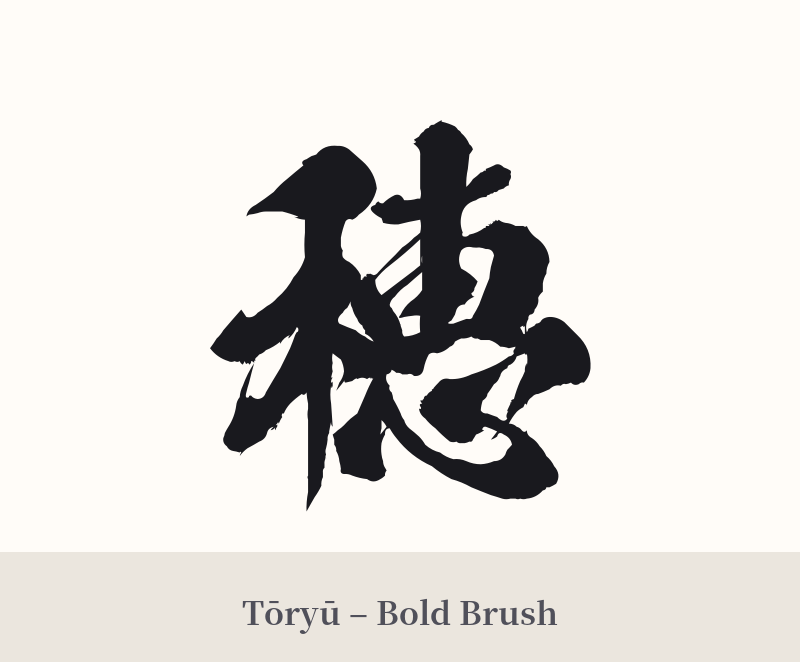
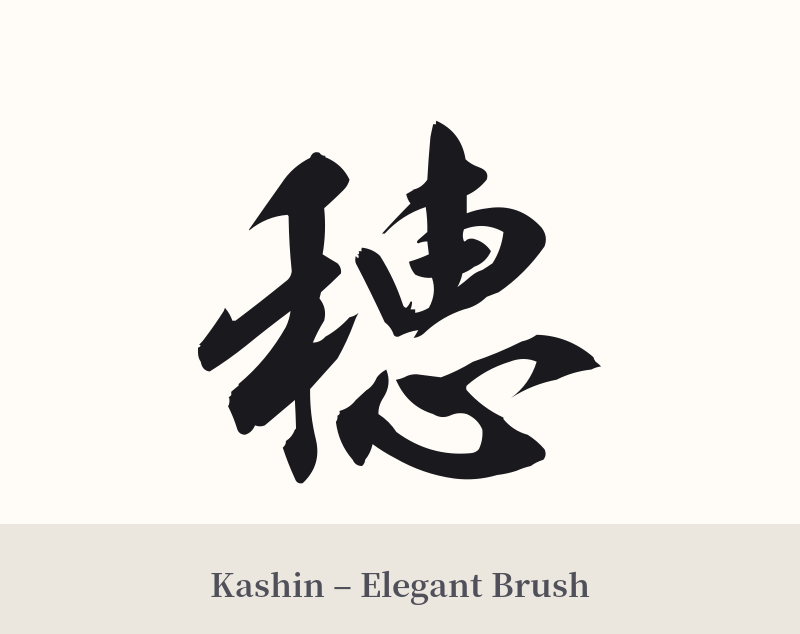
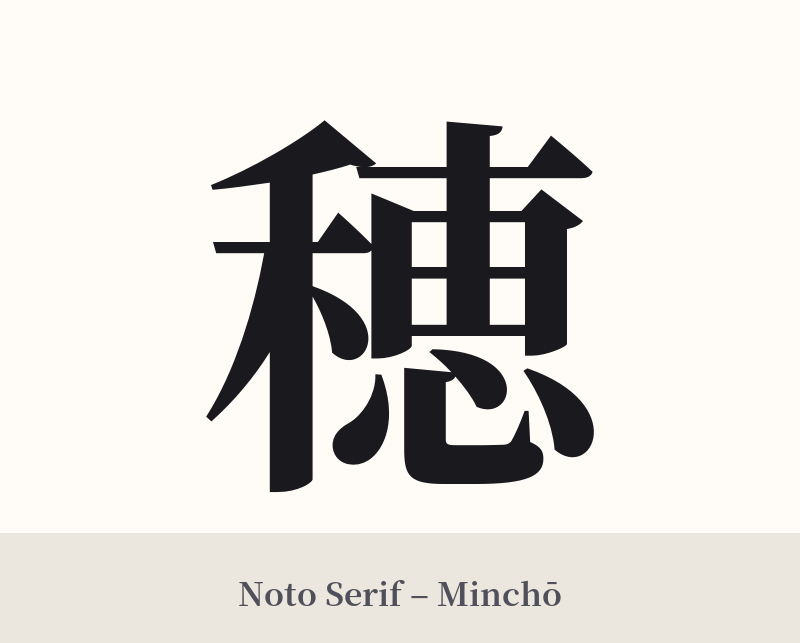
The same kanji can look dramatically different depending on the calligraphy style. Choose a font that matches the mood you want for your tattoo or design.
🎨 Tattoo Suitability
📐 Tattoo Design Guide
The kanji 穂 offers a wonderful balance of natural elegance and symbolic depth, making it a versatile choice for a tattoo design.
For placement, consider spots that complement its vertical, plant-like structure. The forearm, calf, or along the spine or ribs can echo the form of a stalk of grain. For a more contained design, the shoulder blade, chest, or inner bicep are excellent choices.
When it comes to font style, you have several evocative options: – A flowing, semi-cursive (Gyōsho) or fully cursive (Sōsho) style can emphasize the natural, organic feel of a plant swaying in the wind. – A classic, crisp block script (Kaisho) will highlight the character's balanced structure and give it a sense of stability and solidness, reflecting the reliability of the harvest. – A rustic, textured brushstroke style can connect directly to its meaning as a 'brush tip' (fude no ho) and give the design an artistic, earthy quality.
To enhance the design, you could integrate 穂 with other visual elements. Consider placing it alongside a minimalist illustration of a rice stalk, a full moon to symbolize the autumn harvest festival, or subtle waves of wind. However, its balanced form and deep meaning allow it to stand powerfully on its own as a single, bold character. Using earthy colors like gold, ochre, or deep brown can further connect it to themes of harvest and nature, though it looks equally striking in classic black ink.
Comments