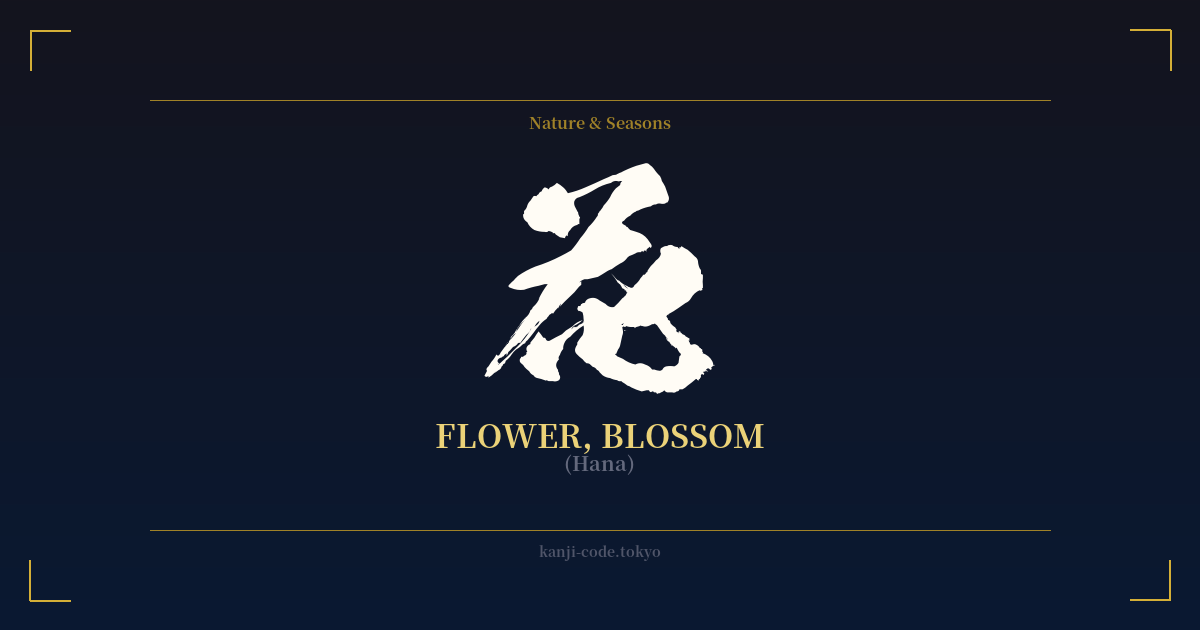
✍️ 花 (Hana) — Cultural Context
The kanji 花 (Hana) is one of the most recognizable and beloved characters in the Japanese language, but its simplicity belies a universe of cultural depth. At its core, it means 'flower' or 'blossom,' yet it's woven into the very fabric of Japanese aesthetics, philosophy, and daily life.
The character's origin tells a story in itself. It is composed of two main parts: the top radical 艹 (kusakanmuri) is a pictogram of grass or plants, while the bottom component 化 (ka) means 'to change' or 'transform.' Together, they poetically depict a plant transforming into a beautiful blossom—a perfect visual metaphor for growth and ephemeral beauty.
This idea of transient beauty is central to the Japanese concept of mono no aware (物の哀れ), the gentle sadness for the passing of things. This is most famously embodied in the tradition of hanami (花見), or flower viewing, where people gather to admire cherry blossoms (sakura). The brief, stunning life of the sakura flowers, which bloom and fall within a week or two, serves as a poignant reminder of the beauty and fleetingness of life itself. While sakura has its own kanji (桜), the word hana is often used colloquially to refer to these iconic blossoms during the spring season.
The influence of 花 extends into many traditional arts. Kadō (華道), 'the way of the flower,' is the art of Japanese flower arrangement, more commonly known as ikebana (生け花). This is not merely about placing flowers in a vase; it's a disciplined art form that emphasizes harmony, space, and the connection between humanity and nature. Each arrangement is a living sculpture, meant to evoke a specific feeling or season.
Furthermore, 花 is deeply connected to the world of the geisha. The traditional entertainment districts where geisha live and work are called hanamachi (花街), or 'flower towns.' The geisha themselves, particularly apprentices, were often seen as beautiful, delicate 'flowers' of Japanese culture. The kanji also appears in countless names, such as Hanako (花子, 'flower child') or Hanayo (花代), reflecting a wish for the child to possess beauty and grace.
🖌️ Font Styles for 花
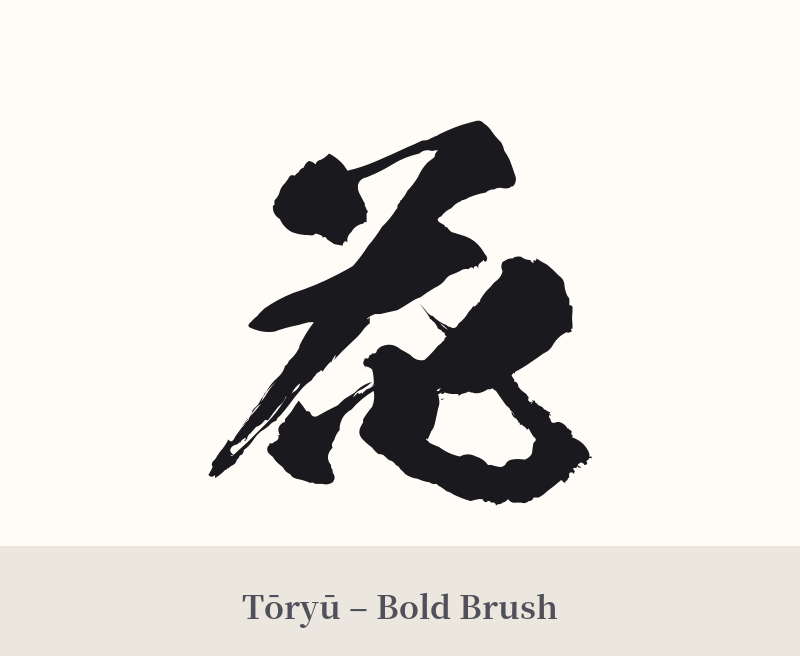
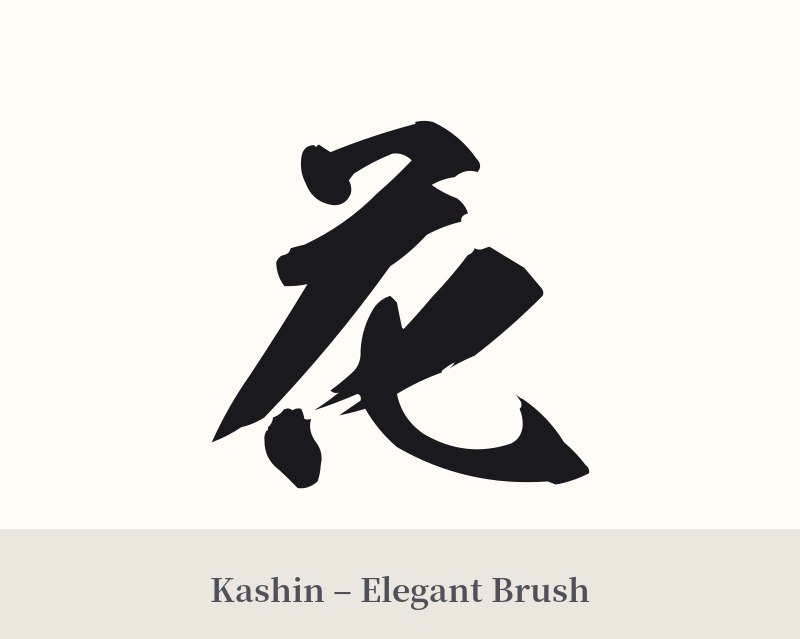
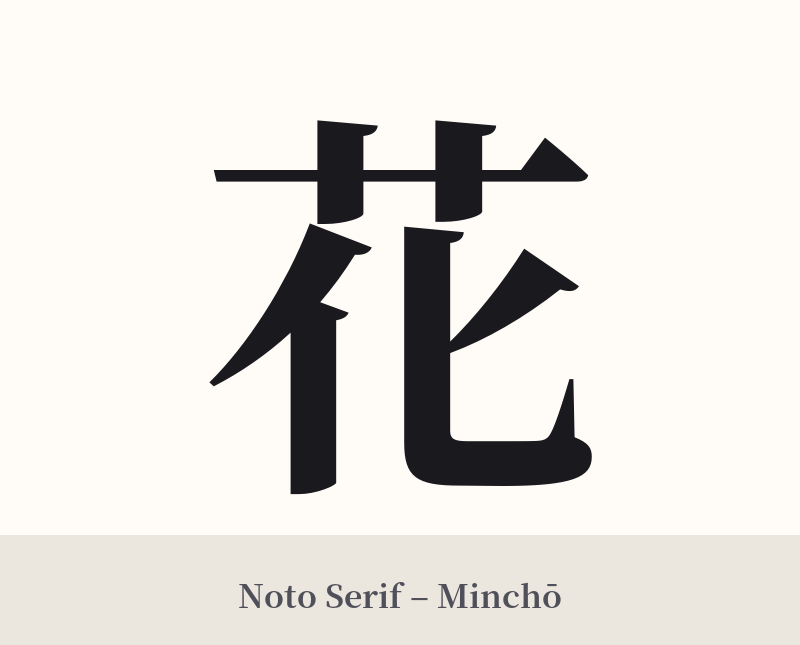
The same kanji can look dramatically different depending on the calligraphy style. Choose a font that matches the mood you want for your tattoo or design.
🎨 Tattoo Suitability
📐 Tattoo Design Guide
The kanji 花 is incredibly versatile for tattoo design due to its elegant simplicity and positive meaning.
– Placement: For a small, delicate tattoo, the wrist, ankle, behind the ear, or collarbone are excellent choices. For a larger, more prominent piece, the forearm, shoulder blade, or calf allows for more intricate calligraphic styles.
– Style: A cursive or semi-cursive calligraphy style (gyōsho or sōsho) can give the character an organic, flowing feel, mimicking the natural form of a plant. Conversely, a crisp Mincho or Kaisho font provides a more formal, elegant, and modern aesthetic.
– Visuals: Consider integrating the kanji with other imagery. The character could be placed within the petals of a lotus, have a cherry blossom branch growing from one of its strokes, or be part of a larger nature scene. This adds a layer of personalization and visual interest.
Comments