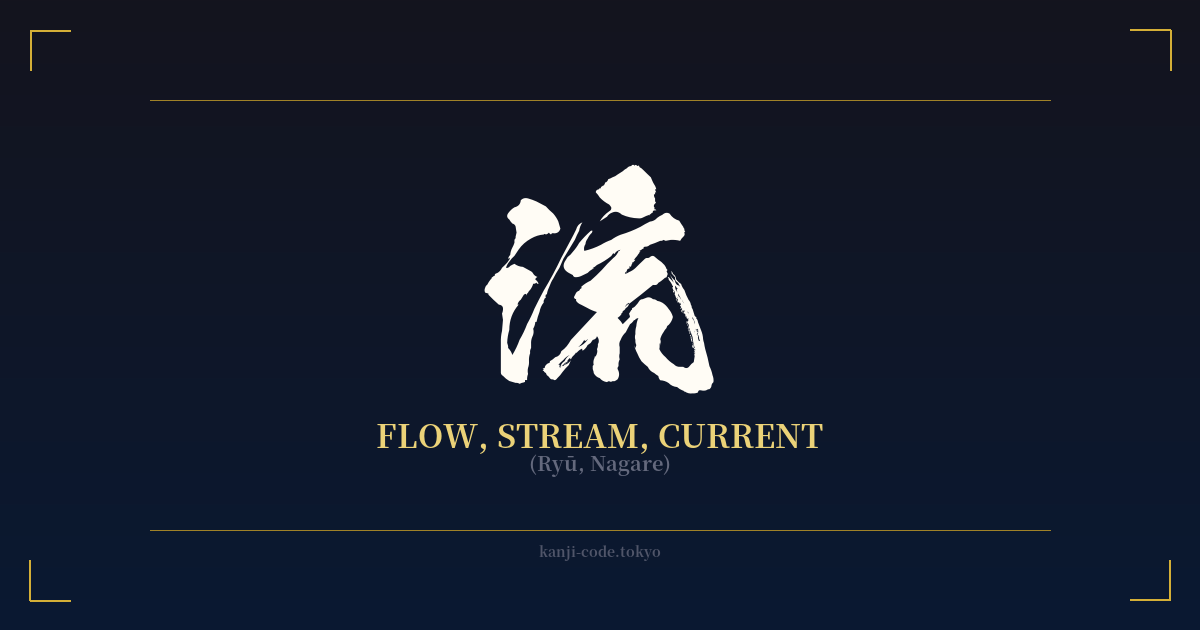
✍️ 流 (Ryū, Nagare) — Cultural Context
The kanji 流 (Ryū or Nagare) is a character rich with the poetry of movement and the philosophy of acceptance. Its origins lie in a simple yet powerful image: a pictograph of water (氵) carrying a child or object along, symbolizing the act of being swept away. This foundational idea of a current has expanded over centuries to encompass a vast range of meanings, from the literal to the deeply metaphorical.
In its most direct sense, 流 represents the natural world. It is the river (川の流れ, kawa no nagare) carving its path through a landscape, the ocean current shaping coastlines, and even the flow of air that creates wind. This connection imbues the character with a sense of relentless, adaptable power—the gentle stream that can, over time, wear away the hardest stone. It embodies nature's principle of achieving great things not through force, but through persistence and flexibility.
This physical concept of flow translates seamlessly into Japanese philosophy, particularly within Zen Buddhism and Taoist thought. To 'go with the flow' is a central tenet, encouraging an individual to move in harmony with the natural course of events rather than struggling against them. It speaks to a state of being where one is fluid and responsive, like water, able to navigate obstacles without losing one's essential nature. This is closely related to the martial arts concept of 無心 (Mushin), or 'No Mind,' where a warrior's actions flow instinctively and perfectly without the interference of conscious thought.
Furthermore, 流 signifies a lineage or tradition passed down through time. The term 流派 (Ryūha) refers to a specific 'school' or 'style' of a traditional art, whether it be swordsmanship (kenjutsu), flower arranging (ikebana), or tea ceremony (sadō). The 'flow' here is the stream of knowledge and technique passed from master to student, evolving yet maintaining its core identity through generations. To belong to a ryūha is to be part of a living, flowing history.
In modern language, it also captures the ephemeral, describing trends and fashion as 流行 (Ryūkō), literally the 'flow of the popular.' From the timeless wisdom of a Zen master to the fleeting trend of a season, the kanji 流 elegantly captures the constant, dynamic movement that defines both nature and human experience.
🖌️ Font Styles for 流
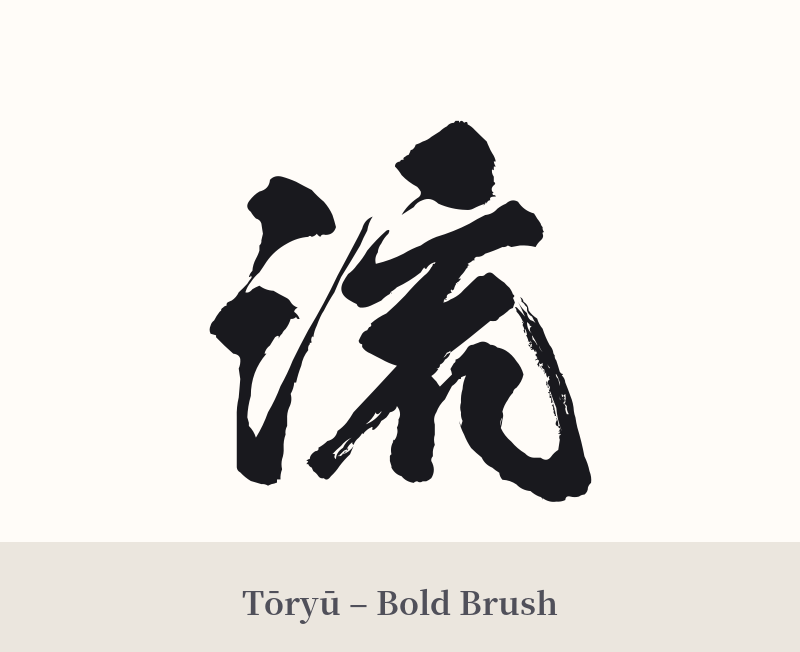
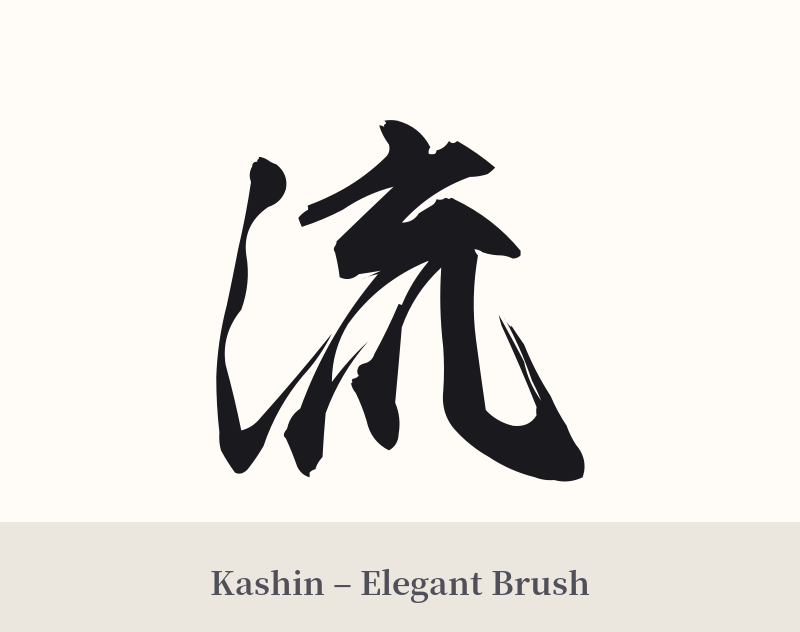
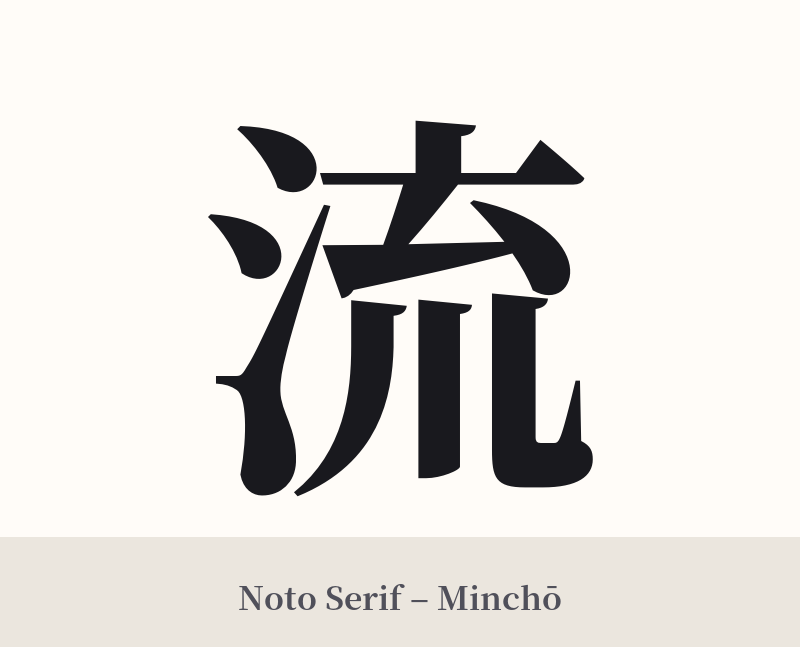
The same kanji can look dramatically different depending on the calligraphy style. Choose a font that matches the mood you want for your tattoo or design.
🎨 Tattoo Suitability
📐 Tattoo Design Guide
The kanji 流 offers wonderful creative possibilities for a tattoo, as its meaning is inherently about movement and form.
– Placement: For a design emphasizing verticality and flow, consider placing it along the spine, forearm, or calf. These locations complement the character's natural sense of downward or forward movement. For a more centered, philosophical statement, the chest or back are excellent canvases.
– Style: A cursive (草書, sōsho) or semi-cursive (行書, gyōsho) script is a perfect match. These calligraphic styles use fluid, connected brushstrokes that visually mimic the flow of water or wind, directly enhancing the kanji's meaning. For a bolder statement, a strong, angular kaisho (block) script can represent an unstoppable current or a deeply rooted tradition (ryūha).
– Visual Elements: Consider integrating 流 with other imagery. It pairs beautifully with classic Japanese motifs like a koi fish swimming upstream, gentle waves, wind bars, or falling cherry blossom petals. These additions can add layers of meaning, such as perseverance (koi), adaptability (water), or the transient flow of life (sakura).
Comments