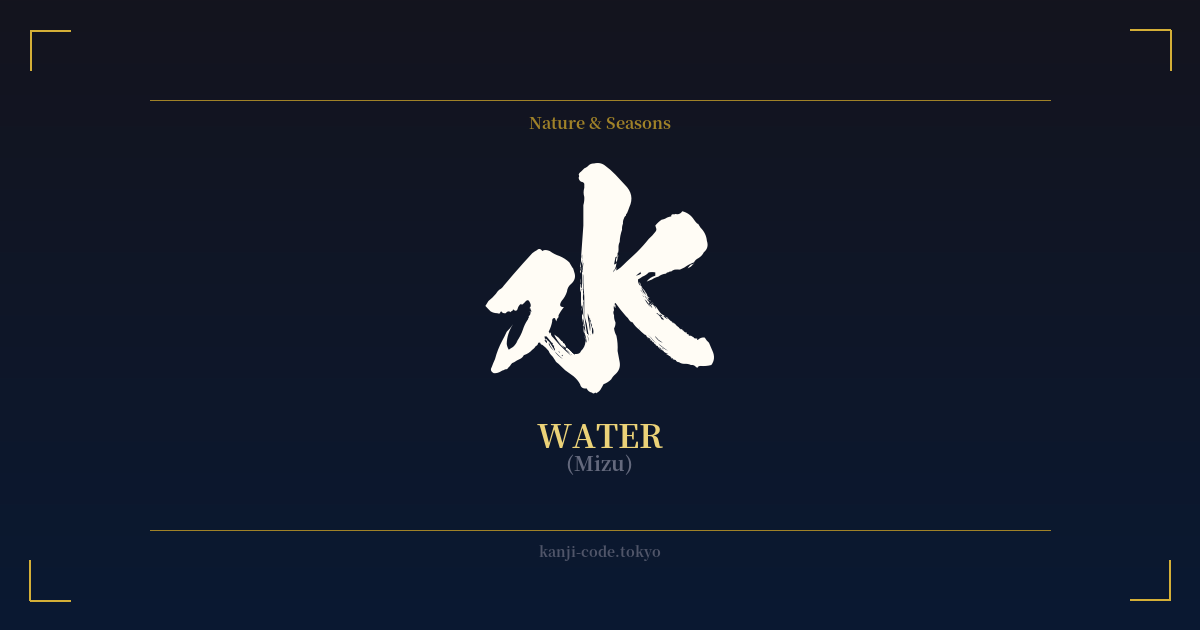
✍️ 水 (Mizu) — Cultural Context
The kanji 水 (Mizu) is more than just the character for water; it is a symbol that flows through the very heart of Japanese culture, philosophy, and spirituality. Its origin is pictographic, a simplified drawing of a central stream with smaller currents flowing beside it, perfectly capturing the essence of moving water.
In Japanese philosophy, water is one of the five master elements, or 'Godai' (五大), alongside Earth (地), Fire (火), Wind (風), and Void (空). In this context, Mizu represents everything that is fluid, flexible, and adaptable. It embodies the principle of yielding to overcome, of finding the path of least resistance without losing its inherent power. This concept is deeply intertwined with martial arts and Zen Buddhism, famously articulated in the phrase 'be like water'—formless, shapeless, yet capable of crashing through any obstacle.
Shinto, Japan's indigenous religion, places immense importance on purity, and water is the primary agent of purification. Before entering a shrine, visitors perform a ritual cleansing called 'temizu' (手水) at a font called a 'temizuya' (手水舎), washing their hands and mouth. This act, known as 'misogi' (禊), is a symbolic washing away of impurities, preparing the individual to approach the sacred. Water isn't just cleaning the body; it's purifying the spirit.
This reverence for water is also reflected in art and daily life. From the iconic woodblock prints of Hokusai's 'The Great Wave off Kanagawa' to the tranquil koi ponds of Japanese gardens, water is a constant artistic muse. It represents the transient, ever-changing nature of life, a core theme in the aesthetic of 'mono no aware'—the gentle sadness of passing things.
Even Japanese proverbs are filled with aquatic wisdom. 'Mizu ni nagasu' (水に流す), which literally means 'let it flow in the water,' is a common expression for forgiving and forgetting, letting past grievances be washed away. This simple kanji, therefore, carries a universe of meaning: it is the life-giving rain, the destructive tsunami, the tranquil pond, and the purifying stream. It is the embodiment of calm acceptance and unstoppable force, a fundamental character that tells a story of an entire culture's relationship with the natural world.
🖌️ Font Styles for 水
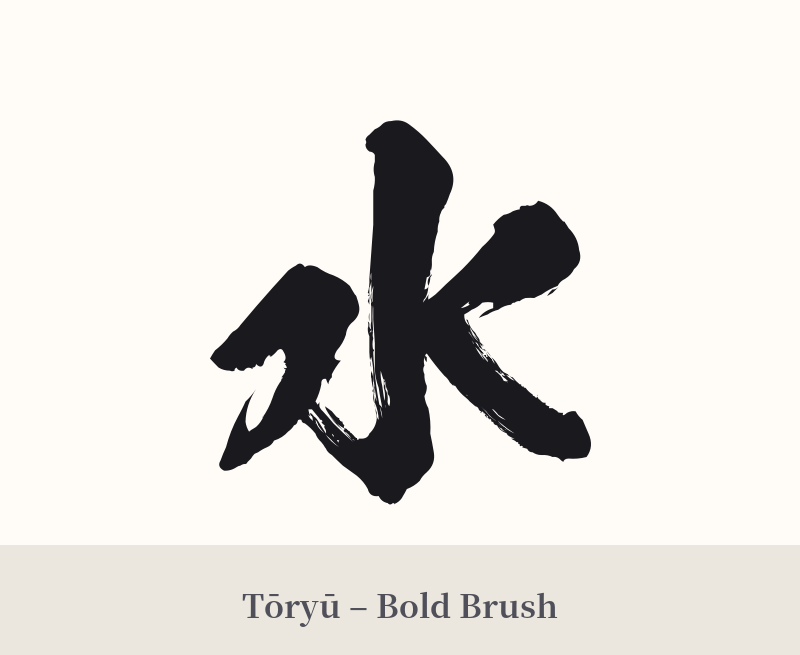
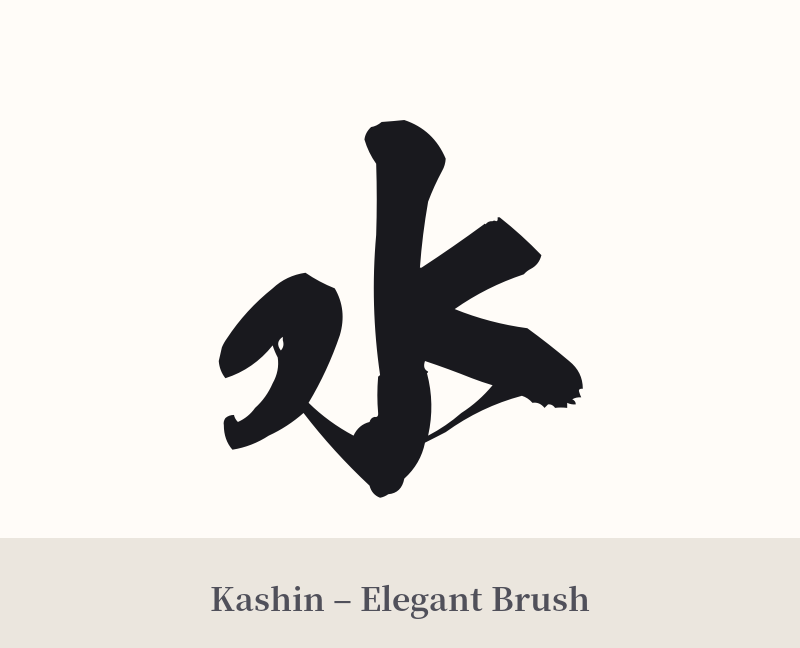
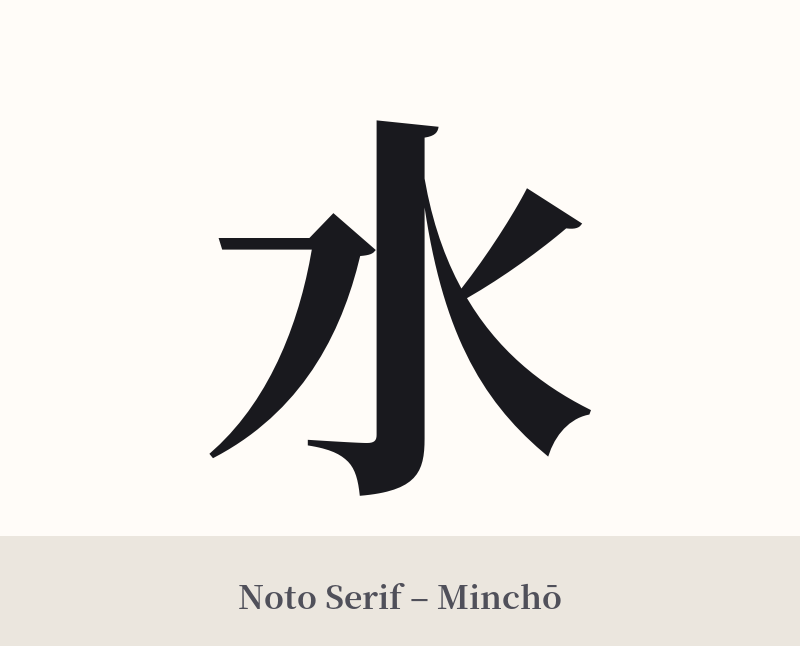
The same kanji can look dramatically different depending on the calligraphy style. Choose a font that matches the mood you want for your tattoo or design.
🎨 Tattoo Suitability
📐 Tattoo Design Guide
The beauty of the 水 kanji lies in its simplicity, which offers surprising design flexibility.
– Placement: Its clean lines make it ideal for smaller, discreet placements like the wrist, ankle, or behind the ear. For a larger statement, it can be the central element of a back or forearm piece.
– Style: A flowing, cursive calligraphy style ('sōsho') can beautifully emulate the movement of water. Conversely, a bold, angular block script ('kaisho') can emphasize water's power and solid presence as ice.
– Visuals: Consider integrating 水 with other Japanese motifs. It pairs naturally with a koi fish swimming upstream, a lotus flower (symbolizing purity rising from murky water), or abstract watercolor splashes to enhance the aquatic theme.
Comments