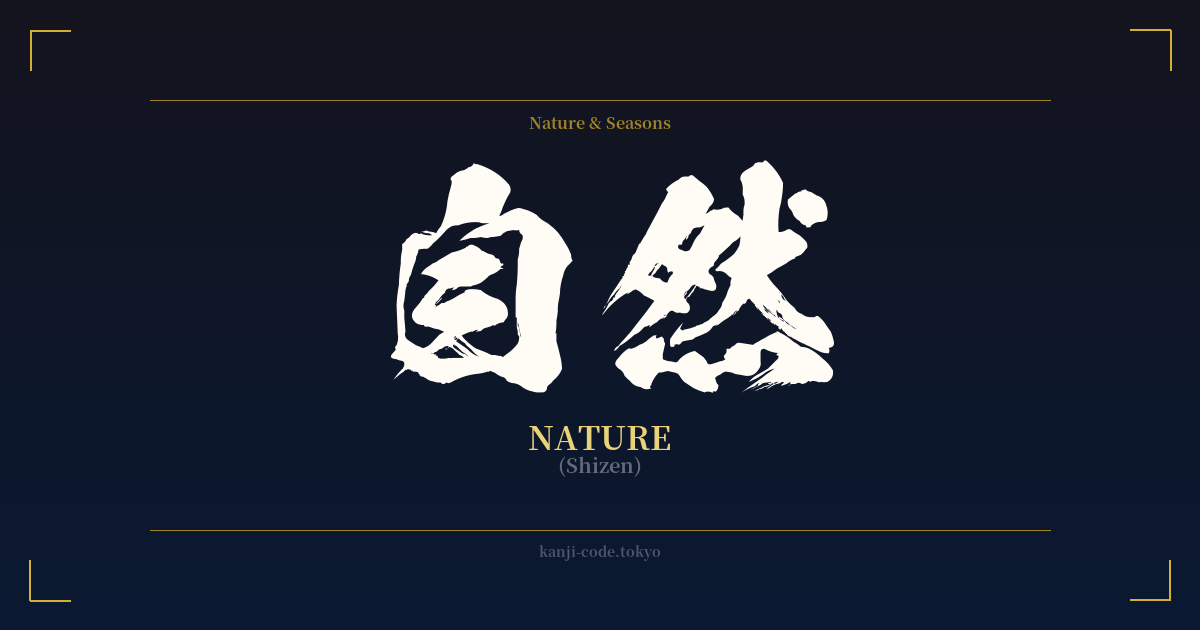
✍️ 自然 (Shizen) — Cultural Context
The word 自然 (Shizen) is one of the most evocative and philosophically rich terms in the Japanese language. While it is most commonly translated as 'Nature,' its true meaning goes far deeper, touching upon concepts of spontaneity, authenticity, and the inherent order of the cosmos.
Etymologically, the word is a combination of 自 (ji), meaning 'self' or 'oneself,' and 然 (zen), a suffix indicating 'in such a state' or 'as it is.' Together, they literally mean 'to be so of itself.' This points to a concept of nature not as a separate entity to be conquered or controlled, but as a self-ordering system that unfolds according to its own intrinsic principles. This idea was heavily influenced by ancient Chinese Taoist thought, which emphasized living in harmony with the 'Tao' or the natural way of the universe.
In Japan, this concept found fertile ground in the native Shinto religion. Shintoism is animistic, believing that divine spirits, or kami (神), reside in natural phenomena like mountains, rivers, ancient trees, and even uniquely shaped rocks. For followers of Shinto, nature is not merely beautiful scenery; it is sacred, the very dwelling place of the gods. The grand Ise Shrine, for instance, is rebuilt every 20 years, a practice that honors the cyclical renewal found in nature itself.
With the arrival of Buddhism, particularly Zen, the appreciation for Shizen was further refined. Zen philosophy emphasizes direct experience and enlightenment, often found through quiet contemplation of the natural world. The creation of Japanese gardens (日本庭園), the art of flower arranging (生け花, ikebana), and the crafting of bonsai are all spiritual practices aimed at capturing the essence of Shizen. These arts don't seek to perfectly replicate nature, but to express its underlying principles—asymmetry, simplicity, and the beauty of impermanence (無常, mujō).
This deep cultural reverence for nature means that Shizen carries a weight of serenity, authenticity, and profound connection. It represents a worldview that values harmony over dominance, and finds beauty in the simple, unadorned reality of existence. To embrace the idea of Shizen is to aspire to live a life that is genuine, unforced, and in tune with the world around you.
🖌️ Font Styles for 自然
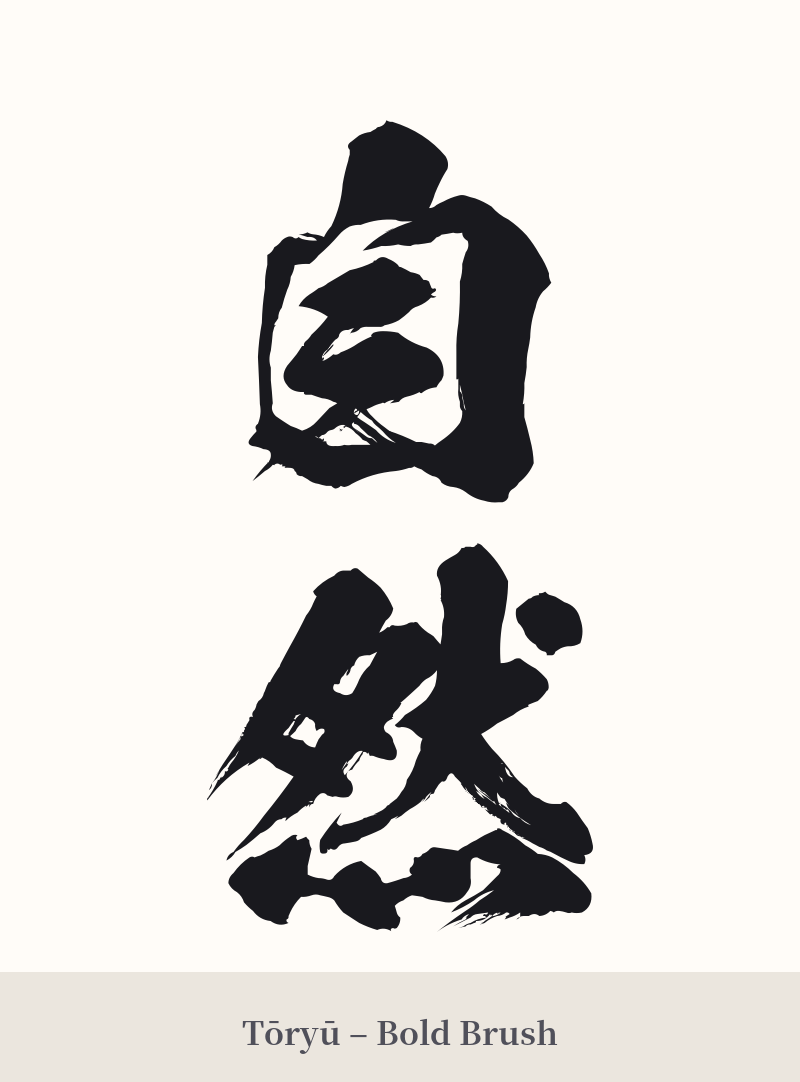
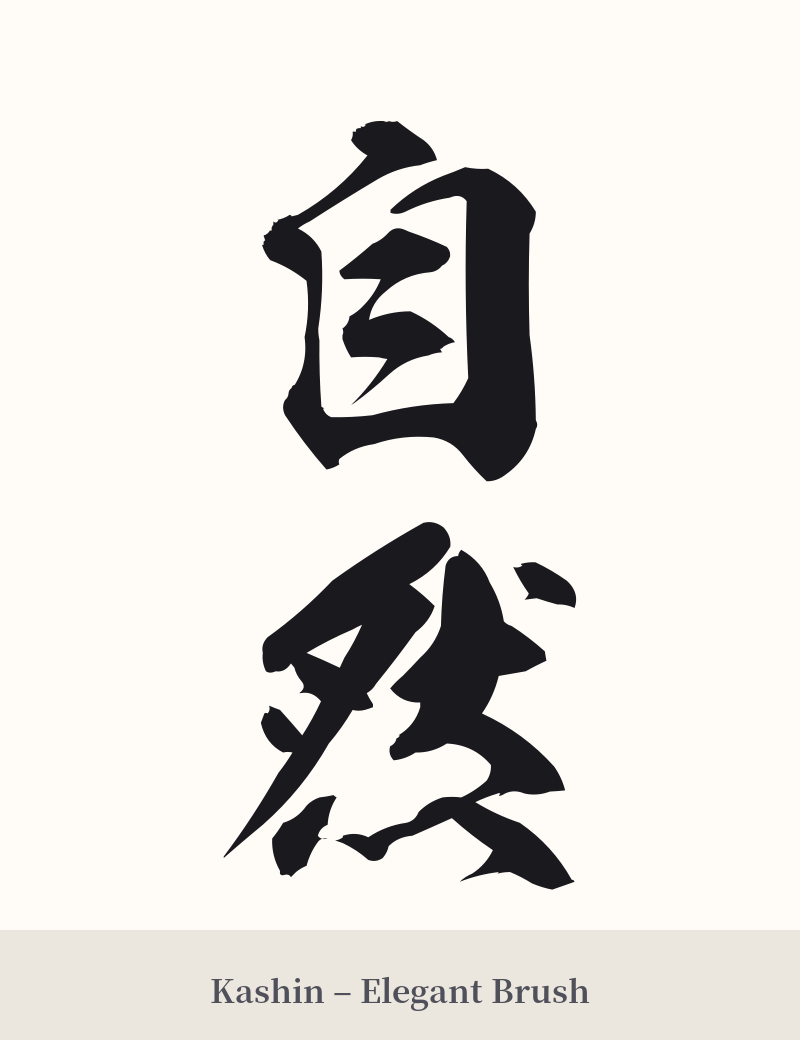
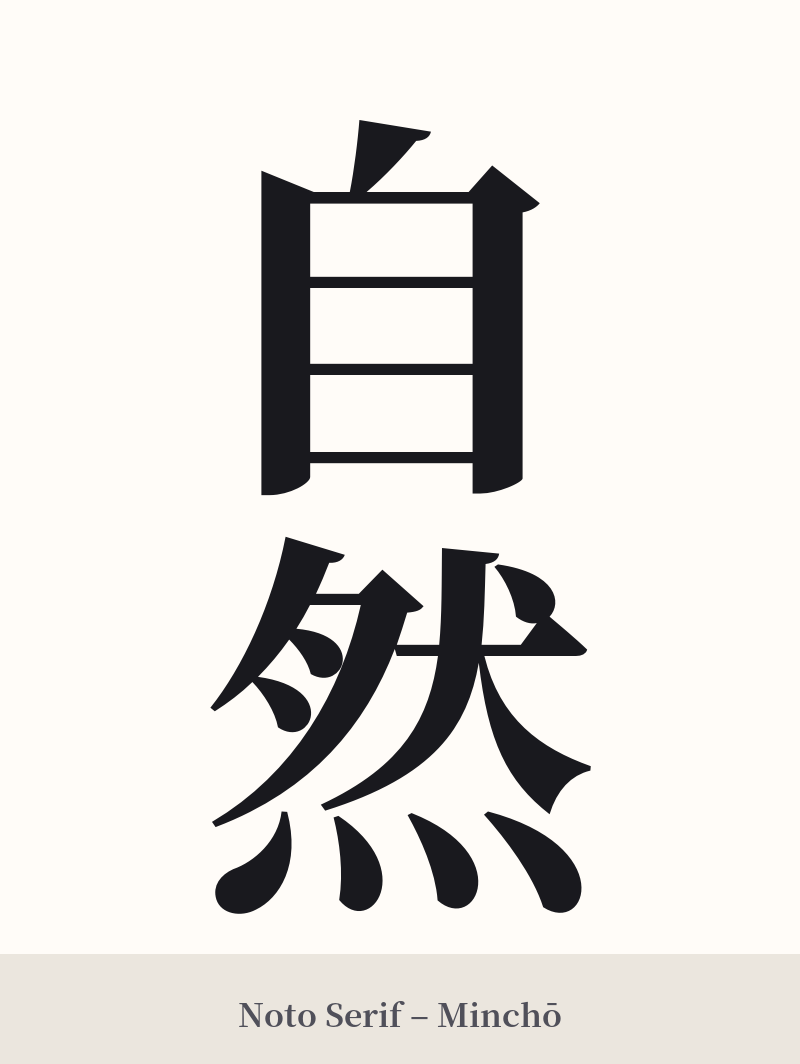
The same kanji can look dramatically different depending on the calligraphy style. Choose a font that matches the mood you want for your tattoo or design.
🎨 Tattoo Suitability
📐 Tattoo Design Guide
The word 自然 offers great versatility in tattoo design, complementing both minimalist and elaborate aesthetics.
– Placement: For a vertical orientation, it looks striking along the spine, forearm, or calf. A horizontal placement works well across the collarbone, upper back, or inner bicep.
– Font Style: A standard, crisp Kaisho (block script) style emphasizes the structure and clarity of the characters, giving it a grounded, solid feel. For a more fluid and organic look, consider a Gyosho (semi-cursive) or Sosho (cursive) script, which mimics the flow and movement found in nature itself.
– Visual Elements: Shizen pairs beautifully with imagery from the natural world. Consider integrating it with elements like a sprig of bamboo, a branch of cherry blossoms, a subtle wave pattern reminiscent of Hokusai's work, or the silhouette of a mountain range. The characters could even be formed from natural textures, such as wood grain or flowing water, for a highly integrated design.
Comments