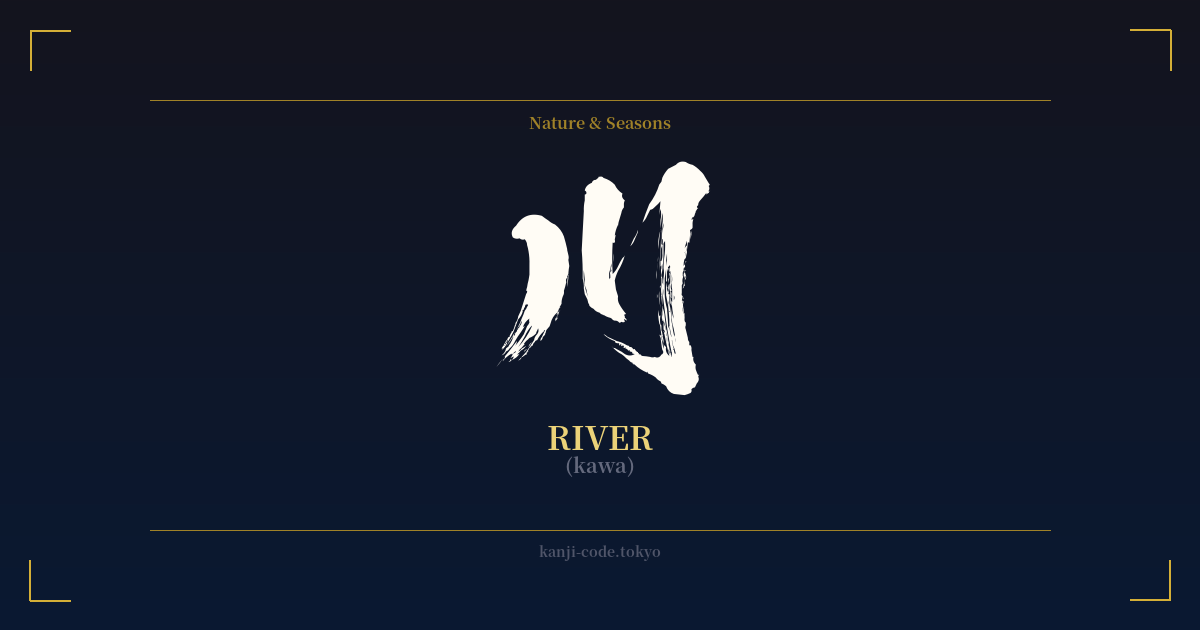
✍️ 川 (kawa) — Cultural Context
The kanji 川 (kawa) is a perfect example of a pictograph, a character that visually represents its meaning. Its three simple strokes beautifully capture the image of water flowing between two banks. This elegant simplicity belies a profound cultural significance rooted in Japan's geography and philosophy.
Japan is a land of mountains and valleys, and as such, rivers are an ever-present feature of its landscape. They are the lifeblood of the nation, carving paths through the terrain, nourishing rice paddies, and providing for communities. This physical reality is deeply embedded in the Japanese psyche. Rivers are not just geographical features; they are active, living parts of the environment.
In Shinto, Japan's indigenous religion, nature is sacred, and deities (kami) are believed to reside in natural elements like mountains, trees, rocks, and, of course, rivers. Rivers are seen as powerful places of purification. The practice of 'misogi' (禊) involves ritual purification by washing in a river or waterfall, cleansing oneself of impurities or 'kegare' (穢れ). This act connects the individual directly to the divine energy of nature.
The symbolism of the river extends deeply into Japanese philosophy and art. It is a powerful metaphor for the flow of time and the concept of impermanence (無常, mujō), a central tenet of Buddhism. The famous opening lines of the 'Hōjōki' (An Account of My Hut) by Kamo no Chōmei state: "The flow of the river is ceaseless and its water is never the same." This captures the idea that life is in constant flux, and nothing ever stays the same—a beautiful yet melancholic truth.
This idea of 'flow' (流れ, nagare) is a recurring theme. A river's journey from the mountains to the sea mirrors the journey of human life, with its twists, turns, rapids, and calm stretches. It represents resilience, adaptation, and the relentless push forward. The kanji 川, therefore, encapsulates not just a physical river, but the entire philosophical concept of life's journey and the unstoppable passage of time.
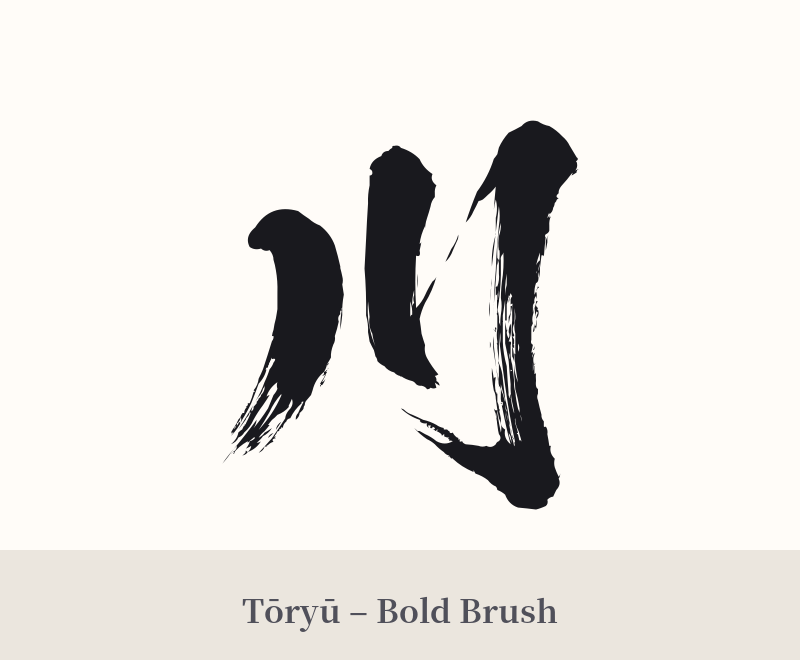
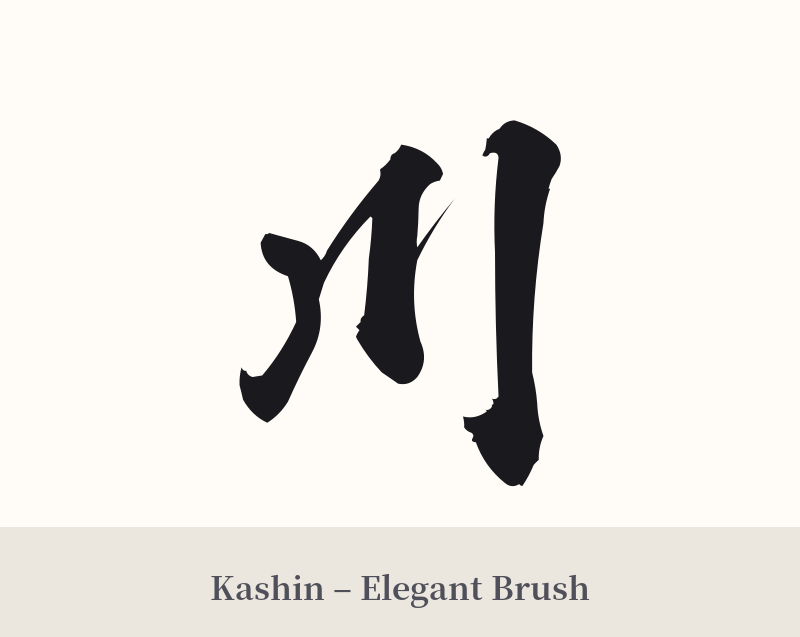
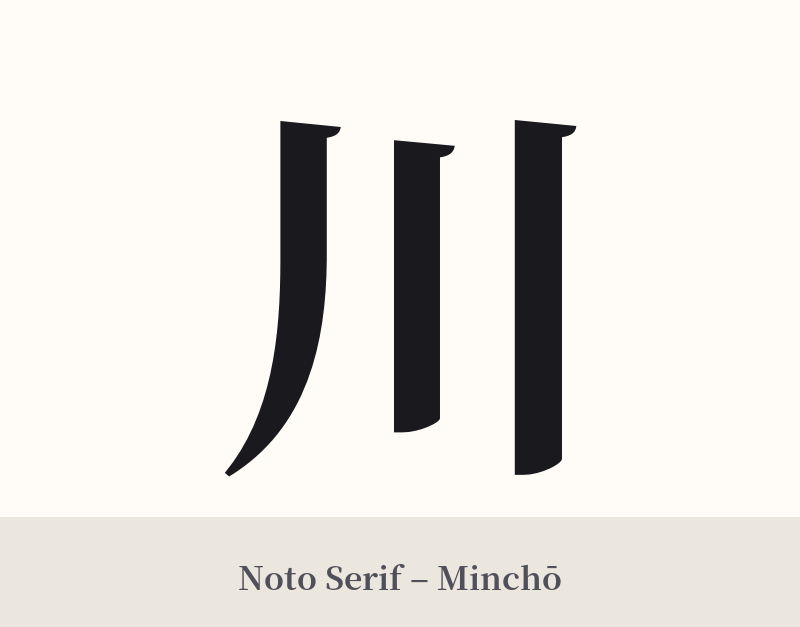
🖌️ Font Styles for 川
The same kanji can look dramatically different depending on the calligraphy style. Choose a font that matches the mood you want for your tattoo or design.
🎨 Tattoo Suitability
📐 Tattoo Design Guide
The beauty of the 川 kanji lies in its minimalist elegance, which opens up many design possibilities.
– Placement: Its vertical nature makes it ideal for places that accentuate length and flow, such as the forearm, the calf, or along the spine. Smaller versions work beautifully on the wrist, ankle, or behind the ear.
– Style: A 'shodō' (calligraphy) or brushstroke style is highly recommended. This approach emphasizes the sense of movement and fluidity inherent in the character. A skilled artist can use varied line weight and 'hasure' (fading brush trails) to make it look as if it were painted directly onto the skin.
– Combination: While it stands strong on its own, 川 can be integrated into a larger Japanese-style piece. It can serve as the conceptual backbone for designs featuring koi fish swimming upstream (symbolizing perseverance), maple leaves floating on the water (symbolizing the passage of time), or a serene mountain landscape.
Comments