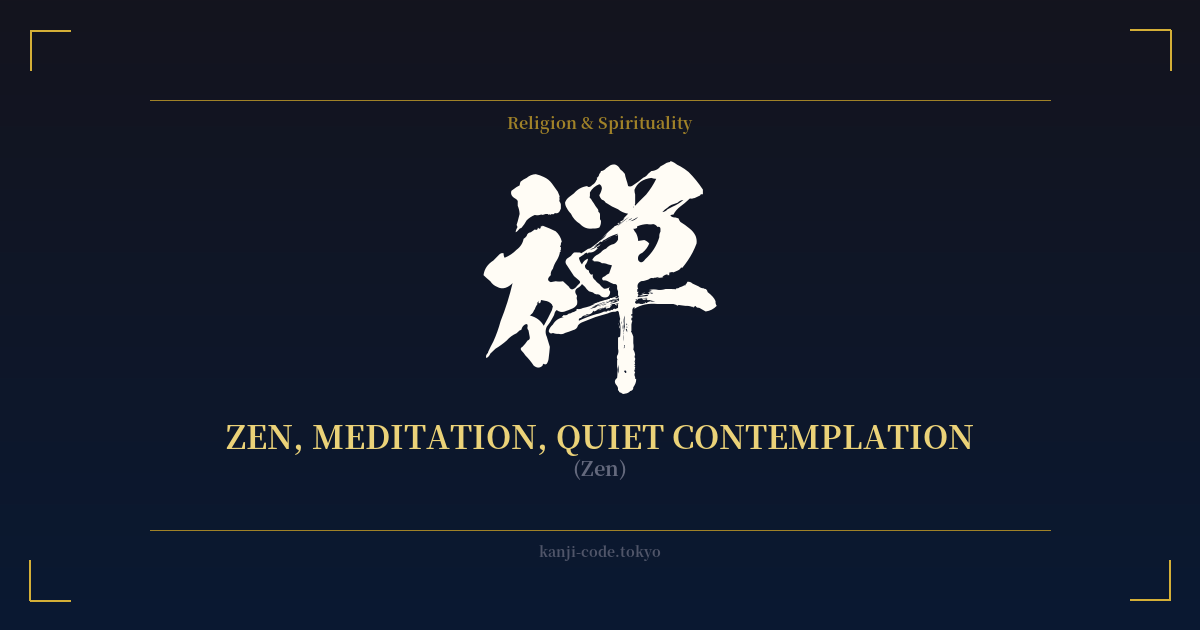
✍️ 禅 (Zen) — Cultural Context
The character 禅 (Zen) is more than just a word; it’s a gateway to a profound philosophy that has shaped Japanese culture for centuries. Its journey begins not in Japan, but in India with the Sanskrit term 'Dhyāna,' meaning meditation or contemplation. This concept traveled along the Silk Road to China, where it was transliterated as 'Chán' and blossomed into a distinct school of Mahayana Buddhism.
It was during the Kamakura period (1185–1333) that Chán Buddhism was introduced to Japan, where it became known as Zen. Monks like Eisai and Dōgen were pivotal figures, establishing the Rinzai and Sōtō schools, respectively. Unlike other Buddhist sects that heavily emphasized scripture and ritual, Zen championed the pursuit of enlightenment through direct experience, self-discipline, and, most importantly, seated meditation known as 'zazen' (坐禅).
Zen's influence quickly permeated the highest levels of Japanese society, especially the samurai class. The principles of discipline, focus, and embracing the present moment resonated deeply with the warrior code of Bushidō. This connection is why Zen is intrinsically linked to Japanese martial arts, where mental stillness is as crucial as physical skill.
Beyond the dojo, Zen aesthetics have sculpted much of what the world considers quintessentially Japanese. The minimalist beauty of the rock garden (karesansui), the mindful ritual of the tea ceremony (sadō), the elegant simplicity of flower arrangement (ikebana), and the spontaneous grace of calligraphy (shodō) all draw from Zen principles. Concepts like 'wabi-sabi' (finding beauty in imperfection and impermanence) and 'yūgen' (profound, subtle grace) are direct expressions of a Zen worldview.
The kanji 禅 itself offers a clue to its meaning. The left-side radical, 示 (shimesuhen), is associated with altars, spirits, and divine matters. The right-side component, 単 (tan), means 'simple' or 'single'. Together, they create a powerful image: a 'simple ritual' or a 'single-minded focus' on matters of the spirit. It perfectly encapsulates the practice of stripping away the non-essential to find clarity and peace within.
🖌️ Font Styles for 禅
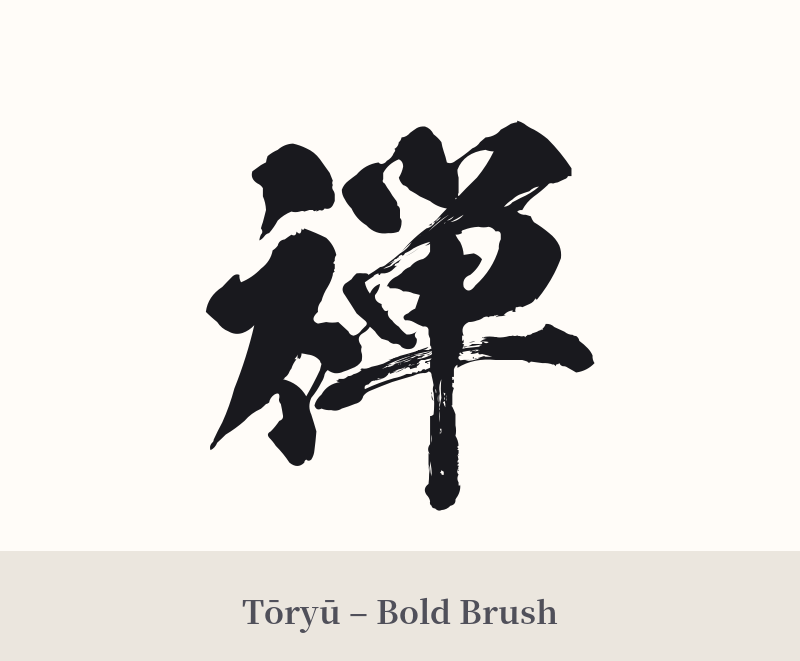
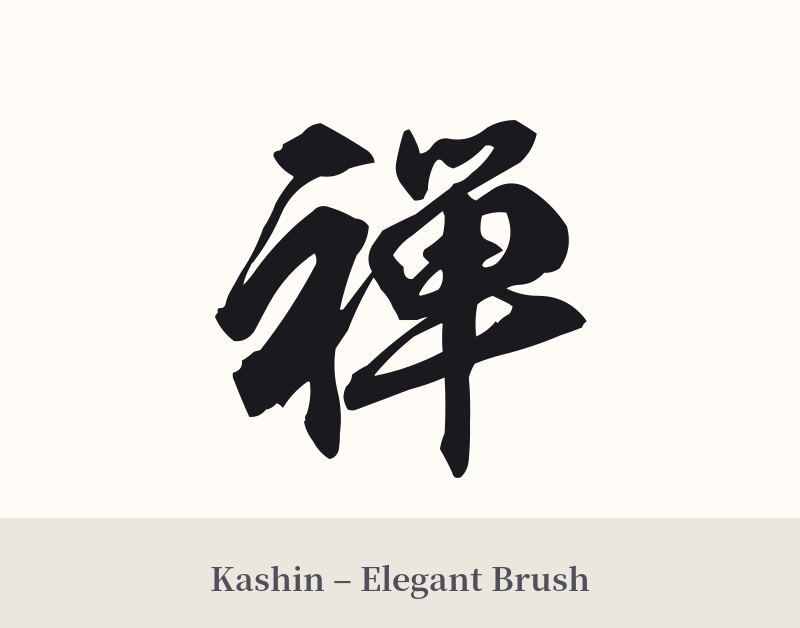
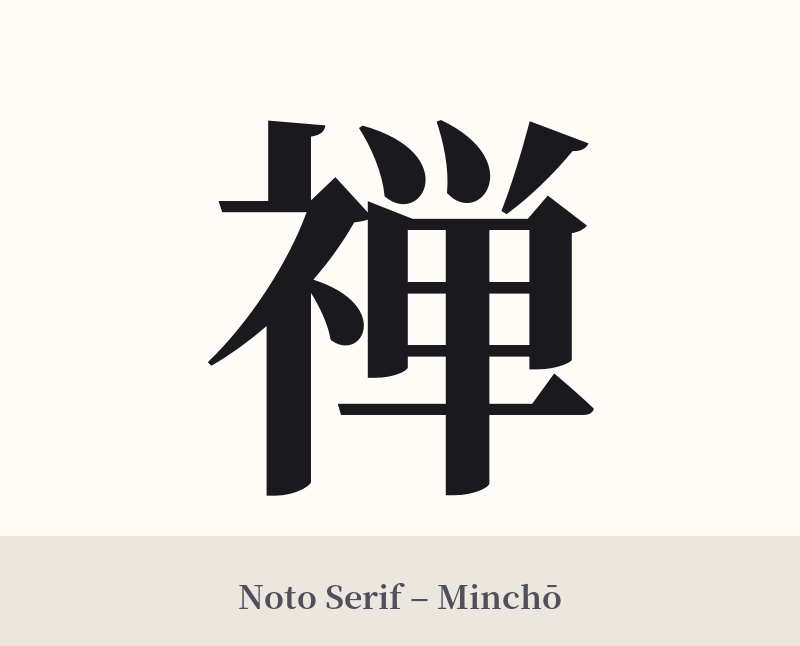
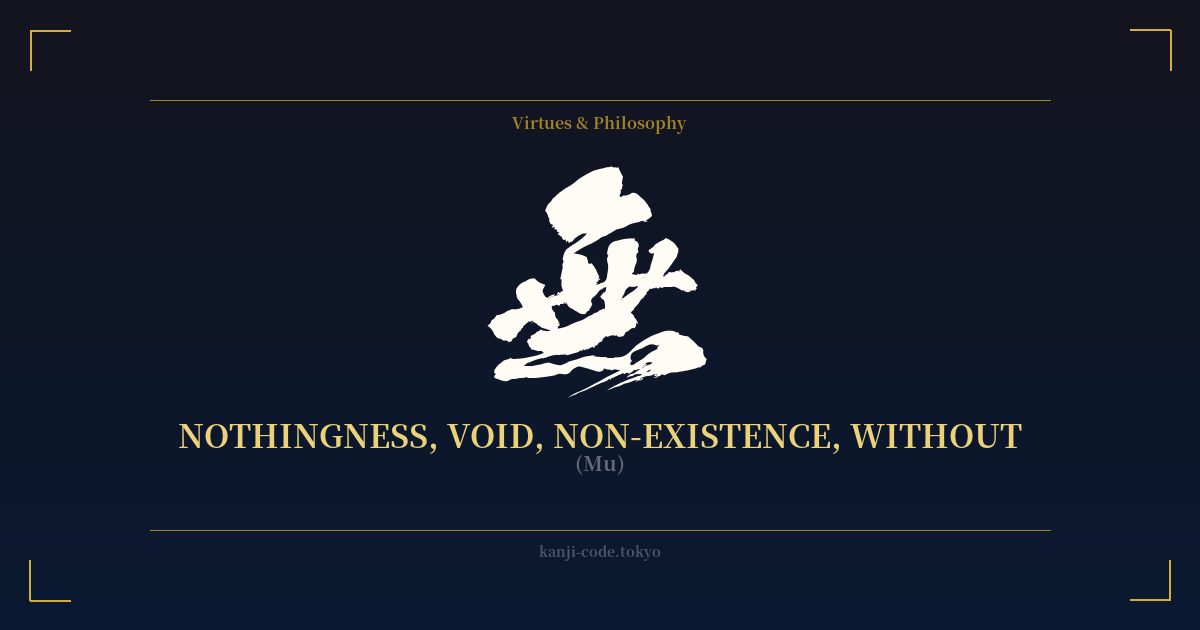
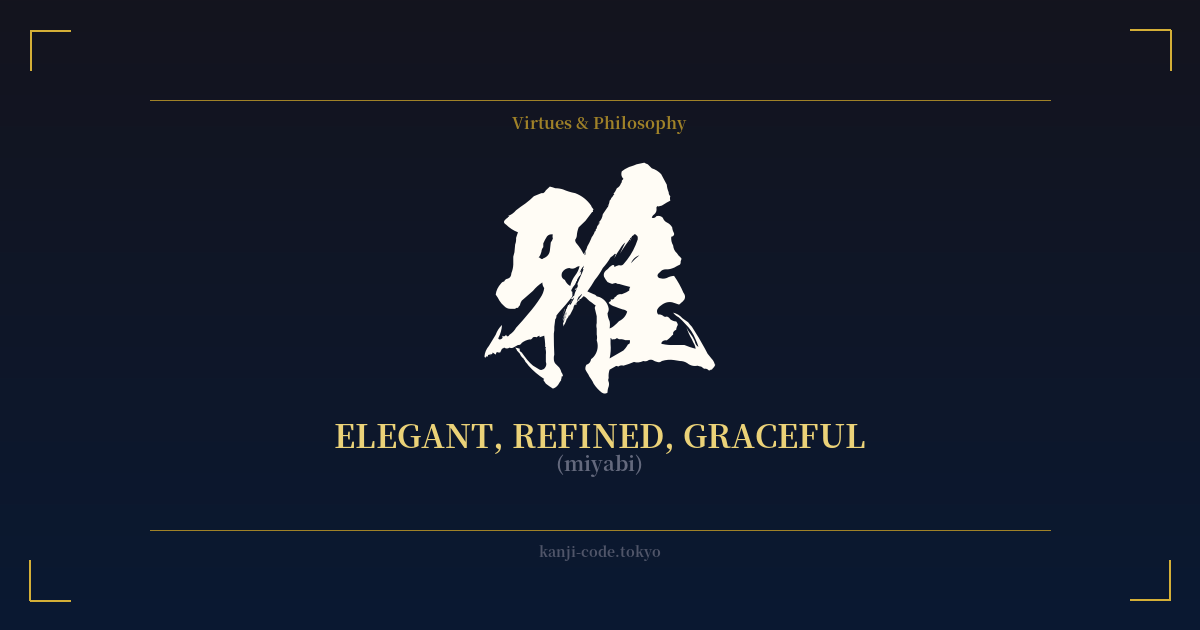
The same kanji can look dramatically different depending on the calligraphy style. Choose a font that matches the mood you want for your tattoo or design.
🎨 Tattoo Suitability
📐 Tattoo Design Guide
The kanji 禅 offers wonderful flexibility for a tattoo, embodying both strength and serenity.
– Placement: For a single, powerful statement, consider the inner forearm, the back of the neck just below the hairline, or the calf. These locations allow the character to stand alone with dignity. It also works well as a centerpiece on the chest or shoulder blade.
– Font Style: The choice of script can dramatically alter the feeling. A bold, blocky Kaisho style emphasizes discipline and stability. For a more fluid and organic feel, a semi-cursive Gyōsho or a fully cursive Sōsho style, often rendered with a brushstroke effect, captures the spontaneous and intuitive nature of Zen.
– Visual Tips: To enhance its meaning, consider pairing 禅 with other Zen-inspired elements. Placing it within an Ensō (Zen circle) is a classic and powerful combination, symbolizing enlightenment and the universe. Other complementary images include a single lotus flower, a silhouette of a meditating figure, or a subtle watercolor background in muted, earthy tones to evoke a sense of calm.
Comments