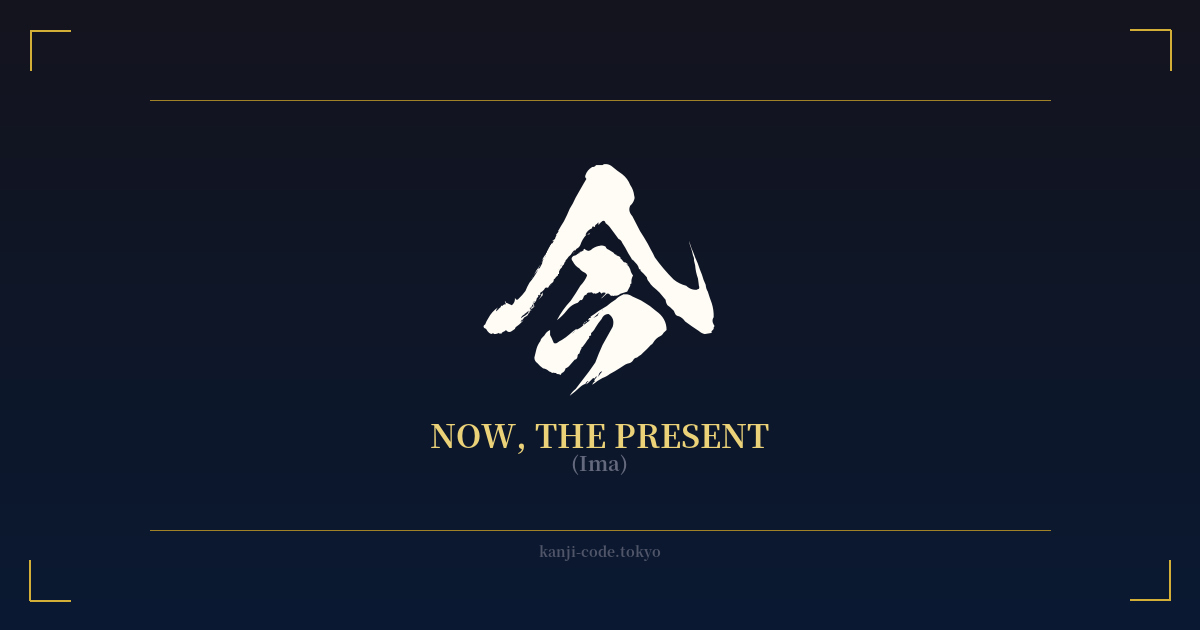
✍️ 今 (Ima) — Cultural Context
The kanji 今, read as "Ima," is one of the most fundamental and frequently used characters in the Japanese language. On the surface, its meaning is simple: "now" or "the present." However, beneath this simplicity lies a profound cultural and philosophical depth that resonates strongly within Japanese society, particularly through the lens of Zen Buddhism.
In Japanese thought, the concept of "Ima" is not just a point in time but a state of being. It is the core of mindfulness—the practice of focusing one's awareness entirely on the present moment. This idea encourages an individual to acknowledge and accept their feelings, thoughts, and bodily sensations without judgment. The past is gone and the future is yet to come; only in the "now" can one truly live, act, and find peace.
This philosophy is deeply embedded in many traditional Japanese arts. In the tea ceremony (茶道, Sadō), every movement and gesture is performed with complete presence. In calligraphy (書道, Shodō), the brushstroke is an unrepeatable action that exists only in the instant it is made. Haiku poetry is built around capturing a single, fleeting moment in nature, crystallizing an observation of the "now."
The character's visual form itself is elegantly simple. Composed of just four strokes, its clean and balanced structure can be seen as a metaphor for the clarity and simplicity one seeks by living in the present. Its etymology is thought to derive from a pictogram representing a lid or cover, suggesting the idea of containing or holding the current moment.
In modern Japan, the word has also taken on a motivational, action-oriented tone. The phrase 「今でしょ!」("Ima desho!"), meaning "Now's the time!" or "It has to be now!", became a massive cultural catchphrase. It captures a spirit of seizing the opportunity and acting decisively, rather than procrastinating. This demonstrates the dual nature of 今: it is both a symbol of serene, meditative presence and a call to immediate, impactful action.
Ultimately, 今 represents a powerful reminder to disconnect from the regrets of the past and the anxieties of the future. It is an invitation to experience life as it unfolds, moment by moment, finding richness and meaning in the here and now. This makes it more than just a word; it is a guiding principle for a more centered and fulfilling life.
🖌️ Font Styles for 今
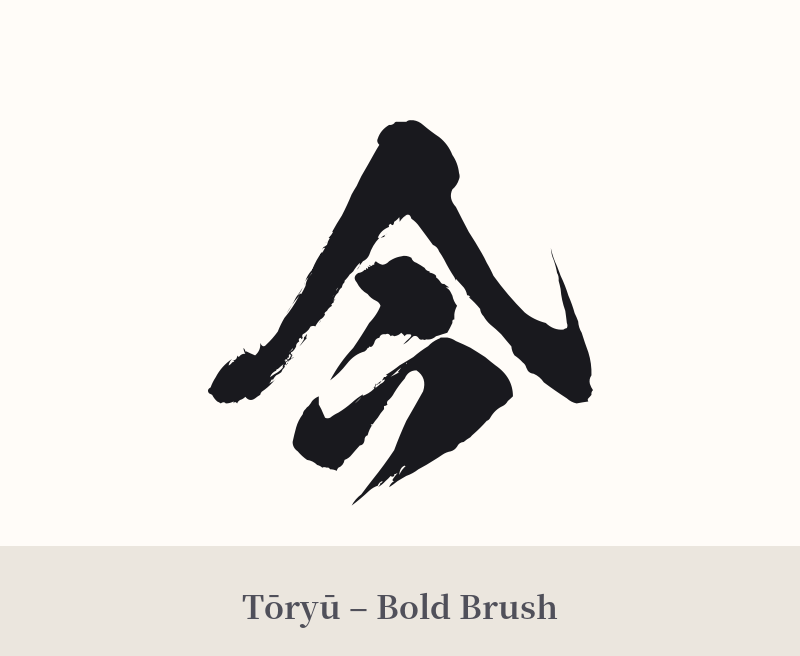
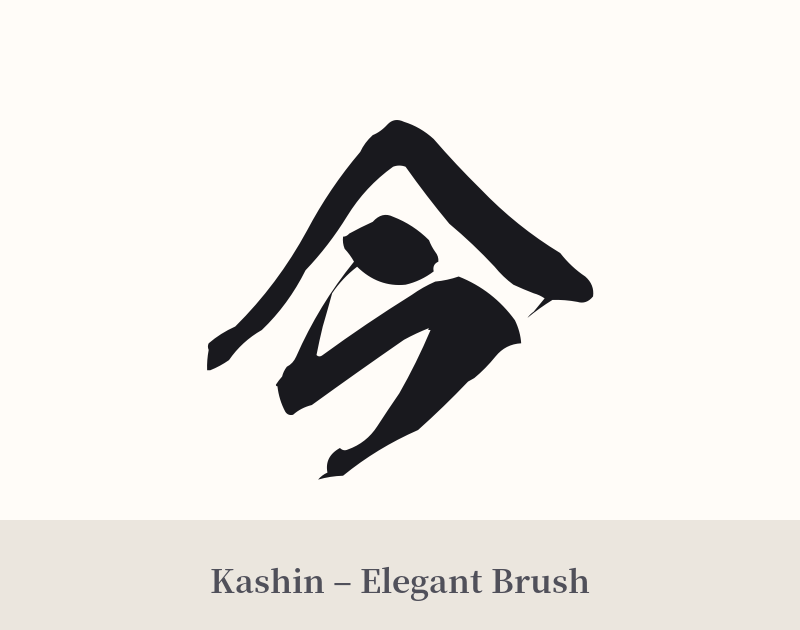
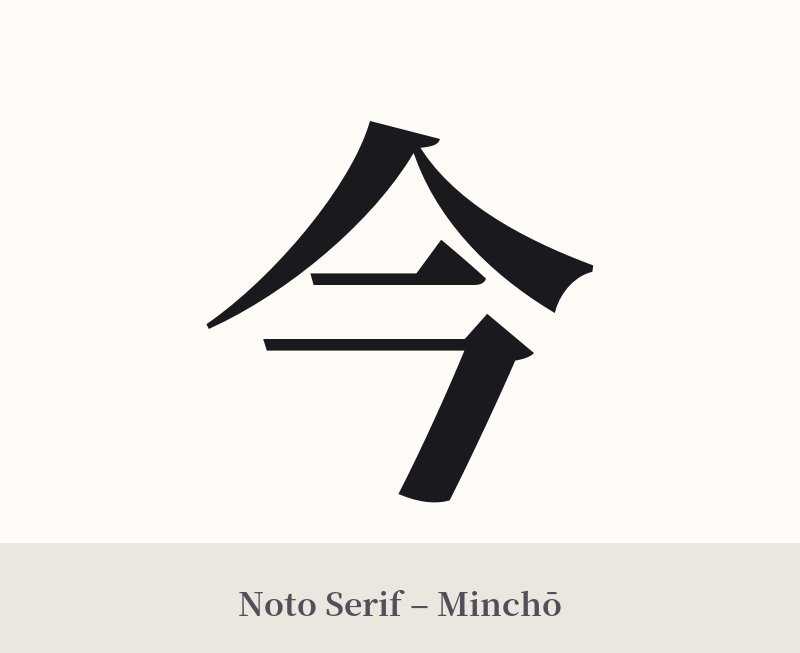
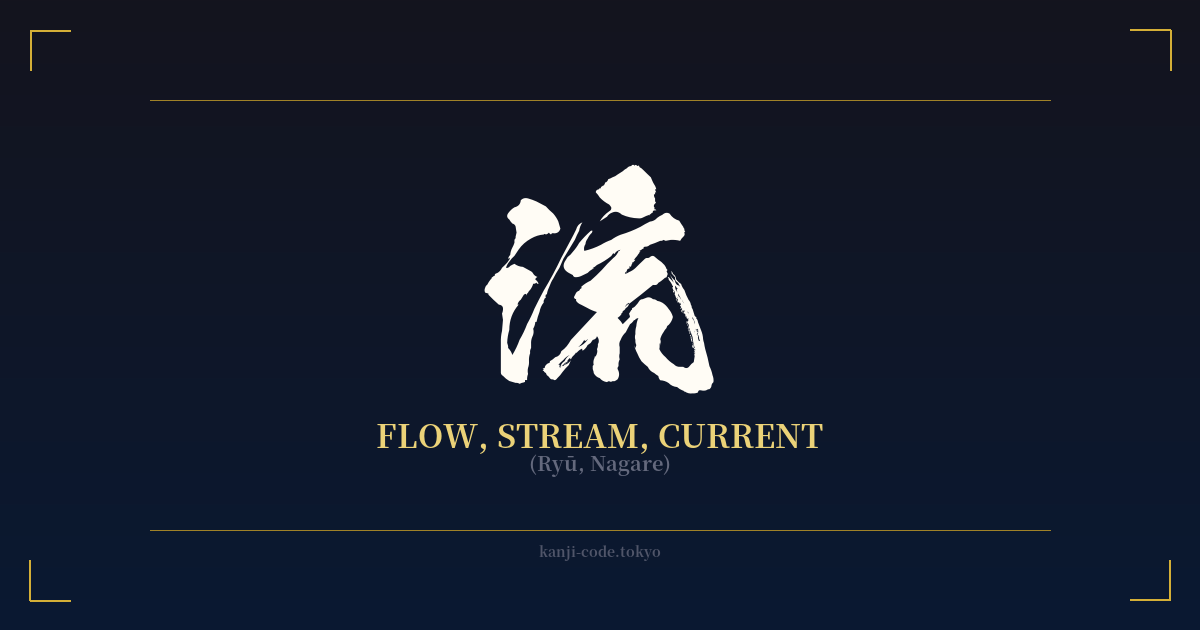
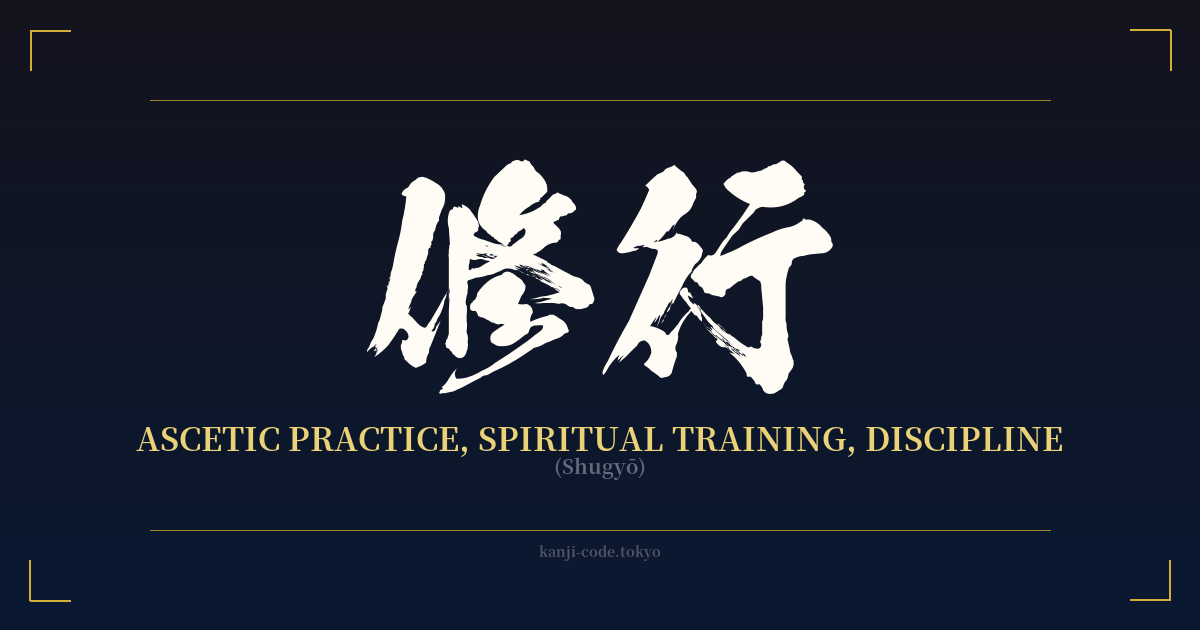
The same kanji can look dramatically different depending on the calligraphy style. Choose a font that matches the mood you want for your tattoo or design.
🎨 Tattoo Suitability
📐 Tattoo Design Guide
The kanji 今 (Ima) is a minimalist's dream, offering clean lines and a powerful message. Its simplicity is its greatest strength in tattoo design.
– Placement: Because of its personal and introspective nature, 今 works well in smaller, more intimate locations. Consider the inner wrist, the ankle, behind the ear, or on the collarbone. For a slightly larger piece, the inner forearm or the back of the neck are excellent choices.
– Font Style: A standard block script (Kaisho) emphasizes its clarity and directness, making it instantly recognizable. For a more fluid and artistic feel, a semi-cursive (Gyosho) or full cursive (Sosho) style can represent the flow of time and the fleeting nature of the present moment.
– Visual Tips: While 今 is powerful on its own, it can be paired with other elements to deepen its meaning. Placing it within an Enso circle (a hand-drawn Zen circle) reinforces the themes of enlightenment and the void. Combining it with a lotus flower can symbolize finding beauty and purity in the present moment. However, for many, the character's unadorned simplicity is the most effective design choice.
Comments