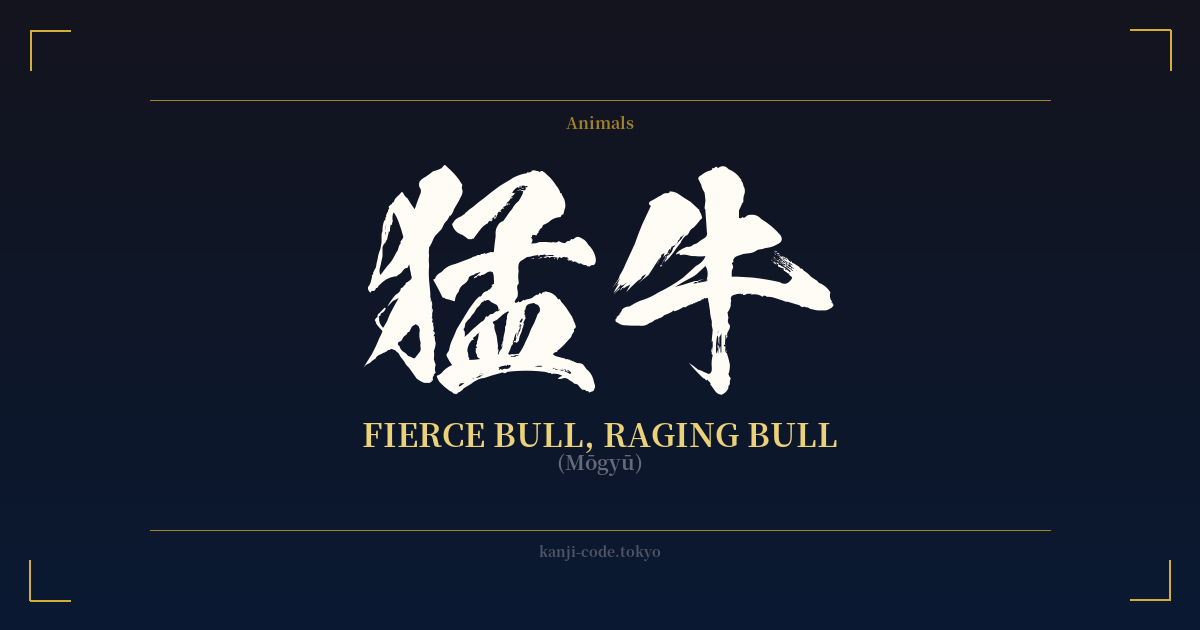
✍️ 猛牛 (Mōgyū) — Cultural Context
猛牛 (Mōgyū) translates directly to “fierce bull” or “raging bull.” It’s a word that immediately conjures images of raw, untamed power, brute strength, and an unstoppable force of nature. It’s not just any bull; it's a bull in its most primal and formidable state, a symbol of pure, unbridled energy.
The symbolism of the bull or ox (牛) in Japan is deeply rooted in agriculture, where these animals were indispensable for plowing fields and transporting goods. They represented diligence, fortitude, and immense physical strength. However, the addition of the kanji 猛 (mō), meaning “fierce” or “violent,” transforms this dependable creature into something wild and dangerous. This combination captures the duality of nature: its capacity for both creation and destruction, for patient labor and explosive fury.
This concept of a powerful, charging animal resonates strongly in various aspects of Japanese culture, particularly in martial arts and sports. A fighter or athlete who is exceptionally strong and aggressive might be nicknamed “Mōgyū.” The most famous example in modern Japan is its association with professional baseball. The Orix Buffaloes, a popular team in the Pacific League, proudly use the image of the fierce bull as their mascot and identity. This association has cemented 猛牛 in the public consciousness as a symbol of competitive spirit and overwhelming power.
Beyond sports, the term taps into a universal archetype. Like the Minotaur of Greek myth or the charging bull of Wall Street, 猛牛 represents masculine energy, dominance, and a defiant spirit that refuses to be tamed. It speaks to an inner strength that, when unleashed, is formidable and awe-inspiring. It’s a statement of resilience and the will to push forward against any obstacle, making it a potent symbol for anyone looking to embody that same relentless drive and untamable spirit.
🖌️ Font Styles for 猛牛
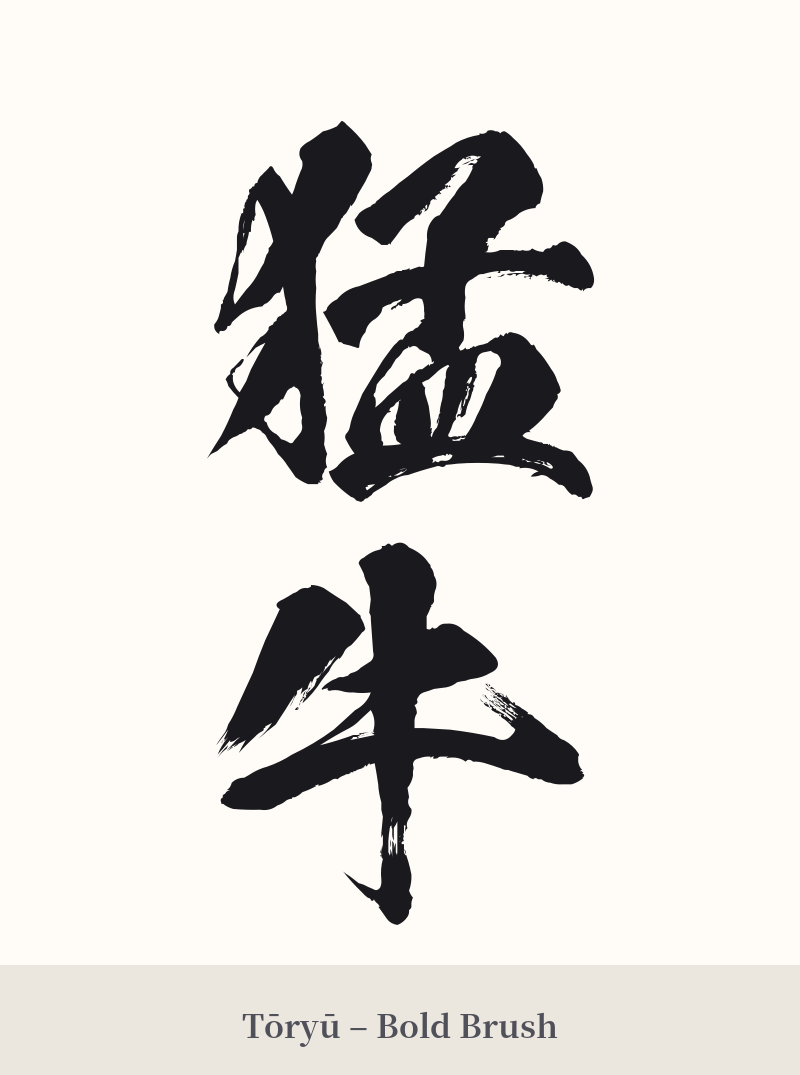
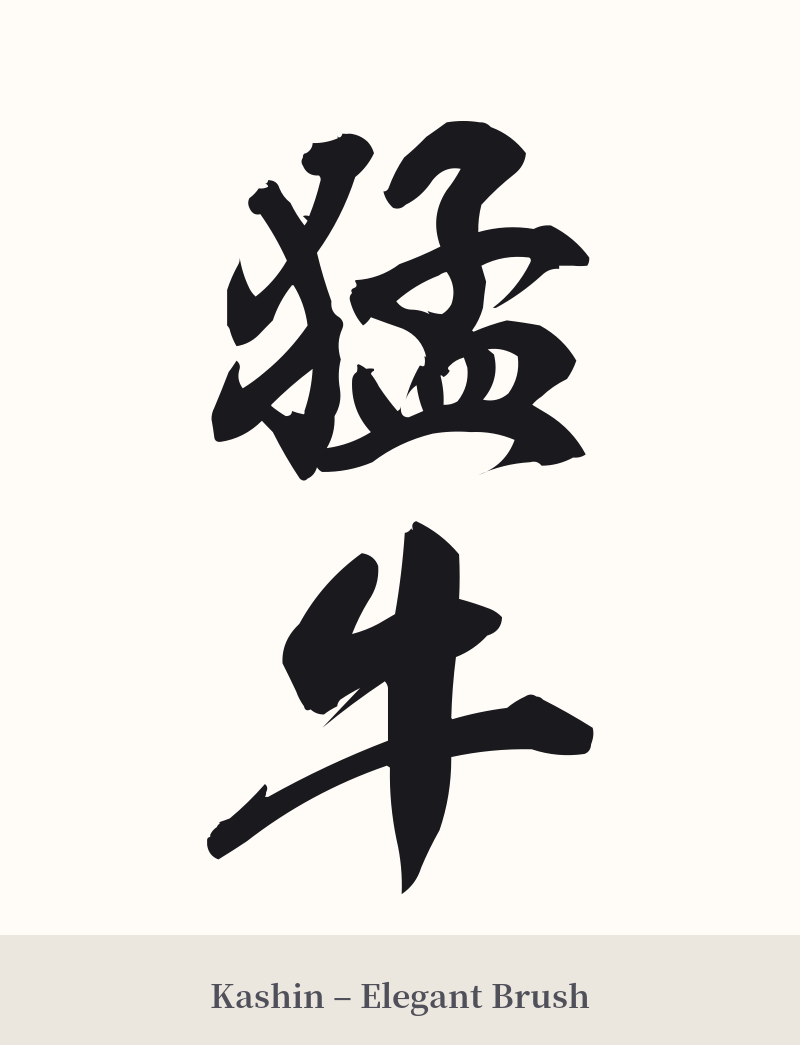
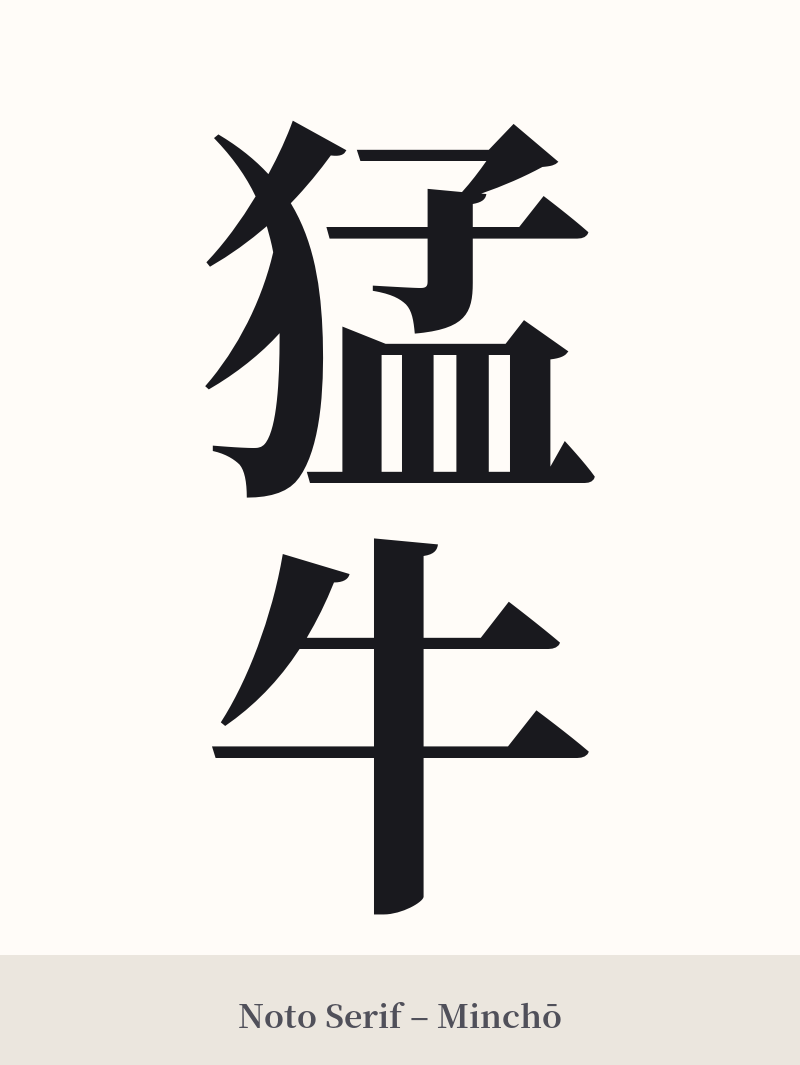
The same kanji can look dramatically different depending on the calligraphy style. Choose a font that matches the mood you want for your tattoo or design.
🎨 Tattoo Suitability
📐 Tattoo Design Guide
For a tattoo of 猛牛, the design should emphasize its core themes of power and aggression. Consider these recommendations:
– Placement: This kanji compound is best suited for large, powerful muscle groups that can support its strong meaning. The chest, upper back, shoulder, or thigh are excellent canvases that provide ample space and align with the concept of strength.
– Font Style: An aggressive, dynamic calligraphy style works best. A thick, semi-cursive script (Gyōsho) or a wild, unrestrained cursive (Sōsho) can capture the 'raging' energy of the bull. Avoid thin, delicate fonts, as they would contradict the word's meaning.
– Visual Tips: Consider integrating the kanji with imagery. The characters could be artistically woven into the form of a charging bull rendered in a sumi-e (ink wash) style. Adding elements like splashes of red ink, storm clouds, or lightning can further amplify the sense of ferocity and power.
Comments