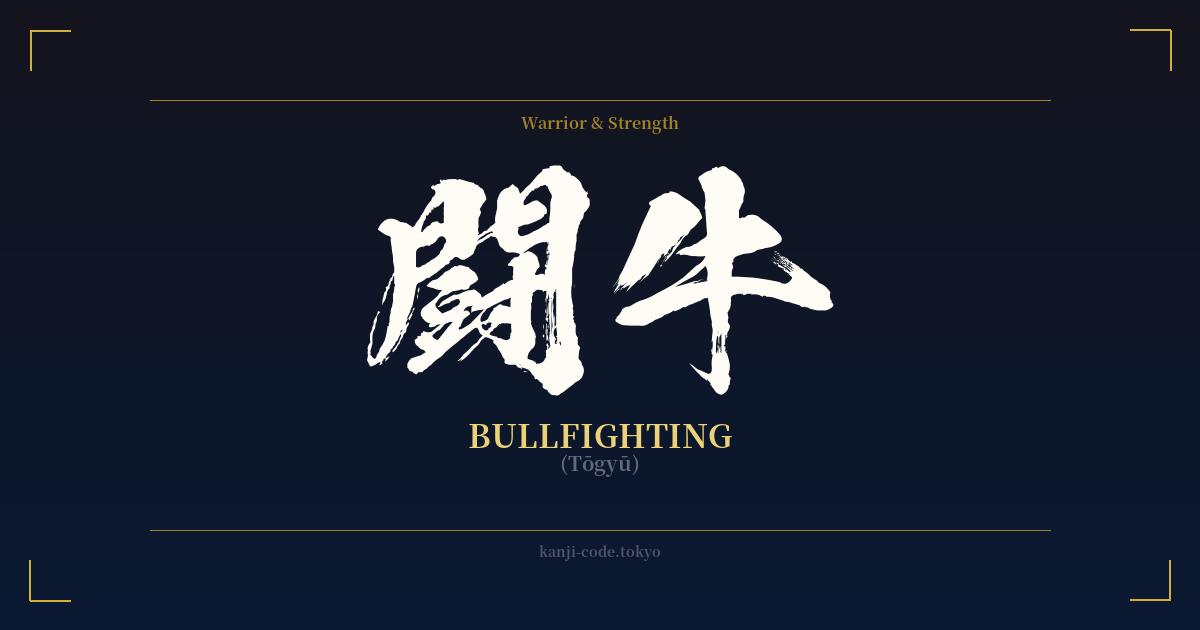
✍️ 闘牛 (Tōgyū) — Cultural Context
The word 闘牛 (Tōgyū) literally translates to 'fighting bulls,' but it represents a tradition vastly different from the Spanish corrida de toros that most Westerners imagine. In Japan, Tōgyū is a form of bull-on-bull wrestling, a raw contest of strength where two bulls lock horns and attempt to push each other out of a ring. There is no matador, no swords, and the bulls are not killed in the arena.
This tradition has deep roots, particularly in the Ryukyu Islands (modern-day Okinawa), where it has been practiced for centuries. It's also a significant cultural event in other regions like Uwajima in Ehime Prefecture and the Oki Islands. In these communities, Tōgyū is less a blood sport and more like a combination of a local festival and sumo wrestling for bulls. The animals are prized athletes, often given names and celebrated as local heroes.
These bulls are carefully raised and trained, becoming immensely powerful. The matches are a spectacle of pure, primal force. The crowd roars as two titans, sometimes weighing over a ton, collide with incredible power. A match ends when one bull loses its nerve and turns away, admitting defeat. The winning bull becomes a champion, bringing honor and prestige to its owner and town.
The symbolism of Tōgyū is tied to raw power, endurance, and fighting spirit. It celebrates strength in its most unadorned form. Unlike the more philosophical martial concepts like Bushidō, Tōgyū is grounded and visceral. It represents a head-on confrontation, a struggle for dominance determined by sheer will and physical might, all within a framework of community celebration and tradition.
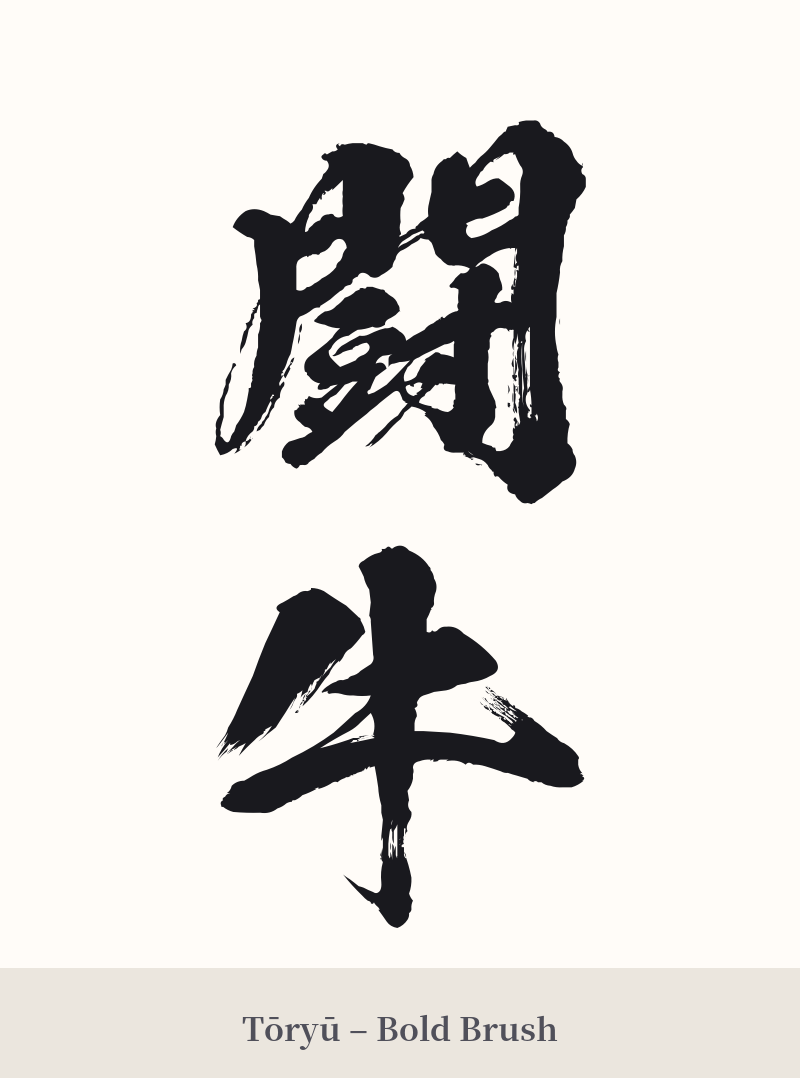
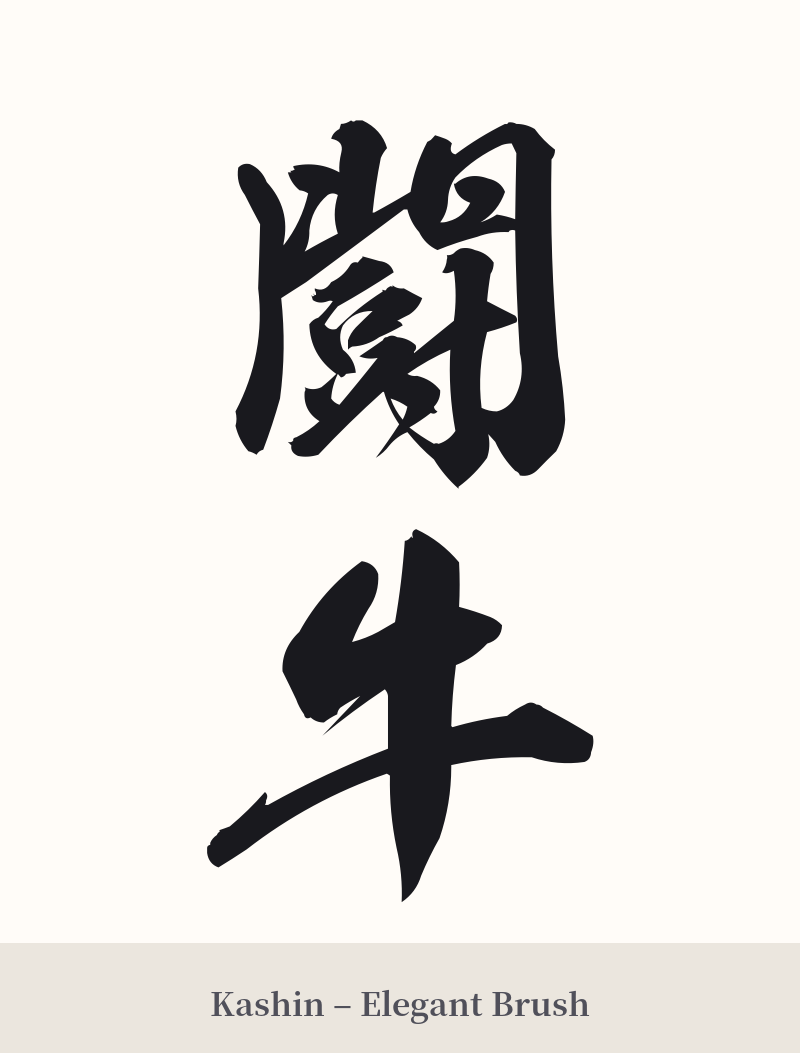
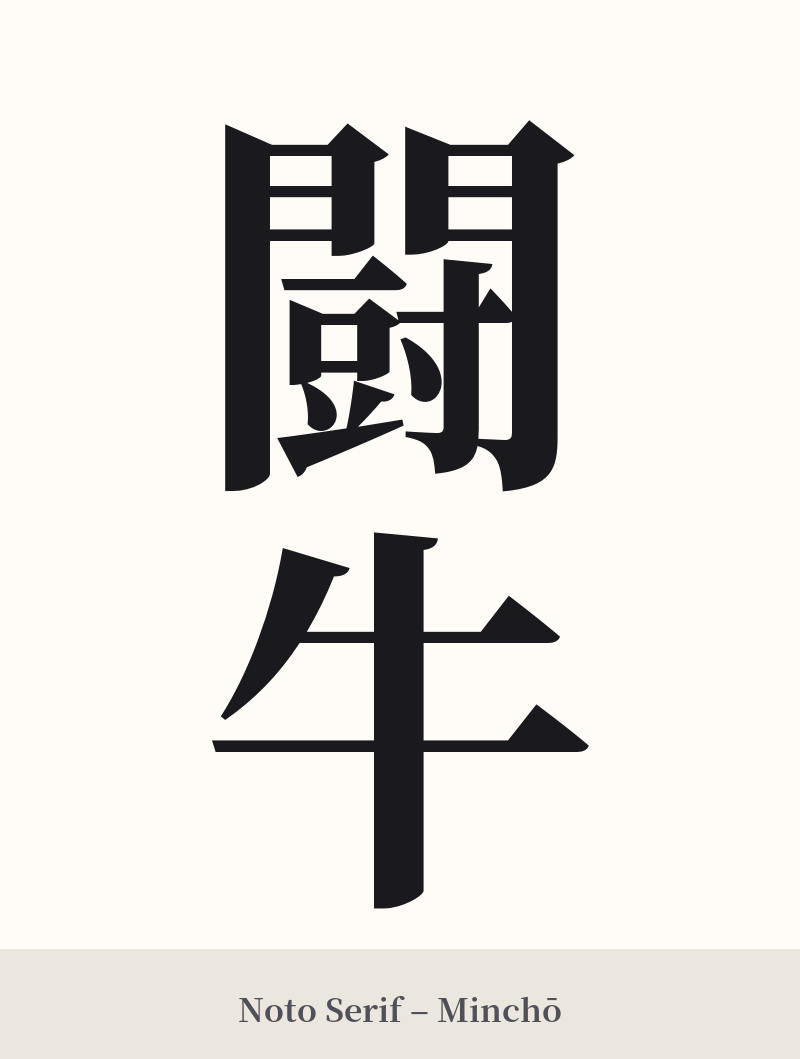
🖌️ Font Styles for 闘牛
The same kanji can look dramatically different depending on the calligraphy style. Choose a font that matches the mood you want for your tattoo or design.
🎨 Tattoo Suitability
📐 Tattoo Design Guide
A 闘牛 tattoo is a statement of raw power and requires a design that reflects its intensity.
– Placement: Due to the complexity of the 闘 character, this design works best in larger areas where detail can be preserved. The calf, outer thigh, forearm, or upper back are excellent choices.
– Style: A bold, aggressive calligraphy or brushstroke (shodō) style would be highly effective. The energetic splatters and strong lines can mimic the intensity of the bulls' clash. A thick, blocky font could also work to emphasize the weight and power of the concept.
– Visuals: The contrast between the 18-stroke 闘 and the 4-stroke 牛 is a design element in itself. A skilled artist can balance these two characters to create a dynamic composition. While you could add a silhouette of two bulls locking horns, the kanji alone is often more powerful and less literal.
Comments