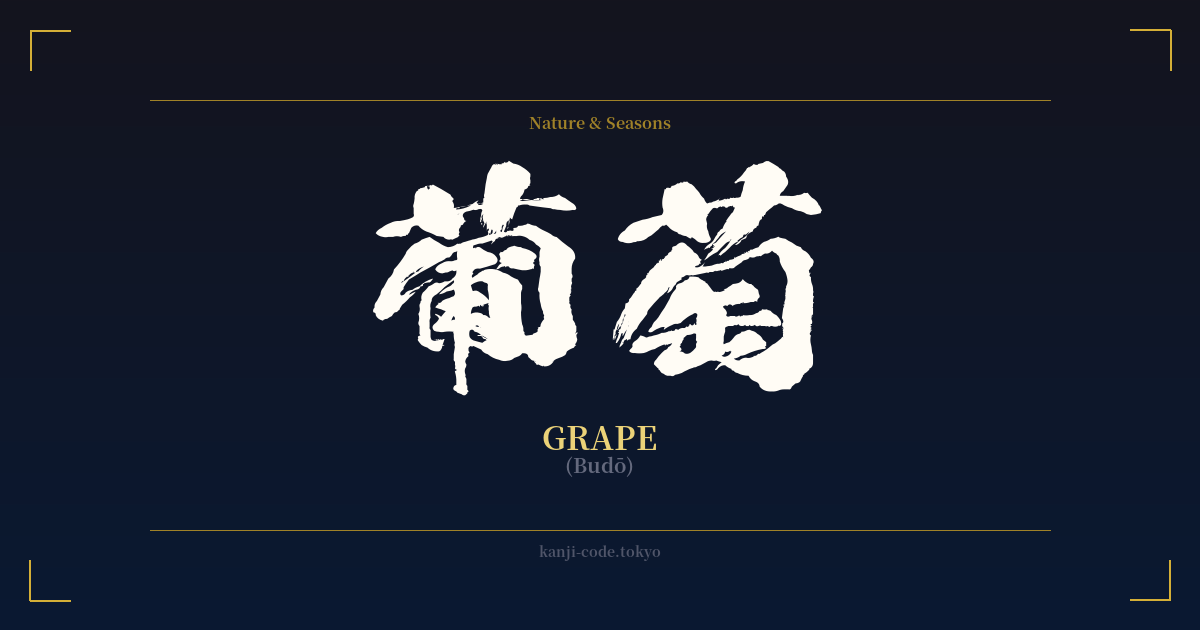
✍️ 葡萄 (Budō) — Cultural Context
The word 葡萄 (Budō) is a fascinating example of how language travels and adapts. Unlike many kanji compounds that are built from the semantic meanings of their characters, 葡萄 is an 'ateji'—a word where characters were chosen primarily for their phonetic value to represent a foreign loanword. The sound 'budō' is believed to be a transliteration of an ancient Persian or Central Asian word for grape, which journeyed along the Silk Road and entered the Chinese language, eventually making its way to Japan.
This origin story is subtly hinted at in the characters themselves. Both 葡 (bu) and 萄 (dō) feature the 艹 (kusakanmuri) radical at the top, which signifies 'grass' or 'plant life.' However, beyond this plant-based clue, the characters don't individually contribute to the meaning of 'grape.' They are a permanent duo, inseparable in this context.
Historically, while wild grapes have existed in Japan for centuries, the widespread cultivation of grapes for table consumption and winemaking is a more modern development, largely beginning in the Meiji Period (1868-1912). As Japan opened to the West, so too did its appetite for Western foods and beverages, including wine. This led to the establishment of vineyards, most famously in Yamanashi Prefecture, which remains the heart of Japan's wine country and is often called the 'Kingdom of Fruit.'
In modern Japanese culture, grapes hold a special place. They symbolize abundance, fertility, and the bounty of the autumn harvest. Grapes are not just a casual snack; they are often cultivated as a luxury item. Varieties like the Kyoho or Shine Muscat are meticulously grown, perfectly shaped, and sold for high prices in department stores, often intended as prestigious gifts. Giving a box of pristine grapes is a sign of respect and goodwill.
This association with harvest and celebration gives 葡萄 a warm, positive feeling. It evokes images of lush vineyards, autumn festivals, and the simple pleasure of a sweet, juicy fruit. While it may not have the warrior spirit of 'Samurai' or the philosophical depth of 'Enso,' it represents a connection to nature, the changing of seasons, and the joys of a plentiful harvest.
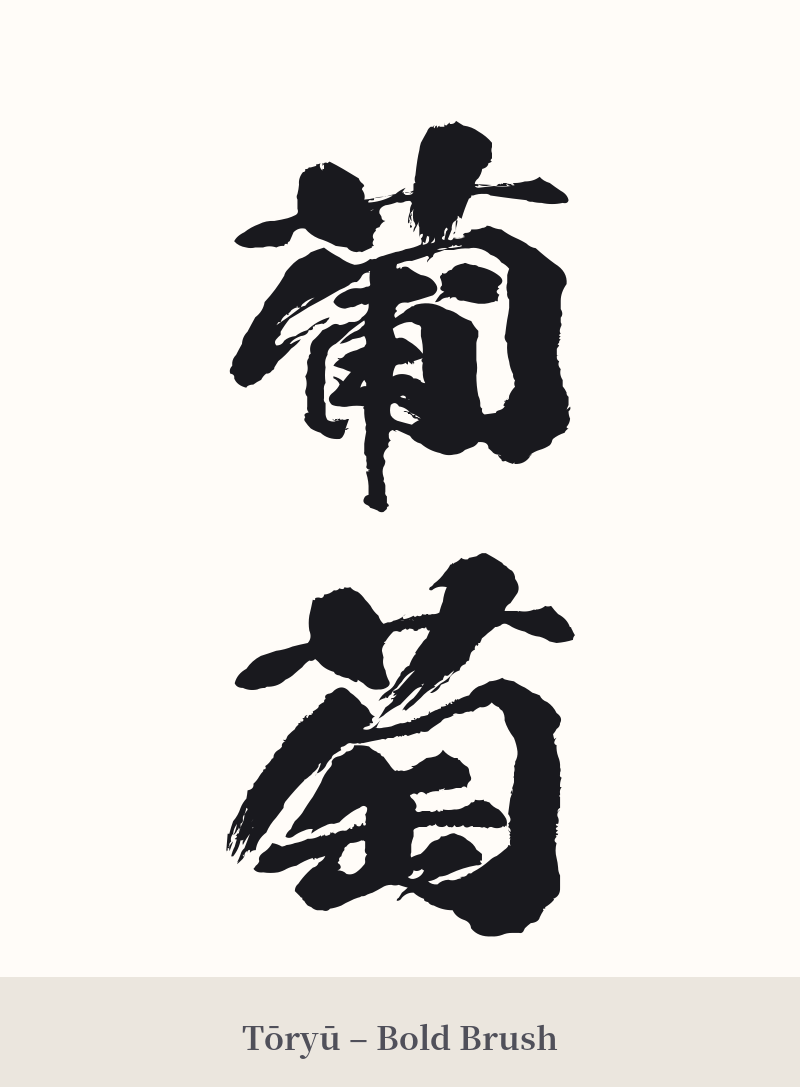
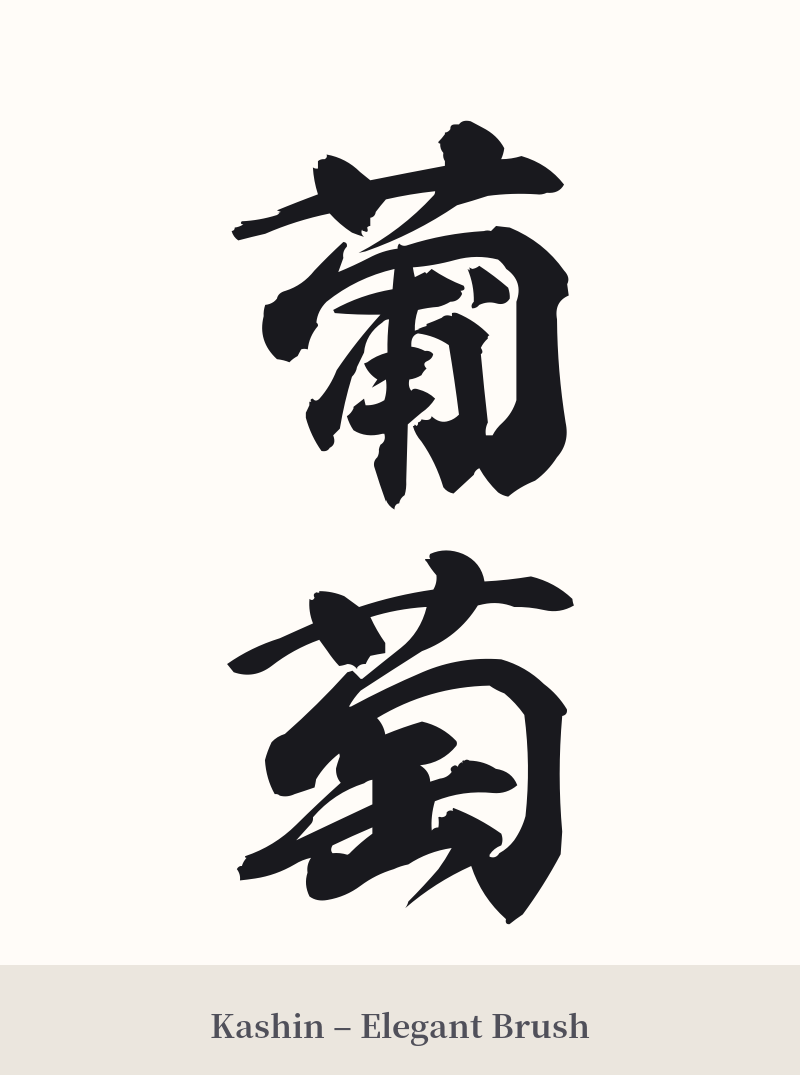
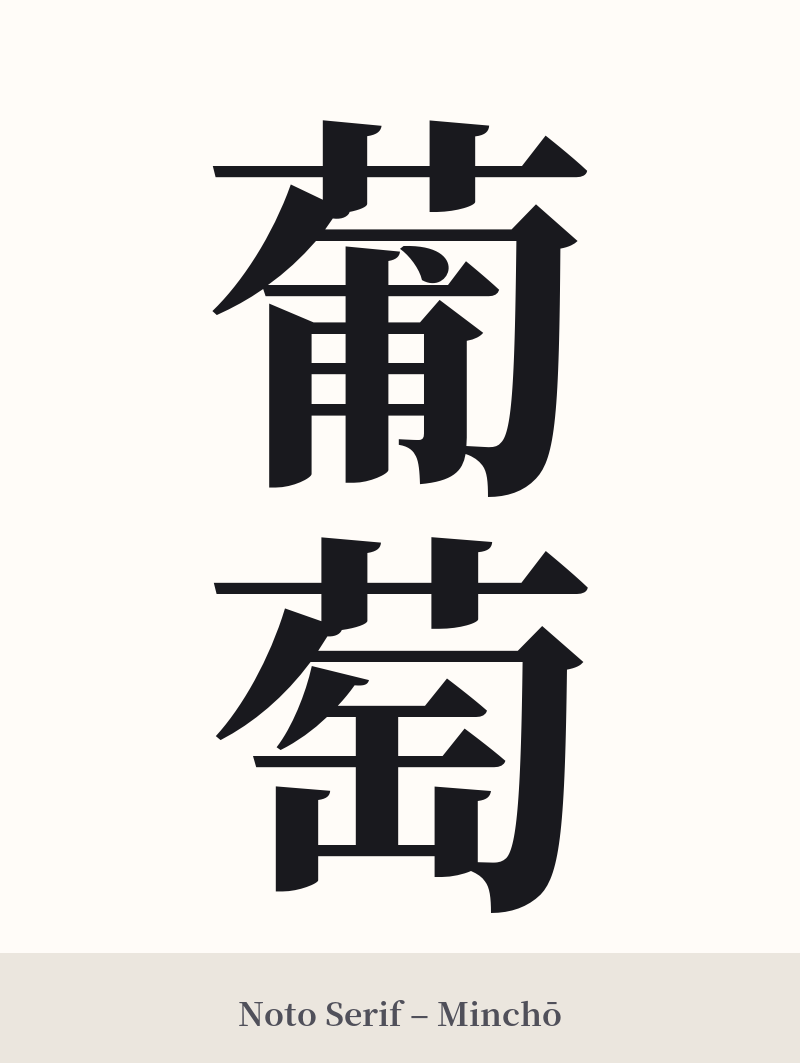
🖌️ Font Styles for 葡萄
The same kanji can look dramatically different depending on the calligraphy style. Choose a font that matches the mood you want for your tattoo or design.
🎨 Tattoo Suitability
📐 Tattoo Design Guide
For a tattoo of 葡萄 (Budō), the complexity of the characters is a key consideration. They require space to be rendered clearly and to prevent the strokes from merging over time.
– Placement: Consider larger surface areas like the forearm, the calf, the shoulder blade, or along the spine. A vertical orientation is particularly elegant for this two-character compound. Avoid small, constrained areas like the wrist, fingers, or ankle.
– Style: A traditional, bold Kaisho (block) script can give the characters a strong, stable presence. Conversely, a flowing, cursive Sōsho script could beautifully mimic the organic, winding nature of grapevines.
– Visual Elements: To add context and artistic flair, consider pairing the kanji with imagery. A design that incorporates the characters into a winding grapevine, or has a subtle bunch of grapes hanging nearby, can create a more complete and visually narrative piece. This also helps clarify the meaning for viewers unfamiliar with the kanji.
Comments