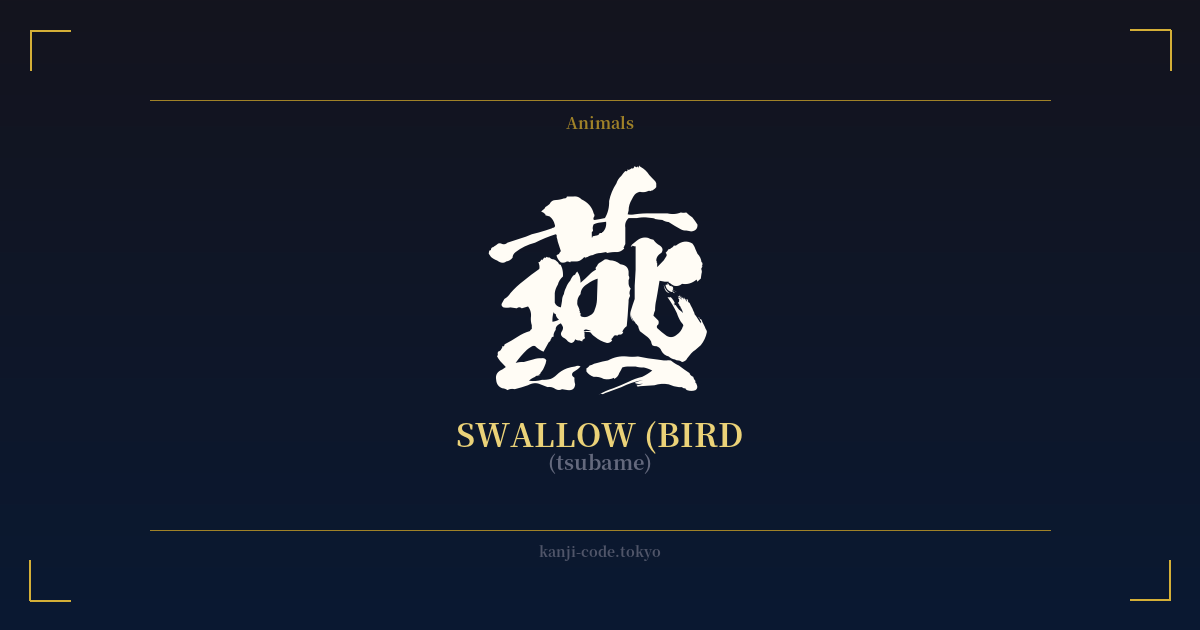
✍️ 燕 (tsubame) — Cultural Context
The kanji 燕 (tsubame) captures more than just the image of a bird; it embodies the arrival of spring and the feelings of renewal and hope that accompany it. In Japan, the return of the swallows is a definitive sign that the cold of winter has passed. They are seen as harbingers of warmth, new life, and the vibrant green of the new season.
This connection to good tidings extends to prosperity and family. Swallows often build their nests under the eaves of houses and shops. A belief persists that a home or business chosen by swallows for a nest will be blessed with good fortune, flourishing business, and a happy, healthy family. To harm a swallow or its nest is considered to bring bad luck, so they are generally welcomed and protected.
The character 燕 itself has fascinating pictographic roots. Its ancient form was a direct illustration of a swallow, complete with a head, outstretched wings, and its characteristic forked tail. The top part (廿) represents the wings, the middle section (口) the body, and the four dots at the bottom (灬) symbolize the elegant, fanned tail. This visual history adds a layer of depth, making the character a stylized representation of the creature it names.
Beyond seasonal change and good luck, swallows are also powerful symbols of a safe return. As migratory birds that travel vast distances and reliably come back to their nesting grounds, they became emblems of safe passage and homecoming. For this reason, swallows were a popular motif for sailors and travelers, a talisman to ensure they would one day return home safely to their loved ones.
This symbolism is woven into Japanese culture through poetry, art, and folklore. You'll find swallows mentioned in classic haiku, capturing a fleeting moment of their swift flight, and depicted in paintings alongside willows or cherry blossoms. The character 燕, therefore, is not just a word; it's a cultural icon loaded with grace, hope, and the promise of a joyful return.
🖌️ Font Styles for 燕
The same kanji can look dramatically different depending on the calligraphy style. Choose a font that matches the mood you want for your tattoo or design.
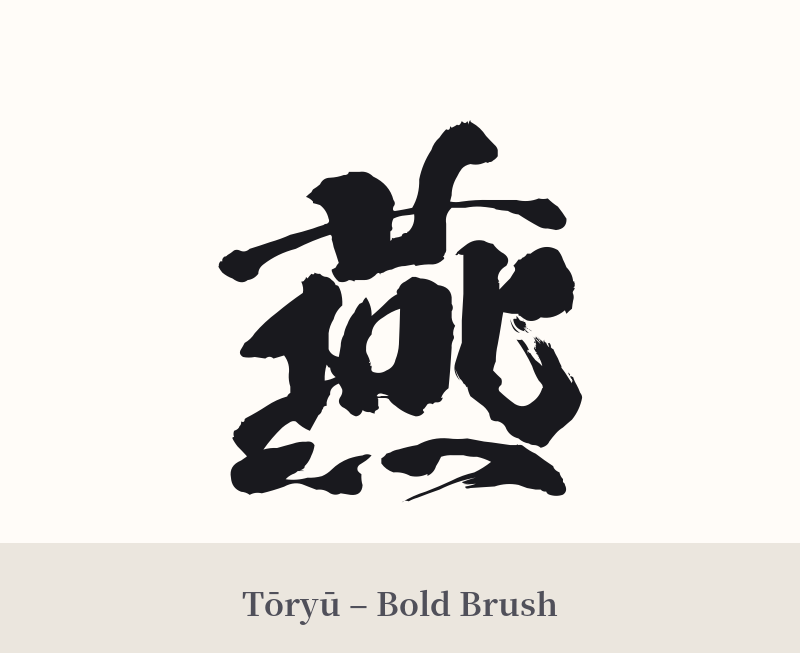
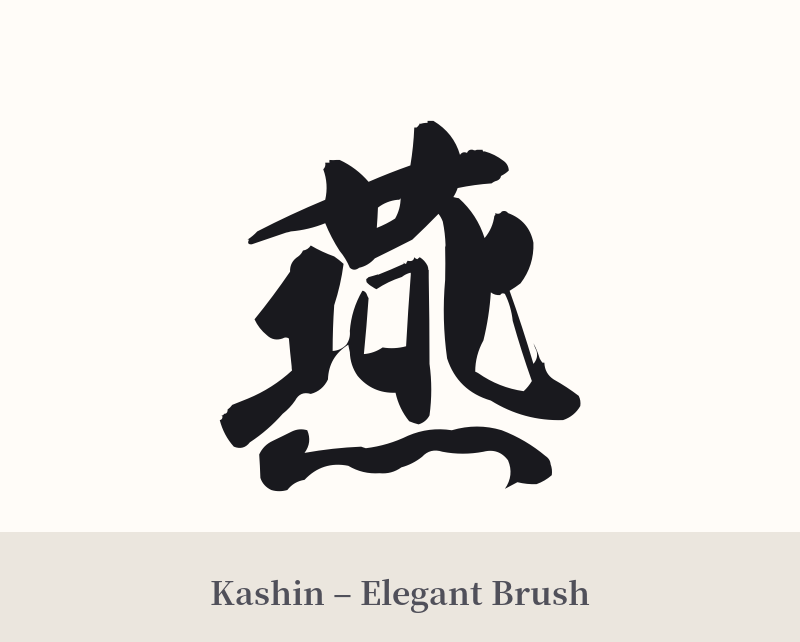
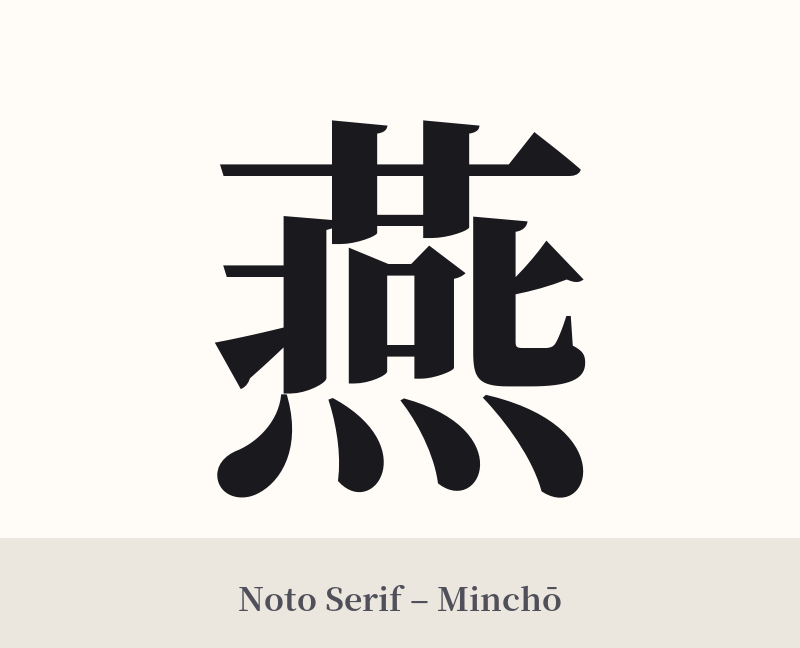
🎨 Tattoo Suitability
📐 Tattoo Design Guide
The kanji 燕 is visually elegant and offers many creative possibilities for a tattoo design.
– Placement: Its graceful nature suits places that suggest movement. Consider the forearm, calf, ankle, or along the collarbone. For a smaller, more subtle design, the wrist or behind the ear works well.
– Style: A semi-cursive (gyōsho) or cursive (sōsho) calligraphy style can beautifully capture the fluid, swift motion of a swallow in flight. A more traditional block script (kaisho) will give it a bold, classic feel.
– Visual Pairings: Complement the kanji by pairing it with an illustrative element. A silhouette of a swallow, a few cherry blossom petals drifting by, or delicate lines representing wind can enhance the design's meaning and aesthetic. The character's own structure, particularly the 'tail' at the bottom, can be stylized for artistic effect.
Comments