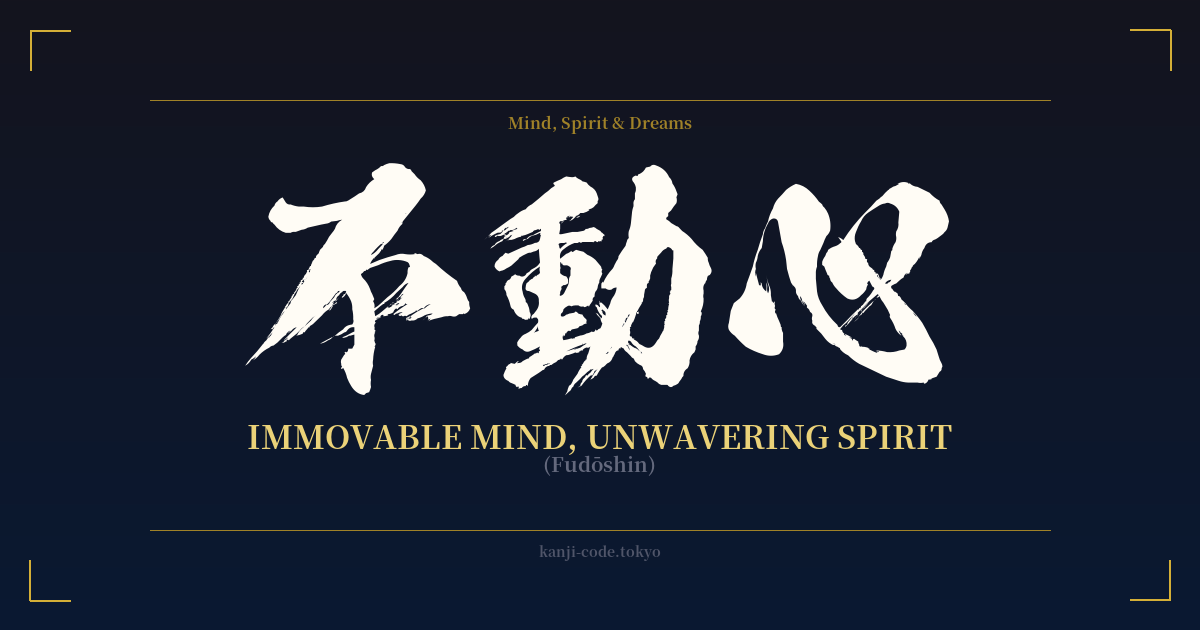
✍️ 不動心 (Fudōshin) — Cultural Context
Fudōshin (不動心) is a Japanese term that translates to 'immovable mind' or 'unwavering heart.' It is a concept central to Zen Buddhism and Japanese martial arts, describing a state of mind that remains unshaken and serene in the face of adversity, chaos, or danger. It is the epitome of mental and emotional fortitude.
The characters themselves tell the story: 不 (fu) means 'not,' 動 (dō) means 'move,' and 心 (shin) means 'mind' or 'heart.' Together, they form the idea of a mind that cannot be moved—not by fear, doubt, anger, or even joy. This isn't about being cold or emotionless; rather, it's about observing emotions without being controlled by them. It's the calm eye in the center of a hurricane.
This concept has deep roots in the world of the samurai and Budo (martial ways). A warrior who possessed Fudōshin could face an opponent in a life-or-death duel without their mind being clouded by the fear of death or the desire for victory. This mental clarity allowed for instantaneous, intuitive reactions and flawless technique. The legendary swordsman Miyamoto Musashi wrote extensively about achieving a state of mind that was fluid yet stable, a perfect real-world application of Fudōshin.
The spiritual anchor for Fudōshin is the deity Fudō Myō-ō (不動明王), the 'Immovable Wisdom King.' One of the most important figures in Japanese Esoteric Buddhism, Fudō Myō-ō is depicted with a fearsome expression, surrounded by flames, holding a sword to cut through illusion and a rope to bind evil. Despite his terrifying appearance, his core nature is one of fierce compassion. His 'immovability' represents the unwavering power of truth and enlightenment that stands firm against all delusion. The concept of Fudōshin is the human embodiment of this divine attribute.
In modern Japan, Fudōshin has transcended its martial and religious origins. It's invoked in business to describe a leader who remains steady during a crisis. It's praised in athletes who maintain focus under extreme pressure. On a personal level, it represents the goal of developing an inner resilience that allows one to navigate life's challenges with grace, clarity, and an unbreakable spirit.
🖌️ Font Styles for 不動心
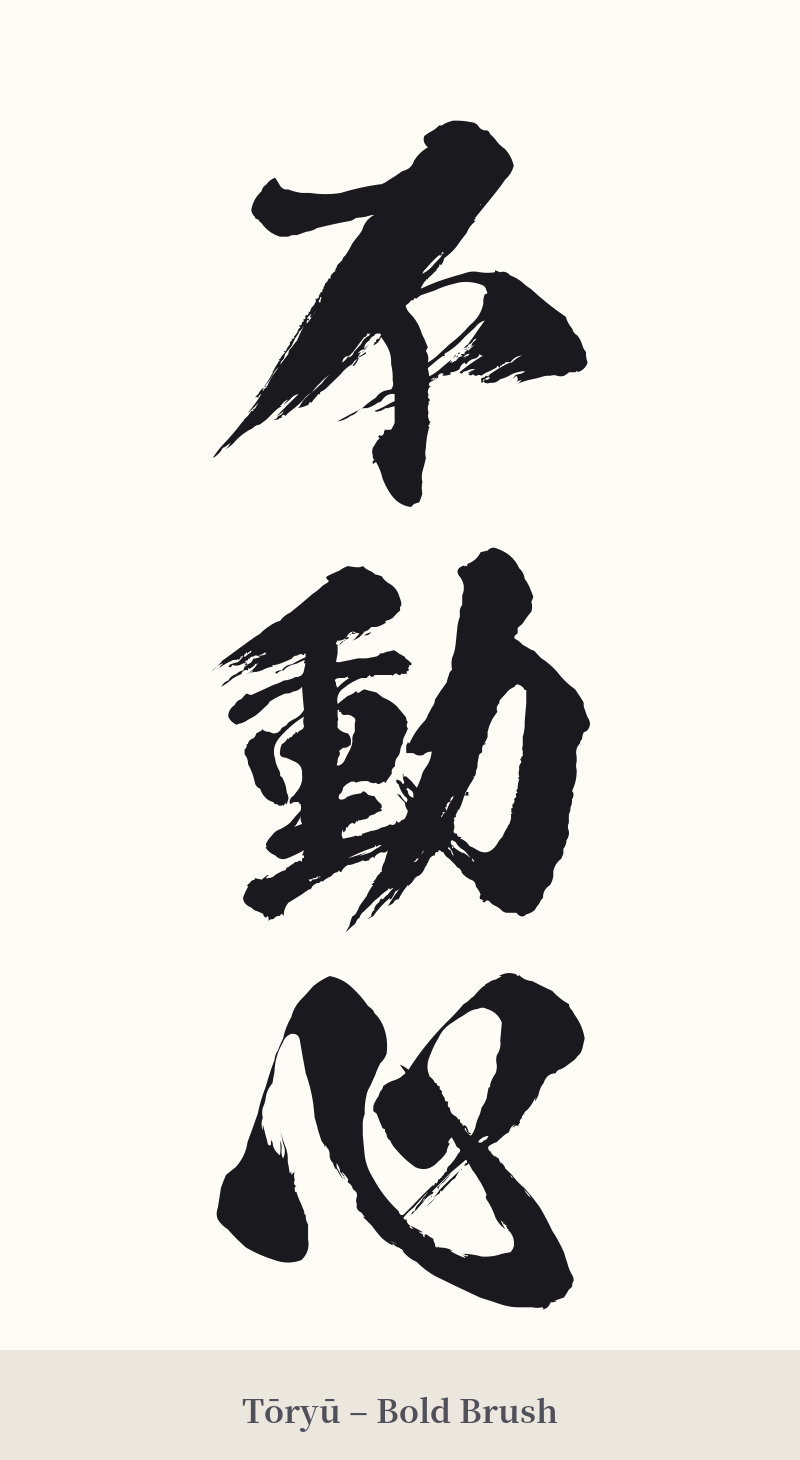
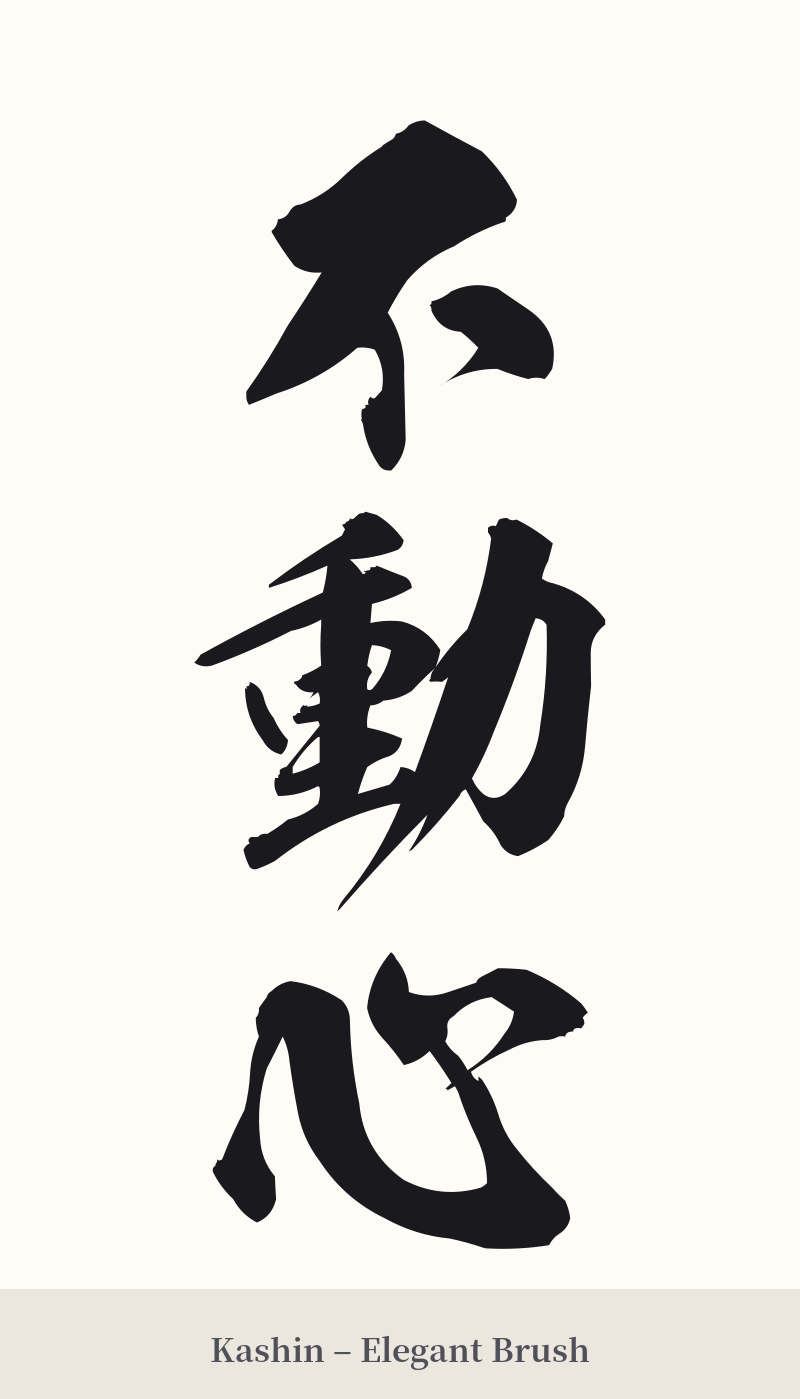
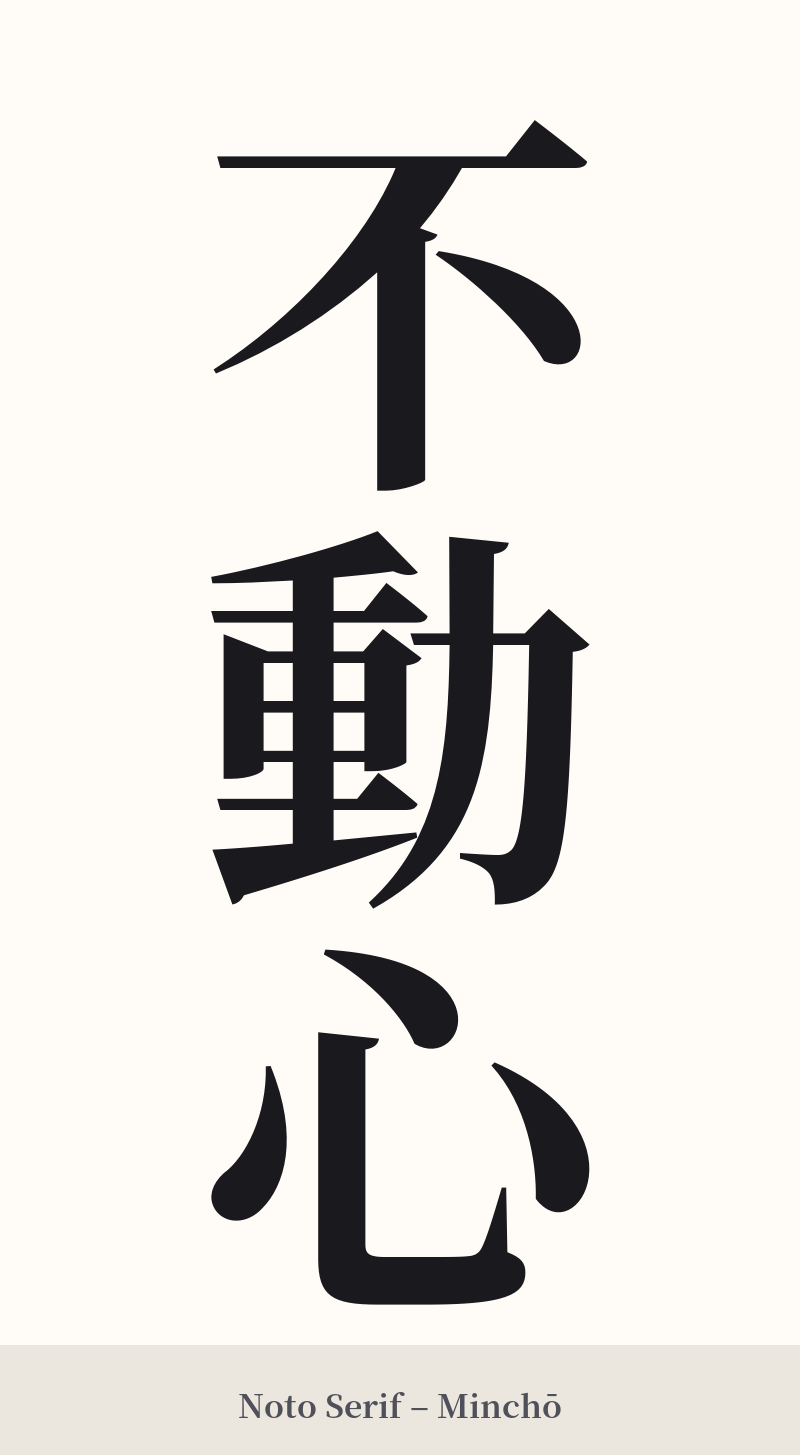
The same kanji can look dramatically different depending on the calligraphy style. Choose a font that matches the mood you want for your tattoo or design.
🎨 Tattoo Suitability
📐 Tattoo Design Guide
Fudōshin is a powerful and visually striking term for a tattoo, lending itself well to traditional Japanese aesthetics.
– Placement: A vertical orientation is highly recommended to follow the natural flow of Japanese writing. The spine, forearm, or calf are excellent placements, as they provide the linear space needed for the three characters to be displayed clearly and boldly.
– Font Style: The style of calligraphy can dramatically alter the feeling of the tattoo. A strong, angular Kaisho (block script) style emphasizes the 'immovable' and 'unbreakable' aspects of the word. A slightly more fluid Gyosho (semi-cursive script) can add a sense of dynamic stability, reflecting a mind that is firm yet adaptable.
– Visual Tips: The three characters are powerful enough to stand alone without additional imagery. However, if you wish to add more context, you could consider subtle background elements. A hint of flames alluding to Fudō Myō-ō or a minimalist enso circle (symbol of enlightenment) behind the kanji can add depth, but be careful not to overcrowd the central characters. The key is to ensure the kanji remain the clear focus.
Comments