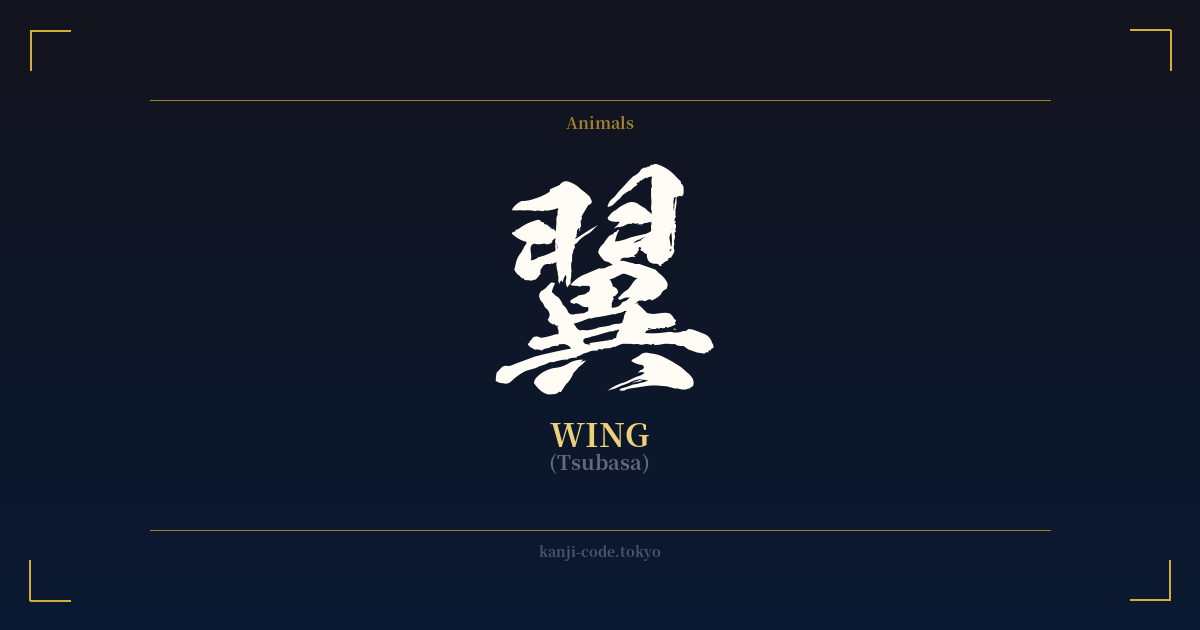
✍️ 翼 (Tsubasa) — Cultural Context
The kanji 翼 (tsubasa) is a visually evocative character that captures the essence of a wing, both literally and metaphorically. Its origins are pictographic, evolving from a drawing that clearly depicted a pair of feathered wings. This direct visual link gives the character an immediate and intuitive power that transcends language.
In its most direct sense, 翼 refers to the wings of a bird, insect, or bat—the appendages that grant the power of flight. This extends to modern technology, where it's used for the wings of an airplane (飛行機の翼, hikōki no tsubasa). This literal meaning forms the foundation for its much deeper symbolic interpretations.
Metaphorically, 翼 is a profound symbol of freedom, ambition, and the desire to transcend limitations. The common Japanese phrase 「翼を広げる」(tsubasa o hirogeru), meaning "to spread one's wings," perfectly encapsulates this idea. It speaks to leaving the nest, pursuing one's dreams, and realizing one's full potential. This makes it a popular motif in stories, songs, and personal philosophies, representing a journey of growth and self-discovery.
Furthermore, 翼 can carry a sense of protection and support. The concept of being taken "under one's wing" (a direct parallel to the English idiom) exists in Japanese culture as well. It implies being sheltered, guided, and nurtured by a benevolent force, whether a mentor, a parent, or a guardian spirit. In this context, the wing is not just for flight, but for providing a safe haven.
This kanji is deeply embedded in Japanese pop culture. It is a very popular given name, Tsubasa, for both boys and girls, imbued with parental hopes for a child's bright and unbound future. Famous examples include the classic anime "Captain Tsubasa." The character also appears frequently in titles and lyrics, often symbolizing hope, escape, or a soaring spirit. This widespread use has solidified its positive and aspirational connotations in the modern Japanese psyche.
From the wings of mythical creatures like the celestial Tennin or the powerful Phoenix (鳳凰) to the simple desire to break free, 翼 is a kanji that resonates on a primal, emotional level. It is a character not just of anatomy, but of the soul's deepest yearnings for flight and freedom.
🖌️ Font Styles for 翼
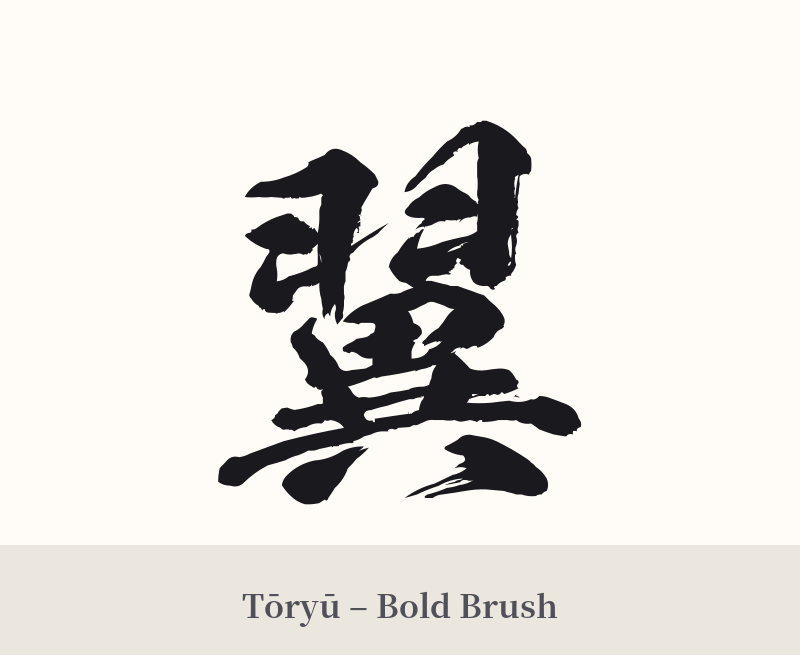
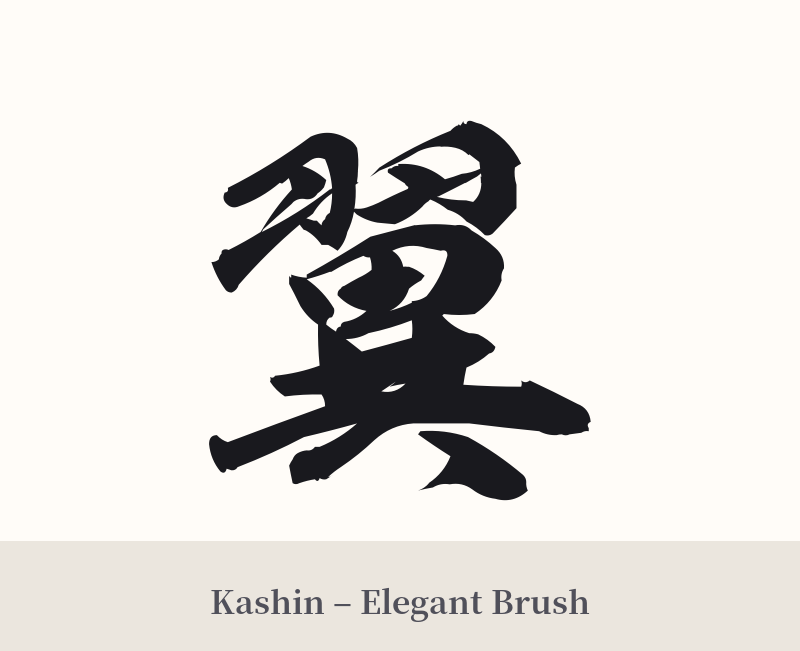
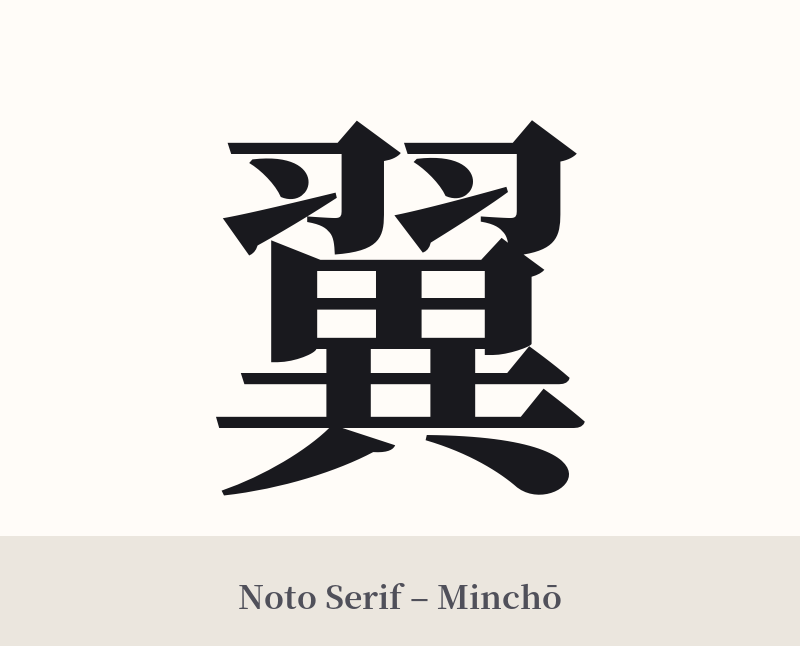
The same kanji can look dramatically different depending on the calligraphy style. Choose a font that matches the mood you want for your tattoo or design.
🎨 Tattoo Suitability
📐 Tattoo Design Guide
The kanji 翼 is visually balanced and elegant, making it a versatile choice for a tattoo. Its inherent symbolism of flight and freedom lends itself well to dynamic placements on the body.
– Placement: The shoulder blades are a classic and highly symbolic choice, as if sprouting your own wings. The upper back, centered between the shoulders, also creates a powerful statement. Other excellent spots include the forearm, allowing for a vertical display, or across the chest.
– Style: A traditional calligraphy or brushstroke (shodō) style can emphasize the graceful, flowing nature of wings in motion. For a more modern take, a clean, minimalist style with sharp lines can highlight the character's intricate geometric structure.
– Visual Tips: Consider integrating the kanji with other imagery. It can be the centerpiece of a design featuring feathers, clouds, or even a silhouette of a bird. The strokes themselves can be stylized to look more feather-like for a unique artistic interpretation.
Comments