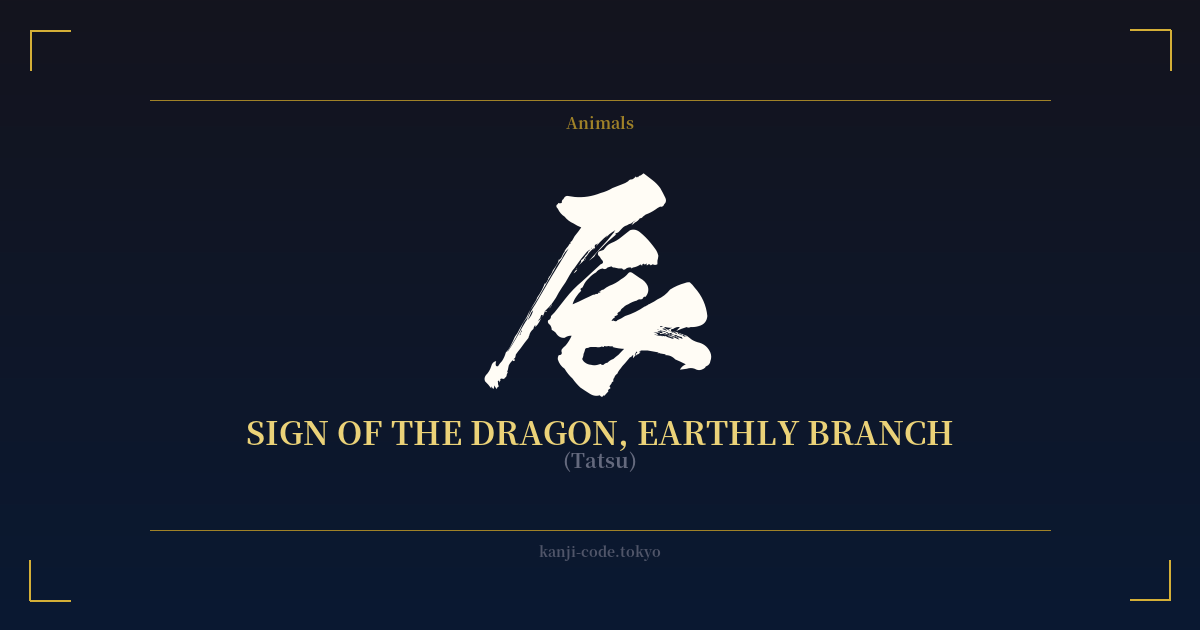
✍️ 辰 (Tatsu) — Cultural Context
The kanji 辰 (Tatsu) is far more than a simple character; it is a key that unlocks a vast system of East Asian cosmology. As the fifth of the Twelve Earthly Branches (十二支, Jūni Shi), 辰 represents the Dragon, one of the most powerful and auspicious signs in the zodiac cycle.
This system, originating in ancient China, is not just an animal calendar. It's an intricate method for marking the passage of time, orienting direction, and understanding the flow of universal energy. Each branch corresponds to a year, a month, a two-hour period of the day, and a compass direction. 辰 specifically points to the hours between 7:00 AM and 9:00 AM, the month of April, and the east-southeast direction.
To be born in the Year of the Dragon (辰年, Tatsu-doshi) is considered exceptionally lucky. Individuals under this sign are believed to be charismatic, ambitious, confident, and natural leaders. They are driven by a desire for success and are often seen as innovators and pioneers. However, this same powerful energy can sometimes manifest as arrogance or impatience, embodying the dual nature of the mighty dragon.
The etymology of 辰 is fascinating and reveals its ancient roots. The character is a pictograph, not of a dragon, but of a clam or shellfish opening its shell, symbolizing movement, vibration, and the start of agricultural work in the spring. This association with 'shaking' or 'arousal' (振る, furu) was later mapped onto the celestial dragon, the bringer of rain and thunder that awakens the earth.
It is crucial to distinguish 辰 from the more common kanji for dragon, 龍 (Ryū). While 龍 depicts the mythical beast in all its serpentine glory, 辰 is more abstract and conceptual. It represents the Dragon's place in the cosmic order—its role as a marker of time and fate. Choosing 辰 is choosing to represent not just the creature, but the entire system of belief and destiny it inhabits. It's a symbol of one's place in the universe, tied to the powerful, cyclical rhythm of the cosmos.
🖌️ Font Styles for 辰
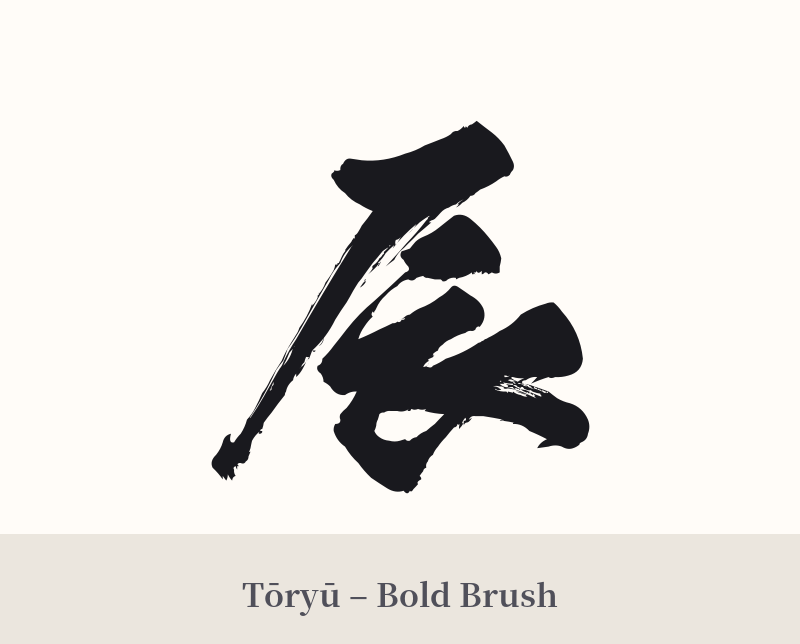
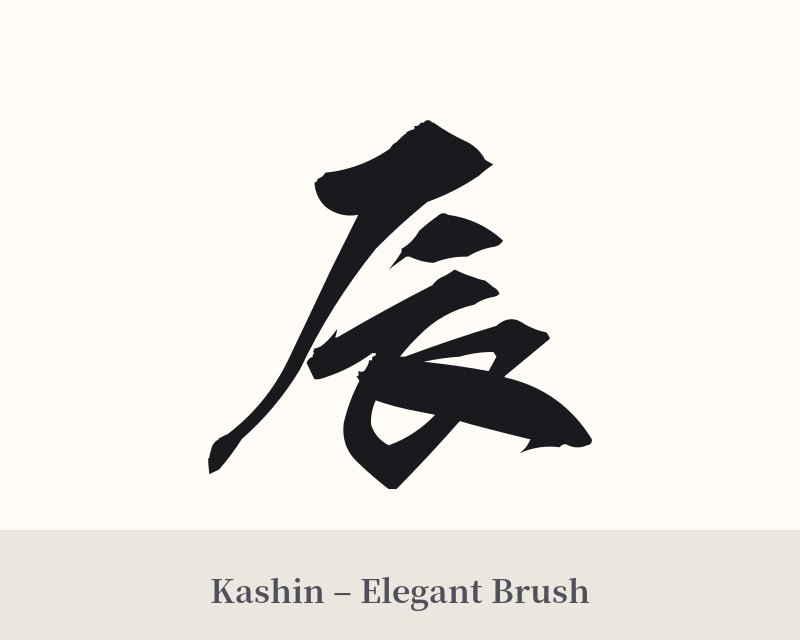
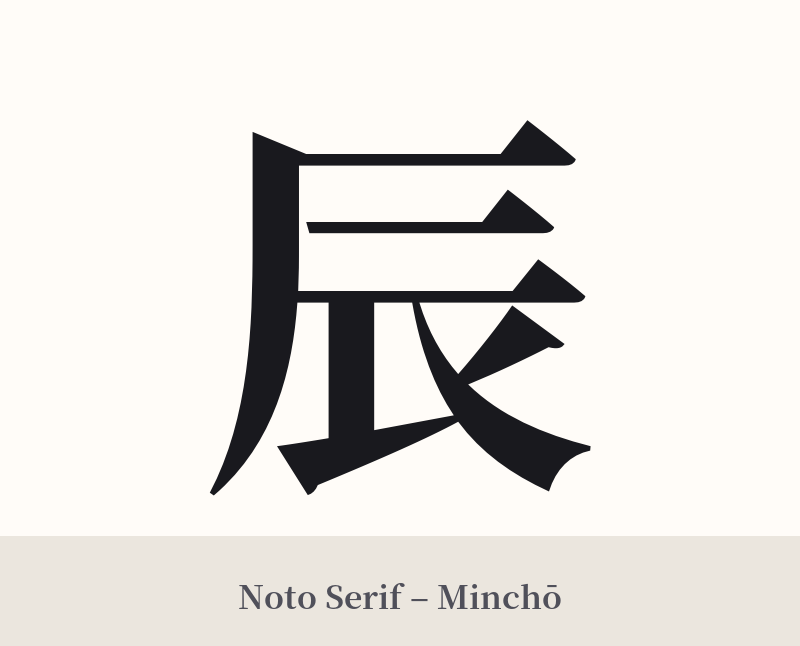
The same kanji can look dramatically different depending on the calligraphy style. Choose a font that matches the mood you want for your tattoo or design.
🎨 Tattoo Suitability
📐 Tattoo Design Guide
The kanji 辰 (Tatsu) offers a blend of simplicity and symbolic weight, making it versatile for tattoo design. Its clean lines and balanced form work well as a standalone piece.
– Placement: For a single, potent symbol, consider the inner forearm, the back of the neck just below the hairline, the calf, or centered on the chest or back. Its vertical balance makes it ideal for spots that elongate the body.
– Font Style: A dynamic, semi-cursive script (gyōsho) can capture the 'movement' and 'vibration' inherent in the character's origin, suggesting the energy of a dragon. For a bolder statement, a thick-brushed kaisho (block script) emphasizes its power and authority. Avoid overly thin or delicate fonts that might diminish its impact.
– Visual Complements: While it stands strong on its own, 辰 can be paired with elements that enhance its meaning. Consider surrounding it with swirling clouds or water to honor the dragon's domain. Integrating it into a celestial map or a compass design can highlight its astrological and directional significance. For those born in the Year of the Dragon, pairing 辰 with the kanji for their birth year creates a deeply personal and powerful design.
Comments