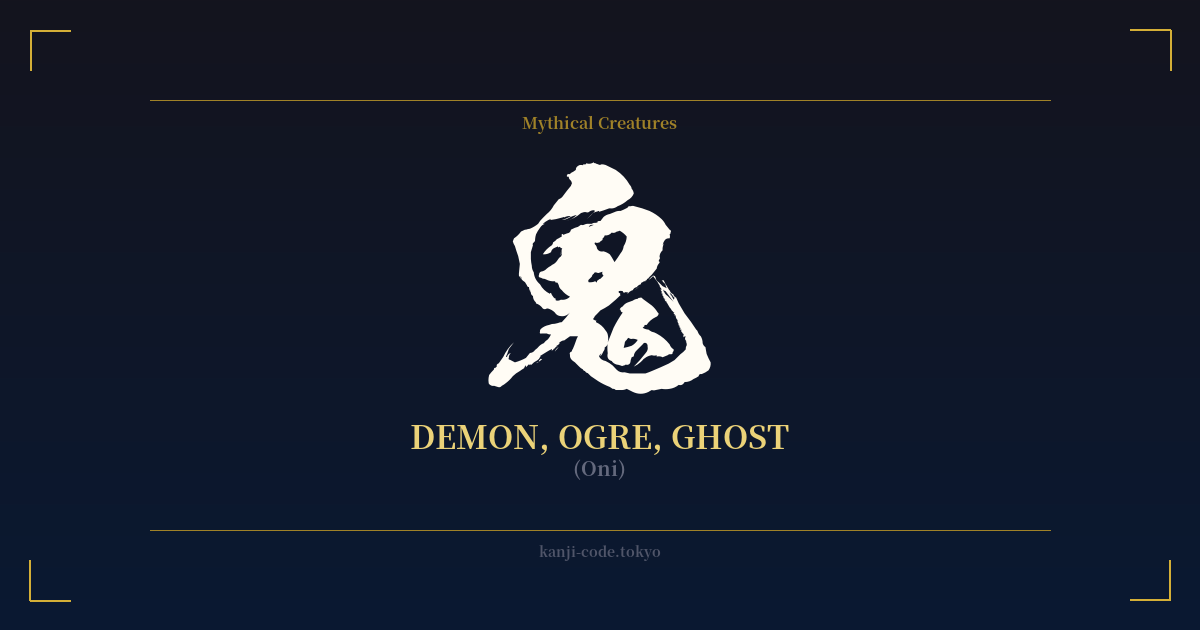
✍️ 鬼 (Oni) — Cultural Context
The kanji 鬼 (Oni) is one of the most evocative and visually powerful characters in the Japanese language, conjuring images of fearsome, horned beasts from ancient folklore. Its origins trace back to a Chinese character depicting a spirit or ghost, often with a large, haunting head. In Japan, this concept evolved into the figure of the Oni, a creature that holds a central place in the nation's cultural imagination.
Oni are not simply 'demons' in the Western, Judeo-Christian sense. They are a unique category of supernatural entity, often translated as ogres, trolls, or giants. Traditionally, they are depicted with red or blue skin, wild hair, sharp claws, and one or more horns. They typically wear a tiger-skin loincloth (fundoshi) and carry a massive iron club called a kanabō. This image is a staple of Japanese art, from ancient scrolls and ukiyo-e woodblock prints to modern manga and anime.
Historically, Oni represented forces of chaos, disaster, and disease. They were the villains of countless folktales, such as the famous story of Momotarō (The Peach Boy), who journeys to Onigashima (Demon Island) to defeat its monstrous inhabitants. This antagonistic role is famously celebrated during the Setsubun festival in early spring, where people throw roasted soybeans out their doors while shouting "Oni wa soto! Fuku wa uchi!" – "Demons out! Fortune in!"
However, the nature of Oni is profoundly dualistic. Not all Oni are purely malevolent. Some stories feature Oni who become protective deities after being defeated by a Buddhist monk or hero. The fearsome Onigawara, or demon-faced roof tiles, are placed on temples and traditional homes not to invite evil, but to use the Oni's terrifying image to scare away other malevolent spirits. This reflects a deep-seated belief in harnessing powerful, dangerous forces for protection.
In modern times, the perception of Oni has become even more nuanced. In pop culture, especially anime like 'Demon Slayer: Kimetsu no Yaiba,' they are often portrayed as tragic figures with complex backstories, blurring the lines between monster and victim. The word is also used metaphorically in everyday language. A person with incredible strength or skill might be called an 'oni' of their craft, such as 仕事の鬼 (shigoto no oni), a 'work demon'—someone who works with obsessive, superhuman focus. This single character, therefore, encapsulates a rich tapestry of fear, power, protection, and even admirable intensity.
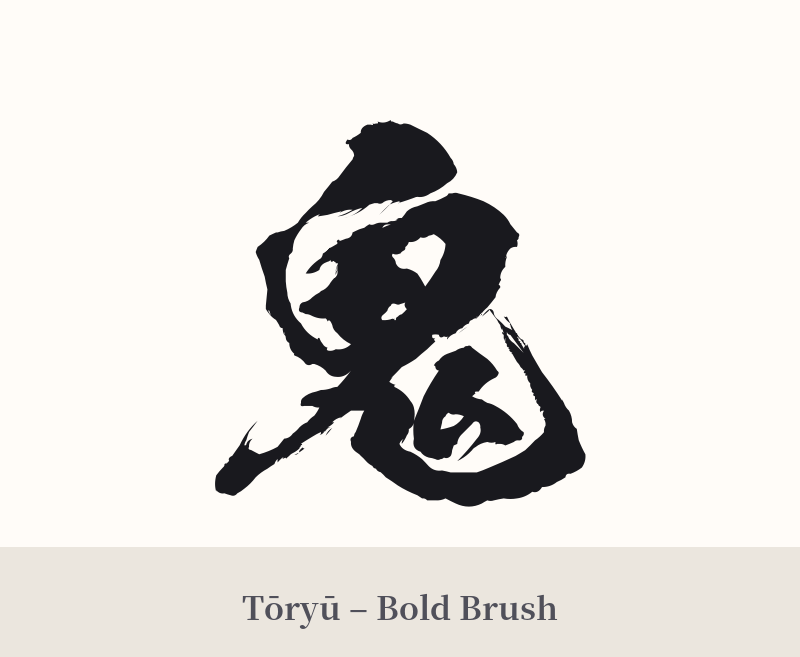
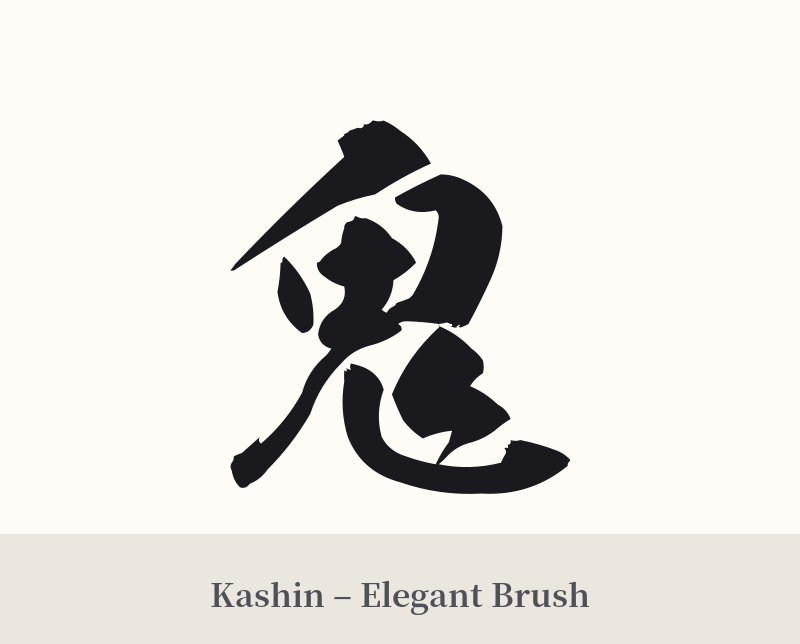
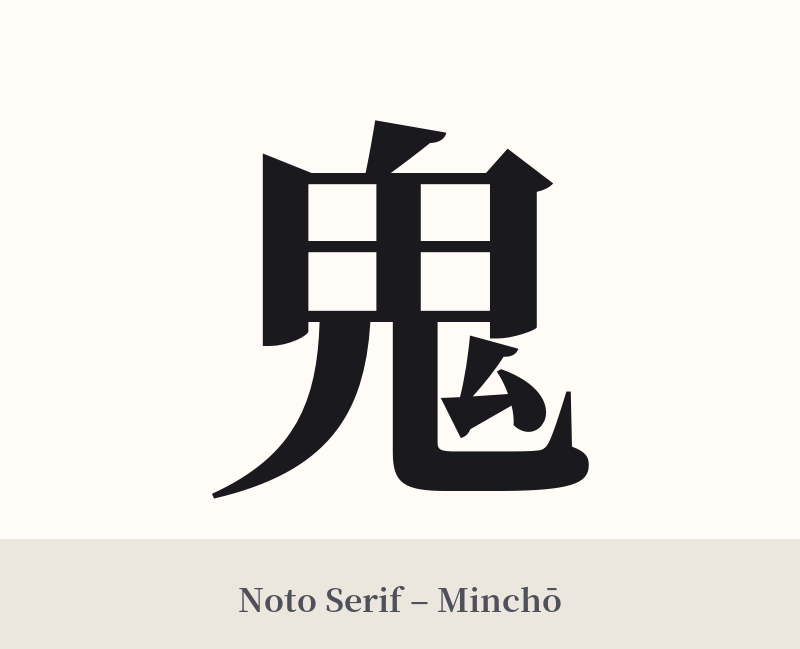
🖌️ Font Styles for 鬼
The same kanji can look dramatically different depending on the calligraphy style. Choose a font that matches the mood you want for your tattoo or design.
🎨 Tattoo Suitability
📐 Tattoo Design Guide
The 鬼 (Oni) kanji is a statement of raw power, and its design should reflect that. It's not a character for subtle or delicate applications.
– Placement: This kanji works best on larger, muscular areas of the body that can support its strong presence. The calf, forearm, upper arm, or as a central piece on the back or chest are all excellent choices.
– Font Style: Opt for bold, dynamic calligraphy styles. A rough, aggressive brushstroke (Sōsho or Gyōsho) can capture the wild and untamed nature of the Oni. Alternatively, a thick and angular block script (Kaisho) can give it a sense of immense, immovable power. Avoid thin, wispy fonts as they contradict the character's meaning.
– Visual Tips: While the character is powerful enough to stand alone, it pairs exceptionally well with other elements of Japanese art. Consider incorporating it into a larger piece with a Hannya mask, crashing waves, storm clouds, or lightning. Surrounding the kanji with red or orange flames or deep blue swirls can further enhance its elemental power.
Comments