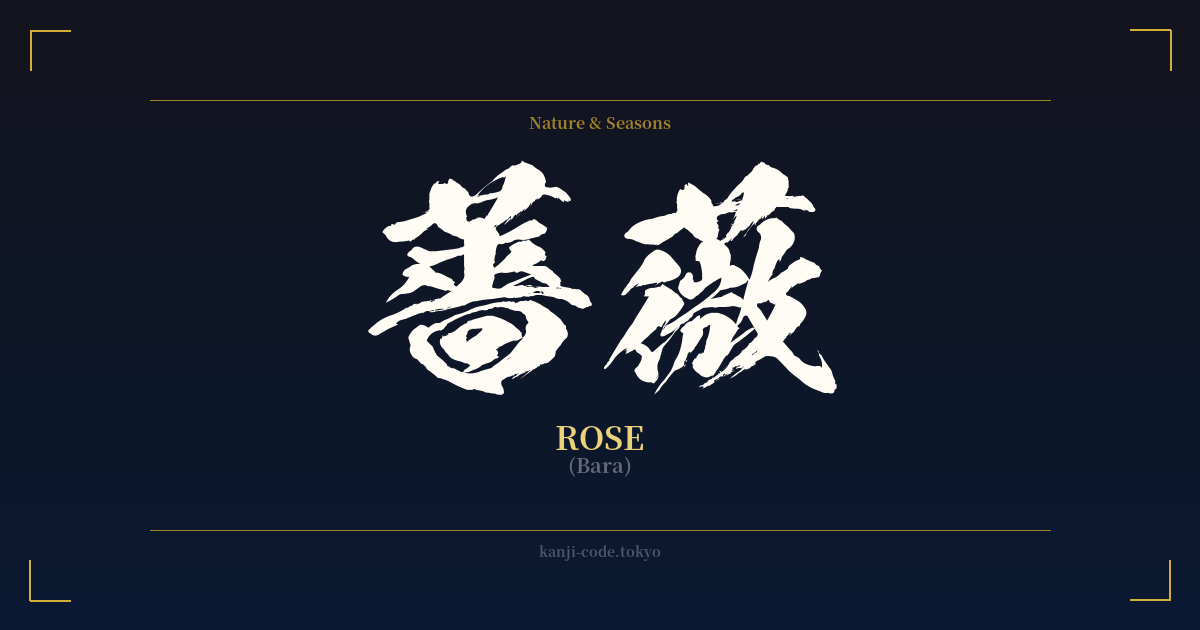
✍️ 薔薇 (Bara) — Cultural Context
The word for rose, 薔薇 (Bara), carries a fascinating story in Japan. While Japan has native wild roses like the 'nobara' (野薔薇), the lush, large-flowered roses we often picture today are largely a Western import. They gained immense popularity during the Meiji Restoration in the late 19th century, as Japan opened its borders and embraced Western culture, including its horticulture and floral symbolism.
Because of this, the rose in Japan largely adopted the Western 'hanakotoba' (language of flowers). A red rose signifies love and passion, a white rose purity, and a yellow rose jealousy, just as in Europe and North America. This makes its symbolism more direct and less layered with ancient Shinto-Buddhist concepts compared to native flowers like the sakura (cherry blossom) or kiku (chrysanthemum).
The rose, however, carved its own unique niche in modern Japanese pop culture. It is a powerful and ubiquitous symbol in anime, manga, and music, particularly in genres that emphasize drama, romance, and aesthetic beauty. Series like 'The Rose of Versailles' cemented its association with romantic tragedy and androgynous beauty. In the 'visual kei' music scene, the rose is a staple, symbolizing decadent beauty, passion, and sometimes, a beautiful death.
The kanji characters themselves, 薔薇, are notoriously difficult to write. With 16 strokes each, they are a challenge even for native Japanese speakers, many of whom opt to write the word using the simpler katakana script (バラ). This very difficulty adds to the word's allure. The complexity of the characters mirrors the intricate layers of a rose's petals, suggesting a beauty that is profound, detailed, and not easily grasped at a glance.
While the sakura represents a fleeting, communal beauty and the chrysanthemum symbolizes imperial nobility and longevity, the bara often stands for a more personal, passionate, and sometimes dangerously alluring form of beauty. It is the flower of dramatic love, deep secrets, and exquisite, almost painful, elegance.
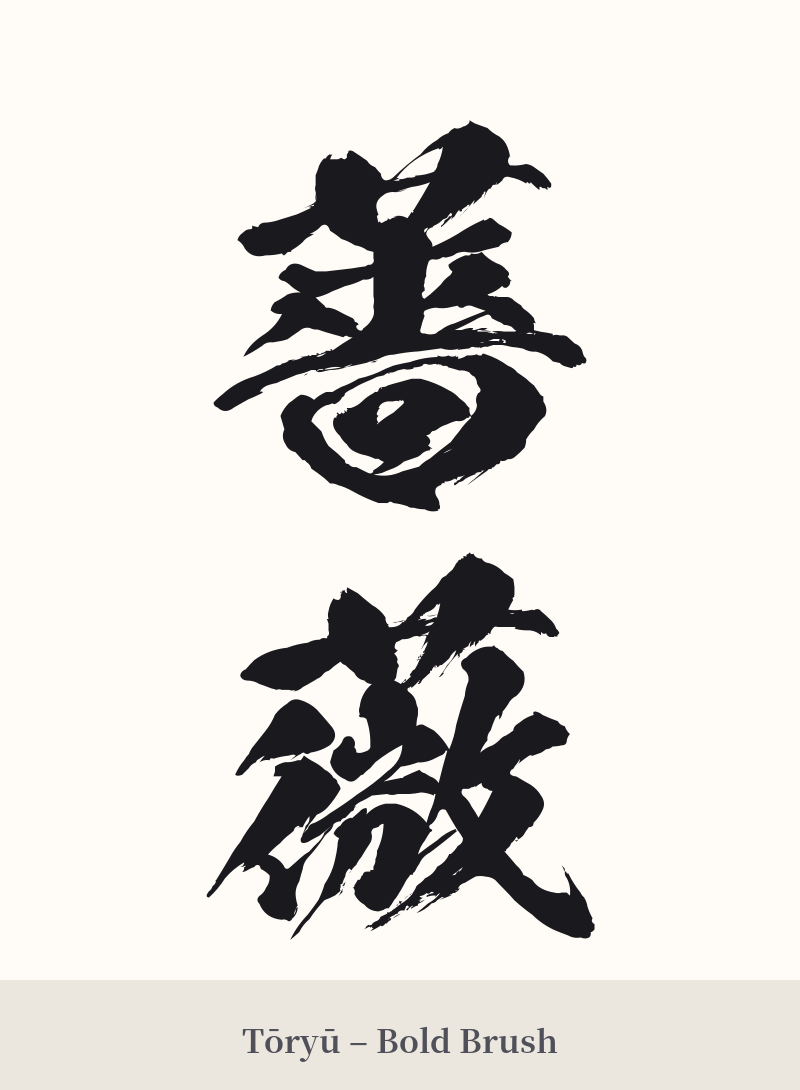
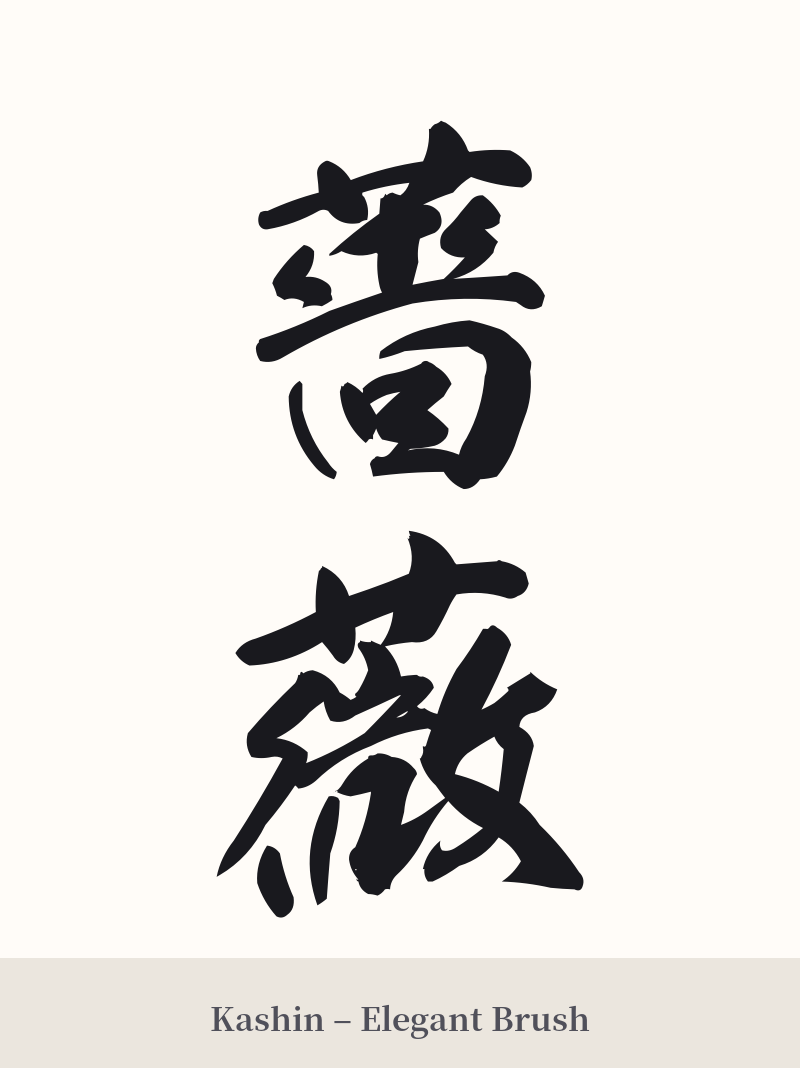
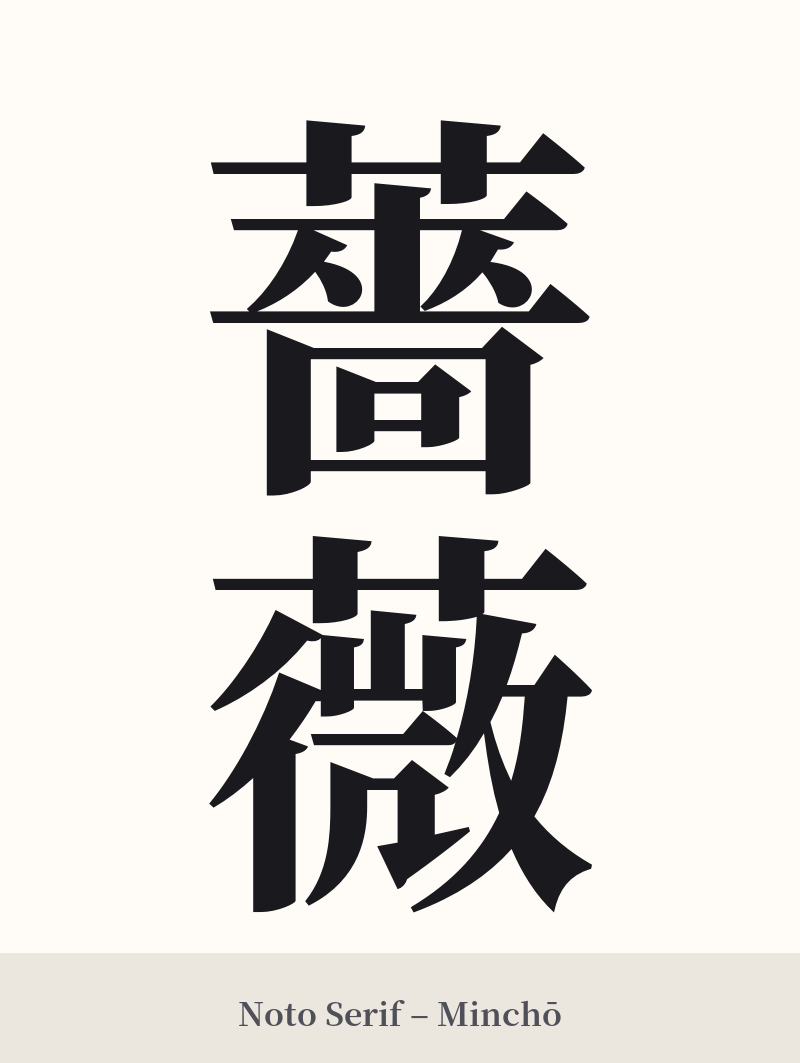
🖌️ Font Styles for 薔薇
The same kanji can look dramatically different depending on the calligraphy style. Choose a font that matches the mood you want for your tattoo or design.
🎨 Tattoo Suitability
📐 Tattoo Design Guide
The complexity of 薔薇 is its greatest design challenge and asset. To ensure a successful tattoo, consider the following:
– Placement: This design requires space. Opt for larger, flatter areas of the body like the back, the thigh, the chest, or the forearm. Avoid small placements like the wrist or ankle, as the details will be lost.
– Size: Go big. A larger tattoo is essential to maintain the legibility of the individual strokes. The space within the characters must be clear and open to prevent them from blurring together over time.
– Style: A crisp, clear script is non-negotiable. A standard Kaisho (block) or Mincho (serif) font executed with precision is ideal. Avoid overly cursive or stylized fonts, as they will only add to the visual confusion and make the characters unreadable.
– Pairing: Consider pairing the kanji with a visual representation of a rose. The characters could be integrated into the stem of a rose tattoo, or placed alongside a black-and-grey or color realism piece. This adds context and can create a more dynamic composition.
Comments