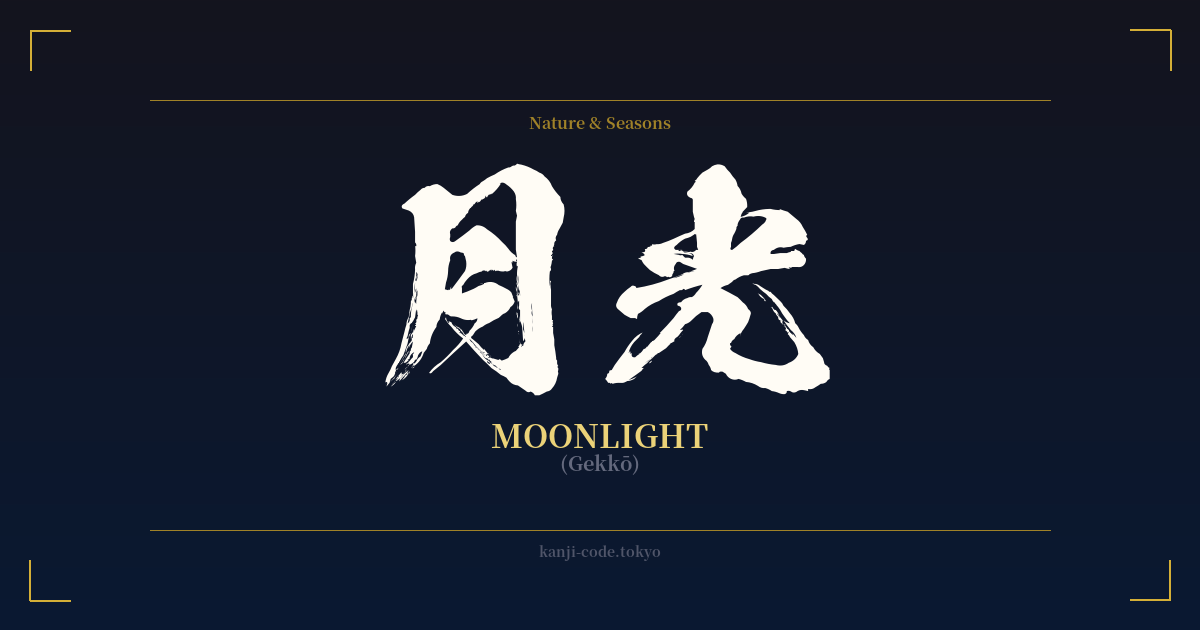
✍️ 月光 (Gekkō) — Cultural Context
月光 (Gekkō) translates simply as "moonlight," but in Japanese culture, it represents far more than just the light of the moon. It is a powerful symbol tied to centuries of art, literature, and philosophy, evoking feelings of serenity, contemplation, and a specific type of quiet, mysterious beauty.
The moon itself has long been an object of reverence in Japan, leading to traditions like Tsukimi (月見), or moon-viewing parties. During the autumn, families and friends gather to appreciate the full moon's beauty, often eating special rice dumplings called tsukimi dango. Gekkō is the visual essence of this tradition—the gentle, silvery light that bathes the landscape and creates an atmosphere of peace and gratitude.
In Japanese literature, moonlight is a constant presence. It sets the scene in countless poems and stories, from the classic "The Tale of Genji" to the haiku of masters like Bashō. Moonlight is rarely just a light source; it is an active participant in the narrative. It can symbolize clarity in moments of reflection, the melancholy of a fleeting moment, or the romance of a secret meeting. The soft, indirect nature of Gekkō is often contrasted with the harsh, direct light of the sun, representing introspection over action.
This ties directly into the aesthetic concept of Yūgen (幽玄), which describes a profound, subtle, and mysterious grace. Yūgen is not about what is seen, but what is suggested or felt. Moonlight is the perfect embodiment of this idea. It doesn't reveal everything, but instead plays with shadows, hinting at forms and creating a world that is more beautiful for what it leaves to the imagination. The light is gentle, transient, and a little sad, connecting to the Buddhist-influenced concept of Mono no Aware (物の哀れ), the beautiful sadness of passing things.
Unlike words that describe raw power or overt emotion, Gekkō carries a quiet strength. It represents the beauty found in stillness, the clarity that comes in the dark, and the power of subtlety. It's a word that speaks to a deep appreciation for nature and the quiet moments of life.
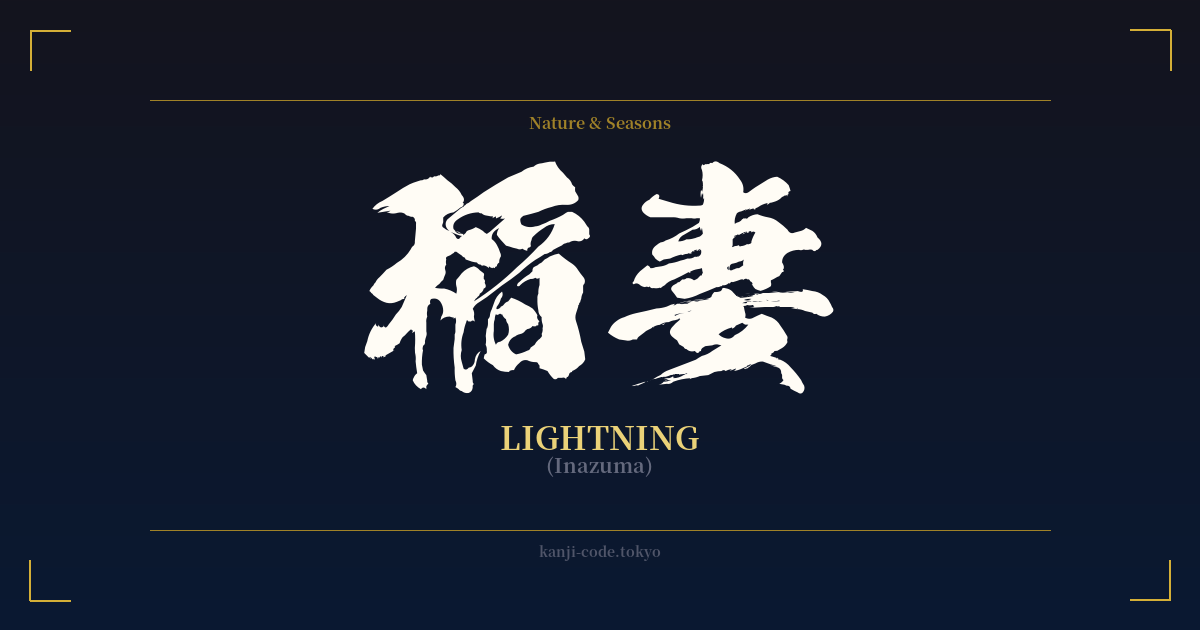
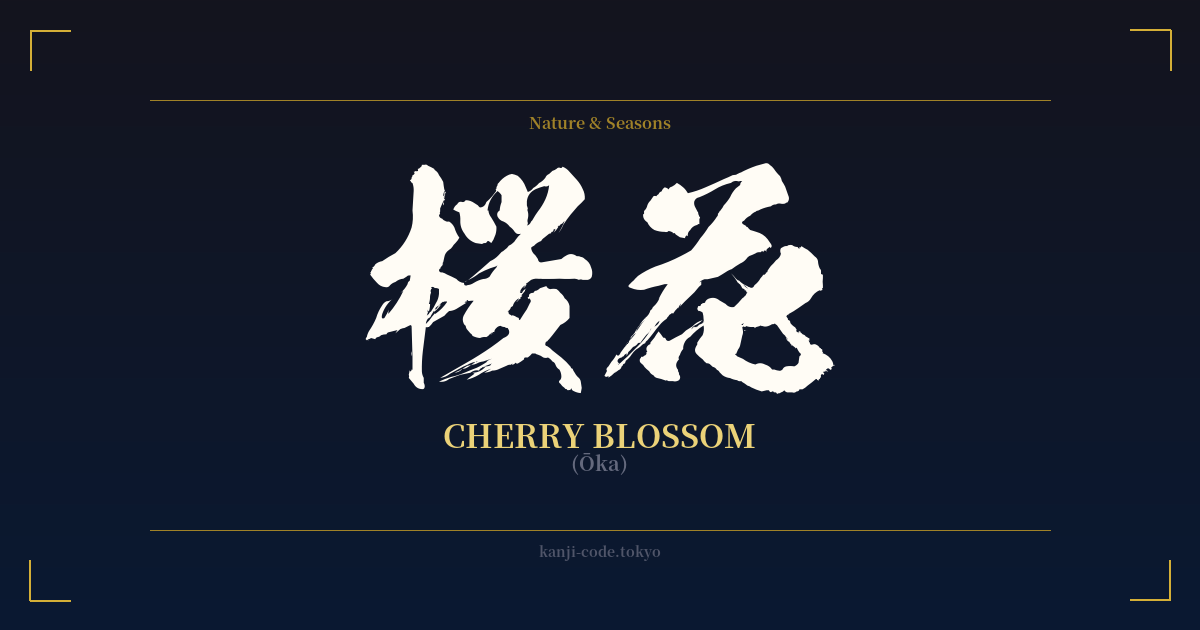
🖌️ Font Styles for 月光
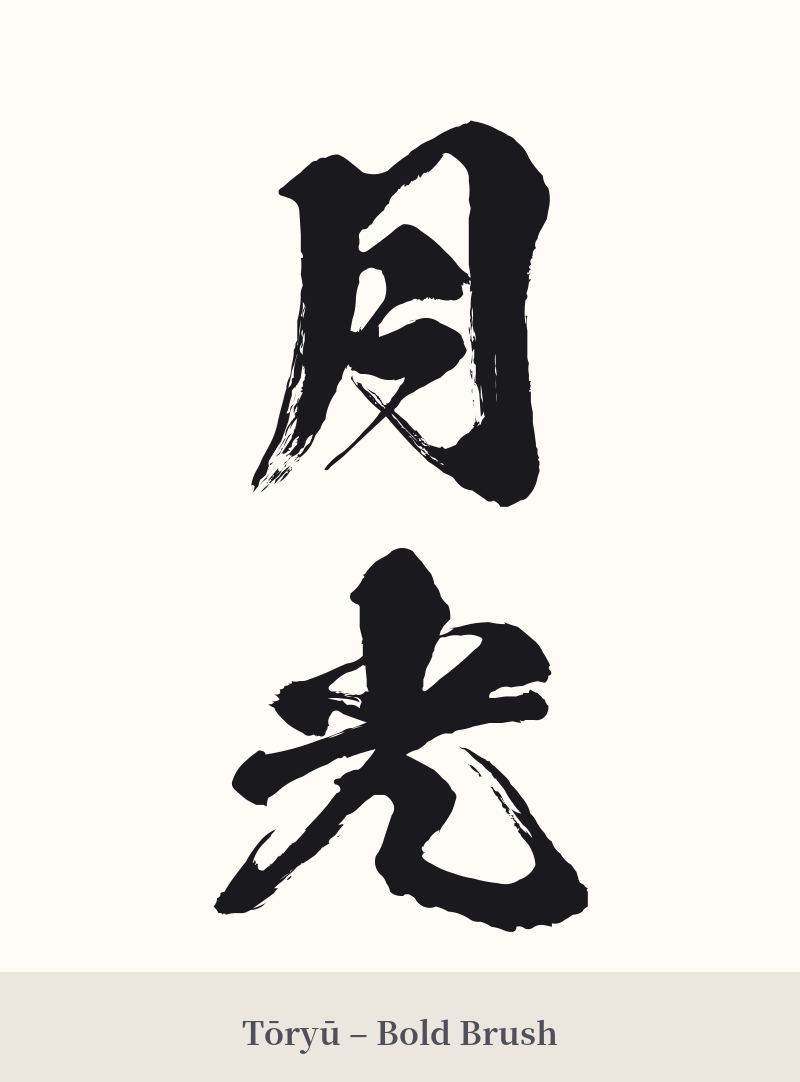
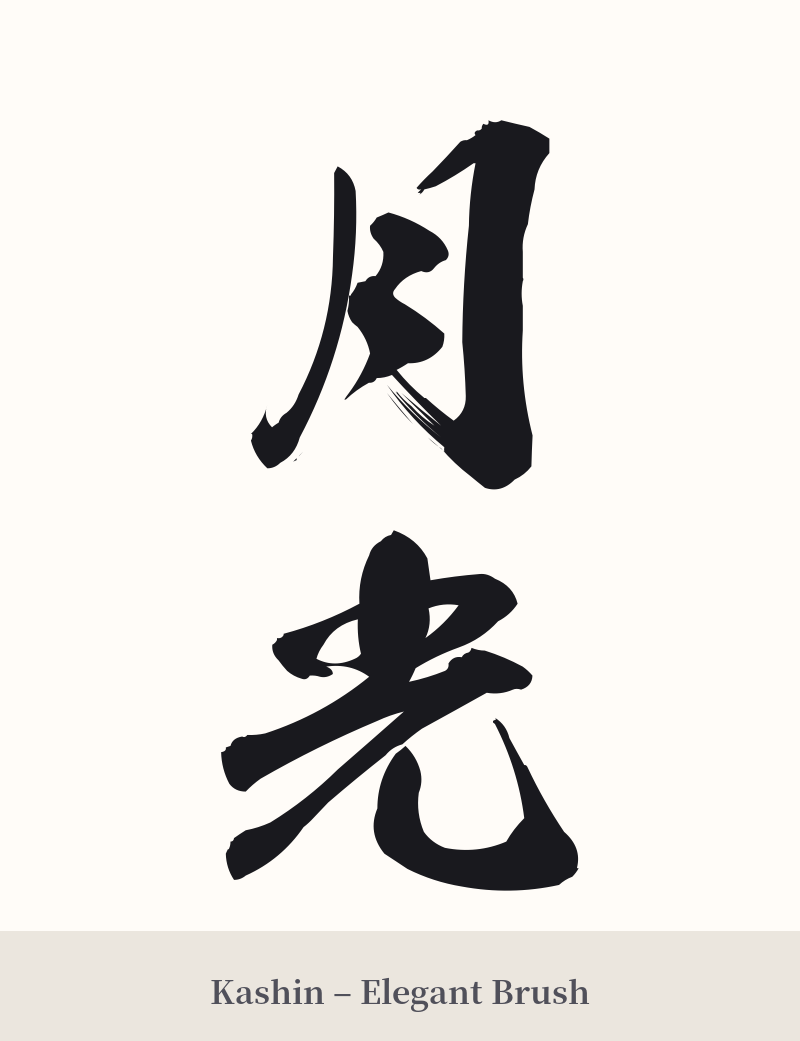
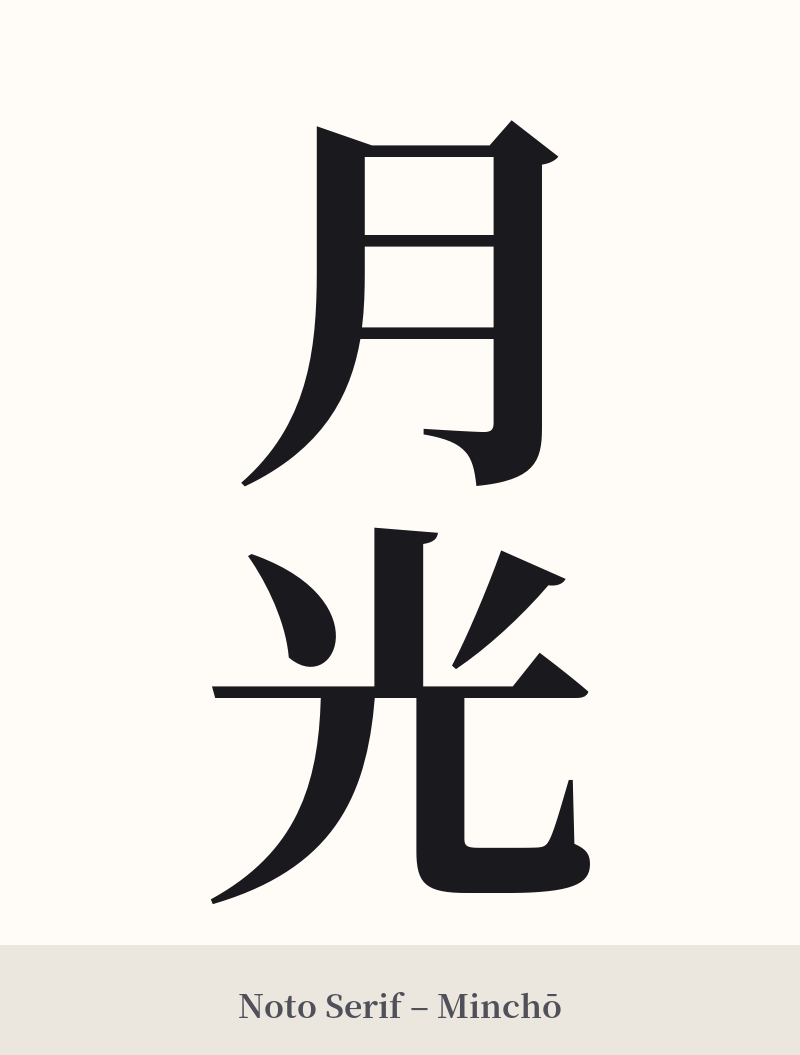
The same kanji can look dramatically different depending on the calligraphy style. Choose a font that matches the mood you want for your tattoo or design.
🎨 Tattoo Suitability
📐 Tattoo Design Guide
The elegant and serene nature of 月光 lends itself well to a variety of tattoo designs.
– Placement: For a vertical orientation, the spine, forearm, or calf are excellent choices, allowing the characters to flow downwards. A horizontal placement works beautifully across the collarbone, inner bicep, or wrist.
– Font Style: The font can dramatically alter the mood. A flowing, cursive script like Gyōsho or Sōsho will emphasize its poetic and artistic qualities. For a more classic and refined look, a crisp Minchō style font with its delicate serifs is a perfect match. A bold, modern Gothic font can also provide a striking contrast.
– Visual Tips: Consider incorporating other elements to enhance the theme. A simple Ensō (Zen circle) can frame the kanji, symbolizing enlightenment and the universe. Pairing it with a silhouette of a pine tree, a branch of cherry blossoms, or gentle waves can ground the design in a natural scene. A subtle watercolor effect in shades of blue, silver, or purple can evoke the feeling of night.
Comments