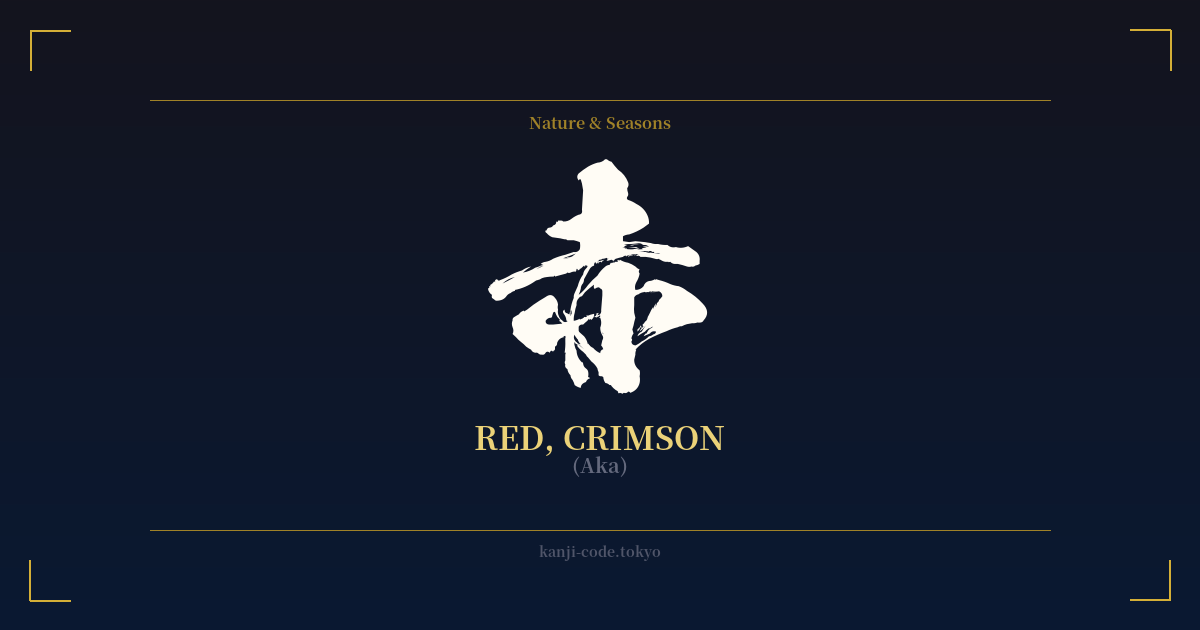
✍️ 赤 (Aka) — Cultural Context
The kanji 赤 (Aka) is one of the most fundamental and symbolically rich characters in the Japanese language. Its origins as a pictograph are thought to depict a person (大) under a fire (火), representing the color of flames and intense heat. This primal connection to fire imbues it with a sense of energy, life, and power.
In Japanese culture, red is a color of immense significance, most notably seen in the national flag, the 日章旗 (Nisshōki), or 日の丸 (Hinomaru), the 'circle of the sun.' The red disc symbolizes the sun goddess Amaterasu, the mythical ancestor of Japan's Imperial family, positioning red as a color of national identity and celestial power.
This sacred association extends to Shintoism, where the vibrant vermilion and red of shrine buildings and torii gates are believed to ward off evil spirits and bring good fortune. The practice of painting these structures red is a visual prayer for protection and purity. Similarly, traditional Daruma dolls are almost always red, symbolizing perseverance and luck in achieving one's goals.
Red is also the color of life itself—the color of blood (血, chi). This links it to powerful emotions like passion (情熱, jōnetsu), love, and vitality. In traditional arts like Kabuki theater, red makeup (kumadori) is often used to denote a powerful, heroic, or virtuous character, visually signaling their strength and passion to the audience.
Furthermore, red is a color of celebration. The combination of red and white, known as 紅白 (kōhaku), is a staple for festive occasions, from weddings to New Year's celebrations. This pairing is considered highly auspicious and is seen everywhere during times of joy.
While its primary meanings are positive, context can shift its nuance. For example, 赤ちゃん (akachan) means 'baby,' likely referring to a newborn's reddish complexion. However, 赤字 (akaji) means a financial deficit, and 真っ赤な嘘 (makka na uso) means 'a complete lie.' Despite these specific uses, the standalone character 赤 overwhelmingly evokes powerful and positive imagery of life, protection, and passion.
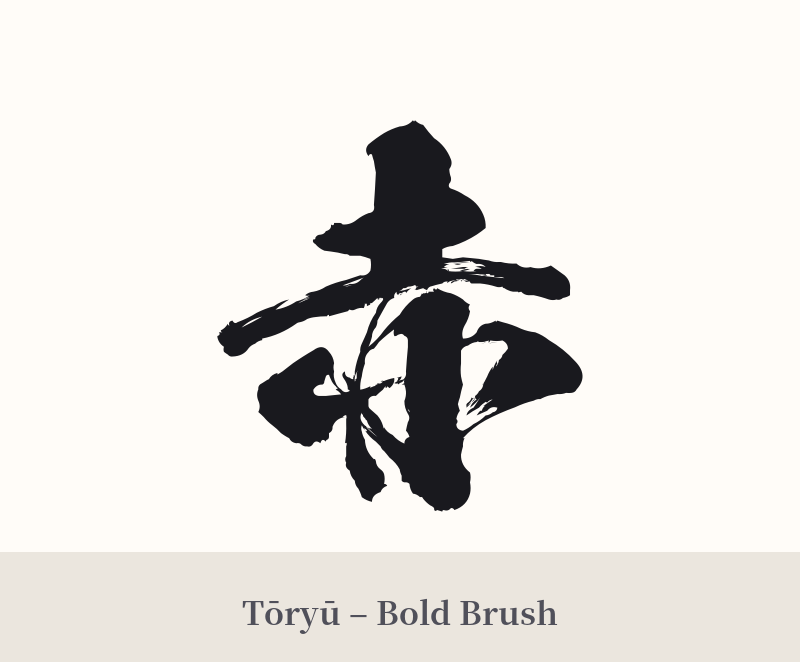
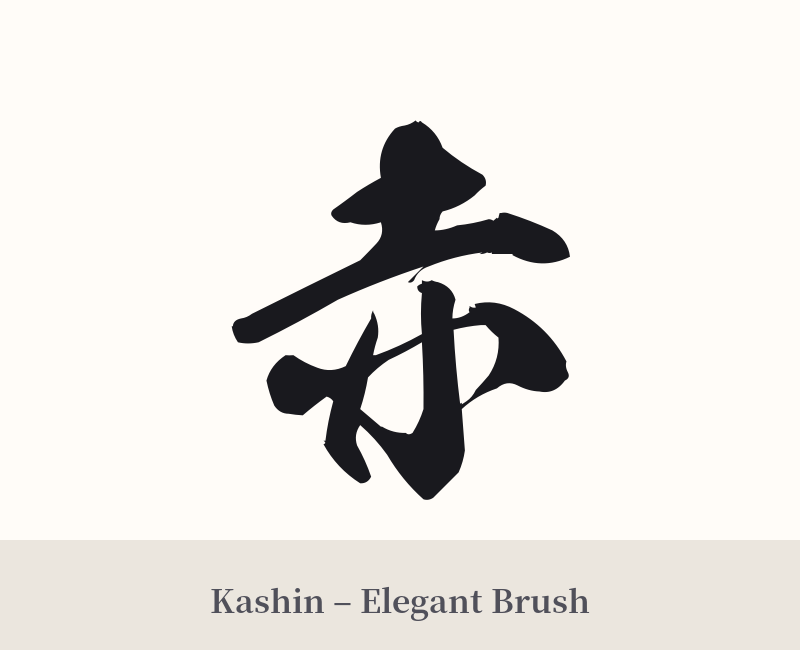
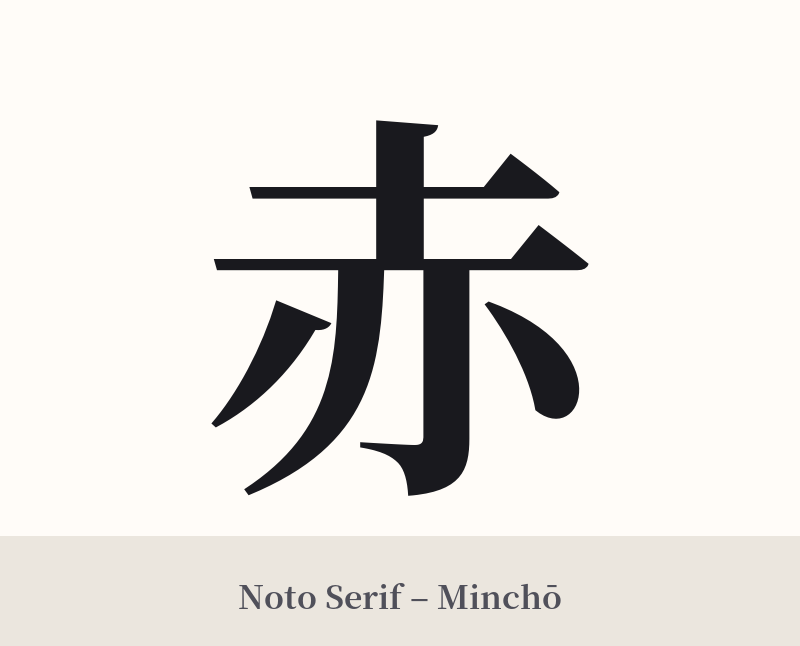
🖌️ Font Styles for 赤
The same kanji can look dramatically different depending on the calligraphy style. Choose a font that matches the mood you want for your tattoo or design.
🎨 Tattoo Suitability
📐 Tattoo Design Guide
The kanji 赤 is a versatile and powerful choice for a tattoo, lending itself to various styles and placements.
– Placement: Its simple, balanced form works well in many locations. For a bold statement, consider the forearm, bicep, or calf. For a more subtle yet striking piece, the back of the neck, wrist, or behind the ear are excellent choices.
– Style: For a passionate and energetic feel, a dynamic calligraphy style like gyōsho (semi-cursive) or sōsho (cursive) is perfect. To emphasize its power and stability, a strong, angular kaisho (block) or Mincho font works beautifully.
– Visual Elements: Consider using red ink for the character itself to make its meaning literal and visually potent. It can also be incorporated into a larger design. Pairing 赤 with a sun disc, a torii gate, Japanese maple leaves (momiji), or a koi fish can deepen its symbolic narrative and create a more personalized piece.
Comments