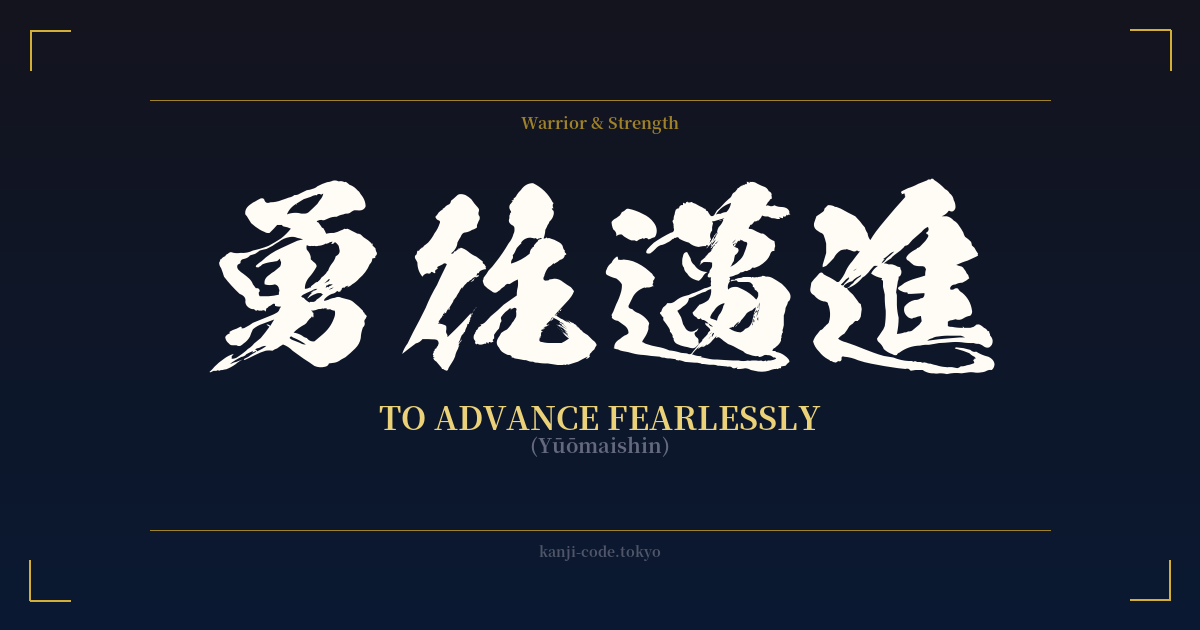
✍️ 勇往邁進 (Yūōmaishin) — Cultural Context
勇往邁進 (Yūōmaishin) is a powerful four-character idiom, known in Japanese as a 'yojijukugo'. These idioms are a hallmark of the language, packing a complex, often poetic idea into a concise and elegant form. Literally, 勇往邁進 translates to 'courageously going, striding forward,' but its essence is about advancing fearlessly toward a goal without hesitation or distraction.
This phrase is more than just a call for bravery; it embodies a core aspect of the Japanese cultural mindset, particularly the concepts of perseverance and dedication. It's the spirit of 'gambaru' (to do one's best) taken to an active, dynamic extreme. It’s not about a single, fleeting act of courage but about sustained, determined progress in the face of any and all obstacles.
The idiom evokes images of a warrior charging into battle, an explorer venturing into uncharted territory, or an innovator pushing the boundaries of what's possible. In modern Japan, its use is widespread and deeply aspirational. You might hear it in a CEO's speech to rally employees, see it on a banner at a school sports festival, or find it used as a personal motto by someone striving to achieve a lifelong dream, whether that's passing a difficult exam or launching a new business.
The power of 勇往邁進 lies in its combination of spirit and action. The first half, 勇往 (yūō), speaks to the inner state: having the courage to go. The second half, 邁進 (maishin), describes the physical manifestation of that courage: striding forward with progress. It’s not blind recklessness, but courage guided by a clear objective. It’s the resolve to move forward, not just for the sake of moving, but to make meaningful progress toward a specific destination.
This makes it a particularly resonant concept for anyone embarking on a new chapter in life, overcoming a personal struggle, or committing to a challenging path. It represents the decision to stop hesitating and start moving, to push through fear and doubt, and to relentlessly pursue one's ambitions. It is a declaration of unstoppable forward momentum.
🖌️ Font Styles for 勇往邁進
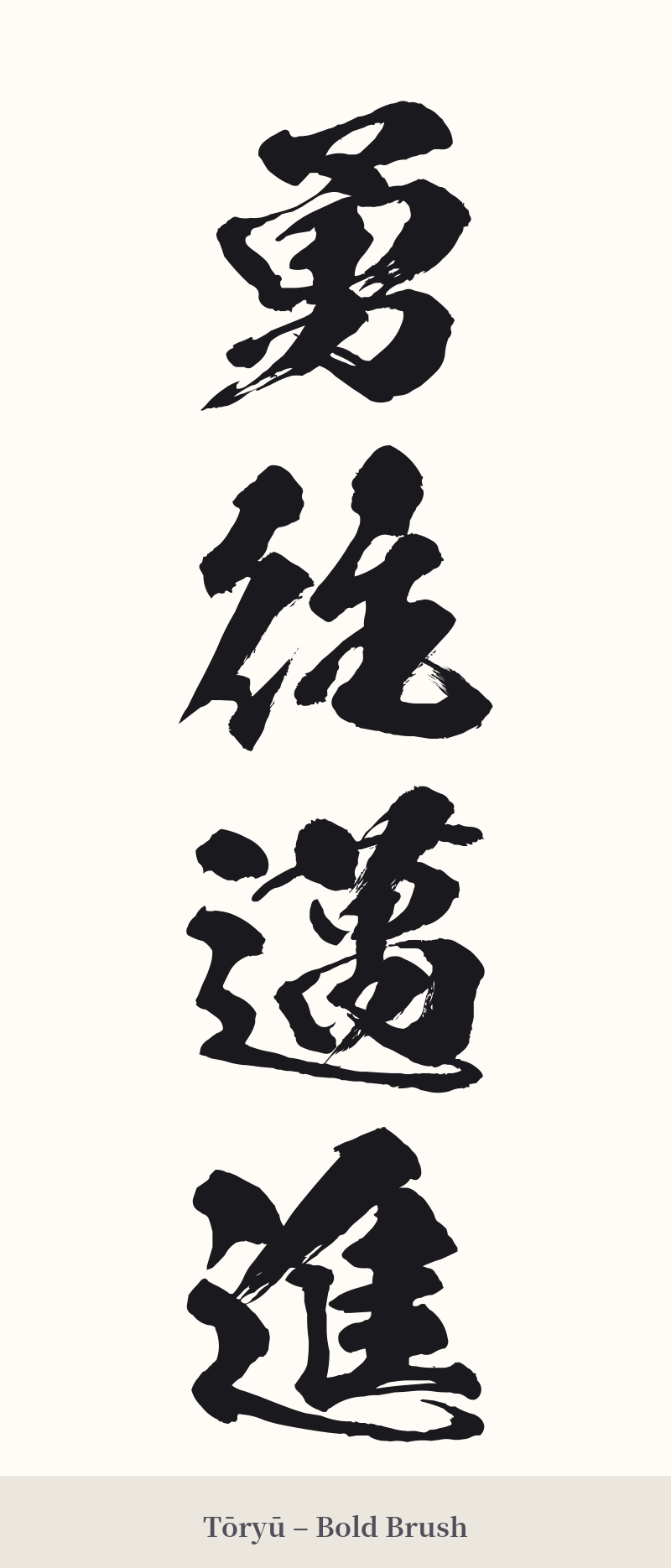
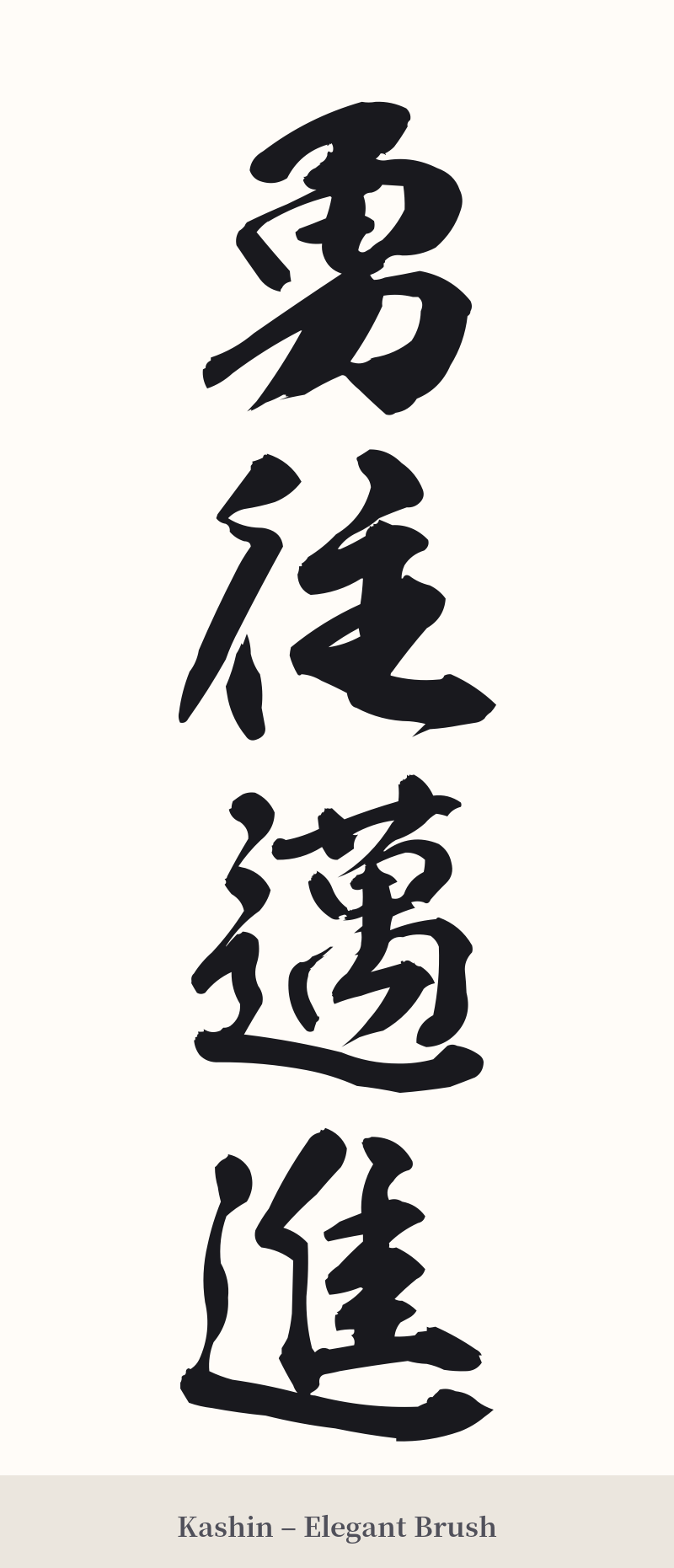
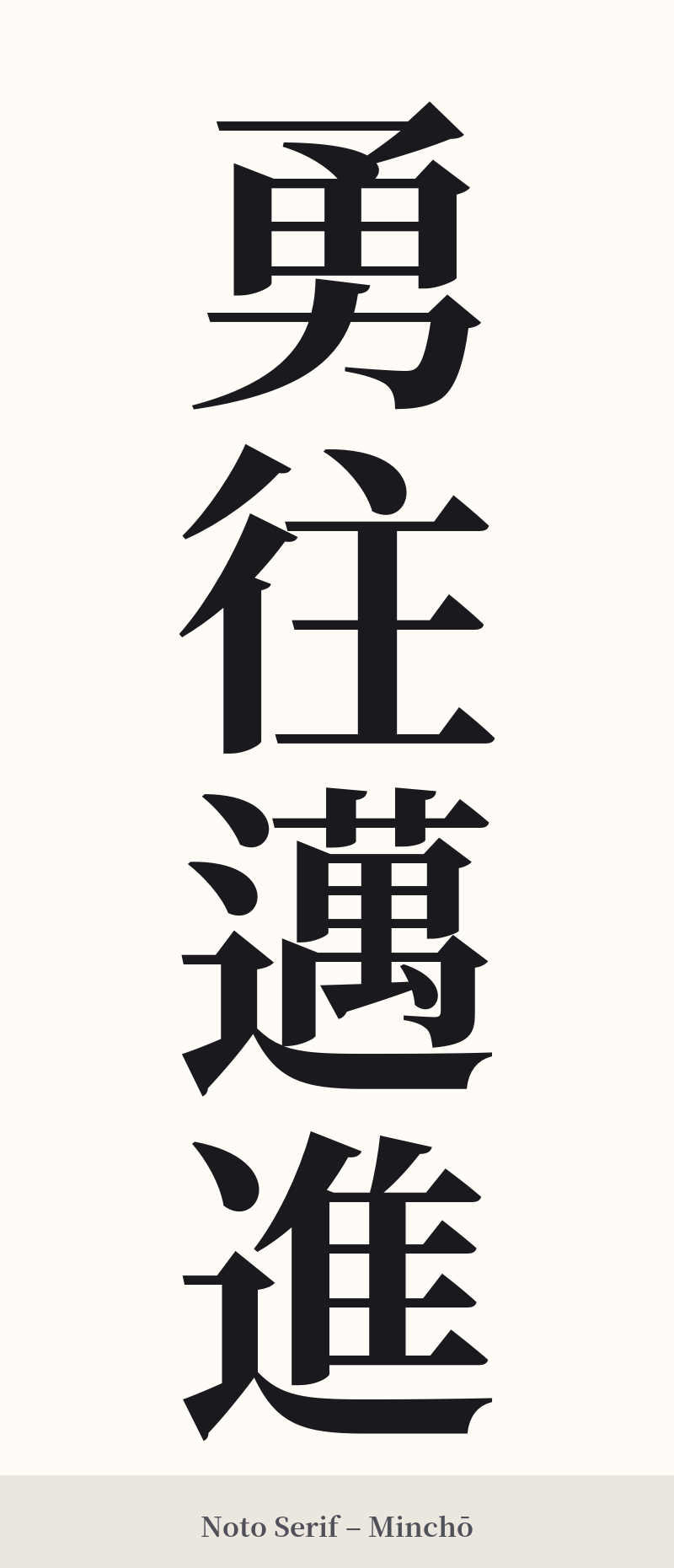
The same kanji can look dramatically different depending on the calligraphy style. Choose a font that matches the mood you want for your tattoo or design.
🎨 Tattoo Suitability
📐 Tattoo Design Guide
As a four-character idiom (yojijukugo), 勇往邁進 has a classic, balanced aesthetic that works well in tattoo designs.
– Placement: A vertical orientation is the most traditional and visually striking way to display this phrase. The spine, forearm, or calf are all excellent choices, allowing the characters to flow downwards. For a horizontal layout, the chest, upper back, or across the ribs can create a powerful statement.
– Font Style: The choice of script can dramatically alter the feel. A bold, angular Kaisho (block script) emphasizes strength and unwavering resolve. For a more fluid and dynamic feel that matches the 'advancing' theme, a Gyōsho (semi-cursive) or Sōsho (cursive) script is ideal, suggesting motion and energy.
– Visual Tips: While the four characters are powerful enough to stand alone, they can be integrated with other imagery. Consider pairing them with elements that symbolize progress or overcoming obstacles, like a koi fish swimming upstream, a crashing wave being parted, or a path leading toward a rising sun. Ensure the kanji remains the focal point and is not overshadowed by the surrounding art.
Comments